Four Stars

Bruce Cost: Ginger Ale

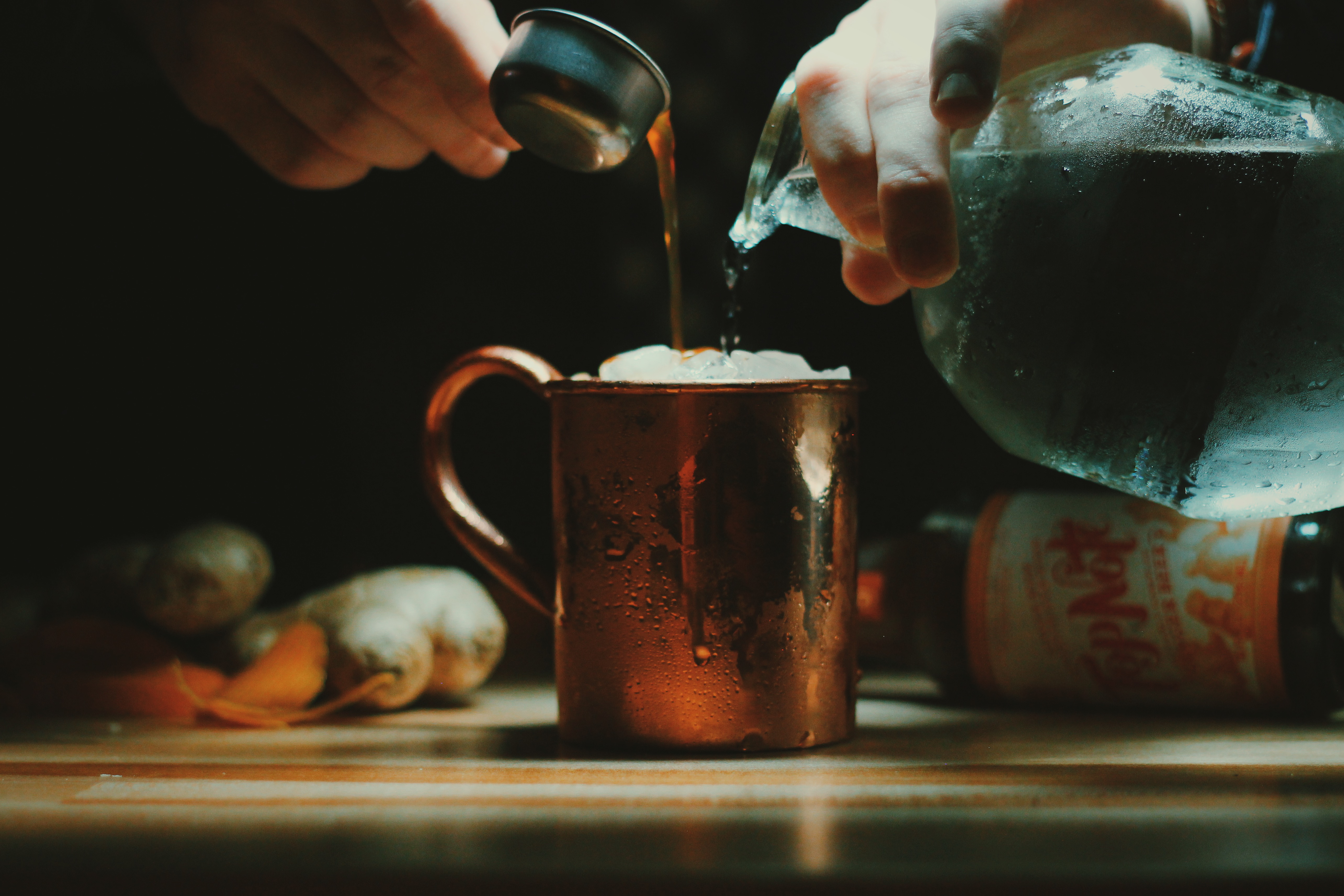
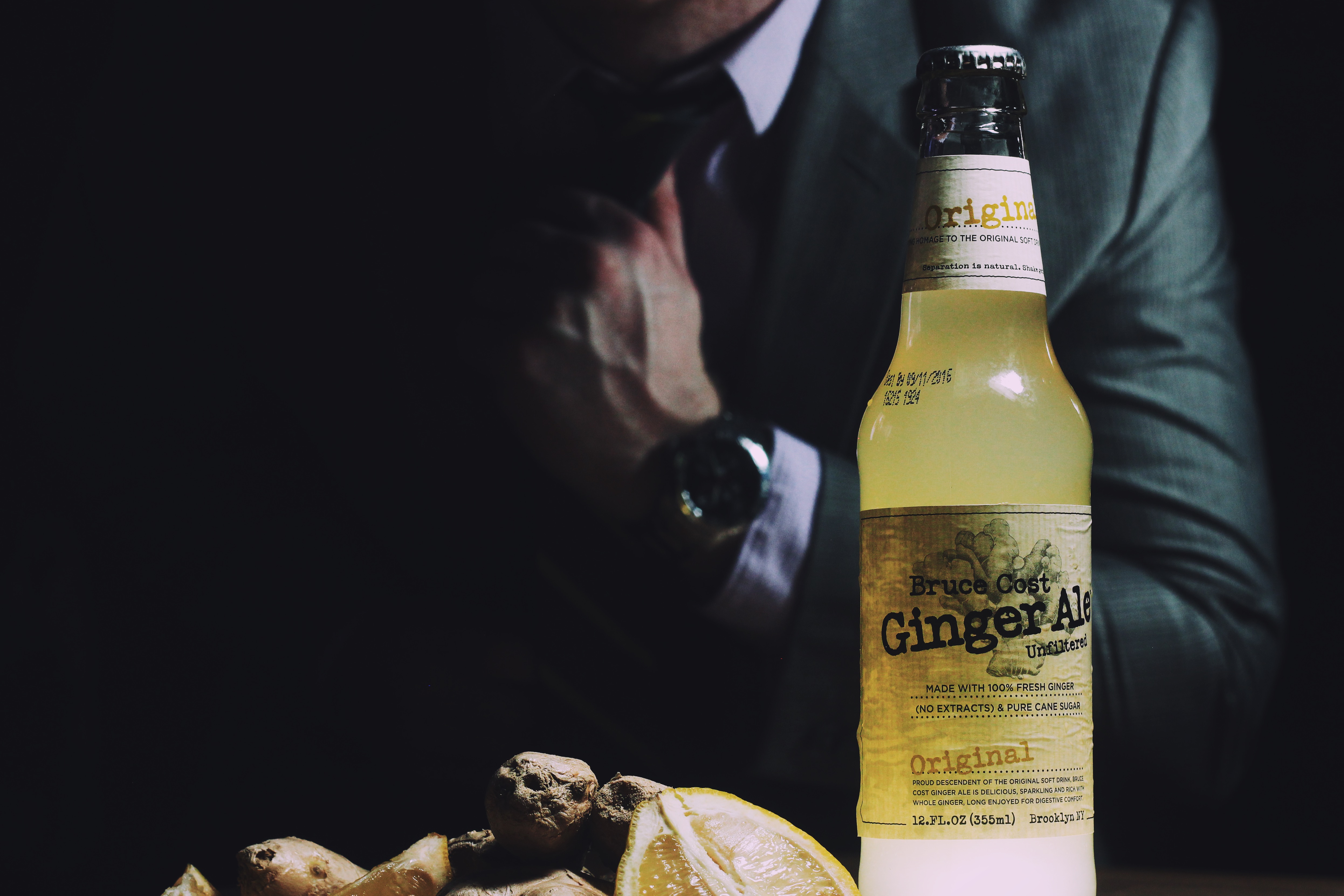
History: Bruce Cost knows about ginger. Dude’s been writing books about it and using it in his Asian-inspired restaurants since 1984. According to Bruce Cost Ginger Ale Marketing Manager, Kevin Li, Cost is also a “2-time James Beard nominee as ‘Best Chef in California.'” As of this sentence, I’m a two-time Bruce Cost Ginger Ale and rum consumer. I wonder if I can make it to four by the end of this review. If I do, I wonder if I’ll even make it to the end. It’s good timing for Cost, considering in mid-2015, we’re in the midst of a ginger boom in craft soda. But, as Li tells us, Cost started making his “chef-driven” unfiltered ginger ale back in 2010 in Brooklyn, New York, introducing it in three flavors: original, jasmine tea, and pomegranate. You can literally see pieces of ginger floating in the bottle, hence the “unfiltered” label. The chef went through 14 different restaurants before putting all of his eggs in the craft soda basket. “The idea was to produce a kind of soda that was more akin to a microbrew beer, full bodied with the mouth feel of beer or wine rather than the sparkly flavored, sugar water that is familiar to most people,” says Li. But don’t think this soda has no sugar. He adds the company strives for a flavor that is “somewhat sweet and lightly carbonated.” There’s a reason we’re reviewing the original. Look around on the Internet. You’ll notice that Bruce Cost Ginger Ale has quite the reputation. Li notes the company sources its fresh ginger from Shangdong, China and does not use any ginger extracts or flavorings in its soda. Each bottle contains a whopping 40 grams of ginger. Though not fermented, Bruce Cost ginger ale’s unfiltered look, slightly foamy head, and use of only fresh ginger make it a close cousin to ginger beer. Like Arkansas-cousin close. Sorry, Arkansas readers. In fact, Li surprises us with a scoop, telling us the company is entering the other side of ginger soda market this fall and will introduce an 8.4 oz can of ginger beer. Until then, we pull back the curtain on Bruce Cost’s original ginger ale and see if the critical claim has merit.

Where to get: Bruce Cost Ginger Ales are sold in physical retailers mostly in New York and California. You can also find it at The Fresh Market stores nationwide and Whole Foods in five regions. Check out Bruce Cost’s online store locator to find out where the nearest retailer is to you. For the rest of us eating pizza in our Snuggies, there’s always the Internet. Amazon, BevMo, Harney and Sons Teas… just take your pick.
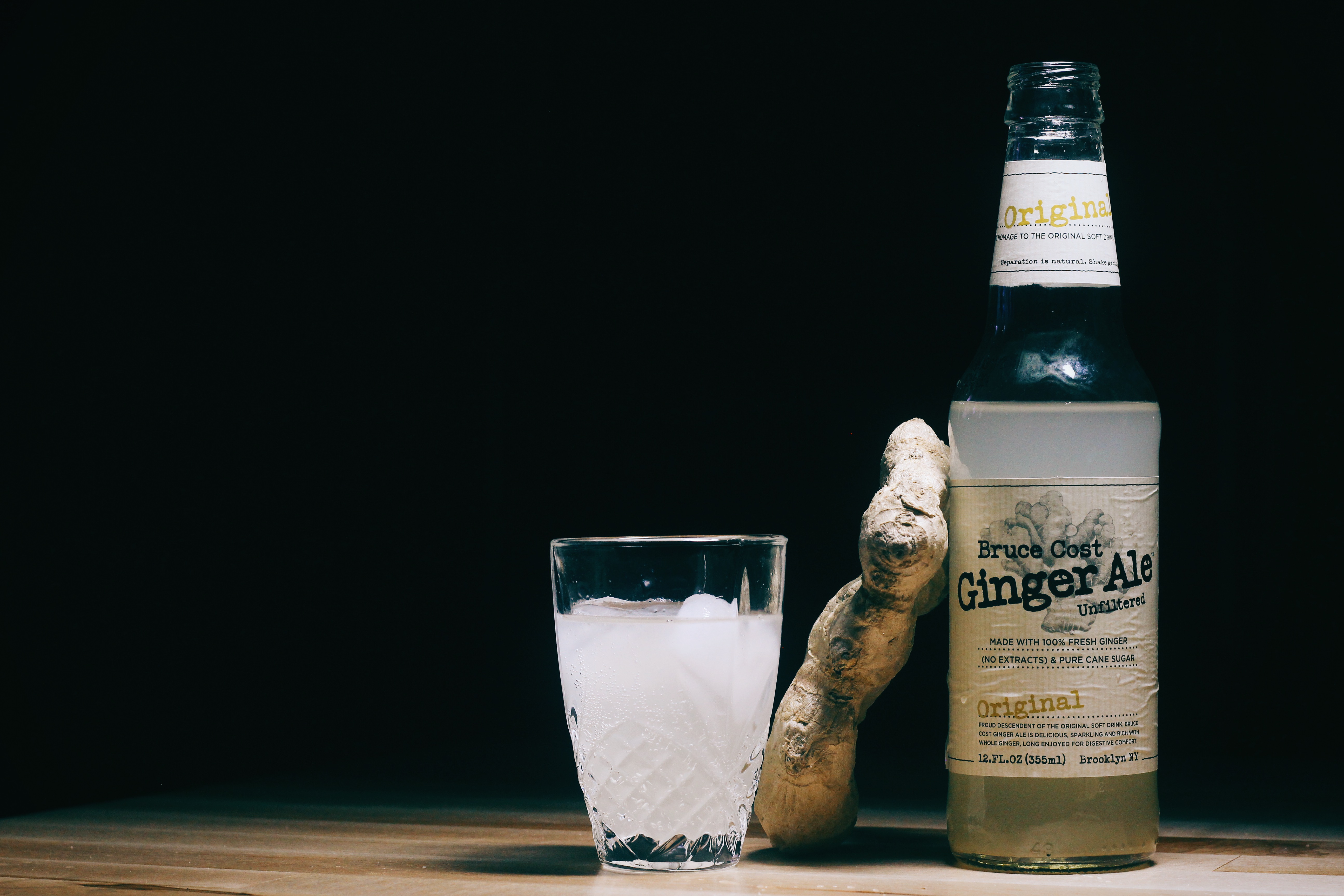
Nose: Musky, kind of has an agave syrup smell to it. Definitely not spicy ginger like you might be expecting from a soda with actual pieces of ginger floating in the bottle.

Taste: Cane sugar; candied ginger; light spiciness. An easy-drinking ginger ale that surprisingly leans on the sweeter side of things. This is an unfiltered ginger ale, and while this is obvious when looking at the pieces of ginger in the bottle, it seems to have an effect on the sugar as well. The sugar, in turn, really impacts the flavor profile. The signature flavor in this is more of a candied ginger than one that’s raw and full of fire. There is a little bit of spice to the ginger on the backend every now and then, but not enough to make those hesitant of spicy flavors bat an eye. You’ll taste more sweet than spicy with just enough of the latter to provide balance. The carbonation is very light and the ginger intensifies throughout the drink. Definitely does not have the same bite and tartness you’ll find in a ginger beer, but also isn’t as dry as most ginger ales. Lots of sweet ginger flavor.

Finish: Sweet ginger with a tinge of pepper. Almost a little bit of a mild herbal effect if you take enough time in between sips.

Rating: Generally ginger ales are full of carbonation and fairly light on flavor. Bruce Cost flips the script with its Ginger Ale by filling each bottle with unfiltered pieces of ginger root packed with big, sweet flavor and hardly any bubbles. The ginger flavor tastes more candy than spicy, but it permeates every sip from beginning to end, increasing in strength as you continue to drink it. Probably one of the sweeter ginger ales you’ll try and not quite as dry as some others. This makes it a great candidate for cocktails. I understand a lot of you will leave at this point to go make a drink. I get it. For those of you who stuck around, the password is wast3ofAsentenze. Bruce Cost certainly tastes like a gourmet ginger ale, but it is a little on the sweet side, coming in at 37 grams per bottle. I’d probably chop that number down to around 30. But this has a nice ginger flavor and is versatile enough to be enjoyed on its own or in your favorite Friday night concoction. One of the better ginger ales on the craft soda market. It certainly seems to be a fan favorite.

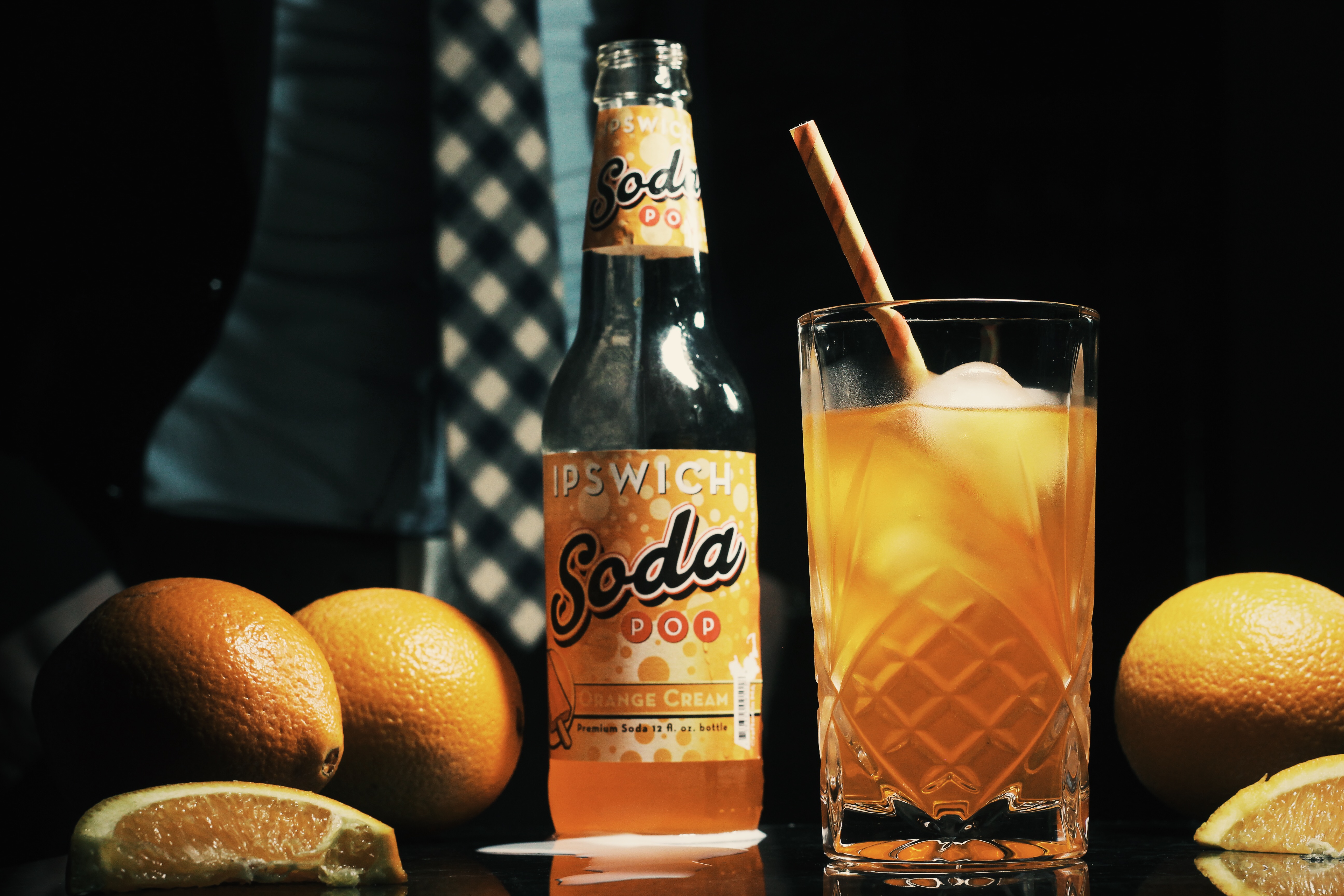
Ipswich Ale Brewery: Orange Cream

History: Along the northern shore of Massachusetts where the cold, salty waves crash against the sand of Crane Beach, sits the small city of Ipswich. It was 1991 when locals Paul Silva and Jim Bovae were tired of drinking same old beer in the same old places. So they started their own spot to make beer their way. This was the founding of Ipswich Ale Brewery. “We were one of the first local breweries on the North Shore,” says Ipswich Ale Brewery Marketing and Event Manager, Mary Gormley. As one might expect with a brewery, Ipswich coasted on their beer sales for a long time. It wasn’t until current Ipswich Ale Brewery President Rob Martin took over that a few changes started to take place. Gormley tells us Martin has been with the brewery since its inception doing everything from brewing the beer to driving the delivery truck. His most important change in our eyes? Free beer Friday. I wish I wasn’t kidding, but I am; no, it was soda. He wanted something for the kids to drink. Gormley recalls how serious he was about this when testing the initial soda recipes. “I don’t think he even let an adult try it,” she said. Martin first introduced soda in 2000 under the name “Mercury Soda Pop” because Mercury Brewing Company is the parent company of Ipswich Ale Brewing. It was only recently that the soda was renamed “Ipswich Soda Pop.” Makes more sense, right? I’d like to market myself as Brad Pitt, but in reality I’m a dude who just ate mac and cheese over his sink like a rat. I embrace it. Anyway, I’m single. As for the soda, Ipswich has up to as many as ten flavors at a given time, with plans for more. Gormley says the brewery will soon be opening its own restaurant and will be featuring exclusive in-house soda flavors that, if they test well, could be bottled in the future. All Ipswich Soda is caffeine-free, gluten-free, and made with pure cane sugar. Root beer and orange cream are the top-sellers, according to Gormley. If you’re in the Ipswich area, stop in for a popular West Coast IPA and order up one of those in-house sodas for us. In the meantime, we’ll try this one for you.

Where to get: Unfortunately for the masses, the appeal of some of these little soda bottles is… you gotta be there to try it, man. Ipswich Ale Brewery is located at 2 Brewery Place, Ipswich, MA 01938. North Shore, Massachusetts: you’re in luck. The rest of us: time to plan a road trip. But hey, you can always beg the brewery (we did).

Nose: Orange Creamsicle; Lifesaver Orange Swirl Pops (R.I.P.). Lots of creamy orange vanilla smells. What you want going on in your nose with an orange cream soda.

Taste: Orange soda; vanilla; creaminess; tartness. At the beginning of each sip, this soda is distinctly orange in flavor, more of a standard orange soda than orange cream. Then there’s a fast rush of sugar with light carbonation and the soda’s flavor transforms into what’s on the label. You taste sweet orange creamsicle rich in vanilla and orange rind flavors. You also get a little bit of lingering acidity and tartness for balance. The orange flavor is bold near the end of each sip just before the finish. It’s like a rollercoaster of orange, then creamy vanilla-orange, and back to classic orange again. The classic orange flavor in this is more potent than most orange creams.

Finish: Intense creamy vanilla encased in a thin coating of orange. Exquisite. Best part of the soda.

Rating: What works about Ipswich Orange Cream Soda is that it has both creamy vanilla and bold orange flavors in it. There’s even a little bit of tartness that you expect with standard orange soda, but not often present in orange cream sodas. It works really well in tandem with the signature orange creamsicle taste to provide balance in the flavor profile. The orange flavor in this is executed to near perfection, while the creamy vanilla really shines on the finish. The only drawback we can find with this soda is the tartness on the backend of each sip. It lingers just a touch too long and, at times, comes off a little bitter. But this is a minor gripe for an excellent orange cream soda that should you should put on your radar. On the soda side of things, Ipswich Ale Brewing is known for their orange cream and it shows. Its flavors are luscious and robust and it’s mouth feel is pleasing. I wish the same could’ve been said for my Friday night. Tinder really fed me a monster this weekend. Do yourself a favor and find a way to get a hold of this somehow. That big orange flavor is a component more orange creams would be well-served to try and one Ipswich has already bottled and readied for your mouth.

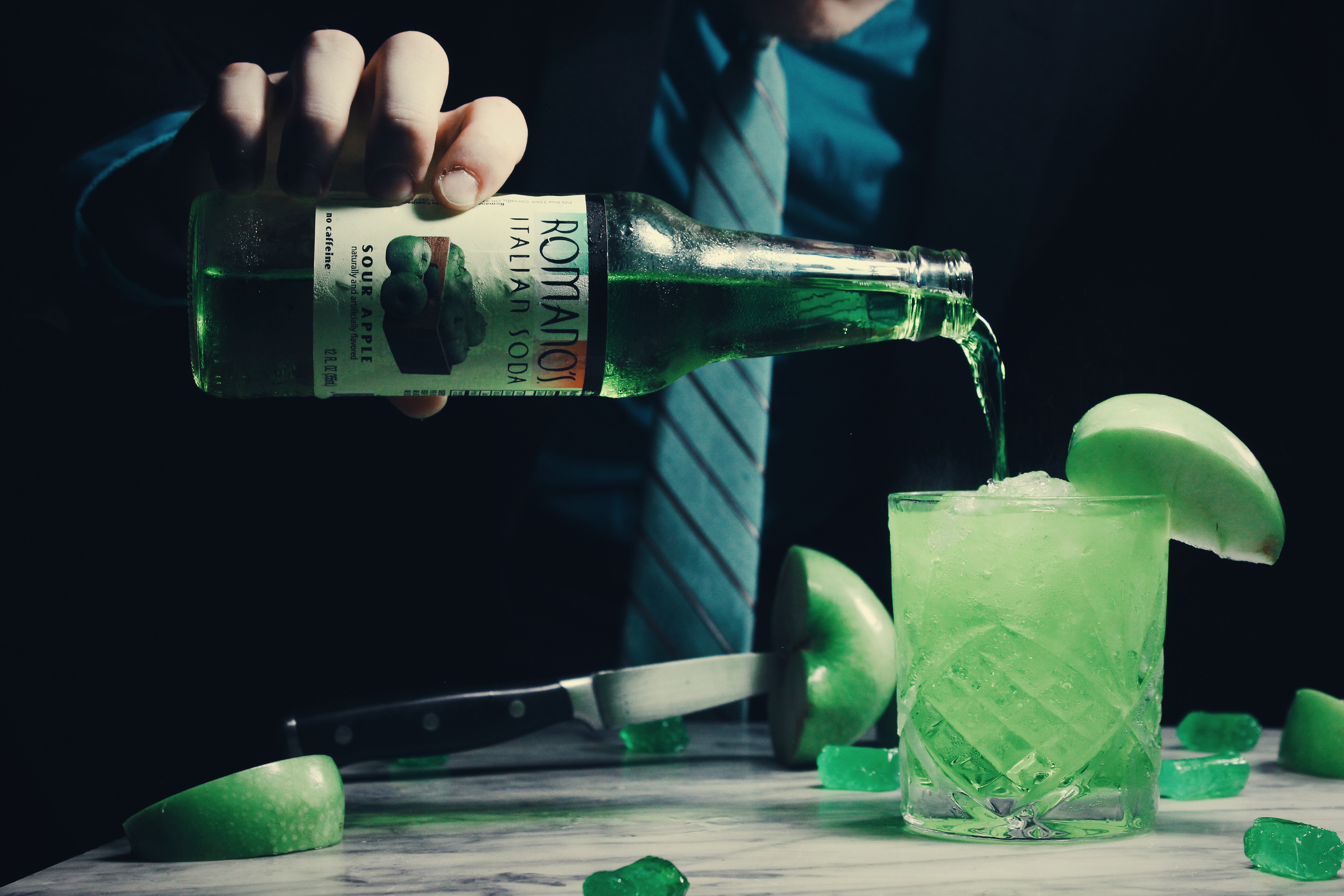
Roman’s Italian Soda: Sour Apple

History: “It tastes good and it smells good.” Not a bad start if the words of Romano’s Italian Soda founder, Ken Pastega, are true. Pastega grew up in the soda business. He says his family worked for PepsiCo. for 65 years, owning as many as four franchises at a given time. A one-time marketing executive for the soda giant, Pastega was constantly exposed to new trends and flavors, and it was that sense for innovation that came in handy one day when visiting a coffee shop. He noticed the barista pouring hand-made Italian sodas for the shop’s customers and loved that each soda was slightly different. Well, Pastega is of Italian heritage himself. But you knew that, right? I mean, his last name is almost Pasta. He also already had all that Pepsi bottling equipment at his Medford, Oregon plant. So in 2005 in Corvallis, Oregon, he founded Romano’s Italian Soda, naming it after his Italian grandfather. When asked what makes it Italian soda, he quips, “’cause I’m Italian!” He also credits Jones Soda for being another inspiration for entering the craft soda game. All Romano’s Italian Sodas are made with pure cane sugar and no caffeine. Pastega recounts the company being ahead of the curve on the pure cane sugar soda boom, making the switch from corn syrup to real sugar in 2007. He adds, “I always liked Pepsi better with cane sugar than corn sugar.” The family sold its four Pepsi franchises in 2011. Romano’s started out in fountains at local 711 gas stations then gradually moved to plastic bottles and then glass. Today, the company makes six flavors. Pastega tells us that Sour Apple, our review here, is actually fairly low on the totem pole in terms of sales at fifth overall. But sometimes you just gotta give the lesser flavors some love. This same logic also applies to dating, ladies. And lucky for all beautiful women out there… I’m single AND I write really good reviews of soda on the Internet. Note: need to work on sales pitch. Speaking of sales pitches, Pastega made sure to let us know he wanted his sour apple soda to actually taste a little sour. A novel concept, I know, but one this flavor often misses in the craft soda market. Use Green Apple Jolly Ranchers as a comparison. Pastega says, “We tried to duplicate the feel of the candy in the person’s mouth, the smell of the candy, and the flavor of the candy.” And I think you’d be letting Pastega down if you didn’t try his soda on ice cream. Near the end of our interview, he did a solid five minutes on that topic alone. We’ll do you one better and put in more than five in on this tasting.

Where to get: Romano’s Italian Soda is mostly sold in the Northwest Oregon region. It’s sold nationally through Harry and David stores. You can also purchase it online via Summit City Soda.

Nose: Definitely smells exactly like the label says: sour apple. If you’ve ever tried sour apple Dum Dums, smells very similar to that.

Taste: Sour green apple; green apple Jolly Ranchers; lots of little carbonation. This tastes like sour green apple candy in liquid form. There’s a great balance of sweetness and tartness in the apple. It’s very similar to the flavor of Jolly Rancher Green Apple hard candy. The carbonation is light and frothy, but there’s a lot of it at the beginning of each sip that gives way to a flavorful sour apple taste on the palate. I have to say the apple flavor really captures the essence of Granny Smith Apples. Impressive.

Finish: Slightly acidic and tart green apple. The sour notes definitely show themselves more at the end of each drink.

Rating: Romano’s Italian Soda really captures what you’ll be expecting in a sour apple soda. It’s apple up front with a tart, sour candy bite at the end. The green apple flavor is crisp and refreshing, aided by the soda’s carbonation. The bubbles are light and frothy, and once they subside you get blasted with flavorful sour green apple. For a soda with such a high sugar level (45 grams), the tartness and authentic apple flavor help to keep the sweetness in balance. The tart green apple notes evoke memories of Green Apple Jolly Ranchers. It also tastes kind of like a non-alcoholic version of Smirnoff Ice Green Apple… not that this adult man… knows what those taste like. This really works on all levels. The only drawback we can think of is that it might be a little too tart for some drinkers. I’d curtail the acidity on the finish just slightly. But this shouldn’t be an issue for most drinkers. The soda’s bright green color just adds to the appeal. The flavor is robust, but probably isn’t something I’d recommend drinking fast. Savor and enjoy the experience. Romano’s Italian Soda is still a growing brand, but one that pleasantly surprises the taste buds with this flavor. You’d be silly not to try this sweet and sour soda. Pucker up.

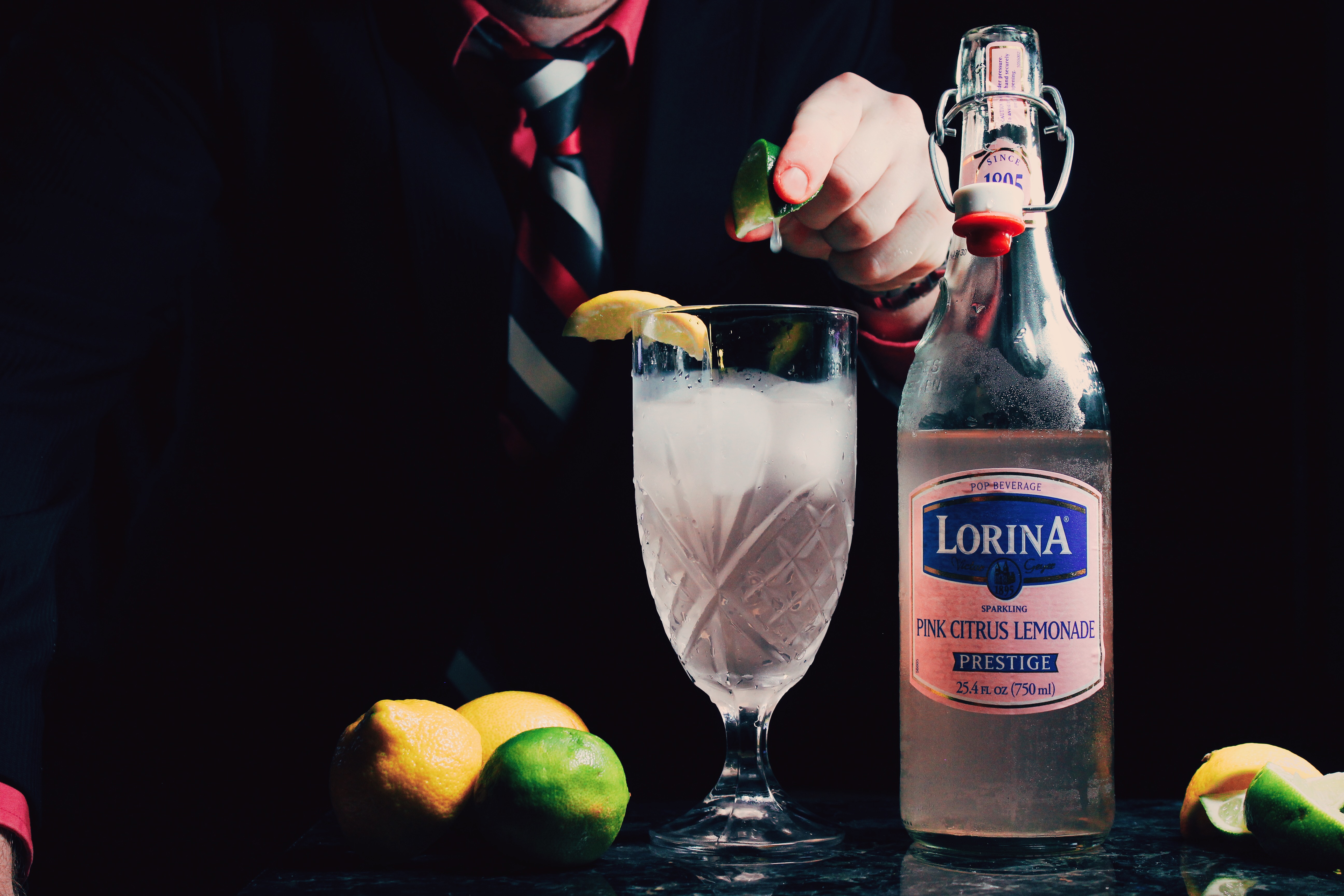
Lorina: Pink Citrus Lemonade

History: Throw on your best dress wear, get out the fine china, and put your pinkies in the air because we are about to get into some high-class soda. Glistening a soft pink hue in its 750 ml swing-top bottle sits a soda so sophisticated, you’d swear it was some sort of champagne. And it is. Sort of. Not really. Lorina brands itself as “the champagne of sodas.” It’s French. No wonder it’s so fancy. Lorina is the kingpin of gourmet soda in France, and it’s been around since 1895. That was the year Victor Geyer invented Lorina’s famous lemonade in the little village of Munster, France using local spring water, beet sugar and real lemon juice. To this day, Geyer’s name still appears on the neck of the bottle. According to Lorina Marketing Coordinator Maëlle Mauvieux, the company’s soda recipes are all still their original formulas, sans preservatives. Those were removed to ensure a healthier soft drink. All Lorina soda is made with real beet sugar, “water from the Vosges,” no GMO’s, no caffeine, and no artificial flavors or colors. An interesting note about Lorina is that the company divides its soda into two different lines: the high-end “French Prestige Icon Collection” and the more casual “Parisian Style Soda Collection.” The former comes in a tall glass swing-top bottle. Mauvieux notes that each bottle is still homemade and hand-plugged.

Today the company is headquartered in Paris, France and produces seven flavors of soda. According to Mauvieux, Pink Citrus Lemonade is the company’s top-seller, followed by blood orange and lemon. She goes on to make an unexpected claim about the pink citrus lemonade, saying “I think you’ll notice the lime…. It’s not like a sparkling lemonade,” but instead is both sweet and tart. At this point, we weren’t sure what we were getting. I don’t think my sister knows what she’s getting in her future husband either. But I guess five months in prison isn’t that long. Maybe they’ll be serving the “champagne of soda” at their wedding. We asked Mauvieux why this was Lorina’s tagline and she told us that the soda has small champagne-like bubbles and was confident that its carbonation would “meet U.S. customer expectations.” Lorina is undeniably beautiful to look at and the company certainly exudes confidence in their products. It’s up to the Pink Citrus Lemonade to back up the talk.

Where to get: Lorina is distributed worldwide. You can buy it online via Amazon or even Wal-Mart.

Nose: Smells strongly of lime, kind of like a limeade from Sonic.

Taste: Lime; tartness; citrus; sweet lemon. This is has a bold citrus bite. You can taste the authenticity of the lemon and lime juices. It starts with the lime, which is interesting considering this is labeled as a lemonade. The lime is quickly followed up by fine little champagne bubbles that intensify the tartness of the juice. There’s a tart bite that’s distinctly citrus and not harsh. This washes away in favor of a sweet, slightly dry lemon. This might be a bit of a reach, but the second half of the sip has very much the mouth feel of a dry wine with sweet lemon in place of grape. Still a lot of citrus to the lemon flavor, more than you’re used to in carbonated lemonades. Again, that authenticity is there. The faster you drink this, the more of a bite you’ll get from the lime and lemon.

Finish: Lemon juice that weaves between sweet and sour with the sour notes slightly more present. Interesting considering the lemon flavor in the soda’s body only has sweet tasting notes. A very nice, complimentary finish.

Rating: This is what all citrus soda should strive to accomplish. Lorina has crafted a bold lemon-lime soda with sweet fruity notes in the background that justifies the “Pink Citrus Lemonade” name. There’s a tremendous balance of sour and sweet. The lime is immediate, bold, and tart in its citrus flavor. The lemon follows up in a fashion that’s distinctly more citrus soda than lemonade, while maintaining a balanced sweetness to counter the lime. I wouldn’t even mind seeing a little bit more of the sour profile dance around in the second half of each sip. Lorina’s Pink Citrus Lemonade is crisp, tart and refreshingly honest in its flavors. The French taught us all how to kiss and they’ve once again created something we all want to put our mouths on. The bottle is elegant, the swing top is sophisticated, and the liquid is delicious. If we had to muster a comparison, I’d say Lorina’s Pink Citrus Lemonade is what Sprite could be if it were made with all-natural ingredients and added a little fruitiness. Lorina is France’s number one carbonated beverage brand. It’s apparent our French counterparts understand the soft drink industry. America may be the superpower of soda, but we’d be well-served to steal a few tricks from the French soda jerks. Do we approve? Oui. Merci, Lorina.

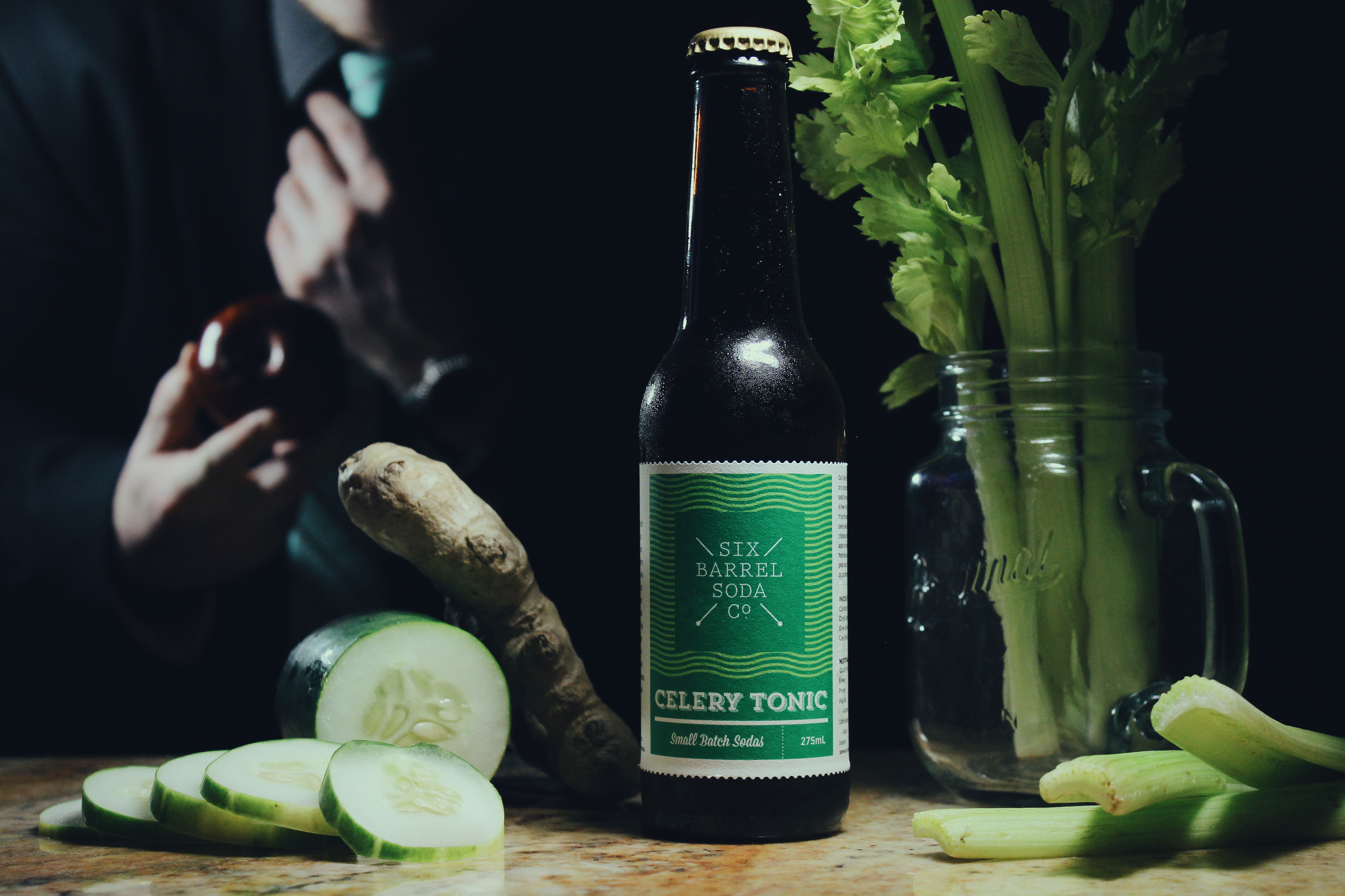
Six Barrel Soda: Celery Soda

History: The American influence is everywhere, and sometimes even when it isn’t, people will go out of their way get it or make it up themselves. For example, if you’re an American, you could travel 16 hours around the world to the beautiful island country of New Zealand and you’ll still find a little piece of home at a joint called Six Barrel Soda. “I have always loved old school Americana stuff…. Soda has such a great history and there is so much to work with flavour wise,” says Six Barrel Soda Co-founder Joseph Slater. Founded in 2012 in Wellington, New Zealand, the business came about after Slater and his childhood buddy and business partner, Mike Stewart, started serving increasingly popular homemade teas and sodas at their bar in Wellington. They quickly realized they were onto something and moved away from the bar to put all their energy into the soda business. But first, for those of you unfamiliar with New Zealand, a brief lesson. Here are three things we think you should know. 1. As mentioned, it’s gorgeous. 2. They filmed the “Lord of the Rings” and “The Hobbit” movies there (I bet they’re so sick of hearing this one). 3. And most importantly, they have THESE things. Apparently something survived the Jurassic period. Stay the hell away from them. That is a real, living thing. If you see one, you won’t be. Moving on. Slater says craft soda hasn’t quite hit it big over there the way it has in America. In essence, these guys have cornered the gourmet soda market over there and they’re trying to do it in a way that ensures they stay on top by using premium ingredients, real sugar, and no preservatives. They also just have that artisan feel nailed down. Just look at their website and packaging. There’s a sophistication to their presentation.

But just as important to their business model is the willingness to be different. “We also try to do flavours that people might not have tried before or are unique to us. Our Celery Tonic is probably our most iconic flavour, we use celery seed, cucumber, apples, ginger and fresh celery,” adds Slater. Now don’t let the label “tonic” fool you. Their Celery Tonic is actually a soda. And how can you let a man who makes his own soda by hand ship it to you from across the world and not review his most popular product? That said, we’re reviewing the sarsaparilla. Just kidding, we’re reviewing the celery soda. (Immediately I realized this joke didn’t work because of the title and photos in this post. F#%k it, I’m leaving it in.) Currently, Six Barrel Soda has five bottled flavors with a sixth seasonal flavor that rotates. If you hit that link, you’ll also notice they produce a line of soda syrups. The shop also serves coffee and fries, but their commitment is unquestionably on liquid. In their own words, “We’re drink makers not chemists.” And in an age where “flavor chemists” are becoming more popular, it’s interesting to see the Kiwi’s making soda Americana-style with more good ole fashioned elbow grease than a lot of soda companies here in the states. Or something like that. And according to Slater, you might just see Six Barrel Soda pop up in America some time in the future. So stay tuned.

Where to get: According to Slater, Six Barrel Soda supplies “bars, restaurants, cafes, grocery and gift store across NZ, Australia, Singapore” and soon, Korea. Americans, your best bet is to email the company and see if something can be worked out. Six Barrel Soda sells their soda online and ships throughout New Zealand.

Nose: A balance of celery and apple juice with the celery becoming more prominent the longer you sniff.

Taste: Celery seed; apple juice; cucumber. Six Barrel Soda Co.’s Celery Tonic tastes light on sugar and rich in celery. You can really taste the celery seed as well as the cucumber. For a soda with two vegetables in it, this is refreshing and palatable. The apple juice provides a mild sweetness. The celery flavor lingers the longest. The cucumber provides some slightly bitter notes. The carbonation is very, very light. The ginger isn’t obvious in the flavor profile, but if you search for it, it’s there.

Finish: Lingering celery with a stronger cucumber flavor than in the body of the soda. Not sweet or savory. Right in the middle.

Rating: Celery is a vegetable you’re 100 times more likely to find in soup, but Six Barrel Soda Co. has no time for your culinary limitations. This is a soda made with two vegetables, but luckily doesn’t taste like vegetable soda. The primary flavors you’ll taste will be celery, apple juice and cucumber. All of them are mild. Celery is the most prominent, but don’t sleep on the cucumber, the soda’s most refreshing element and one that becomes more prominent throughout the duration of the drink. The apple juice does a nice job providing a sweetness, but I’d love to see the flavor more emboldened in the drink’s overall flavor profile. The celery and cucumber are both distinct, while the apple seems to be cast in a supporting role. I think a stronger apple would work really well with those two flavors. That said, Celery Tonic is a pleasant surprise. You don’t often expect a soda with a vegetable on the label to be something you want to drink, but I’d definitely down one of these on a hot day. Fans of botanical sodas or ones off the beaten path are almost sure to love this, but we’d recommend it to any sort of soda connoisseur. It’s an inventive take in an industry where innovation is half the battle to its customer base. Keep fighting the good fight, Kiwi friends.

Bec Cola

History: Regardez comment la fantaisie nous commençons la première phrase de cet examen en français. Don’t worry, the rest is in English. If you didn’t immediately go to Google Translate, that says “Look how fancy we are starting the first sentence of this review in French.” We have the humor of an eight year-old. I know. Bec Cola out of Montreal, Quebec in Canada, however, is not eight years-old. The company began recently in 2014 with humble ambitions. It was about making an organic product with human values behind it, while highlighting Quebec at the same time. Says Bec Cola founder Olivier Dionne, “We firmly believe that the organic philosophy is very important, both for the consumer and/or our land. We wanted to create a soda line free of chemical preservatives and replace refined sugars by Quebec’s wonderful resource which is maple syrup.” Cola with maple syrup. Honestly, we’re talking abooot Canada here… did you expect this soda not to have maple syrup in it?? Since we’re stereotyping Canada right now, let’s keep it going by presenting another: Canadians are nice. This is very true. I know this because when I visited Toronto, beautiful women would speak to me and there wasn’t a judge involved. Bec Cola is also very nice and apparently has nothing to hide because they told us every ingredient in their soda. They are, as follows: “water, organic maple sugar, organic vegetable sugar, citric acid (from lemon), organic caramel color and organic cola flavor.” There was even a smiley face at the end of that answer in Dionne’s email to us. Pretty friendly, eh? According to Dionne, Canadians are the eighth highest drinkers of soda in the world at roughly over 26 gallons per person a year. It’s not quite America’s numbers, but like in the 50 states, soda has a bad rep in Canada because most of it is made cheaply with ingredients that make your insides resent you. “With reason, sodas have a very bad reputation. We intend to change this, by bottling only quality organic ingredients,” Dionne adds. It seems like artisan soda is catching on with our neighbors to the north. Let’s find out what Canadian cola tastes like.

Where to get: Bec Cola is sold throughout a majority of Quebec. Check out the company’s store locator here. If you’re in Canada, you can also buy it online from Terroirs Quebec.

Nose: Nutmeg; cinnamon; cola. Definitely a nuttiness on the sniff.

Taste: Cola; nuttiness; cane sugar. There’s a classic cola flavor to this with some slightly sweet, fruity notes. What’s most prominent is the nuttiness on the second half of each sip that’s accompanied by the distinct flavor or real, crisp cane sugar. The nutty flavor has some nutmeg notes going on, but I’m guessing it’s really just the maple syrup interacting with the sugar. The carbonation in this is very soft, and unlike most colas, it comes at the end rather than blasting your mouth before you even taste anything. This is a soft cola with subtle, different flavors from the ordinary and the nuttiness is a nice touch.

Finish: Nutmeg and kola nut with lemon and undertones of sweetness. You finally get that mild lemon flavor at the end of some sips, but it isn’t consistent.

Rating: What makes Bec Cola a success is the balance of classic and atypical cola flavors. On the first half of each sip, you’ll taste traditionally bittersweet cola flavors, while the back half is anchored by subtle fruity notes and a distinct nuttiness. We can’t really taste the maple as a standalone flavor, but we assume those fruity and nutmeg flavors are created by the way the maple syrup plays out in the soda. There’s also some spice notes in this that we can’t place, but work well. Gives off kind of a fall flavor. Bec Cola would go nice with an oaky bourbon or in a cold glass full of big ice cubes. I’d like to see the maple stand out a little more distinctively to make this feel super Canadian. I want this to be so Canadian that you’re only allowed to drink it while riding a moose to Tim Horton’s. Those nutty notes are a nice change of pace. Look, at the end of the day, cola is cola. It’s the hardest flavor to make stand out from the crowd. Bec Cola isn’t completely off the beaten path, but it’s off the trail enough for you to invest in this Canadian concoction. Check back this fall for new flavors from Bec Cola.

Joia: Pineapple Coconut Nutmeg

History: There is an undeniable link between the craft beer and craft soda movements. No one would debate you if you argued micro-brewed IPA’s, stouts, and lagers led to the renaissance of soda and sparked the craft and gourmet trend in soft drinks. But what about cocktails? One could argue there’s more creative wiggle room in that atmosphere and more flavors for mixologists to morph. Former Kraft and General Mills marketing executive Bob Safford certainly thought so. Now Bob Safford doesn’t drink. Still, he saw all these herbs and spices and flavors going in to unique, artisan-based cocktails and thought, “why not soda?” Well, if you want something done right… you know the rest. Not an expert an soda, Safford connected with Joe Heron, who did have a background in carbonated beverages. And in 2010, Safford founded Boundary Water Brands as a starting point to refine his ideas for a sophisticated craft soda with, in his words, “complex, adult-oriented flavors.” “For Mark, it was highly personal,” said Joia co-founder and mixologist Carleton Johnson. A year later, Joia All Natural Soda was born in Minneapolis, Minnesota. The name, pronounced “Joy-a,” was created with the intent of expressing the company’s passion and joy for their products inside each bottle. Joia launched with four flavors that were whittled down from over 100(!) recipes. Today there are six and all of them incorporate combinations of fruits and spices and are void of “preservatives or stabilizers. Nor are there any artificial ingredients or flavors.” According to Safford, the sodas are complicated to keep stable during production because they contain so many different elements. Sounds a lot my wife at the end of every month. According to the Minneapolis/St. Paul Business Journal, in 2011, BevNet named Joia the soda of the year. We chose to review their Pineapple Coconut Nutmeg because who doesn’t like to get a little tropical when it’s hot out? One thing we like about Joia is their commitment to quality. “I believe that the majority of beverages that are consumed will always be about taste and refreshment… and that’s where Joia excels,” says Safford. It’s a good start; now let’s see what our mouths think.

Where to get: To find the nearest physical outlet to you where Joia is sold, use the store’s online locator. For the rest of us, Amazon and Soda Emporium have the hook up online.

Nose: Pina Colada; pineapple juice; coconut oil.

Taste: Pineapple; coconut; citric acid. This tastes like a liquid piña colada. The pineapple-coconut combo that forms the basis of most piña coladas is definitely prominent. Pineapple is up front. There’s a little bit of a bitter bite to it that I’m guessing is the nutmeg’s influence. Coconut comes next, infusing itself into the pineapple and creating that signature tropical flavor. The coconut stays long after the tart pineapple colada flavor fades and has some creamy notes attached to it. The carbonation is full of petite, little bubbles that help intensify the soda’s citric acid. The nutmeg is subtle, but you’ll take away the pineapple-coconut flavor most from Joia’s tropical elixir.

Finish: Tart pineapple-coconut that fades into a creamy, sweet piña colada flavor.

Rating: I often find myself fantasizing of lounging on the beach, staring at models, sipping on piña coladas, not worrying about my diet and letting the beads of sweat drip off me, forming a puddle of satisfaction in the sand. Then I remember it’s Monday and my 350 pound boss waddles in and pushes my deadlines up because that’s life when you aren’t on the beach. Joia must know these things. They’ve created a soda that transports you to a tropical paradise from any average setting. Pineapple Coconut Nutmeg exhibits a bold, tart pineapple flavor before transitioning into traditional piña colada and finally fading out with creamy coconut. The nutmeg is a minor player, but it adds a tartness to the pineapple and some nuttiness to the coconut. Fans of pineapple, coconut or piña colada flavors will love this little slice of bottled paradise. One area we think there could be improvement in is that tartness I mentioned. The citric acid in this is strong at some points. I think if that was toned down, the tropical flavors would shine more and the subtle flavors would be more apparent in the profile. Not everyone will be a fan of its tropical fruit flavors, but those who like fruity soda aren’t likely to be disappointed. Coconut and pineapple are both underutilized flavors in the world of craft soda, and as more and more natural sodas continue to pop up, companies will be looking to Joia as a blueprint. Drink this over ice with a straw or chilled straight out of the bottle. Hot weather is also an ideal pairing. And if you’ve had a Monday like me, throw some rum in there. Enough of those and you’ll be daydreaming of beaches and models again in no time.

Top Note Tonics: Ginger Beer

History: Mary Pellettieri was growing increasingly tired of the soft drink selection in restaurants. It was always the usual brands. No creativity. No variety. And seemingly no room for improvement. She disagreed. She wanted to dial the clock back and return to the days of flavored tonics, something a little more bitter on the palate. Italian sodas, another bitter soft drink, were a major inspiration. When you think tonic, let’s be real, you think alcohol. But based on her background in beer, her desire might not seem so surprising. In 2014, Pellettieri founded Top Note Tonics in Milwaukee, Wisconsin, an all-natural artisanal tonic and soft drink mixer company. “People forgot tonics could be used in the soft drink category,” she notes over the phone. Top Note Tonics lives the best of both worlds, serving both the craft cocktail and soft drink markets, though admittedly, it gets more mileage from booze. If you’re a soda fan, Ginger Beer and Bitter Orange are the two flavors most likely to stand out. Just add a couple ounces of syrup to eight-ish ounces of seltzer water and you have a do-it-yourself craft soda. If you’re into booze, try the exotic spice-infused Indian Tonic or the company’s most popular Gentian Tonic. Pellettieri recalls how difficult of a process it was making all-natural syrups with premium ingredients. Often soda companies work with what are called “flavor houses” to get their syrups tasting just right without using expensive ingredients. Pellettieri says many flavor houses are hesitant to innovate and that Top Note Tonics was unwilling to compromise on the quality of its ingredients, making any kind of partnership difficult. “We don’t use any fake ingredients. Everything that we use is derived directly from an herb or a natural extract we work with,” she adds. You also won’t find any preservatives in Top Note Tonics. Because Ginger Beer is so hot right now, and because it seemed like the syrup with the most logical connection to craft soda, we chose that one to review. The ginger beer came in the company’s second wave of flavors and is made with lots of fresh ginger, prunes, grapefruit peel, and a Belgian candy sugar often used in beer brewing. Sign us up. We’ll sign you up too. Maybe.

Where to get: Top Note Tonics are available to purchase online here. If you’re in the Milwaukee area, you can buy Top Note Tonics at Sendiks, Groppis, and Outpost stores.

Nose: Out of the bottle, there’s a musky ginger smell going on. When mixed with the seltzer water, the smell becomes much sweeter and more like a traditional ginger beer.

Taste: Citrus; ginger; spice. There’s a definite citrus note to this on the first sip. Yes, you can taste the ginger immediately, but it’s paired with a citrus element. Top Note Tonics’ Ginger Beer is made with grapefruit peel, so that’s likely what you’re tasting. The ginger has a little bit of heat to it, but nothing that’s going to overpower anyone. Like on the smell, the ginger flavor to this is a bit musky, but it’s accompanied by an unusual sweetness. Likely, this is simply due to the way the ingredients interact, but I taste a little bit of burned brown sugar in here to go along with the ginger. That could be the Belgian sugar coming into play. It’s a different type of sweet. Definitely an earthier ginger beer with a little bitterness.

Finish: Bitter grapefruit and ginger notes.

Rating: Let’s just call it like it is: most soda purists approach craft soda syrups with a lot of hesitation. Bottled soda feels safer, and more importantly, it’s less work. I have to walk all the way to the fridge and add WATER to this? What if I mess the proportions up? What if I don’t even like the recommended recipe? People are willing to think out strategy, but much less inclined to actually take a few more steps to ensure refreshment. It’s just the way we are. Why do you think Netflix and pizza delivery are so popular? That said, Top Note Tonics has managed to make a ginger beer syrup that when added with seltzer water, forms a very serviceable soda. If someone poured the right combination of water and syrup into a bottle and served it to you, I’d seriously doubt you’d know this began as a bottled soda syrup. The ginger spice is mild, probably a four or five on the heat scale. That gets paired with some semisweet grapefruit notes and a distinct, earthy sugar flavor. You’ll taste a little bit of bitterness at the end of every sip. When paired with rum, this makes a tremendous dark and stormy. On it’s own, it’s solid. I’d prefer the ginger to be a little bolder and the sugar to be crisper. But the more and more you drink it, the more you like it. Here’s what I did would do: drink one on its own as a soda, then four one with rum and pass out see what you think. The grapefruit goes a long way in supplementing the lack of heat in the ginger. It really adds some nice citrus flavor to a ginger beer that needed a companion flavor. The two elements work well together. Even we at Five Star are cautious when it comes to soda syrups, but we’re here to tell you that this one can come over and stay the night. Let it show you a good time.