Three Stars

1642 Cola

History: “Canadian people must have their own cola.” The thought kept running through the mind of 1642 Cola founder, Bastien Poulain. He admits the inspiration behind his creation stemmed from the fact that “there wasn’t a real Canadian coke.” A born Frenchman, Poulain now resonates most with Montreal and thus, wanted a cola that truly represented the city. This is the reason for the name 1642 Cola. For all you non-Canadians, 1642 was the year de Maisonneuve discovered Montreal. Poulain studied the business model of Breizh Cola in France, another soda with a strong regional identity that now commands 20% of the cola market share there. Armed with some knowledge, he really committed to the concept of being true to Montreal with his soda. Poulain notes “the ingredients are all made in Québec” (the province Montreal is located in). Another interesting note: instead of cane sugar, 1642 Cola has “Québec beet sugar” in it. 1642 Cola has some competition with Bec Cola for the king of Cola in Montreal. As the company looks to the future, Poulain says they’re working on a tonic and stevia cola. 1642 Cola is allegedly “a taste of Montreal.” I heard the same thing from a young lady I met there a couple years ago. Hope I don’t end up at the doctor’s office after this experience, too.

Where to get: To check out where 1642 Cola is sold in Québec, check out the company’s online locator. Canadians and Europeans can also buy the stuff online. Americans… as with many fun international sodas, your best bet is to contact the company and beg… at least for now.

Nose: Smells like classic cola, a little reminiscent of Coca-Cola, actually.

Taste: Crisp carbonation; classic cola flavor. The flavor here is pretty standard in terms of what you’re used to with cola. I’d say Coca-Cola is a pretty fair comparison. We’re not tasting the maple syrup influence. If anything, there’s a little bit of nuttiness on the back end, but it’s very minor. Some slightly fruity notes emerge in the body of each sip the more you drink it, but not enough to convince you this is drastically different from classic cola. This is straightforward in terms of cola: big, fizzy carbonation with classic cola taste.

Finish: Classic cola with a little bit of acidity from the bubbles.

Rating: 1642 Cola wanted to make a Canadian Cola because America had its own and their country didn’t. Poulain noted “there wasn’t a real Canadian coke,” and it seems he’s drawn heavily off classic American Coca-Cola. The flavors are as close to each other as we’ve come across in two unrelated brands. It really does taste like Canadian Coke in the most literal sense. There’s a classic crisp, slightly bitter head of carbonation in the beginning, followed up by traditional cola flavor. There’s some nutty notes near the end of each sip, but you have to really search for them. For a cola made with maple, we’re not tasting it. It must be very, very subtle… like my third marriage. If you’re in Canada and pining for something different that still reminds you of America, 1642 Cola should be your go-to. If you’re really wanting to taste that maple influence, you’ll have to have better maple senses than we did. 1642 is solid and works well as a mixer. A bottle here and there should tide you over.
Santa Vittoria: Limonata

Santa Vittoria Limonata 1History: When talking about the culinary capitals of the world, you’ll hear several cities in Italy mentioned. Florence, Rome, Bologna. Food is basically a religion in Italy. One culinary element you might not automatically associate with the Italians: soda. Santa Vittoria is attempting to change that notion. You’ve heard of Italian soda, but this review today is literally a true Italian soda. Santa Vittoria bottles all of its soda in Italy and offers four flavors: chinotto, aranciata, aranciata rossa, and limonata. First and foremost though, Santa Vittoria is known for its premium mineral water. The company saw soda as an opportunity to offer another high-end product, particularly in restaurants and cafes. “The inspiration behind launching a range of Italian Sodas stemmed from the desire to provide a total product offering for our clients who strive to serve the best beverages in their venues,” says Santa Vittoria Senior Marketing Manager Josh Passaro. Americans might already detect the similarities between Santa Vittoria and San Pellegrino Sparkling Beverages from the name to the flavors to the nutritional information. If you’re in this boat, on the surface, you’re not wrong. What stands out about Santa Vittoria sodas, Passaro says, is that they “contain 12% fruit juice, no preservatives and are combined with sparkling Italian water.” So in essence, you’re kind of getting the the water for which they’re known for free. It’s like a buy-one-get-one sale where you don’t resent yourself after leaving the store. In terms of popularity, Passaro says chinotto (bitter orange) and aranciata rossa (blood orange) are the top sellers. For all this talk about Italy, here’s a delicious little fact: Santa Vittoria, while bottled in Italy, is headquartered in Sydney, Australia and distributed in Italy, Australia, New Zealand, and portions of the Asia Pacific region. And now it’s reached America. Soon it will reach my mouth.

Where to get: According to Passaro, Santa Vittoria is mostly sold at physical locations. You can also purchase Santa Vittoria Soda online here and here. Americans, your best bet is emailing the company.

Nose: This is a lemon soda, but it definitely smells of musky lime.

Taste: Tart citrus; pungent lemon; mild sugar; light carbonation. On first sip, you get slammed with intense citrus and lemon, and then a small wave of light bubbles. The citrus element is where you’ll taste a little sugar, while the lemon is bold and tart. There’s a sharp acidity to this. You could even call it astringent. This is noticeably more bitter than American citrus sodas, but calling this a citrus soda would be incorrect. This is unmistakably lemon soda. The lemon is tart and acidic, leaving a bite on the back of the tongue. You can certainly taste real lemon juice in every sip. You do get a little hint of lime throughout the drink, but we’re uncertain if it’s actually an ingredient. The sugar is mild. Santa Vittoria really chose to highlight bitter notes with Limonata.

Finish: Mostly tart lemon that tastes authentic with a little bit of lingering sugar. Highly acidic and might sting the tongue on some drinkers.

Rating: The Italians love their citrus fruits. The entire Santa Vittoria soda line is based on them. So we went with traditionally the harshest: lemon. The company’s Limonata soda definitely captures the essence of what you’d think a carbonated lemon would taste like in liquid form. It’s tart and bitter. There’s a sweetness, but it’s really an afterthought when assessing the soda as a whole. I think it would be fair to compare this to San Pellegrino, which I’m sure may have already crossed your mind. What you’re going to taste here is lemon, and to a lesser degree, citrus. The lemon tastes real and it is; you can literally see the pulp in every bottle. It’s also strong and reminds me of squeezing a real lemon with sugar on it into one’s mouth. The citrus element is sweeter and tastes like a combination of lime and faint grapefruit. Santa Vittoria’s Limonata isn’t going to be for everyone. The sour notes might make your face muscles tighten up harder than a botched Botox session. On the flip side, for those who enjoy a bitter soft drink, this should be right up your alley. Compared to American sodas, this one really feels European and has a lot of the calling cards: mild sugar, tart notes, bold fruit flavor, and lax on carbonation. Personally, this is a little bitter for my tastes. I wouldn’t mind seeing the sugar dialed up a bit. The tart lemon works really well. It just needs an element to help reign it in. But for a lemon soda, this is very solid. It really nails the main flavor. We’re just not quite certain how ready America is for it.

Berghoff: Root Beer

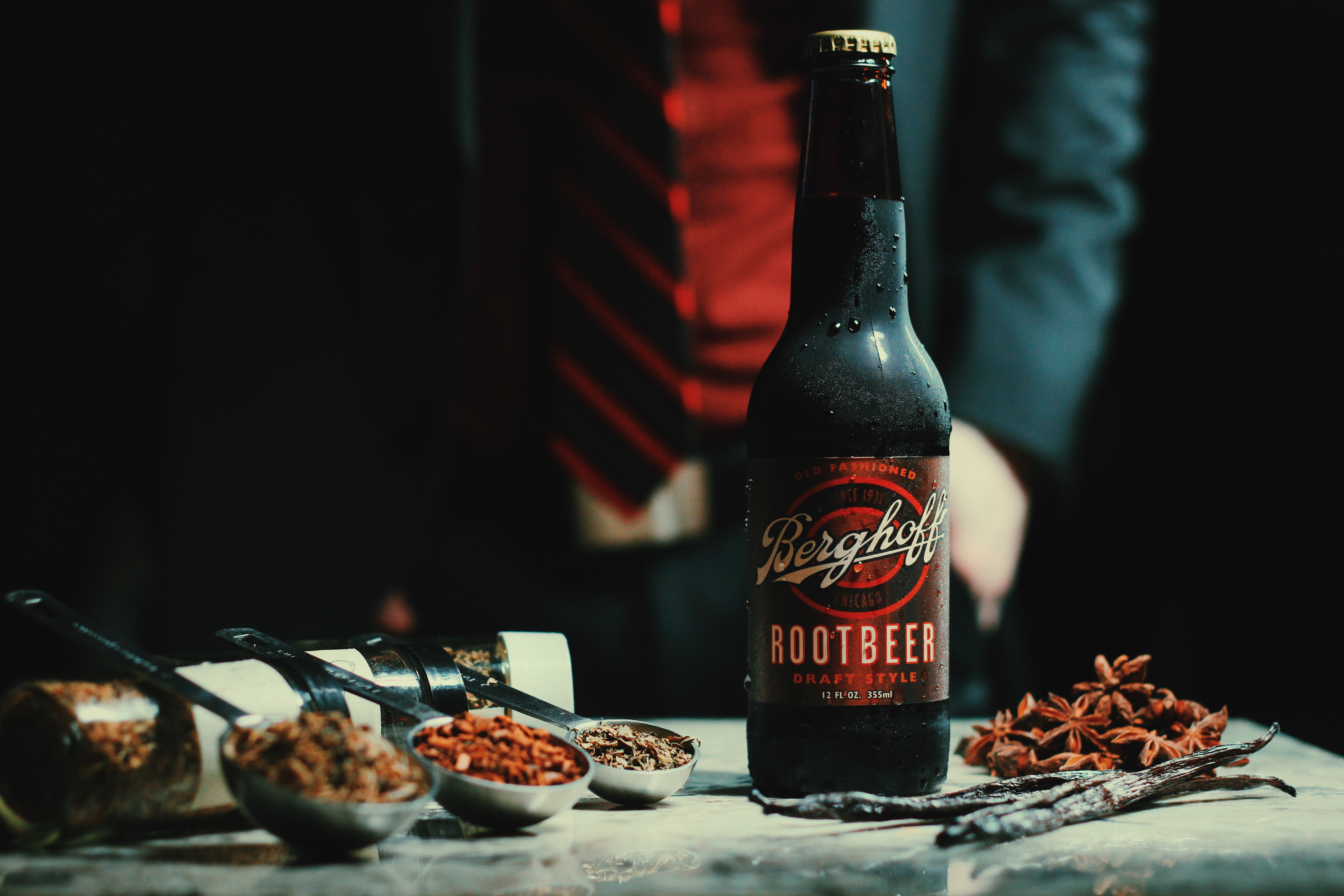
History: Berghoff Root Beer has been around, in one form or another, since 1933 during the era of prohibition. According to Berghoff Director of Sales, Ben Minkoff, back then the company produced a root beer-esque soft drink called “Bergo” to keep the company afloat along with a tonic. The beer dates back even further. It was created in 1887 by Herman Berghoff and his three brothers in Fort Wayne, Indiana. The brewery moved three years later to Chicago and was introduced to The Chicago World’s Fair in 1893. It remains a Chicago craft beer staple, though it does not have its own brewery under the Berghoff name. Berghoff beer and soda are made to order. Now the history behind who makes Berghoff is complicated, so keep sharp.

We’ll spare you with some of the initial details and start in 1960 with the Joseph Huber Brewing Company, where Berghoff soda and beer were then produced. In 2006, Berghoff beer and soda switched their production location again, this time to Minhas Brewing. According to Minkoff, to this day, Minhas produces Berghoff barreled root beer, but not regular beer. K? You still following? You might know Minhas Brewing because they too make their own soda called Blumers. In 2013, Berghoff beer, but not soda, changed locations again, this time to Stevens Point Brewery in Wisconsin. Stevens Point makes their own soda as well. Alright, to the four of you who read this far, you probably no longer want soda. You need alcohol. I get it. Let’s do shots after this. But first, a few facts about Berghoff Root Beer. Minkoff says it’s “all-natural, gluten-free, and made with pure cane sugar.” It was made to be a compliment to the company’s beer right down to the way you drink it. Minkoff adds, “We wanted it to taste as much as draft soda as possible” and describes its flavor as very “vanilla-like.” Berghoff also produces black cherry and orange sodas in addition to root beer. Lately they’ve been trying to appeal to both the craft beer and soda crowds by introducing their alcoholic “Rowdy Root Beer.” Minkoff ended our conversation making a bold claim about the company’s signature soda. “It’s the best one out there,” he says with a chuckle. We’re about to find out, Mr. Minkoff. We’re about to find out.

Where to get: To find the nearest physical location near you where Berghoff Root Beer is sold, use the company’s online locator. You can also buy it online from Beverages Direct  in 6-packs or Soda Emporium in singles.

Nose: Licorice; anise; sassafras root. Honestly, the smells on this are pretty mild. It’s got a pretty traditional root beer nose.

Taste: Wintergreen; licorice; anise; sassafras; birch oil; mild creaminess. All the flavors just mentioned are traditional root beer tastes. If you’re looking for a comparison, this is kind of a hybrid between Barq’s and A&W, leaning more towards the Barq’s flavor spectrum. The most noticeable element in this root beer is the mint, which is the first thing you taste and the strongest. Traditional wintergreen with maybe a little bit of spearmint too. The birch flavoring in this is strong as well. This was described to us as a vanilla-heavy root beer, but what we’re tasting is more of a bolder, dryer brew than a creamy one. There is a little bit of lingering vanilla near the tail end, but this is more brassy than velvety in mouth feel.

Finish: Mild vanilla with birch oil that rises off the tongue like fog.

Rating: Root beers can be very generally divided into either creamy or not creamy. Berghoff has created one that focuses more on bold flavors than lighter, creamier ones. A root beer like Berghoff would pair well with a velvety texture, aka vanilla ice cream. This is a great liquid pairing for your favorite ice cream in a root beer float. On its own, the flavors are pretty standard for a root beer. You’ll certainly notice the mint and birch elements. If you enjoy birch beer or root beers more mild in vanilla, I’d look into this one. If you prefer a root beer rich in vanilla with a thick creaminess to it, you may be let down. Personally, I think the mint would work better here if Berghoff played up one of the ingredients in the root beer that might compliment it more, like vanilla or perhaps nutmeg (not sure if nutmeg is in this). This root beer doesn’t list cinnamon as an ingredient, but I think it could really benefit from the sweetness of that particular spice too. With so many root beers out there, I’d put this near the upper middle tier. It’s solid and reliable. If you ask me, its best use is in a root beer float. Do it. I wouldn’t let you down.

Route 66: Orange Soda

History: Route 66 is arguably the most iconic stretch of road in the history of America. Officially replaced in totality by the current interstate system in 1985, its legacy lives on in many forms, from song to soda. “I know nothing about running a soda business, but I’m running it,” Alan Bruggeman says comically over the phone. Bruggeman, a lawyer, is the current owner of Route 66 Soda, based out of Wilmington, Illinois. Bruggeman purchased the business with a group of investors in 2006 from his friend Larry. The brand originated in 1996 after Larry consulted with Bruggeman’s mutual friend Scott Cameron. Cameron was an agent for several older blues musicians who remembered the nostalgia of glass-bottled soda working on the road along Route 66. Long story short, the two sought to recapture both the old-time feel of soda from the 20’s and 30’s while honoring the historic landmark highway. Cameron passed away in February of 2015, so Bruggeman took over the operation.

You’ll notice several famous Route 66 landmarks scattered across the bottles, including Dead Man’s Curve, Chain of Rocks Bridge, and the Wigwam Village Motel. The soda’s popularity is certainly on the rise. According to Bruggeman, Route 66 Soda is looking to double its production this year in addition to expanding its market reach. The company is currently in negotiations with a large national chain whose name was kept secret from us of over 300 stores. There’s even international interest. Bruggeman notes Route 66 soda is distributed in both Canada and Cyprus, with South Korea interested. The power of American culture, ladies and gentlemen. For the real sugar purists, fear not, Route 66 switched their recipes to pure cane sugar in 2011. Their etched glass bottles stand out amongst the crowded craft soda market place. Route 66 actually won the 2010 Clear Choice Award by the Glass Bottle Institute. Yes, that’s a real thing. The company produces five flavors: Route 66 Route Beer, Cream Soda, Black Cherry, Lime and Orange in order of popularity. I always got picked last in kickball in elementary school, so we went with their orange soda. Bruggeman adds, “The flavors are old fashioned like they used to be. I haven’t had anyone taste our sodas and say they didn’t like it.” Take that for what it’s worth7. We valued the opinion enough to give it a shot.

Where to get: Route 66 Sodas are distributed sporadically throughout the country with a majority of availability in the midwest. I know that does nothing for you, so order it online in your underwear at Summit City Soda or Soda Emporium.

Nose: Orange Lifesavers; bold candy orange.

Taste: Orange Lifesavers; tangerine; mild orange. This has a very distinctive flavor, but that flavor is more tangerine than orange. This is a bold soda. It has a distinctive rich, sweet tangerine flavors with subtle notes of orange hard candies. Not tart at all. The carbonation is very light and small. The sugar is distinct and coats the edges of the tongue as the tangerine citrus flows down the middle. Definitely not what you’ll probably be expecting. Not a traditional orange soda.

Finish: Mild acidic tangerine notes. Not much a difference from the soda’s body.

Rating: For a line of soda’s named after a highway in the middle of good ole America, Route 66’s Orange Soda tastes slightly exotic. In our opinion, it’s flavor is distinctively tangerine rather than orange. There are some subtle candy orange flavors that float about, but the richness and sweetness of the tangerine really come through in the flavor profile. Tangerines are generally bolder and sweeter in flavor than orange, which are sweet, yet tart. This soda possesses no tartness. To some, that will be an immediate draw. Others like an orange soda that bites back. You won’t find that here. This is surprisingly nontraditional. There’s certainly some familiar orange soda flavor in here, but if you’re familiar with the taste of a tangerine, you’ll understand this review much better. If this was called tangerine soda, it’d be four stars. If you’re up for an orange soda that’s off the beaten path, this is worth a try. We’re certainly intrigued by this offering from Route 66. It’s a brand that seems to be worth investigating. We’ll report back when we know more.

Apple Beer

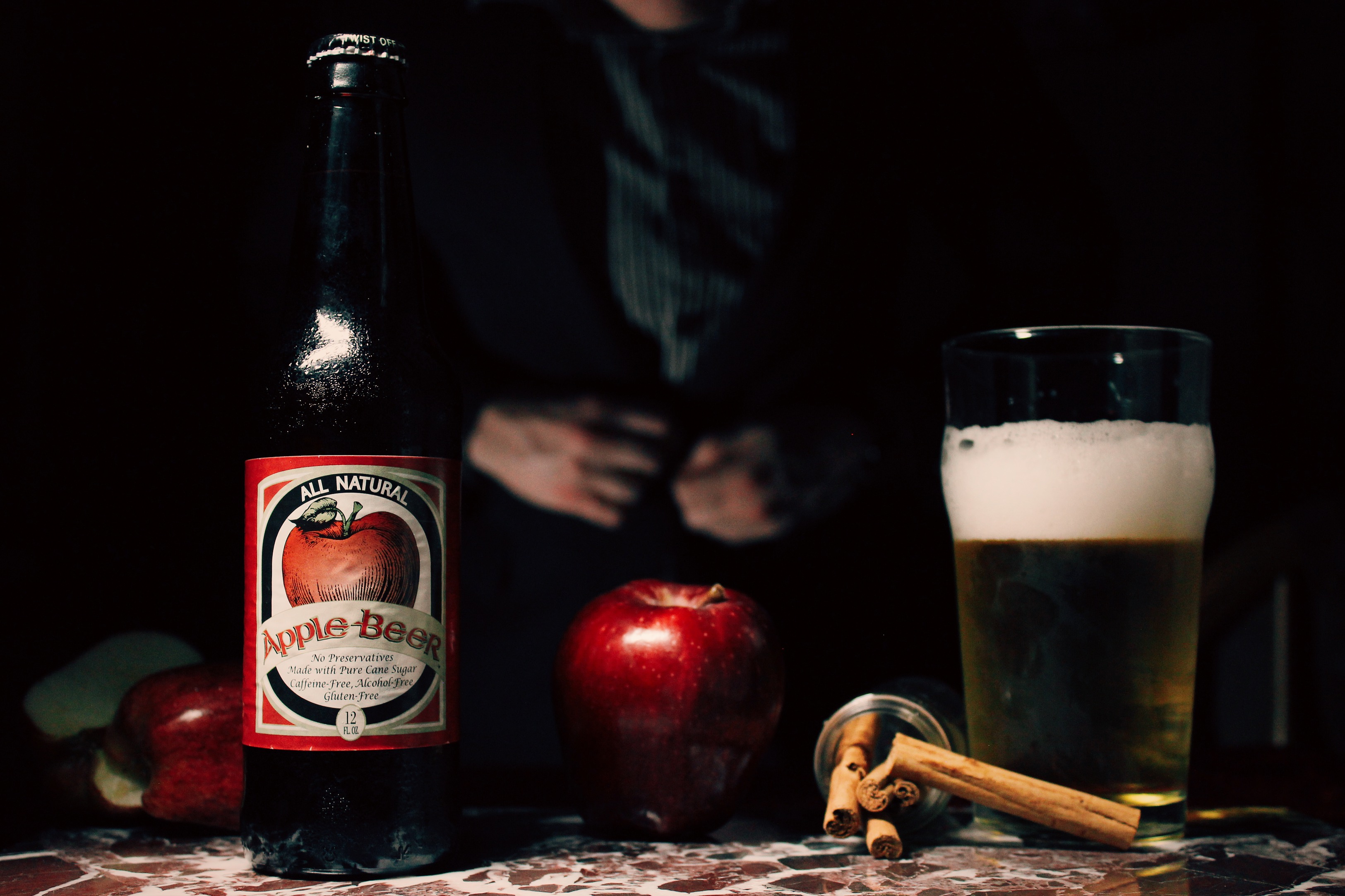
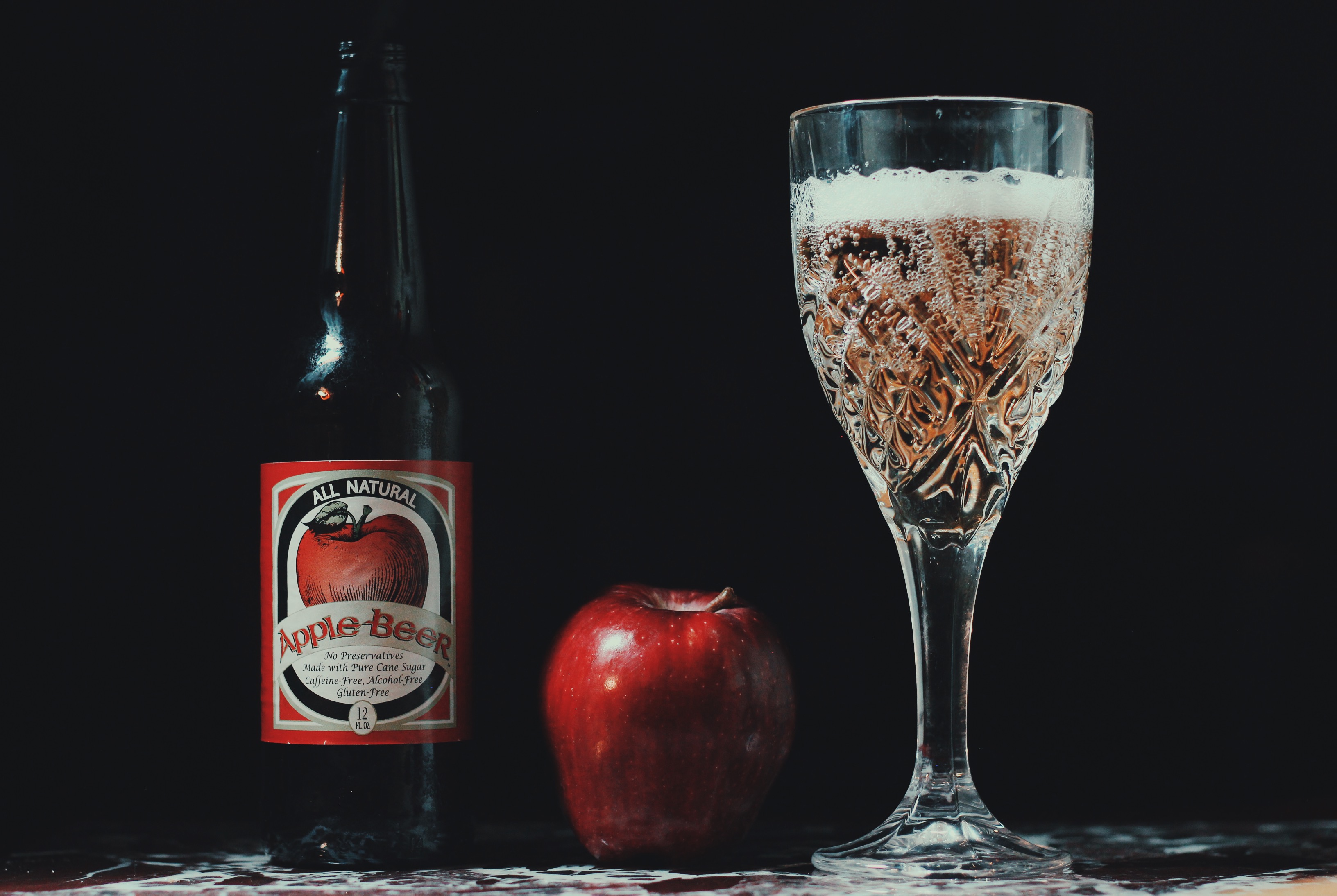
History: Throw your knickers on and bang your mugs together, ‘cuz it’s Apple Beer season in America. First of all, Apple Beer is not literally apple-flavored beer and contains no alcohol. In fact, it was designed long ago by northeast German “biermeisters” for those who didn’t fancy themselves a fine ale. So what is it, exactly? According to Apple Beer’s marketing director, Ashley Simmons, “Apple Beer’s flavor comes from an all-natural blend of fruit and herb extracts” with a flavor profile designed to be “light, crisp, and dry.” It has a foamy head, like a beer, and gets its crisp flavor from the peel of the apple. Don’t expect much beyond that. We tried and were greeted with the response “We can’t offer too many details.” That’s cool. I have secrets too. But legally, I’m not allowed to share them with you. With humble beginnings in Germany, today the beverage is exported around the world, from Australia to Curaçao. Apple Beer’s American debut came in 1964 in the “Intermountain West.” In this case, that means Salt Lake City, Utah. Apple Beer still maintains its peak popularity throughout western America. For you nostalgia enthusiasts, Simmons might tickle your warm and fuzzies by letting you know that “We have always been a family-owned business.” The family business is currently in its fourth generation. If you’re on the fence about whether or not to try Apple Beer, consider this: it has won the Best of State beverage award for Utah every year since 2010, including this year. It’s designed to be an all-natural antithesis to syrupy soda and is made with cane sugar and without gluten… so you can keep your fedoras on, hipsters. “With a half-century of experience, we have become a tradition in the lives of our many loyal customers,” says Simmons. Let’s see if they’re about to score some more loyalty.

Where to get: Apple Beer is distributed internationally and, obviously, across the U.S. To find the nearest retail location near you, use Apple Beer’s locator. It’s also sold online. For singles, try Soda Emporium. For 12-packs, hit up Apple Beer’s online store.

Nose: Acidic apple juice.

Taste: Apple; tartness; fig; raisin. First of all, no this doesn’t taste like beer or apple-flavored beer. That said, it does taste like apple, though the flavor isn’t what I’d call robust. Somewhere in the middle. Much closer to a carbonated cider than anything else, but not enough fizz to call it a sparkling cider. The apple flavor comes through in a burst at the beginning of each sip and is quickly followed by a cutting tartness that rides the back of your tongue likes surfer bros catching a wave. This is a dry beverage. The flavor profile is rounded out with notes of fig and raisin. Not totally sure where those come from. The ingredient label doesn’t list any spices, just “natural flavors,” but the fruitiness provides a nice balance to go along with the apple cider taste.

Finish: Tart apple cider that lingers for a few seconds, then fades.

Rating: Apple Beer is solid. It’s that friend you know you can count on at the end of the night to be your DD after you’ve stopped caring about how much your tab is going to be at the bar. Its flavor is unmistakably fall; it’s a crisply carbonated apple cider-esque soda you should be drinking as the leaves change color. So, of course, we reviewed it in July. Just a note: Apple Beer’s biggest season is actually summer, so I obviously know nothing. Apple Beer’s flavor also comes along with an acidic bite. Probably a little bit too much for me. I’d prefer to have seen the apple flavor increased and the tartness decreased. I also got some additional tasting notes of fig and raisin, and though I can’t place why, they were the best parts of the soda. This is definitely worth a try because it has a nice, familiar flavor that takes you straight to autumn. I’d estimate its likability will always be highest in summer and fall. In our opinion, this is cold weather soda. Revisit this in October.

Death Valley Soda: Sour Green Apple

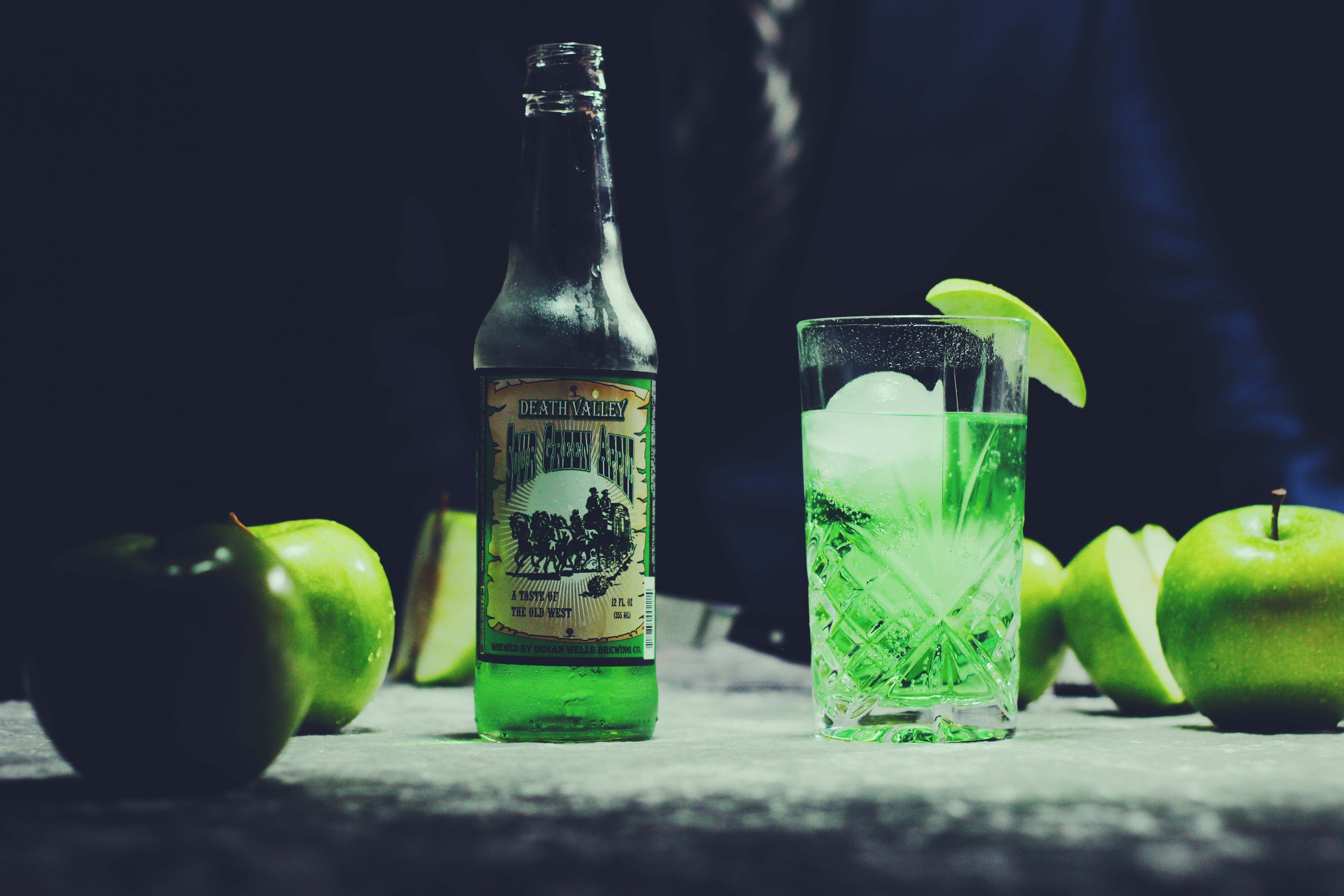
History: “We’ve been brewing beers for 20 years, but I’ve been brewing soda for 25 years,” says Rick Lovett, beer and soda brewmaster of Indian Wells Brewing Company. Lovett probably makes more soda than any independent bottler in the world. He’s currently trying to get up to 200 flavors spread out over various brands. He even wants to make the Guinness Book of World Records for it. But among all the concoctions, his signature line is the six-flavor deep, Death Valley Soda. Indian Wells Brewery is located in Inyokern, California, a small city tucked away in the hot, dessert climate of rural California, thus the name Death Valley Soda and the cowboy-influenced label. “It wasn’t any master plan. It just made sense,” Lovett jokes. The most unique flavor in the Death Valley Soda line? Sour Green Apple. Over the phone, Lovett recalls a story of his young grandson playing outside and sucking on a Green Apple Jolly Rancher. He reached his little hand up to his mouth, pulled out the candy, looked at his grandpa and said, “Popa, can you make this into soda?” Turns out he could. Death Valley Sour Green Apple is made with pure cane sugar and real Granny Smith Apples, as well as McIntoch and Pink Lady. As with all Indian Wells products, the soda’s most unique element is the water used in making it. The Indian Wells Spring is actually owned by the brewery. Its water is filtered through million of feet of granite; according to Lovett, thousands of gallons spill out to the surface every day. But the soda’s most noticeable feature is undoubtedly its bright green color that is remarkably 100% natural with no food dye used. If you think that’s hard to believe, you aren’t the only one. In order for Whole Foods to carry the soda, the natural goods supermarket made Indian Wells Brewing hire professionals to provide an independent chemical analysis on the product to prove the color was authentic. Wild stuff. “All of America is waking up,” Lovett says of the rise in popularity of soda made with quality ingredients. “I wouldn’t have produced a soda pumped up with additives and then given it to my grandson.” I understand, Rick. Now I’m about to pump this soda into me.

Where to get: Death Valley Soda is available for purchase at Rocketfizz retailers. You can get your fix online at Amazon for 12-packs. There are also online retailers selling individual bottles, but at the time of this review all were sold out. Give it a Google.

Nose: Green apple Jolly Ranchers; fresh-sliced Granny Smith Apples.

Taste: Green Apple Airheads; cane sugar. This is light. It certainly tastes like candy green apple. But the sour flavor that the label advocates is not present. A little bit of bitterness near the end that may come from the spices Death Valley uses, but no sour notes. The carbonation is soft. You can taste the cane sugar, but you can also taste some of the water’s influence in this drink. This is definitely very light, both in flavor and mouth feel.

Finish: Slightly bitter green apple. Definitely more of a bitter than sour sensation on the tongue.

Rating: Your nose and eyes always set the expectation for any soda. It shouldn’t just taste delicious; it should smell good. Whatever’s written on that label will also inevitably sway you. This smelled like Jolly Ranchers, and the word “sour” on the label would indicate there’s going to be some tartness. I anticipated this tasting like liquid sour green apple candy, hopefully with some fresh apple notes. That’s not what you get. The sour, tartness, bite – whatever you want to call it; it’s not there. You get some bitter notes on the finish, but there’s no punch to this. It’s light. A little too light. You definitely get a nice candy green apple taste in the flavor profile, but I was promised sour and did not get it. This is a beautiful green color. One of the prettier sodas in hue I’ve come across. But I feel like I got lied to here. If this was labeled “green apple” as opposed to “sour green apple,” I’d maybe rate this higher. If you enjoy apple-flavored things or are just a big proponent of fruit sodas, this is worth a shot. If you’re looking for something that makes the sour detectors on the back of your tongue flash red, you won’t find it here. Death Valley has made a fine apple soda, but the name on the label needs a little work.

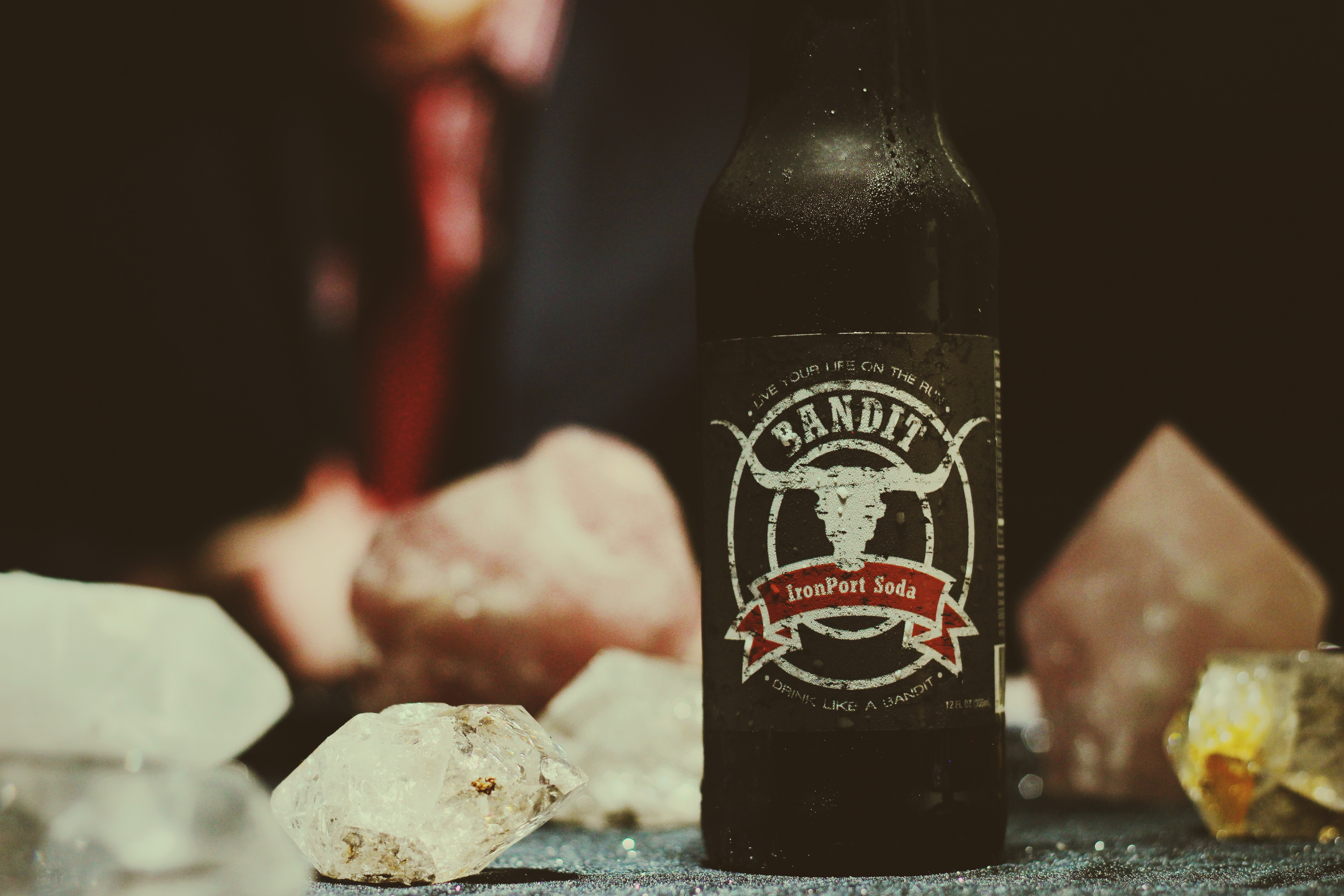
Bandit Beverages: IronPort

History: The Coelacanth is one of the most unique animals you’ll ever come across. Thought to have been extinct for 66 million years, it reappeared in 1938 to the surprise of the world. To this day, most people still don’t even know it exists, yet it’s an important example of the many mysteries within our world. What if I told you in the world of craft soda, there’s something out there that’s basically the equivalent of the Coelacanth? What if I told you there’s a soda out there that barely clung to life throughout the late 20th century, but is being reintroduced? What if I told you its creators knew literally nothing about soda in 2013 when they had the idea to bring it back? All of this is true. It’s called IronPort, and it’s the entire reason the Northern Utah-based Bandit Beverages exists. The company’s manager, Cameron Green, explains, “We wanted to find a way for those who haven’t tried this ‘cult’ soda a chance to, and give a chance to those people from the 50’s 60’s etc. a chance to have a soda they probably haven’t seen since they were kids or teens.” IronPort is rumored to still be a favorite in the Mountain West region of America, especially Utah and Idaho, according to Green. Unless you’re from around there, you’ve likely never heard of it.

Listen, the soda might as well be called ???. There’s a lot of mystery behind it. I’ve heard it called root beer combined with cream soda. I’ve heard it called root beer with Caribbean spices. You won’t find much information online. Is it still popular anywhere? Is it mixture of two sodas? Is it a flavor? Is it a style? Will it cure that thing I caught in a South American club last month? We asked some of these questions to Bandit Beverages, the only producer of bottled IronPort we can find. And even they won’t budge. “Can’t answer that without saying too much,” Green says with a coy smile. (I only assume this because he attached a 🙂 at the end, the kind of smiley face that girls text dudes to let them know something good is happening that night. You know what I’m talking about.) The most we could get out of them is that they’re trying to keep it “as close to the original” as possible and that “IronPort is the flavor, just the same as grape is a flavor, etc.” The one snag that may raise eyebrows to craft soda lovers is that Bandit Beverages makes their IronPort with high fructose corn syrup as opposed to cane sugar. “Since we were a young company we were trying to keep costs down, we were basically being cheap, which was a big mistake,” Green adds. Bandit Beverages acknowledged to us that they are currently in the process of switching all four of their sodas to pure cane sugar. We couldn’t resist the mystery. This should be an experience.

Where to get: Bandit Beverages sells IronPort directly via the company’s website. As of now, you won’t find it anywhere else, so you might as well snatch it up.

Nose: Bubblegum; spices; something akin to the smell of an orange freeze.

Taste: Bubblegum; orange; nutmeg; vanilla; creaminess. On first taste, this is a bit puzzling. IronPort certainly tastes like its own category. It’s sweeter and creamier than most sodas. If you drink a lot of higher-end soda, you’ll notice it’s a bit syrupy. This is because of the high fructose corn syrup used instead of cane sugar. The most prominent flavors that come through after a few sips include bubblegum and orange. This tastes more like a bubblegum cream soda infused with orange than a spiced root beer. That said, this doesn’t taste like an orange cream soda. It tastes like creamy bubblegum infused with floral orange and vanilla. Not the traditional orange soda flavor profile, but much softer. There’s definitely a nice creaminess to this and there are some additional flavorings in here that impart an orange flavor, perhaps spices. Some of those could include allspice, nutmeg, and/or cloves. As you can tell, this is hard to place. One of our team members said they even tasted some rose hips in there. There’s also definitely vanilla. That likely explains the creaminess. Bottom line: Smooth, sweet bubblegum cream with notes of soft orange, vanilla, and maybe some spices.

Finish: Creamy, yet slightly bitter orange.

Rating: Even after an entire bottle, IronPort remains mostly a mystery to us. Closer to a cream soda than root beer; this is in its own category. It’s not a variation. It’s a flavor in itself. There’s a creamy bubblegum body with notes of aromatic orange, yet I wouldn’t label this as being even close to an orange cream soda. There’s some sort of spice influence. Perhaps some nutmeg. Definitely vanilla. Maybe even some cinnamon. These are impossible to place in absolute terms, but something is causing that orange flavor. IronPort is very smooth with a nice creaminess. One area it lacks in is mouth feel. Bandit Beverages elected to use high fructose corn syrup and it leaves a syrupy taste at times. The company has said themselves they plan on switching to cane sugar in the near future. Once that move is made, I think IronPort’s flavor will greatly improve. Cane sugar provides a crisp sweetness as opposed to the thickness you taste with corn syrup. Like a majority of women, I may never understand IronPort. But its elusiveness, its mysterious standing in the world of craft soda, is something that should appeal to any soda connoisseur. Bandit Beverages, while a young company, has made a veteran move to resurrect an old favorite of which many haven’t heard. It’s nostalgic, yet abstract; classic, yet foreign; familiar, yet so peculiar. This is one you’ll want to put a check mark next to on your soda resume.

Americana: Honey Lime Ginger Ale

History: The Americana line of sodas is produced by a giant retro soda bottler known as Orca Beverages. Orca came about in the 1980’s and was founded by Mike Bourgeois in Mukilteo, WA, an affluent suburb of Seattle. The first brand they produced was their very own called Orca Sparkling and “contained over 50 percent juice sourced from Northwest juice processors.” Orca no longer bottles their own name brand, but they’ve expanded to become one of the biggest craft soda bottlers in the country. They’ve partnered with over 100 brands to produce their sodas, including classics like Dad’s Root Beer, Moxie Original Elixir, and Bubble Up. According to CFO Charles Funk, Americana is now the company’s flagship brand with 11 different flavors. The Americana bottles used to feature old presidents on the label. Personally, we’re not sure why they abandoned such a neat idea. But I’m also not sure why I’m on my third marriage and sleep on the couch half the time. In the words of the company, the brand is a throwback to the time of “soda fountains, sock hops and five-cent sodas.” You can’t even get a disease for five cents these days, much less soda. But you get the idea. Orca Beverages is steadfast in their emphasis on quality. Says Funk, “One thing about our whole line of sodas we produce is that we use the best ingredients we can find,” even if it means paying more. The company employs their own “Tasteologist.” So do we. We’re called Five Star Soda. Today, it’s honey lime ginger ale made with premium honey.

Where to get: Americana craft soda from Orca Beverages is distributed world-wide and easily found in stores that sell glass-bottled sodas. Americana is one of the more popular craft soda brands, just a touch below Boylan’s, Virgil’s, and Jones. You can find it online at Summit City Soda (better pricing) or on the company’s website. You can also purchase single bottles at Soda Emporium.

Nose: Ginger; honey. Maybe the first soda made with honey I can actually smell in the bottle.

Taste: Ginger; mild heat; honey. This is spicier than you expect it to be for a ginger ale with the word “honey” on the label. It’s light like a ginger ale with enough spice to call it a ginger beer. Probably a 7 on the heat scale with spice that lingers on the tongue. Some of that may be from the citrus of the lime that causes the heat to stick. It takes a few sips to adjust before the honey really comes through. After that initial heat, this becomes quite a sweet ginger ale. Almost too sweet at times. The spice of the ginger and the flavor of the lime form together to create a pepper-like heat. This is a ginger ale that’s definitely sweet with lingering spice.

Finish: Light honey immediately followed by peppery spice.

Rating: Americana Honey Lime Ginger Ale is an interesting take ginger ale and probably won’t fit the preconceived notions of taste you might have about what’s in the bottle. It’s quite spicy, but not the traditional gingery fire akin to ginger beers. No, this tastes like it has some kind of pepper in it. It’s a little too prevalent for me. Yet at the same time, this is also sweeter than most ginger ales. It’s an odd combination of sweet and spicy. The lime doesn’t quite come through in the flavor profile all that much, but that doesn’t really bother me. I just keep coming back to the sweet vs. heat. It feels like a struggle over which one should be more bold on the palate as opposed to working in tandem to create a balanced flavor profile. This is worth a try simply because it’s different, but it could use some tweaks. One thing I will say about this soda is that it benefits from being on ice as opposed to sipping straight from the bottle. There are better ginger ales out there, but you will please your inner soda connoisseur by trying one this different.