There’s something magical about cracking open an ice cold glass bottle of soda and drinking it down, filling you with nostalgia and sugary satisfaction. For a long time that feeling was lost as soda’s popularity plummeted due to society’s growing concerns about the chemicals and unpronounceable mysteries on the ingredients label. But now, young and old pioneers of the beverage industry have reintroduced your favorite fizzy treats in new ways, with a new identity: they call it craft soda. And the craft soda business is booming. So before we get into the heart of what we’ll be doing at Five Star Soda, we wanted to fill you in about what craft soda is, why it’s quickly rising in popularity and why the hell some weirdos on the Internet made a review Web site about it.
-

-
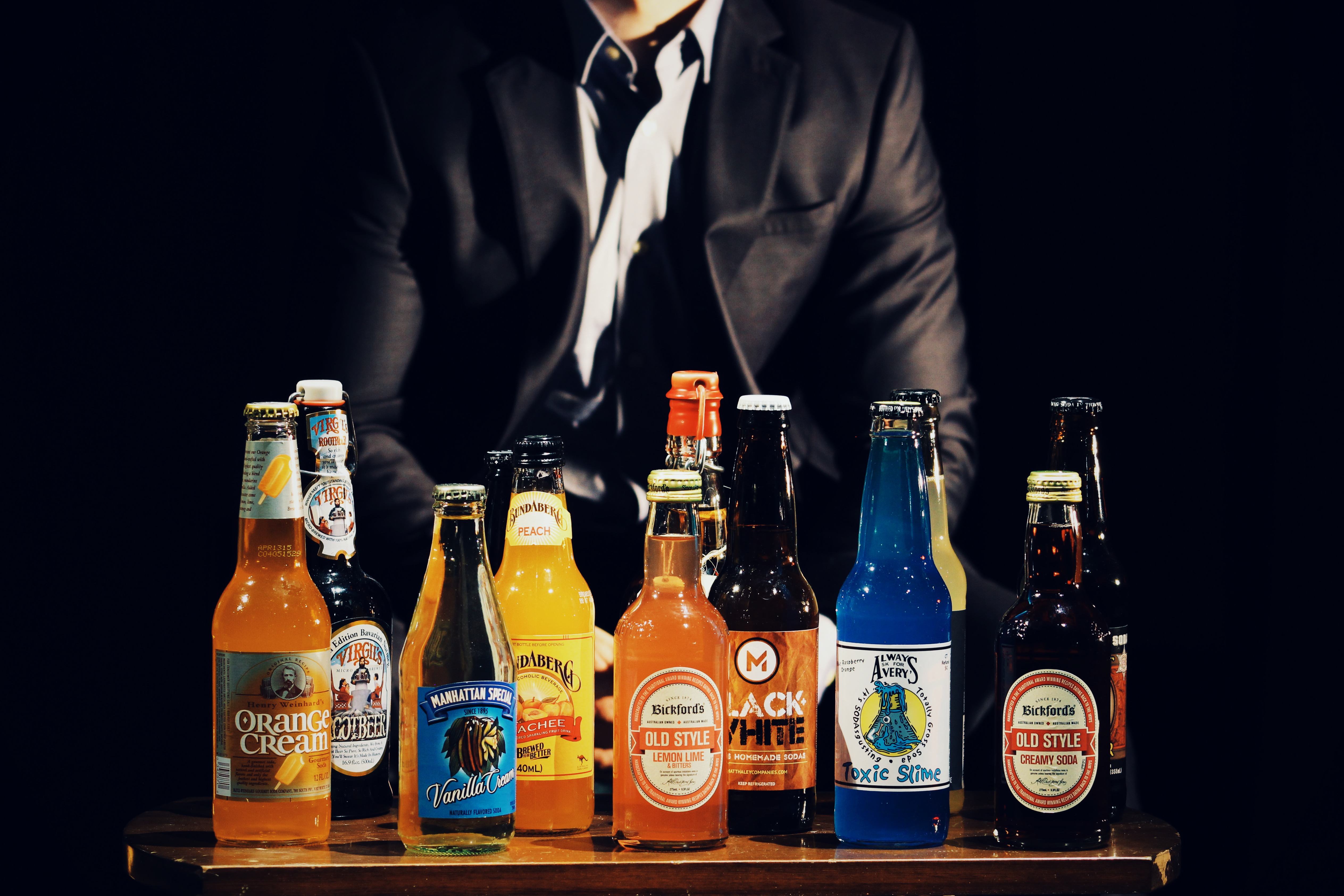
There’s no shortage of choices.
What is it?
Craft sodas are simply made to taste better. They’re usually in glass bottles. Most of them have a vintage feel. And if you ask around, connoisseurs will tell you craft soda retains several principles that make it different, namely the ingredients used and how it’s made.
“Craft sodas tend to be more unique than mass produced sodas especially when you consider the flavor profiles and ingredients used.”
– Freya Broughton | Grand Teton Brewing Soda Program Manager
Good soda is simple. You know what the main ingredients in soda are? Carbonated water and a sweetening agent. In the craft soda world, if your sweetening agent isn’t cane sugar, you’re basically the devil. It’s a standard. If a company uses high-fructose corn syrup, the rest of the ingredients in their bottle better start with holy water and end with liquid gold. The quality of ingredients matter to craft soda drinkers. They matter just as much to the bottlers. Take it from David Yudkin, the owner of Hot Lips pizza in Portland, OR, who produces a line of sodas known for using real fruit: “It really is a point of differentiation…. Using fresh ingredients, you have an opportunity to create a relationship with the customer.” Quality is a word closely associated with craft soda. Natural flavorings, pure juices, 100% [insert whatever]… these are descriptions often used to describe craft soda ingredients. Apart from cane sugar and water, ingredients like honey, spices, 100% fruit juices, and homemade syrups are commonly used. Many are often void of preservatives. You won’t see sodium-hydrowhatthehellisthisgoingtodotome5g4m or other weird chemicals in craft sodas. But remember, because craft sodas are of higher quality, they’re often more expensive and elusive than that can of colon coater you guzzled with your hot dog last month at your weird neighbor’s barbecue.
How craft soda is made also differentiates it from the bigger retailers. And it’s almost always smaller, local operations cranking out the best stuff. Some companies might employ 50. Some might employ two. The latter is way more common. Much like craft beer, craft soda is brewed in small batches and not mass manufactured. In fact many companies, like Sprecher, actually make their sodas using methods and equipment originally designed for brewing their beers. The similarities between small-batch soda and alcohol are actually surprising. Take Bundaberg for example, an Australian company famous for their ginger beer. According to the company’s international brand manager, Daniel Flecker, “Bundaberg Brewed Drinks can take up to 7 days to brew a delicious craft soda” due to fermenting the cane sugar with yeast and maturing the beverage.” Pretty wild, huh?
-

-
The nostalgia factor… it’s real.
Why is it popular?
Taste. Perception. Variety. $$$. First and foremost, people drink craft sodas because they taste better. They taste authentic, but just as important, they feel authentic.
“Everyone likes a treat and…. quality soda fills that yearning for something special.”
– Charles Funk | CFO Orca Beverage
Perception is key in the craft soda movement. People love that old school feel, the nostalgia, at the heart of soda. It resonates with Gen Xer’s because they grew up with those vintage sodas in glass bottles and it appeals to millennials because the younger generation gravitates to what feels genuine. What could be more genuine than a little carbonated water, sugar and natural ingredients made by local folk like you and me? (Can’t you just feel your inner hipster coming out? Let’s do yoga and get fair trade coffee after this.) Today’s generation asks “what’s in this?” and if they don’t know, you’re probably not getting their business. They want real. As Broughton says, “Higher quality ingredients market your product for you.” Case and point, Grand Teton Brewing is one of several soda companies famous for using natural water. Specifically, they use “glacial run-off filtered 300-500 years with Teton Mountain granite and limestone” Honestly, do I know what that really means? Absolutely not. Do I want to try it now? Yes, in fact, I need to. Craft soda is no doubt a niche market, but it’s popularity continues to fizz. New, local bottlers are popping up everywhere, from Waynesville Soda Jerks on the east coast to Doggone Good Soda on the gold coast. It’s all cause and effect, supply and demand. People are ready for it, so new craft sodas makers are creating more products for public exposure. I think Flecker put it well when he said, “Consumers love the idea of drinking a beverage that ‘they have discovered.'” And there’s plenty to discover. The flavors are endless. From staples like root beer and cream soda to Toxic Slime and chai cola; there’s bound to be something out there for you and more than enough to experiment with. Just be careful, experimenting has created a lot of weird memories for me.
The use of higher quality ingredients to be different, production in small batches, local bottlers, a target audience of connoisseurs… do these principles sound familiar to another craft bottled product? Maybe one that defines your Friday nights and haunts your Saturday mornings? Beer. I’m talking about beer, craft beer in particular. Craft beer has exploded over the past few years, so much so that it’s really affecting sales of mass-produced water lighter beers. It’s undoubtedly accounted for a portion of craft soda’s rapid ascent as the newest cool kid in the beverage industry. Many craft beer brewers are actually getting in the craft soda game too as the next logical step. A quick google search of craft soda brewers will reveal the link. And why not? As Stevens Point Brewery operating partner, Joe Martino, points out; soda can be produced relatively quickly and turns a higher profit margin than beer. Even the big boys are getting in on it. Pepsi recently introduced Kaleb’s Cola, a soda void of its parent name and marketed to the more sophisticated soda drinker. This more than any other industry move is probably the greatest proof that craft soda has arrived and is here to stay.
-

-
We like this stuff. We hope you’ll like us.
Why are we covering it?
We’ve always gravitated to what was different, like cream sodas or ginger beers, since we were little. It wasn’t until two or three years ago that people started calling the sodas we liked “craft,” but I guess everything needs a name. Like so many people who love this stuff, it’s sentimental to us. And we felt like it wasn’t being talked about enough online in a proper forum. But I don’t think it would be fair to not acknowledge a couple sites out there who review sodas/beverages that hit on this subject. So check out Thirsty Dudes and The Soda Jerks. With craft soda really hitting its peak, new bottlers are coming up with fresh takes on old flavors and veteran bottles are using old production methods to create new ones. We want to be a resource where people can come and find out what it is they’re be getting in that bottle. Because let’s face it, you pay for what you get and some of this stuff is expensive. Hell, I’ve seen premium craft sodas retailing anywhere from $10-$32 dollars. I’m gonna need some intel if you want me to fork out that kind of cash.
We think every soda has a story. We’re here to tell them.
It’s an incredibly exciting time in the world of craft soda. We’re not afraid to be a little smug in saying we think craft soda is better than its mass-produced counterparts and should be portrayed as such. We’re a classy bunch around here. We plan on presenting ourselves in an upscale fashion. #CraftBrewedCraftReviewed, as we say. But I think we’ve said enough. There’s your history lesson. If you read this far, congratulations, you’re clearly not one of my ex’s. Stick with us. We’ll review some good stuff. We promise. Every soda has a story. We’re here to tell them. Cheers.




 Five Star Soda