Three Stars

164 Soda Co.: Tree Climber

History: Josh Carnell and Frank Schiffner are soda vloggers… because that is a thing.

In talking with Carnell, he told us the two of them literally just bought some Frostie’s and Bundaberg soda, filmed themselves drinking it with commentary, and a month later became Rocket Pop Stop reviews. “We had no idea what we were doing,” he says. You’re probably not surprised these are the guys behind 164 Soda Co… because why the hell else would we be talking about two strange dudes on the Internet? It’s cool though. We like to get weird too. Carnell is a dreamer. He’s always wanted his own soda shop. Lately though, the dream has been about creating rather than just selling. “I wanted to try my hand at making my own soda,” he says. Turns out filming yourself drinking soda makes you thirsty for what your own version could be like. “Honestly, I think a lot of it had to do with the videos we had done. We really wanted to go deeper about what is special about these sodas.” But first, the St. Charles, Illinois boys needed a name for their potential new company. Carnell reminisced how the two met each other in St. Charles East High School in 2010. It was room 164. Carnell recalls his buddy “looked a little chubby.” Ouch. Regardless, room 164 became the impetus for the two’s label as a soda company. Carnell started experimenting with strawberry soda in January 2014. Fast forward to March 2015 and the two dudes began the soda creating process. Their goal is to break the mold of people who are turned off by stereotypical soda. They’ve visited several craft soda bottlers, like Canonborough Beverage Co. and Gents Ginger Ale to try to gain insight on what the cool, new bottlers are doing. After a few tries in July of 2015, they concocted what just might become their signature soda: Tree Climber. It’s a take on a German beverage called “Fassbrause,” which is essentially a nonalcoholic apple cider drink. Apple Beer was also inspired by Fassbrause. 164 Soda Co.’s version is tweaked a little from the original. Its main two flavors are apple and ginger. When asked about which one is stronger, Carnell says “we’ve found that you seek out the flavor you taste.” He adds that the duo is trying to take soda and make it sophisticated. Hmm, that sounds familiar.

Where to get: Currently 164 Soda Co. is just sold at markets around the St. Charles, Illinois area. The hope is for the company to expand into local bars and restaurants. For now, if you’re interested in what the company is brewing up, shoot them an email at 164sodaco@gmail.com.
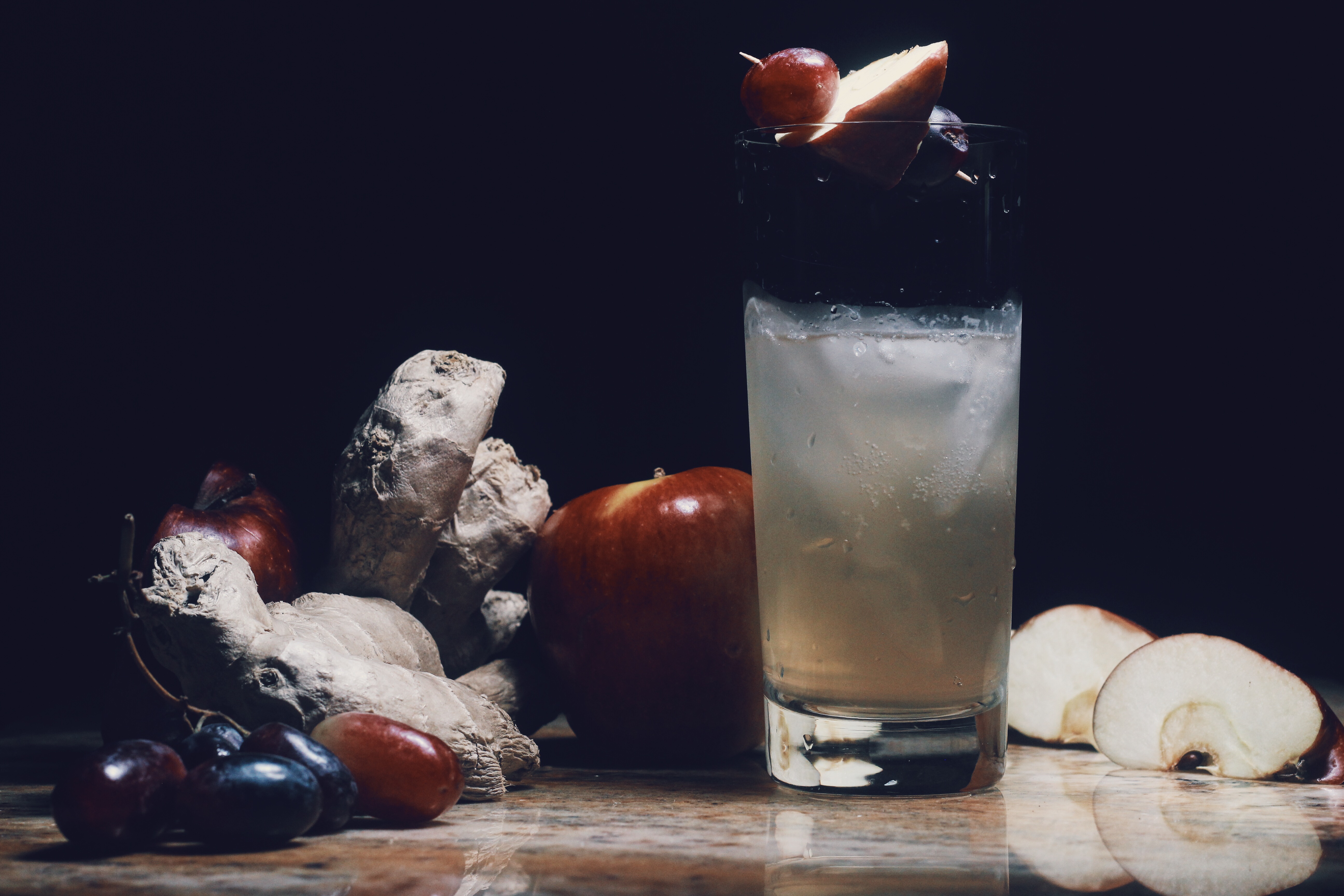
Nose: A bit of a sour cider smell reminiscent of alcoholic ciders. The more you waft the bottle under your nose, the more the sweet apple juice smell opens up. Definitely smells like it could be tart.

Taste: Earthy; apple; acidic; mild grape. This has a very earthy taste to it. The sweetness is minimal, almost nil. It really does kind of taste like an alcoholic cider with the ethanol stripped away. It’s strange in that it doesn’t taste alcoholic, yet definitely isn’t sweet enough to meet the definition of a traditional apple cider. It’s a dry soda. Kind of a beer flavor to this too, but it’s sweeter than beer. First thing’s first: it’s tart. The tartness comes from both the apple and ginger. You taste both flavors off the bat, apple more so, and they’re both gift-wrapped in a bow of acidity. An interesting tasting note is malt, like in beer. It’s interesting because there’s none in here, yet the flavor remains. Almost a hop taste too, but not quite. If you go searching for it, there’s a grape flavor in here as well. But what you’re going to taste strongly is an acidic, almost beer-like, earthy apple juice, devoid of sugar, with a pinch of ginger.

Finish: Savory apple with subtle notes of licorice.

Rating: Tree Climber is definitely not from a soda universe that feels familiar. No, this feels like it was imported from a far away land. You’ll taste essentially no sugar and a lot of tartness, two elements that usually don’t pair in soda in that order. The defining flavor here is raw apple juice with a zing, accompanied by mild ginger. I am wondering if the ginger absorbed all of the apple’s natural sweetness because it’s odd to taste this much authentic apple without any sort of sweet relief. Very subtle grape notes dance about near the end of each sip, as does a light licorice taste that most probably won’t even notice. This would really benefit from some added sugar. I wish I had the power to add it to the recipe because I think it would take Tree Climber to the next level. As currently constructed, Tree Climber is like all my past relationships: too bitter and not my fault. It tastes more like a carbonated juice blend to me than a soda, yet it really tastes like something else entirely. I have to hand it to 164 Soda Co. in that Tree Climber is based off of what is essentially a German apple beer, and this definitely tastes like a beer with authentic apple flavor and some added mild ginger. So I think they accomplished the basic framework of what they intended to create. I’m just not sure it’ll fly off shelves with soda enthusiasts without more cane sugar in the recipe. Tree Climber is worth a shot because you’re simply not going to find an American soda with a more foreign taste than this one. We just wonder if we’ve actually seen its final form.
Three Stars

Lakefront Brewery: Golden Maple Root Beer

History: We all remember the intense rivalries with had with our siblings. I mean, to this day, my little brother has to call me king at all family gatherings because of the backlog of blackmail I have against him. But those are the memories you’d never trade. Well, the Klisch brothers did decide to trade their sibling rivalry… for a partnership in craft beer making. They call it Lakefront Brewery. The brewery’s tour administrator and manager of environmental programs, Chris Ranson, tells us the the story. It’s a simple one. Jim Klisch decided he wanted to see what home brewing was all about. Humored by his brother’s interest, Russ Klisch bought him a book on the subject. Jim did his homework. Turns out, Jim could brew a mighty fine ale. And Russ was like aw, hell nah. So Russ, too, made his own beer. After going back and forth on tasting trials with friends and family, the two became convinced they had a talent for beer brewing. In 1987, they founded Lakefront Brewery in Milwaukee, Wisconsin. To give you an idea of its success, consider this: in 1988 the brewery turned out 72 barrels of beer; in 2012, that number had grown to 33,368 barrels. After several years in the business, Ranson says the brothers came to the realization that “people need an alternative to alcohol.” Root beer, as is often the case in breweries, was the logical choice to them. But they wanted to make theirs a little different. Ranson tells us how big maple syrup is in Wisconsin. We weren’t aware, but apparently Wisconsin is the fourth-largest producer of maple syrup in the U.S. behind Vermont, New York, and Connecticut. So in 1995 Lakefront Brewery decided to make a maple root beer using locally-sourced maple syrup. The root beer is made with pure cane sugar and does not use artificial coloring. This results in the root beer’s signature “golden” hue. Ranson tells us it’s “very sweet” and “definitely root beer,” but adds the maple flavor gives it a taste “somewhere between a root beer and a cream soda.” We’re not sure what to expect. This is either going to have a flavor identity crisis or it’s going to be something pretty special.

Where to get: In addition to being sold at the brewery, Golden Maple Root Beer is sold sporadically at Wisconsin Whole Foods, and is a big player at Milwaukee state fairs and farmer’s markets. If you aren’t in the area and want to try it, the company does do custom orders. Just know the shipping will be pricey. Contact Lakefront Brewery directly here.

Nose: Sarsaparilla root; mint; vanilla; spice. All in all, it’s a pretty standard root beer smell with maybe a little more emphasis on the spices. You can smell the maple a little bit, but I assume that’ll come through more in the taste.

Taste: Sugar; sweet bite; maple; wintergreen. What you taste immediately is sugar. This is sweet. Despite that, there’s actually a pretty decent bite to this – but again, it’s a sweeter bite than in most root beers. What’s strange about this is the initial flavor you get when sipping. It’s probably just how the maple interacts with the rest of the ingredients, but I swear this tastes kind of like ginger ale when it first hits your lips. The maple flavor comes through more after you drink the root beer. You’ve gotta get through a few sips of sugar-coated spices before you taste what this root beer is all about. Don’t think maple syrup. No, it’s more like a spiced root beer with added maple flavor, yet the spices don’t let the maple completely overtake the flavor profile. What I’m saying is you can taste the maple in this, but it isn’t overpowering. If this didn’t have maple syrup in it, I think this would be a particularly robust-flavored root beer rich in spices, so the maple acts as kind of a mellowing agent. This has decent balance between the maple, spices, and wintergreen mint flavors, but it retains an above average sweetness.

Finish: Slightly creamy vanilla and maple. The best part of the root beer.

Rating: Lakefront Brewery’s Golden Maple Root Beer is an oddball. But being weird isn’t always bad. I’m weird. I’m also still single, but there’s not necessarily a correlation there. Right? Right, guys? This isn’t going to overpower you with traditional root beer spices and extracts. You taste some sarsaparilla. You taste some wintergreen. But this root beer isn’t about being traditional; it’s about showcasing its maple flavor. After wading through a sea of liquid sugar on the first few sips, you’ll taste that maple influence. When mixed with the spices that are in here, it’s noticeable, but not particularly bold. If you go into this wanting a strongly maple syrup-flavored root beer, you’re in for disappointment. This is just a fun soda to try because there really aren’t that many maple root beers out there, and there are even fewer with a pale yellow color like this one. The biggest shortcoming of this root beer is its sugariness. Generally in root beer, sugar isn’t something that is so striking because of all the spices that counter the sweetness. But when the two most noticeable ingredients you taste are sugar and maple syrup, I mean, it’s a lot to handle. This needs more of a traditional root beer bite to balance out all that sugar. I’d suggest more of a mint flavor too. Nothing that would drastically change its identity, just little tweaks to help reign in my impending diabetes. That said, if you like sweet root beers, you might just find a favorite here. Bottom line: Lakefront Brewery’s Golden Maple Root Beer probably isn’t one you’ll drink all the time, but it’s a fun change of pace for the craft soda enthusiast.

Three Stars

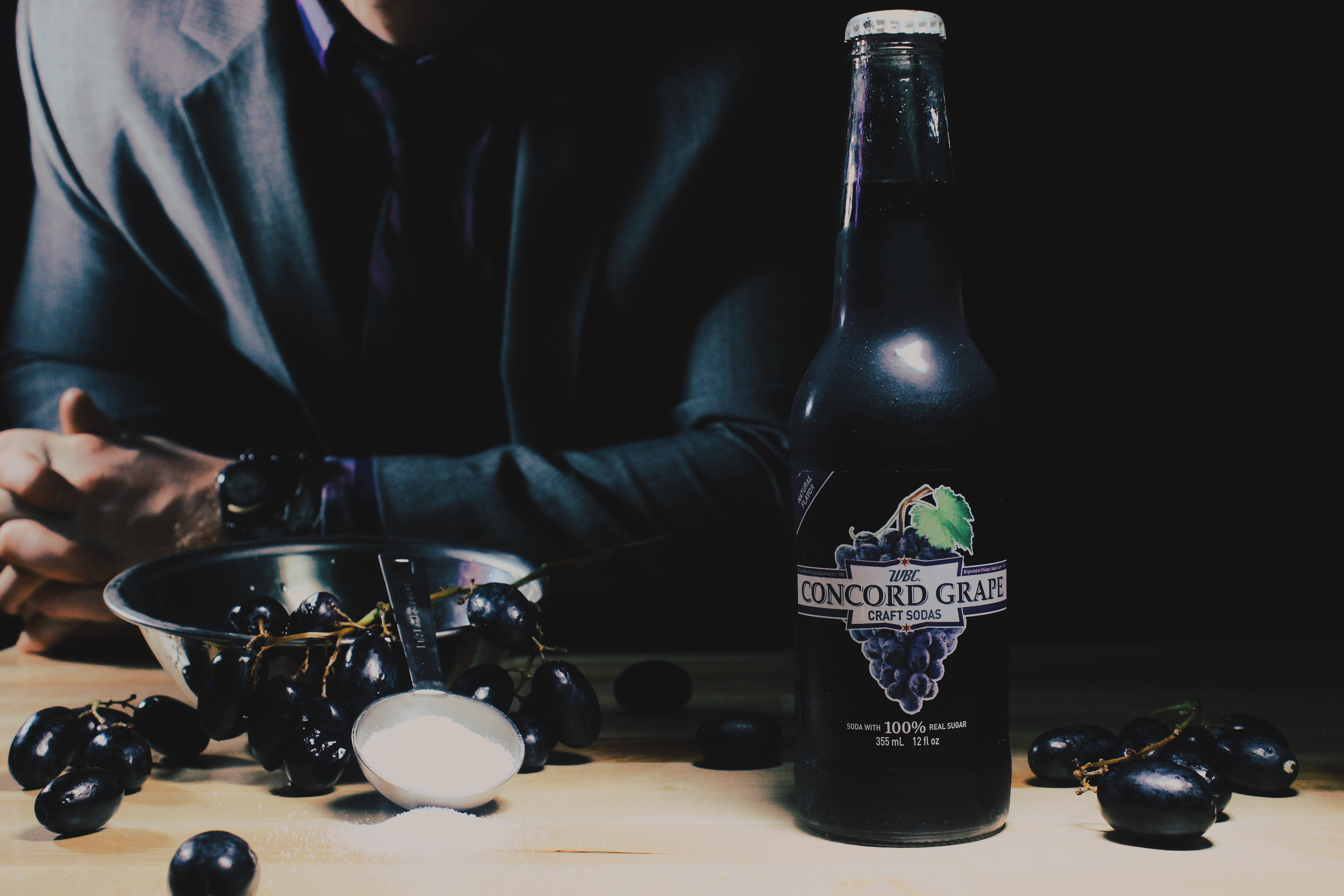
WBC: Concord Grape

History: Chicago’s famous Goose Island Brewery is arguably the most popular place to get local beer in the city. I know I remember the beginning of many fond nights there. Not so much the end. The Windy City brewers started making their own Goose Island Root Beer in 1988, according to WIT Beverage Sales and Marketing Director, James Akers. The brewery eventually added diet root beer, Orange Cream, and Concord Grape, but they also realized the success of their beer was taking away time from focusing on their soda. This is where WIT Beverage in Redding, California comes into play. Akers tells us Goose Island was “chasing money for soda and getting it easily for beer.” Goose Island needed an outside bottler to produce it and in 2010 WIT Beverage stepped in to do the job. In order to meet the quality of the original Goose Island Root Beer WIT reformulated the recipes of Orange Cream and Concord Grape with “all-natural ingredients,” and introduced two other flavors in Spicy Ginger and Vanilla Cream. The other main difference is the name change from “Goose Island” craft soda to “WBC” craft soda. Akers says Concord Grape was originally introduced in 2006. After its recipe was altered, he says WIT spent considerable time trying to ensure it tasted cleaner and crisper than other grape sodas. “We spent a lot of time making sure it tastes like concord grape, like if you were to have concord grape juice,” says Akers. He adds to consider it a treat, which supports the mentality that craft soda is more of a luxury than mass-produced soda and not an addiction. I suppose you could be addicted to craft soda, but damn, it’d get expensive. “Once you have it, you’ll wanna come back,” Akers boasts. Let’s see if he’s right.

Where to get: WBC Craft Sodas are sold mostly throughout the midwest from Minnesota down to Kentucky. If you want to save time searching, Summit City Soda is a sure-fire way to find it online. You can also buy single bottles online from Soda Emporium. And if you’re a retailer looking to sell soda in your shop or you just feel an overwhelming need to order mass amounts of WBC Concord Grape, Homer Soda Company is the place to call.

Nose: Grape popsicle. Also kind of reminds me of those chewable grape Tylenol tablets you’d take as a kid. Hmm.

Taste: Grape popsicle; grape Kool-Aid. The grape flavor in this is immediate and pops on the tongue. Bang! It’s accompanied by a wave of sweetness and tiny, frothy carbonation that intensifies the grape flavor to its highest point. Then the flavor dramatically drops off. What most interesting is how the flavor comes and goes so rapidly without much a lingering effect. The carbonation also brings out the citric acid in the soda, which gives it a slight tartness. The sugar is crisp, but it’s definitely sweet. Grape push pops and grape Kool-Aid are the two best comparisons to the grape flavor in this. It’s big and bold, despite how brief it is on every sip.

Finish: Leaves a little bit of a strange, sweet medicine aftertaste akin to those grape Tylenol chewables I mentioned on the nose.

Rating: Where WBC Concord Grape succeeds is its combination of bold grape flavor up front, followed by a wave of carbonation and slight tartness. Grape is a such a complimentary flavor for sour or tart notes and WBC does this well here. On the flip side, while the grape flavor in this is nice; it doesn’t stick around long enough. Instead, you’re left with lingering sweetness, stripped of grape flavor, and a strange medicinal aftertaste. That candy grape flavor is so robust that it needs to be spread out more over the course of each sip instead of blasting your taste buds and then divorcing them prematurely. I already have trust issues. Don’t do this to me, Concord Grape! The aftertaste needs a little work too. I’d settle for fixing just one of these issues. If that were to happen, I think this ranking would get bumped up a notch. Concord Grape executes its flavor well, but leaves the drinker wanting just a little more.

Three Stars

Howdy: Lemon Lime

History: Before Spite and 7-Up, there was Howdy. Orca Beverage President and Owner, Mike Bourgeois, calls Howdy the “original creators of the lemon-lime category.” In fact, Howdy Lemon-Lime was the primordial soda recipe from which 7-Up eventually evolved. The company originally began in 1929, and according to Bourgeois, back then Howdy was made with seven ingredients. I don’t think I need to explain the connection further. Here’s the weird part: one of those seven ingredients was lithium. Bourgeois tells us the soda was originally marketed as a “Bib-Lable Lithiated Lemon-Lime Soda.” He goes on to tell us that lithium was used at the turn of the century as a mood-altering stimulant, thought to “give you a lift.” He offered up cocaine as a comparison. Good. Because there’s nothing I like with my lunch more than an ice cold lemon-lime soda chocked full of angel dust. Really makes the rest of the day go faster when I do my afternoon accounting work with a heart rate of 200 BPM. As you might imagine, lithium has since been regulated out of the drink. Bourgeois did not specify when Howdy went out of business, but notes the company had been dormant for many years until around 2010 when Orca Beverage reactivated the trademark due to its rich history. Orca has done this several times since the Mukilteo, Washington-based soda distributor began in 1987 because it wants to preserve the nostalgia of retro soda as much as possible. It is now the sole producer of Howdy. Currently, the company boasts around 120 different brands. Bourgeois says in the case of Howdy, “It was a natural niche for us to cultivate.” He adds that the recipe has been reformulated to be more modern and clean and uses pure cane sugar and real lemon and lime oils. Even the logo is the same as the original. “It’s more flavorful. It has a little more of everything in it,” Bourgeois says at the end of our conversation. Time to taste the history.

Where to get: Howdy Lemon Lime soda is distributed nationwide at retro soda retailers. We suggest checking your nearest Rocketfizz retailer. You can also purchase it online at Amazon (via Orca Beverage) and Soda Emporium. And if you’re a retailer looking to sell soda yourself, or you’re just a dude wanting a bunch of soda at one time, Homer Soda is your go-to.

Nose: Classic lemon-lime smell, leaning more towards the lime side of things. Fragrant pine scents as well.

Taste: Lemon-lime with an emphasis on lime. Howdy tastes like 7-Up with bolder flavors. The lime is much more dominant than the lemon. Still refreshing and light, but heavier and sweeter than your day-to-day lemon lime soda. Definitely more acidic as well, but not anything that’s going to overpower you. The lime becomes bolder as you drink it. Fairly straightforward in terms of lemon-lime flavor, again, with more lime than lemon.

Finish: A wave of tart lime followed by a smooth, sweet lemon flavor. That tartness outlasts both flavors and lingers until the next sip.

Rating: Howdy is classic, old-school soda. Not complicated, not sophisticated, but reliable. Howdy Lemon Lime is the Toyota Corolla of craft soda. Always dependable when called on and will get you where you want to go. This in-review ad brought to you by Toyota *cash register noise*. Howdy definitely tipped the scales toward lime in this soda. You still get the lemon, but the lime is bold and continually increases in flavor as the drink goes on. The carbonation is nice and works really well to compliment the soda’s flavors. It’s refreshing. The sugar is probably a gram or two high, but nothing you can’t get past. The only complaint we have is the lime. At times when it reaches its strongest points, it takes on a bit of a pine flavor, something that makes me feel like a lumberjack lost in the woods. I’m just trying to drink a soda, not chop down trees. So maybe juuuust tone down the lime a little. Or perhaps up the lemon. But Howdy Lemon Lime is a classic and it has staying power for a reason. It won’t blow you away, but it’s flavors are crisp and refreshing. I’d recommend it for a hot day out in the sun.

Three Stars

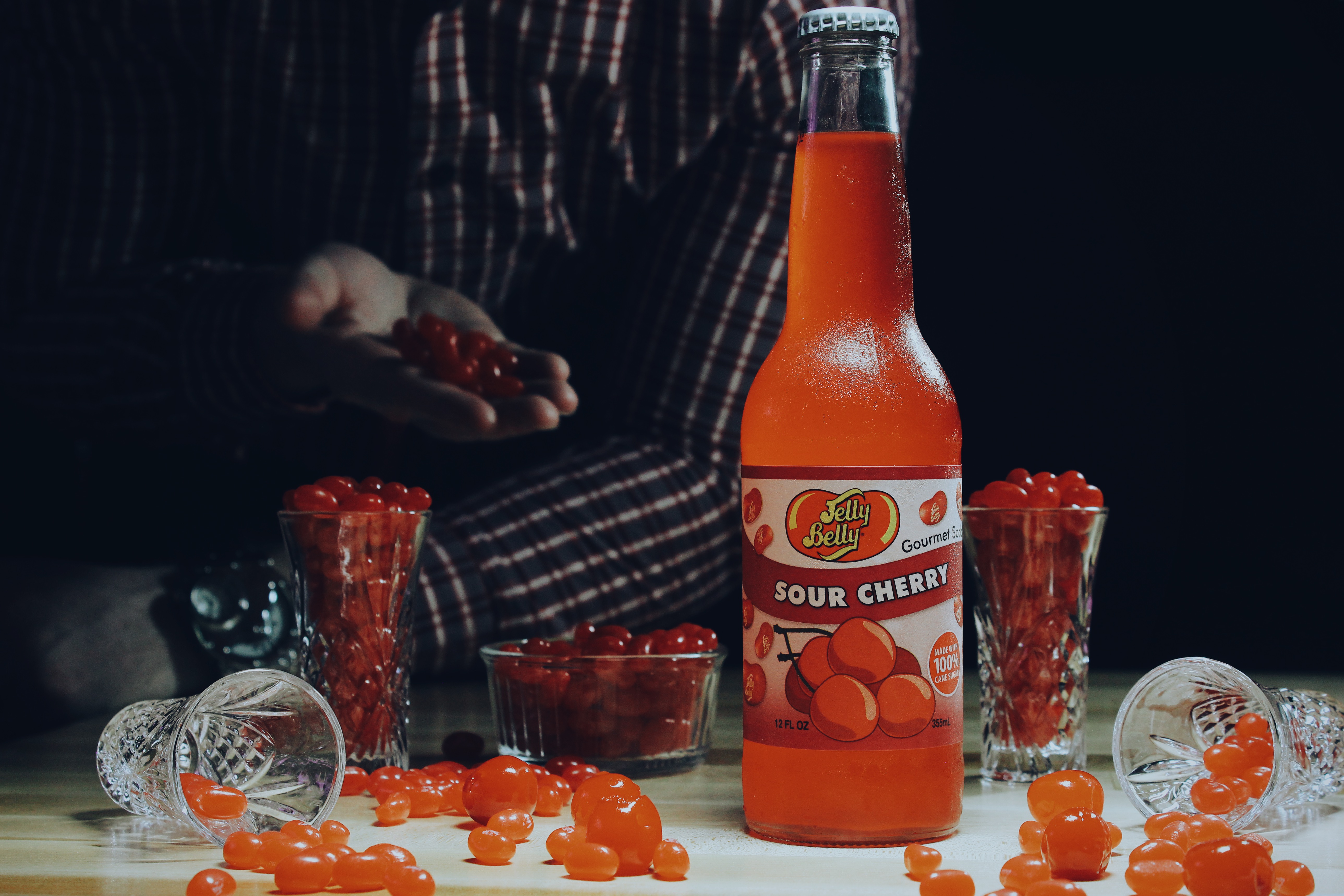
Jelly Belly: Sour Cherry

History: “I don’t know of another soda that marries up with their brand so closely,” says WIT Beverage Company Sales and Marketing Director, James Akers. So to answer your assumption from the get-go, yes, Jelly Belly Soda is designed to taste like a liquid version of its corresponding jelly bean flavor. It’s not a difficult concept to grasp, yet it wasn’t actually the directive given from Jelly Belly to WIT Beverage, the makers of Jelly Belly Soda. Akers recalls being told “Make ’em taste good. We don’t care if they taste like the bean.” This seems astonishing to me, and apparently it did to Akers too. It was his directive to make sure the sodas matched up to their candy companions. As an ex-buyer for Walgreens for 16 years, Akers saw lots of beverages come and go, including the failed Life Savers Soda. He didn’t want Jelly Belly to become another candy-turned-soda disaster. It was 2010 when Jelly Belly Soda hit the market. Today the brand boasts 10 flavors, including its bestseller, blueberry. Interestingly, two of those ten flavors are cherry: one normal, one sour. If you read the giant bold letters in the title above, you know which one we chose. If you didn’t, you might be Floyd Mayweather. “The sour cherry is intended to go after that younger, pucker-y sour candy crowd,” Akers tells us. In addition to the pure cane sugar in all Jelly Belly sodas, there’s a special ingredient in the Sour Cherry that gives it that signature zing: citric acid. And it’s not necessarily the ingredient itself that’s unique, it’s the amount. Akers notes Jelly Belly Sour Cherry contains two-and-a-half times more citric acid than the average soda. If you’ve ever tried pure food grade citric acid, it’s more intense than the sour taste you get in your mouth after waking up next to a bad decision the morning after a night out. It’s clear the company really wants to hammer home that sour bite. Will you be able to handle it, or will it handle you?

Where to get: Jelly Belly Soda is distributed all over America and in the United Kingdom. It’s also available for purchase online at Summit City Soda and in single bottles at Soda Emporium. And if you’re a retailer wanting to sell soda in your store or just someone looking to place a large order, give Homer Soda Company a call; they’ll have you covered.

Nose: Cotton candy. Didn’t see that coming.

Taste: Sour; candy strawberry; mild cherry. The tart bite is evident near the end of each sip. It coats your tongue. But the actual flavor is hard to place. It doesn’t jump out. Artificial candy strawberry is in there. The same could be said to a lesser extent with candy cherry. At times there’s even a strange cotton candy flavor. But there’s no bold complimenting flavor to go along with the sour. As the soda progresses, there’s definitely more of a candy cherry that jumps out once the soda hits your lips, but it’s literally gone in a fraction of a second in favor of a sour candy taste that’s more strawberry than cherry. The sour bite is what defines Jelly Belly Sour Cherry soda, but the main flavor is more of a question mark.

Finish: Candy gummy strawberry lingers just a bit longer than the soda’s signature sour flavor.

Rating: I know what a lot of you are thinking. There’s no way a Jelly Bean company can make a good craft soda. This isn’t necessarily true, but in the case of Jelly Belly Sour Cherry, the jury is still out. And I don’t know if they’re coming back. Sour cherry certainly nails the sour taste. It’s like someone melted down the sour bite from Sour Straws candy and infused it in this liquid. It works. It’s not too strong and would be a nice complimentary flavor. Would be. That’s the problem with this soda. It has no flavor identity. Sometimes it tastes like candy strawberry. Sometimes candy cherry. Other sips, you taste cotton candy. This soda is having an identity crisis, and I already get enough of that on a daily basis with my brother. He just can’t let the 80’s go. What I judged this soda on was a simple criterion: does it taste like the sour cherry jelly bean it’s named after? Answer: I don’t think so. But listen, it has one really solid quality in that signature sour taste. But the sour notes need something to play off of and there’s no consistency in the soda’s complimentary sweet side. If you’re a big fan of sour candy like Sour Straws, War Heads, or Sour Patch Kids, you’ll probably like this and I’d say it’s worth a shot. For the rest of us, there are better (slightly less) tart sodas out there, but I won’t fault you for trying it because the sour taste is unique and nice. Someone needs to send this soda to an adoption center. We can only hope it finds a family that will provide stability.

Three Stars

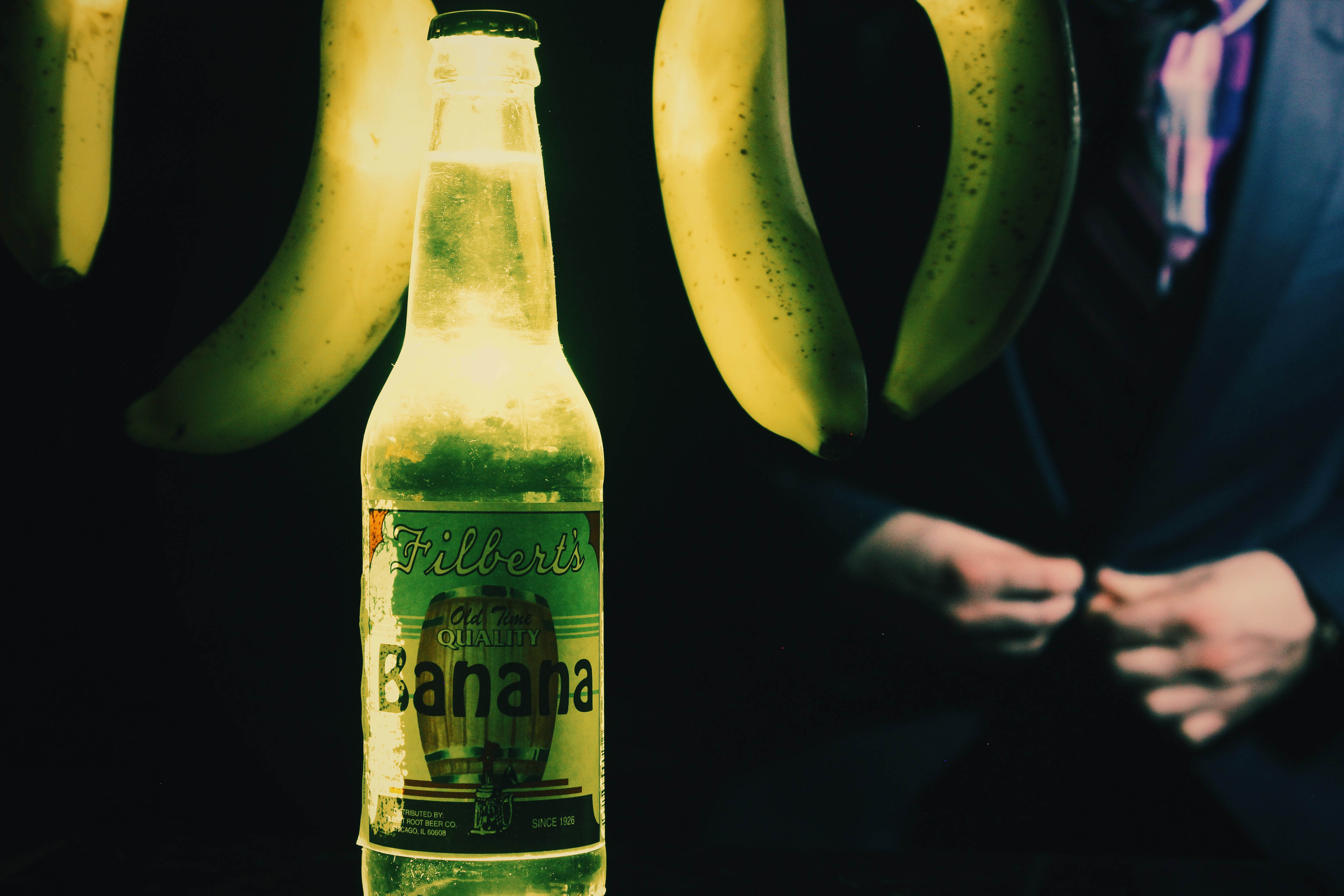
Filbert’s: Banana

History: Over the phone, Ron Filbert’s voice is old-school Bridgeport, Chicago. Somewhere between grunge-fueled Mike Ditka and classic nasally Brooklyn, his voice conveys a sense of seriousness. You can almost feel the tradition through the phone. Filbert bares the company’s name because he’s a third generation soda jerk and has been in the business since he was 12. He still brews the soda in the same Bridgeport community where his grandpa founded the company in 1926. He says, “Back in the day, root beer was the number one soft drink in the country.” Considering this was in the era of prohibition, he’s probably not joking. If people couldn’t drink beer, at least they could guzzle something still with the word in its title. Root beer continues to be Filbert’s most popular flavor out of around 30 different options. A couple others high up on the list are a little more unique: watermelon and banana. He adds that ginger beer is also rising in sales. Filbert’s falls into an interesting category in craft soda. Filbert tells us “We make our flavors in small batches,” but also notes a majority of the company’s flavors are made with high fructose corn syrup as opposed to pure cane sugar, though several do use the latter. Banana, our review today, is made with high fructose corn syrup. We’d consider Filbert’s a craft soda company because every batch is made by hand in small quantities, and also because there’s a rich tradition there. Filbert, a man of few words, made the objective when making the banana soda pretty clear. “You want it to taste like a banana. You want it to look like a banana.” Alright, then. That’s super clear-ish. What we can tell you definitely is that banana is a flavor most companies shy away from because it’s a fruit that is hard to capture accurately in liquid form. Filbert’s took a chance, so maybe you should take a chance on them.

Where to get: Being a Chicago-based company, Filbert’s is heavily distributed throughout the midwest. It’s also growing out on the west coast, but still working its way east. Luckily, you’re online purchasing options are numerous. If you’re a retailer hoping to sell soda in your store or someone looking to make a larger order, you can hit up Homer Soda. Everyday folks can go to Summit City Soda and Soda Emporium to get your fix.

Nose: Banana popsicles; faint smell of Banana Laffy Taffy. A very candy banana smell.

Taste: Tart; banana taffy; heavy carbonation. This is surprisingly tart for a banana soda. When we think banana, I think we often imagine a creamy flavor, but this is slightly acidic and mild. The banana flavor is definitely a candy banana taste more akin to a taffy than say a popsicle. The carbonation, despite the bubbles being small, is heavy throughout each sip. Fairly syrupy, probably due to the high fructose corn syrup. The banana flavor isn’t overly harsh or bold. It’s actually pretty light. But I think what you take away from the soda’s flavor most is that syrupy taste full of carbonation.

Finish: Tart banana that lingers only for a few seconds. No different from the body of the soda.

Rating: Filbert’s Banana Soda is fairly straight forward in terms of flavor, but it does what a majority of banana sodas do not: it doesn’t suck. The banana flavor is more of a candied taste, but it’s pretty light. Most banana sodas are overly harsh, so this is a welcome change. The carbonation is thick, encasing the soda’s taste. But it just feels like something is missing here, and I can pinpoint a couple ideas for improvement. First, there’s a syrupy taste to this. Undoubtedly, it’s because Filbert’s uses high fructose corn syrup in their banana soda as opposed to cane sugar. It just feels a little heavy and not as crisp as it could. I think cane sugar would make the soda’s mouth feel a little lighter and more refreshing. Second, the banana flavor is almost too mild. I’d either up the amount of banana flavor in the recipe or cut back on how intense the carbonation is in the soda. Less bubbles might unleash a more aromatic and robust banana taste. It sounds like we’re picking on this soda. We’re not. Banana is such a wonderful flavor, one of nostalgia. As kids we all enjoyed it in some fashion. Today, it hits its mark in candy, pastries, and cocktails. Soda is still searching for its banana unicorn. Until then, Filbert’s does a serviceable job filling the void.

P.S. We now reserve the right to start a nightclub called “Banana Unicorn” in the future. Dibs.

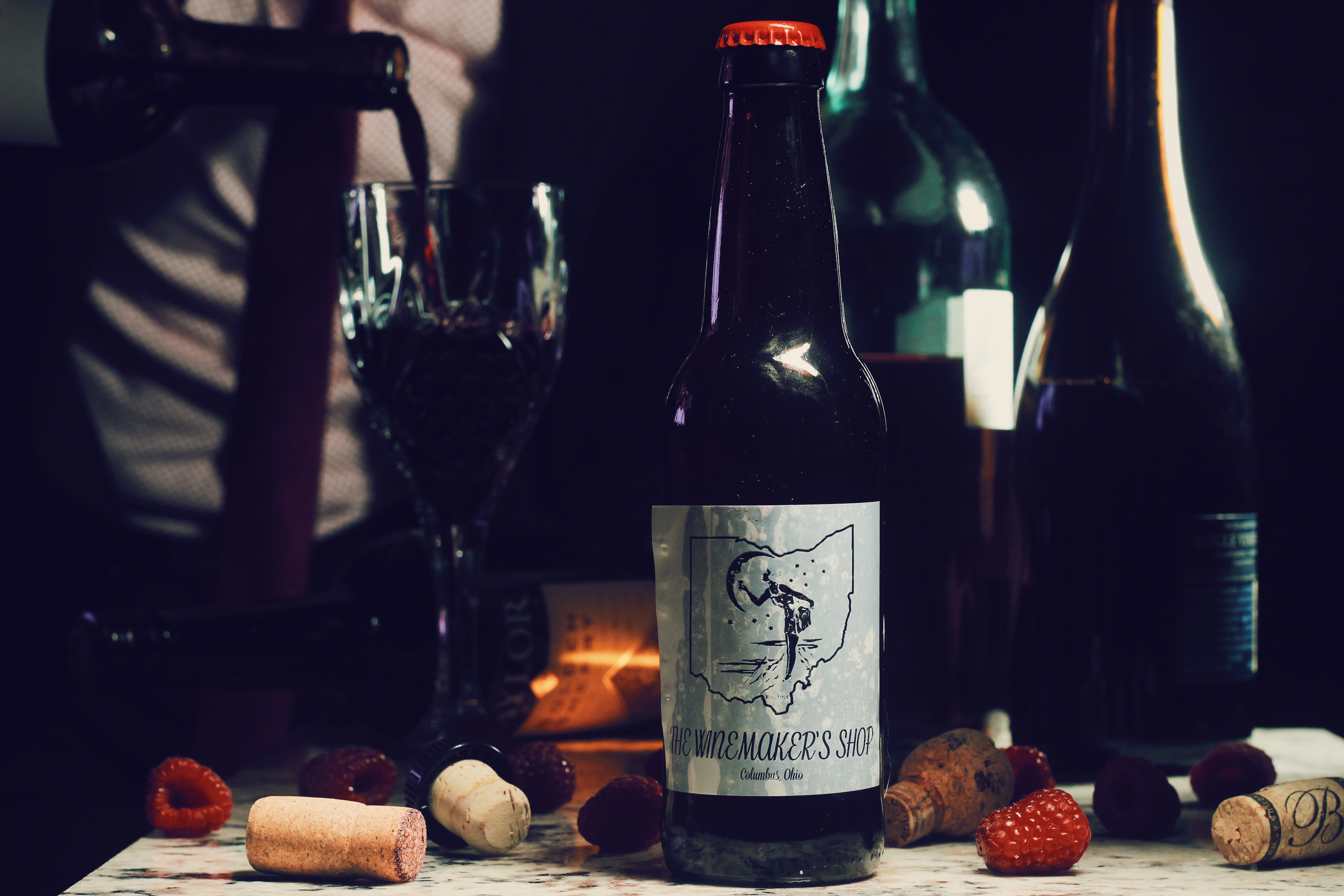
The Winemaker’s Shop: Raspberry Dragonfruit Shiraz

History: There are always whispers in the craft soda community about how closely related gourmet sodas are to the artisan side of the alcohol industry. Both place an emphasis on quality. Both are held in the highest regard of their respective beverage categories. And both share an audience. The Winemaker’s Shop in Columbus, Ohio recognized this and decided to blur the line for drinkers even more by introducing something enticingly original: wine soda. The Winemaker’s Shop, perhaps unsurprisingly, sells wine and beer kits for home brewers. But here is a surprise: the shop doesn’t sell wine or beer. They can’t. In talking to manager Ivan Francis, we learned an interesting tidbit. The Winemaker’s Shop is located in a “dry zone,” preventing the sale of alcohol. The business was founded in 1974 by Ivan’s father and prolific brewer (seriously, he has a degree in it from the Siebel Institute), Scott Francis. His son notes the entire business has “been very interwoven with the brewing development.” Funny, how a business called “Winemaker’s Shop” started with beer. A lot of great things start with beer, to be fair. So do a lot of bad ones, like my first marriage. But the fact remains that the business can’t sell alcohol. This aided the creation of their soda. But there was one more factor that tipped the scales. According to Francis, every summer there is a farmer’s market that sets up shop right outside the business. He recounts how the market would take away both sales and parking from The Winemaker’s Shop. Scott Francis’s wife and co-owner, Nina Hawranick, thought “On a hot day, what’s better than a nice, cool soda over ice?” So last summer, they started producing their wine-flavored sodas and selling them at that same farmer’s market.

It’s pretty easy once you have it explained to you why the soda tastes like wine… because it almost is. Francis tells us they simply take the fruity summer wine grape juice kits, force carbonate the liquid, and add some sugar. Voila. Wine soda. So they’re literally making the soda from the same elements from which you could make wine. You’d just need to add water and yeast instead. Theoretically, you could buy one of their kits and also make the soda yourself if you got the proportions right and had the tools to carbonate it. “You don’t find wine soda in stores,” says Francis. No you don’t, Ivan. The only wine soda I’ve ever had previously was when I poured Zinfandel in my Sprite. But in fairness to me, I was already pretty drunk. Francis notes they usually have around 12 flavors of wine soda at a given time with Green Apple Riesling and Black Raspberry Merlot being the most popular. We went with the up-and-comer, Raspberry Dragon Fruit Shiraz, mostly because you just don’t find Dragon Fruit in soda. It was designed with the idea of the bitterness in the raspberry interacting with the sweetness of the dragon fruit. Francis drops the best quote of our interview right before we hang up, saying Winemaker’s Shop wine soda “gives people a break from alcohol and allows them to drink early in the morning.” Amen.

Where to get: The Winemaker’s Shop sodas are sold at the company’s store in Columbus, Ohio, as well as several other outlets in the area. Unless you’re close to Columbus, this is one craft soda you’ll have to pick up on a road trip.

Nose: Black raspberry; Berry Juicy Juice. Very fruity, lots of berry scents going on.

Taste: Raspberry; berry wine spritzer. This confuses your taste buds because you expect a raspberry soda flavor, but instead get more of a berry wine spritzer/sweet champagne taste. There’s definitely a fermented alcohol-like flavor to this, akin to wine. The dragon fruit isn’t really apparent in the flavor profile, but then again, dragonf ruit doesn’t have a lot of flavor with which to begin. The raspberry presents itself in more of a generic berry form and has lots of fruity berry notes. Imagine a white wine sangria with blueberry, blackberry, and raspberry flavors; that’s the best description I can give you of this soda’s flavor.

Finish: Fine carbonation with the same berry flavor from the soda’s body that tails off. Not a lot that’s different on the finish.

Rating: This is really impressive and interesting, both in concept and flavor. A wine-flavored soda? Who does that? What really stands out though, is that this actually tastes like a berry-flavored wine. I’m not entirely convinced this doesn’t have alcohol in it. That’s how much like wine it tastes. The berry taste is apparent throughout the beginning, middle, and end of each sip. “Raspberry dragon fruit” is the flavor on the label, but we taste a cornucopia of berries in this. I liken it to a white wine sangria allowed to soak in the flavors from blueberries, blackberries, and raspberries. What you’re likely tasting here is the influence that Shiraz wine grape juice has on the raspberry. I mean, I can’t get drunk off this right? This is blowing my mind. What I’d tweak about this soda is the raspberry. I’d like to taste that sweet, fruity raspberry flavor with its mellow acidity as opposed to a generic berry flavor. Upping the raspberries in the recipe probably wouldn’t hurt. The fact that it tastes like wine might also be a turn off to soda drinkers. But if you’re drinking wine soda and you don’t like wine, you were probably held back a grade at some point. The Winemaker’s Shop has created one of the most unique takes on soda being bottled today. It closes the gap between the beer and wine market and the craft soda community for a beverage with mass appeal. It accomplishes what it sets out to do: it tastes like fruity wine. It’s almost uncanny. I don’t grasp the science behind it, but I don’t have to and neither do you. This is one you have to experience to understand.

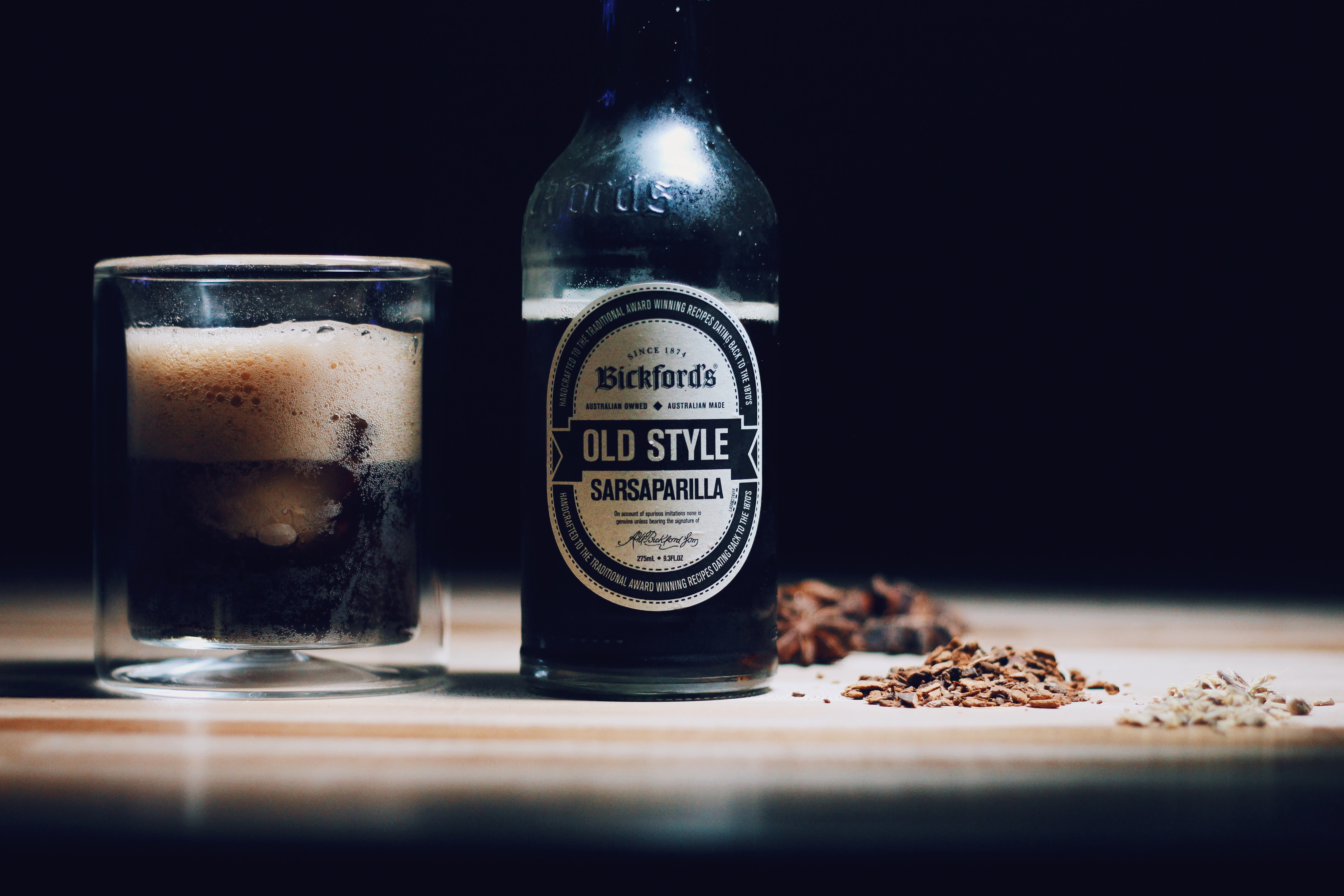
Bickford’s: Sarsaparilla

History: Bickford’s is a brand rooted in tradition. Since 1874, the South Australian company has been producing its famous cordials. The company makes a whole host of other products too, including its Bickford’s Old Style Soda line of seven different flavors. One of the most popular is sarsaparilla. Says Bickford’s Brand Manager Beverley Reeves, “Sarsaparilla is the fastest growing in some of our overseas markets perhaps because the flavors are different from those that consumers there would normally be familiar with.” According to Reeves, the soda’s recipe is still the same as it was decades ago. Like America, the Australian soda scene continues to evolve. Reeves adds that there is a “shift from mainstream to more differentiated flavours and brands with a story.” In the end, it’ll always come down to taste and Bickford’s Sarsaparilla was designed with a bold licorice flavor in mind. Knowing that, I wouldn’t expect this to be particularly fluffy on the palate. Previously, we reviewed their creamy soda that has a touch of raspberry. So Bickford’s definitely seems to be a company that makes traditional flavors with nontraditional tastes. A fan favorite in its native country, Reeves gave us the inside scoop that Bickford’s is soon coming to America and will debut in October. We’ll keep you posted when and where as soon as details become available. In the mean time, there’s ice cold sarsaparilla waiting for you.

Where to get: In Australia, you can find Bickford’s Sarsaparilla at “most major supermarkets and convenience stores,” according to its website. Now you might pay some hefty shipping outside of Australia, but you can also buy Bickford’s Sarsaparilla online via Sippify.

Nose: Strong black licorice; anise. There’s a mild hint of root beer on the nose, but this smells very, very rich in licorice. Pucker up.

Taste: Licorice; anise; sarsaparilla root. This is definitely more of a botanical sarsaparilla as opposed to a creamy one with lots of vanilla. You’ll really notice the sarsaparilla root flavor in this drink. It’s bold and very herbal. There’s a semisweet sensation encapsulated by frothy bubbles that coats the tongue as the sarsaparilla flavor fades. At brief points in the soda, there’s even a little bit of a cola flavor, but this is a sarsaparilla anchored by strong sarsaparilla root, sassafras, and licorice flavors. The licorice isn’t as pronounced in the flavor profile as it is on the nose, but really shows up in the aftertaste. Definitely black licorice flavor, but not overly strong.

Finish: Tart sarsaparilla root with lingering notes of licorice.

Rating: Bickford’s sarsaparilla is a stark departure from American takes on the flavor, utilizing a strong herbal flavor profile instead of a smooth, creamy one. The tasting notes that stand out most are unmistakably sarsaparilla root and licorice. The sarsaparilla flavor is stronger, but the licorice is particularly noteworthy. Coming in near the end of each sip along with a wave of champagne-like bubbles; it’s a commendable use of a flavor that often overpowers the soda experience. Another aspect that stands out is the tartness on the finish. It’s a crisp herbal reminder that reinforces you’re definitely drinking sarsaparilla and not root beer. I could’ve used a sign like that during my second engagement If you’re not a fan of botanical sodas, you’re not going to enjoy Bickford’s Sarsaparilla. This is a soft drink for the slightly more adventurous soda connoisseur. It isn’t particularly sweet and relies more on its herbals flavors to impress its drinkers. The sugar, while lower in the flavor profile, is noticeably crisp. Bickford’s Sarsaparilla should be a hit with lovers of botanical sodas and die-hard sarsaparilla drinkers. It won’t be for everyone, but this soda knows its niche and leaves an Australian footprint in the sarsaparilla marketplace.