Death Valley Soda: Sour Green Apple

History: “We’ve been brewing beers for 20 years, but I’ve been brewing soda for 25 years,” says Rick Lovett, beer and soda brewmaster of Indian Wells Brewing Company. Lovett probably makes more soda than any independent bottler in the world. He’s currently trying to get up to 200 flavors spread out over various brands. He even wants to make the Guinness Book of World Records for it. But among all the concoctions, his signature line is the six-flavor deep, Death Valley Soda. Indian Wells Brewery is located in Inyokern, California, a small city tucked away in the hot, dessert climate of rural California, thus the name Death Valley Soda and the cowboy-influenced label. “It wasn’t any master plan. It just made sense,” Lovett jokes. The most unique flavor in the Death Valley Soda line? Sour Green Apple. Over the phone, Lovett recalls a story of his young grandson playing outside and sucking on a Green Apple Jolly Rancher. He reached his little hand up to his mouth, pulled out the candy, looked at his grandpa and said, “Popa, can you make this into soda?” Turns out he could. Death Valley Sour Green Apple is made with pure cane sugar and real Granny Smith Apples, as well as McIntoch and Pink Lady. As with all Indian Wells products, the soda’s most unique element is the water used in making it. The Indian Wells Spring is actually owned by the brewery. Its water is filtered through million of feet of granite; according to Lovett, thousands of gallons spill out to the surface every day. But the soda’s most noticeable feature is undoubtedly its bright green color that is remarkably 100% natural with no food dye used. If you think that’s hard to believe, you aren’t the only one. In order for Whole Foods to carry the soda, the natural goods supermarket made Indian Wells Brewing hire professionals to provide an independent chemical analysis on the product to prove the color was authentic. Wild stuff. “All of America is waking up,” Lovett says of the rise in popularity of soda made with quality ingredients. “I wouldn’t have produced a soda pumped up with additives and then given it to my grandson.” I understand, Rick. Now I’m about to pump this soda into me.

Where to get: Death Valley Soda is available for purchase at Rocketfizz retailers. You can get your fix online at Amazon for 12-packs. There are also online retailers selling individual bottles, but at the time of this review all were sold out. Give it a Google.
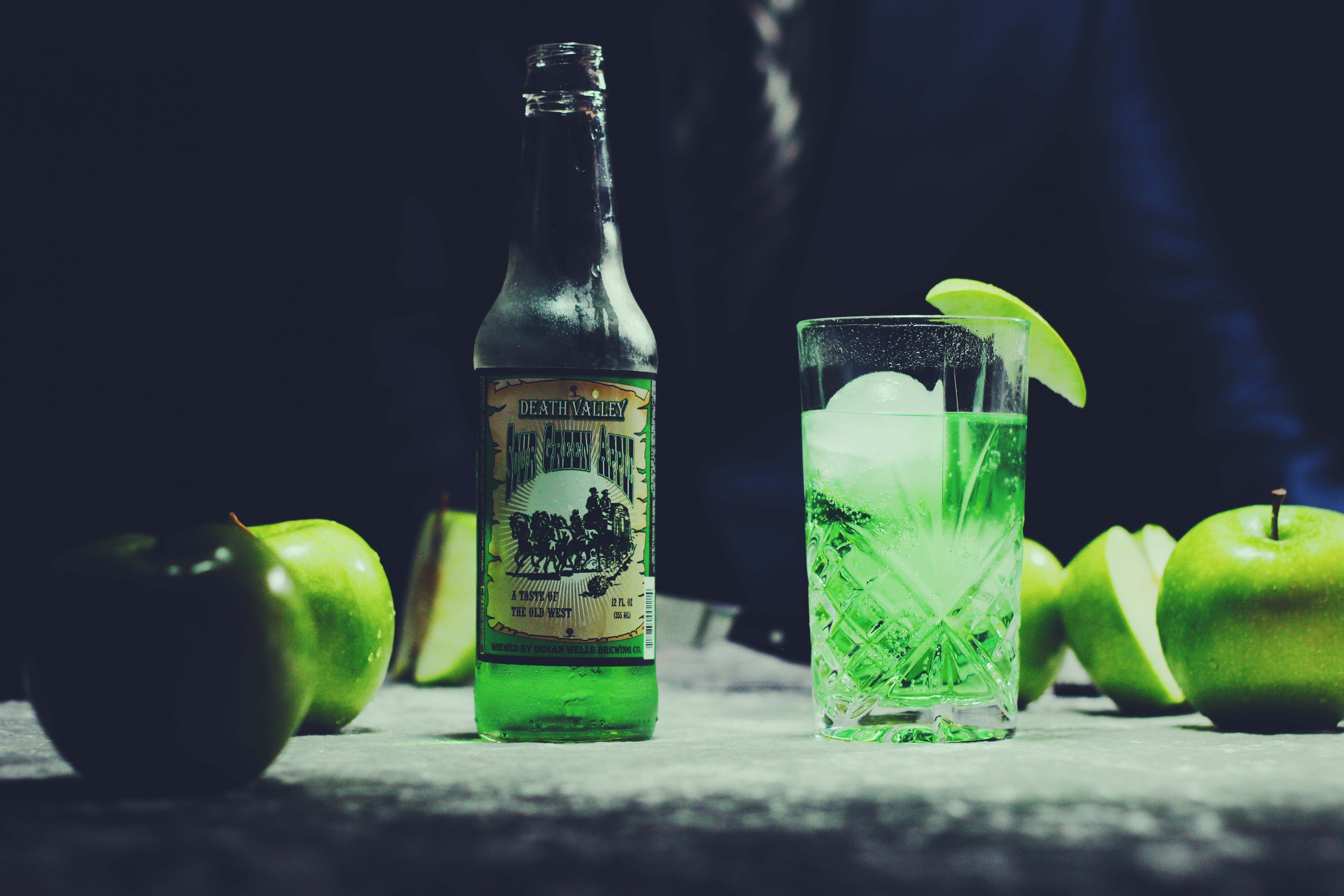
Nose: Green apple Jolly Ranchers; fresh-sliced Granny Smith Apples.

Taste: Green Apple Airheads; cane sugar. This is light. It certainly tastes like candy green apple. But the sour flavor that the label advocates is not present. A little bit of bitterness near the end that may come from the spices Death Valley uses, but no sour notes. The carbonation is soft. You can taste the cane sugar, but you can also taste some of the water’s influence in this drink. This is definitely very light, both in flavor and mouth feel.

Finish: Slightly bitter green apple. Definitely more of a bitter than sour sensation on the tongue.

Rating: Your nose and eyes always set the expectation for any soda. It shouldn’t just taste delicious; it should smell good. Whatever’s written on that label will also inevitably sway you. This smelled like Jolly Ranchers, and the word “sour” on the label would indicate there’s going to be some tartness. I anticipated this tasting like liquid sour green apple candy, hopefully with some fresh apple notes. That’s not what you get. The sour, tartness, bite – whatever you want to call it; it’s not there. You get some bitter notes on the finish, but there’s no punch to this. It’s light. A little too light. You definitely get a nice candy green apple taste in the flavor profile, but I was promised sour and did not get it. This is a beautiful green color. One of the prettier sodas in hue I’ve come across. But I feel like I got lied to here. If this was labeled “green apple” as opposed to “sour green apple,” I’d maybe rate this higher. If you enjoy apple-flavored things or are just a big proponent of fruit sodas, this is worth a shot. If you’re looking for something that makes the sour detectors on the back of your tongue flash red, you won’t find it here. Death Valley has made a fine apple soda, but the name on the label needs a little work.
Bandit Beverages: IronPort

History: The Coelacanth is one of the most unique animals you’ll ever come across. Thought to have been extinct for 66 million years, it reappeared in 1938 to the surprise of the world. To this day, most people still don’t even know it exists, yet it’s an important example of the many mysteries within our world. What if I told you in the world of craft soda, there’s something out there that’s basically the equivalent of the Coelacanth? What if I told you there’s a soda out there that barely clung to life throughout the late 20th century, but is being reintroduced? What if I told you its creators knew literally nothing about soda in 2013 when they had the idea to bring it back? All of this is true. It’s called IronPort, and it’s the entire reason the Northern Utah-based Bandit Beverages exists. The company’s manager, Cameron Green, explains, “We wanted to find a way for those who haven’t tried this ‘cult’ soda a chance to, and give a chance to those people from the 50’s 60’s etc. a chance to have a soda they probably haven’t seen since they were kids or teens.” IronPort is rumored to still be a favorite in the Mountain West region of America, especially Utah and Idaho, according to Green. Unless you’re from around there, you’ve likely never heard of it.

Listen, the soda might as well be called ???. There’s a lot of mystery behind it. I’ve heard it called root beer combined with cream soda. I’ve heard it called root beer with Caribbean spices. You won’t find much information online. Is it still popular anywhere? Is it mixture of two sodas? Is it a flavor? Is it a style? Will it cure that thing I caught in a South American club last month? We asked some of these questions to Bandit Beverages, the only producer of bottled IronPort we can find. And even they won’t budge. “Can’t answer that without saying too much,” Green says with a coy smile. (I only assume this because he attached a 🙂 at the end, the kind of smiley face that girls text dudes to let them know something good is happening that night. You know what I’m talking about.) The most we could get out of them is that they’re trying to keep it “as close to the original” as possible and that “IronPort is the flavor, just the same as grape is a flavor, etc.” The one snag that may raise eyebrows to craft soda lovers is that Bandit Beverages makes their IronPort with high fructose corn syrup as opposed to cane sugar. “Since we were a young company we were trying to keep costs down, we were basically being cheap, which was a big mistake,” Green adds. Bandit Beverages acknowledged to us that they are currently in the process of switching all four of their sodas to pure cane sugar. We couldn’t resist the mystery. This should be an experience.

Where to get: Bandit Beverages sells IronPort directly via the company’s website. As of now, you won’t find it anywhere else, so you might as well snatch it up.

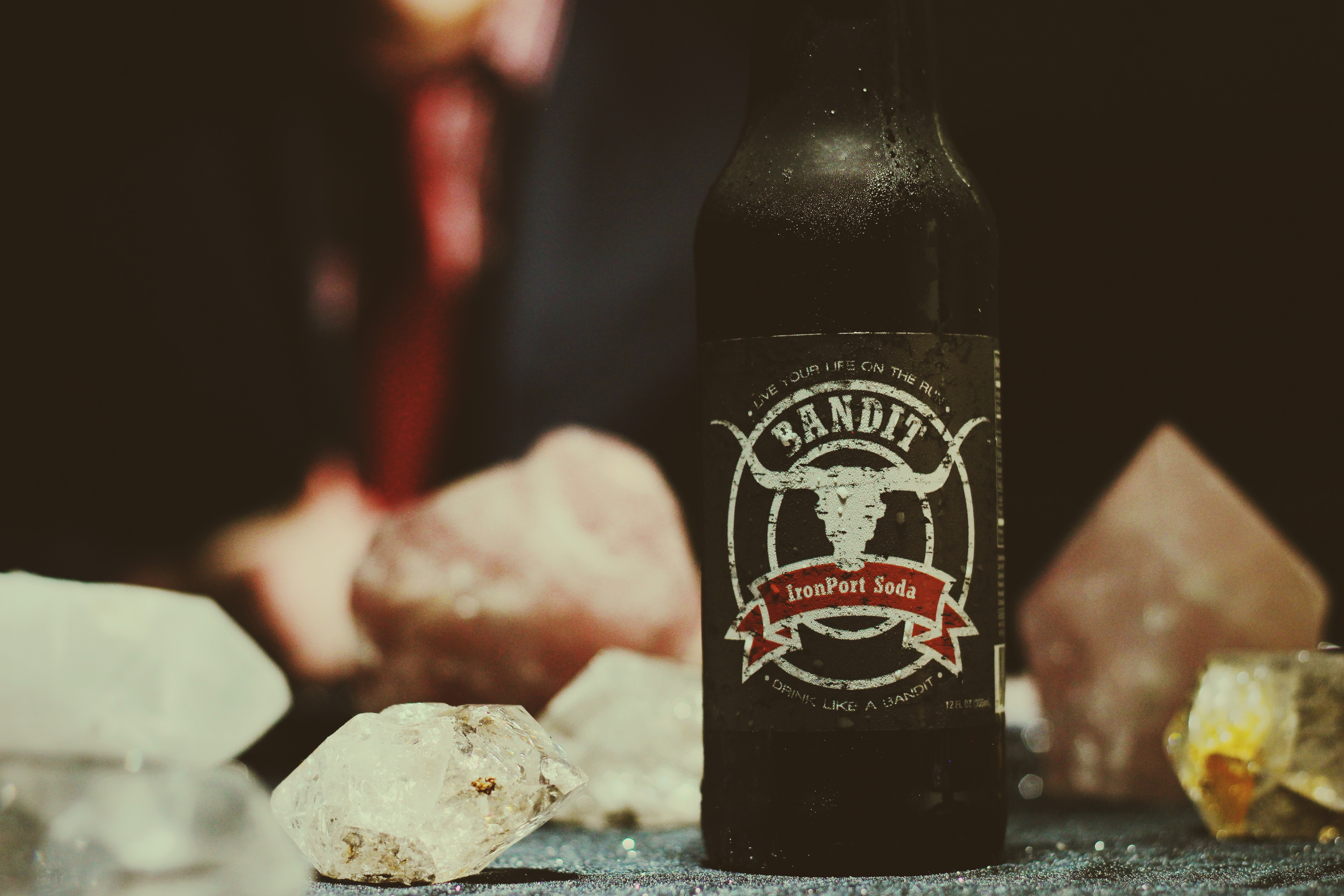
Nose: Bubblegum; spices; something akin to the smell of an orange freeze.

Taste: Bubblegum; orange; nutmeg; vanilla; creaminess. On first taste, this is a bit puzzling. IronPort certainly tastes like its own category. It’s sweeter and creamier than most sodas. If you drink a lot of higher-end soda, you’ll notice it’s a bit syrupy. This is because of the high fructose corn syrup used instead of cane sugar. The most prominent flavors that come through after a few sips include bubblegum and orange. This tastes more like a bubblegum cream soda infused with orange than a spiced root beer. That said, this doesn’t taste like an orange cream soda. It tastes like creamy bubblegum infused with floral orange and vanilla. Not the traditional orange soda flavor profile, but much softer. There’s definitely a nice creaminess to this and there are some additional flavorings in here that impart an orange flavor, perhaps spices. Some of those could include allspice, nutmeg, and/or cloves. As you can tell, this is hard to place. One of our team members said they even tasted some rose hips in there. There’s also definitely vanilla. That likely explains the creaminess. Bottom line: Smooth, sweet bubblegum cream with notes of soft orange, vanilla, and maybe some spices.

Finish: Creamy, yet slightly bitter orange.

Rating: Even after an entire bottle, IronPort remains mostly a mystery to us. Closer to a cream soda than root beer; this is in its own category. It’s not a variation. It’s a flavor in itself. There’s a creamy bubblegum body with notes of aromatic orange, yet I wouldn’t label this as being even close to an orange cream soda. There’s some sort of spice influence. Perhaps some nutmeg. Definitely vanilla. Maybe even some cinnamon. These are impossible to place in absolute terms, but something is causing that orange flavor. IronPort is very smooth with a nice creaminess. One area it lacks in is mouth feel. Bandit Beverages elected to use high fructose corn syrup and it leaves a syrupy taste at times. The company has said themselves they plan on switching to cane sugar in the near future. Once that move is made, I think IronPort’s flavor will greatly improve. Cane sugar provides a crisp sweetness as opposed to the thickness you taste with corn syrup. Like a majority of women, I may never understand IronPort. But its elusiveness, its mysterious standing in the world of craft soda, is something that should appeal to any soda connoisseur. Bandit Beverages, while a young company, has made a veteran move to resurrect an old favorite of which many haven’t heard. It’s nostalgic, yet abstract; classic, yet foreign; familiar, yet so peculiar. This is one you’ll want to put a check mark next to on your soda resume.

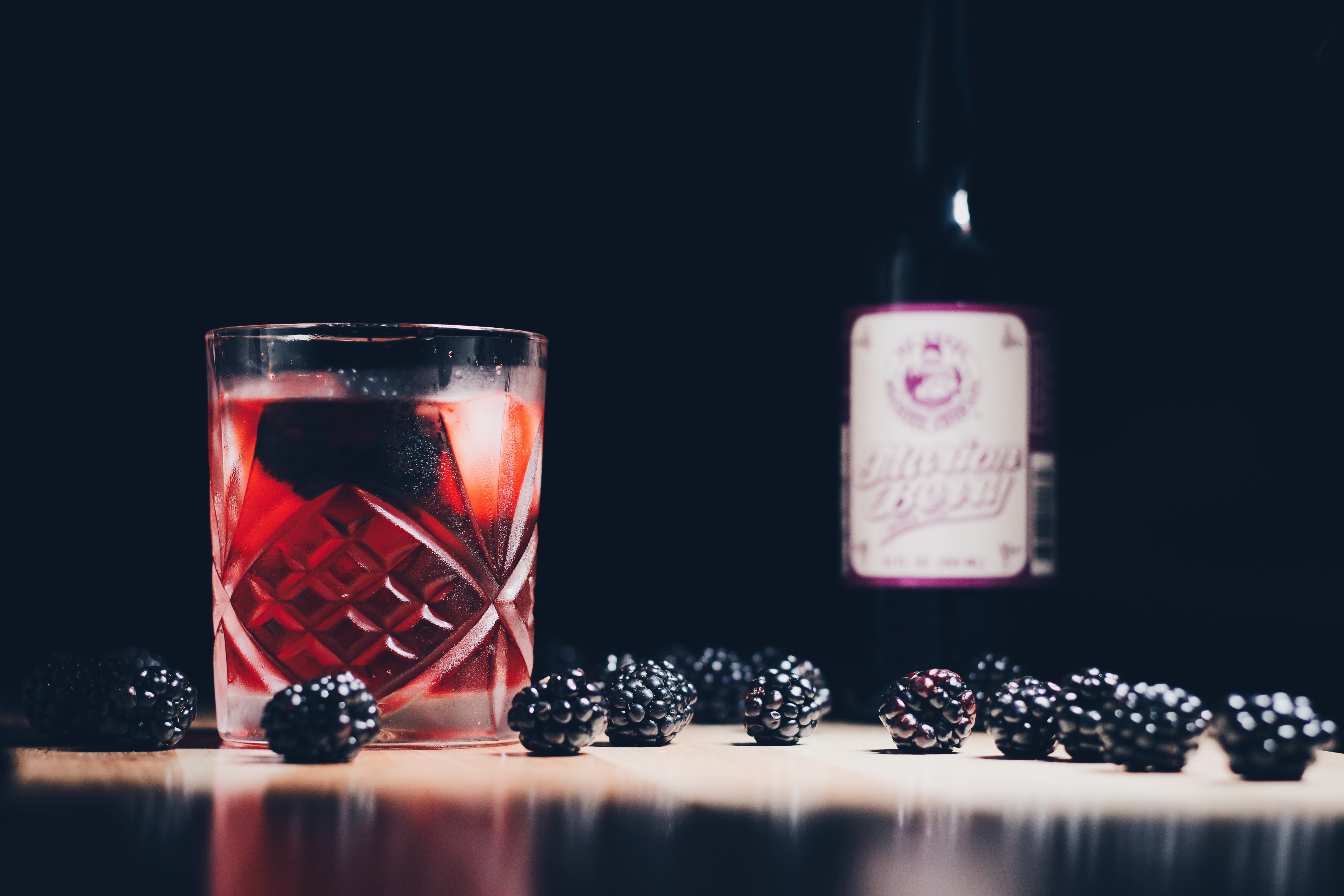
Mount Angel Brewing Company: Marionberry

History: Root Beer Larry, they call him. Nestled all the way up in Mount Angel, Oregon, Larry Oien’s family has roots in the root beer business. Back in the day, his dad’s cousin was on the board for A&W. Oien has been running Mount Angel Brewing Company since 2005 from “a German agricultural city” of just over 3,000 people, as he puts it. Oddly enough, there’s a barbecue connection here. So if you love soda, Germany, and smoked meats, keep your pants on, buddy. Oien and his brother Hal purchased Mount Angel Brewing Company from the Treager family so they could focus more on their barbecue grill business. The Treager’s used to brew beer and serve food at Mount Angel. Oien and his brother dropped the beer and food, but kept the name. So even though it’s called a “brewing company,” they do not brew beer. They do, however, make four different flavors, including their award-winning root beer. Ironically enough, the award was won at a beer competition. One of those flavors: marionberry. If you aren’t from Oregon, you probably don’t know what it is. We had to make sure it was a real thing. It is, and it’s very similar to a blackberry, though not quiiiiite the same. Oien notes, “They’re quite similar. Blackberry has a more definitive berry flavor, and marionberry is milder.” Along with two other soon-to-be-revealed flavors, Oien calls marionberry one of the “flavors of the Willamette Valley.” All of Mount Angel’s sodas are made with pure cane sugar, and natural extracts concocted in Wisconsin by a food scientist. Oien says it took about a year to get the marionberry flavor right in this soda. One thing Root Beer Larry is not a fan of in many sodas today? Too many bubbles. He adds “Everything is so dang carbonated. Drink it with some air. Savor the flavor.”

Where to get: “I’ve touched every bottle twice. I’ve bottled them, cased them up and delivered them to you personally,” Oien chuckles over the phone. As you can imagine, Mount Angel is a small operation. The company sells its sodas through the greater Oregon area. They’re also available online via the company’s website.

Nose: Blue raspberry Dum Dums; blackberries.

Taste: Blackberry; mild blue raspberry; grape. There’s a very distinctive sweet candy blackberry flavor that begins on the tongue and then transitions to a mild grape taste. The carbonation is nice and soft throughout the body of each sip. There are hints of blue raspberry throughout the drink, though definitely more blackberry. The blue raspberry flavor, though, does provide the slightest bit of tartness for a balanced mouth feel.

Finish: I’m definitely tasting a grape influence at the end of each sip. I don’t necessarily think there’s any grape flavor added, so it’s an interesting flavor to appear here.

Rating: Upon smelling this, it reminds me of the same blue raspberry smell present in High Mountain Huckleberry from Jackson Hole. Mount Angel Brewing Company’s Marionberry Soda is definitely more heavy on the berry side of things than the former. There is a distinctive blackberry taste in this soda that’s accompanied by notes of old-time grape and a tinge of blue raspberry tartness. Blackberry dominates the flavor profile and delights on the tongue. The levels of sugar and carbonation in this are just right. Enough to encourage repeat sipping without overpowering the soda’s main flavors. With so many soda flavors on the market today, we often find ourselves trying them and then moving on, never to return. Reminds me of my date last week. I’m still free any this weekend… if you’re reading this. Mount Angel Brewing Company has created a beverage you could enjoy sitting in your room on your laptop or with a meal after a long day at work. That grape flavor at the end of each drink is a little bit of a mystery. I wouldn’t mind seeing it curtailed a bit and letting the blackberry ride all the way through each sip. But this is a soda most should enjoy, particularly fans of fruit and/or berry-flavored sodas. Besides, you’ll be hard-pressed to find a marionberry soda anywhere else.

Garwood’s Ginger Beer

History: Ginger beer is one of the most adult craft sodas on the market. But don’t tell that to Salt Lake City’s Thomas Garwood, who used to drink the stuff down as a kid. Still a young adult at 28, Garwood was no longer satisfied with the state of ginger beer. He felt he’d grown up, but his favorite soda hadn’t. It’s not me, babe. It’s you. “As an adult I’ve never been able to find a ginger beer that was quite spicy enough,” he says, his phone cutting in and out as if he was communicating from an AOL dial-up landline. He’d also become disenchanted with studying music in school. So Garwood, already experienced in the food industry, went to work. But he needed some help. Garwood’s Ginger Beer probably wouldn’t exist had it not been for a successful Kickstarter campaign that raised $5,000. When it came to the soda, he didn’t just want more spice. He wanted more flavor. Fresh flavor. Garwood’s Ginger Beer is made with 30% real juice, using cold-pressed ginger, lemon and lime juices. Garwood made it a point to ensure his ginger beer was wrapped in a bed of natural citrus as opposed to using syrups or extracts. The only other ingredients are carbonated water and cane sugar. He adds, “The purpose of starting this business was to do unique things that you don’t find around a lot.” For example, down the line, he wants to create a malt soda. In the more immediate future, grapefruit or grapefruit-ginger may be on the table. He says so far, his two-man team (Garwood and his wife) have gotten a great response locally in Salt Lake City. Time to try this out. Better put on my adult pants for this review.

Where to get: Due to the small size and recent launch of the company, Garwood’s Ginger Beer is still only sold locally in Salt Lake City. For those of you stopping through, you can pick up a bottle at Liberty Heights Fresh Market or Caputo’s downtown market. Garwood was confident online sales would eventually happen. If you’re desperate, you can contact the company via their Facebook page.

Nose: Skunky, almost like a citrusy Heineken or Modelo beer. Lime and lemon juice are also prevalent. The ginger smell is relatively mild.

Taste: Ginger; lemon juice; lime juice. This tastes extremely fresh. You can taste all three of the main juices that make this up. Each bottle of Garwood’s Ginger Beer contains 30% juice, yet it tastes higher. You start out with a sweet, but tart lemon-lime flavor. The lime has more of a punch, but the lemon has more staying power in the flavor profile. The ginger comes in last. It’s not particularly hot, but full of flavor. This is light and tart, an extremely refreshing take on ginger beer that relies heavily on lemon and lime flavors to supplement the ginger.

Finish: Slightly skunky lime with just a tinge of citrus-infused ginger that coats the tongue. Some people are into skunky tastes, but others may be turned off.

Rating: Ginger beers are almost always engineered to be enjoyed with alcohol and for that reason, they almost always taste better with alcohol. I think this is the first ginger beer I’ve had that I would say is better on its own. The ginger, lemon and lime juices work perfectly together to form a refreshing citrus elixir. To me, this is like a ginger-infused lemonade with some notes of lime. Now this is a little skunky, something unusual in ginger beers, but that’s really an aside. Some may disagree, but I think it adds to the flavor. All three main juices stand out in a unique way in the flavor profile. The lemon is refreshing and full of citrus that forms the base of each sip. The lime is brief but adds a burst of tart, bold flavor. And the ginger tastes so fresh and zesty that it’s almost impossible not to be impressed. This won’t make your eyes water with heat, but you will cry if you don’t try one. This is like when a hot hipster girl transfers to your college in po-dunk nowhere and you realize you’ll be making a lifestyle change. Other girls can’t match her style, looks and sassiness. In similar fashion, I don’t think I can name a more flavorful or better ginger beer than Garwood’s. That’s a bold statement, but this is a bold ginger beer that ascends to the highest peak in its category. This is that hot hipster girl wearing her plaid shirts and shiny leggings. You need her. You need her like you need air. To be fair, I don’t think you’ll need this like you need air. If you do, contact a hospital and scientist. But you’ll need this more than any other ginger beer you’ve had to date. This is one of the newest players in the game and if Garwood’s continues making other flavors, they’ll be one of its heaviest hitters.

Taylor’s Tonics: Chai Cola

History: You could hear the seriousness in his voice. “We would’ve gone out of business,” says Taylor Peck. It was a grave error, one that would’ve cost his new venture over $40,000 in expenses. $40,000 they didn’t have to lose. And then, a break through. “It was kind of a miracle moment,” he says, the tension still in his voice. Taylor Peck is the founder and brewmaster of Taylor’s Tonics soda kitchen and retail soda shop, The Fizzary; both are located in San Francisco. Their flagship product is the one we review today, chai cola. But it was never supposed to happen.

Taylor and his team started out in Santa Cruz, California in 1996 making and importing teas. They quickly got into chai tea and then transitioned into using organic ingredients. Eventually they started making tea concentrates that they sold to clients. Peck become known for his sophisticated, flavorful tea brews. Business was good, so good he relocated to San Francisco in 2002. Six years later, he almost destroyed it all. “I made a major blunder as a brewmaster,” he chuckles over the phone. You see, there are a lot of ingredients and precision that go into making fine tea. In 2008, Peck was making a 16:1 chai tea concentrate. When he went to add the citric acid, he was off by one decimal point, meaning he added 10 times too much. The batch was useless as tea. This was a major problem, a costly problem. Peck estimates he would’ve lost over $40,000 and bankrupted his business if he didn’t do something. So Peck started thinking. And tinkering. And adding things. I mean why not; he had nothing to lose. Just kidding; he had everything to lose. And then one day… voila. Peck discovered that by carbonating this liquid mess and adding vanilla, it transformed into a pretty damn good soda.

Taylor’s Tonics now markets this soda as Chai Cola. It’s the company’s most recognizable product and the one that saved his business. As you might imagine, there’s a strong tea influence. In fact, 98% of its ingredients are also found in teas. In 2009, Peck began selling it to the public. Eventually he and his team sold off the tea concentrate side of the business to focus solely on craft sodas using tea ingredients. He explains, “It’s still our product. We just took it to a different plane.” All of the ingredients are natural and listed right on the bottle. “We do a combination of organic black tea extract, steamed black tea, and yerba maté teas.” You’ll find spices like cinnamon, nutmeg and three different ginger elements. Like most colas, this one also contains caffeine. Taylor’s Tonics also sells two other year-round flavors and a few seasonal selections. Three years ago, they added a retail soda fountain next to their store called The Fizzary. You’ll never hear Peck brag about his soda, but if you ask his opinion, he won’t shy away from giving it you; “We say little, do much. We don’t want to over promote and we make recipes that aren’t based in hype.” Bold. But can you blame him? I would be too if I pulled some wizard shit like he did. Let’s see if his soda is just as magical.

Where to get: At the time of this review, the online shop at Taylor’s Tonics is down for repair. If you’re looking at this way past June 4, 2015… go give it a peak. Until then, Soda Emporium and Galco’s have you covered for single bottles and Amazon has the hook-up on 12-packs.

Nose: Vanilla cola; chai tea; cloves. One of the best-smelling sodas my nose has come across.

Taste: Cola; tea leaves; cardamom; cinnamon; vanilla. This is a mouthful with a flavor profile akin to a fine dining experience. Lots of things are going on here. First there’s the unmistakable taste of black tea with a sweet kick. This segues into a smooth cola body with notes of vanilla, cinnamon and cardamom. The vanilla isn’t quite as pronounced on the tongue as it was on the nose. The cola and black tea flavors sustain throughout the drink, but the cinnamon and vanilla fade in favor of light ginger and cloves. I’d love to see that vanilla linger just a little bit longer. For a soda with black tea as a bold ingredient, it works well with contrasting flavors like vanilla, ginger and cinnamon.

Finish: Creamy cloves; herbal notes; chai. I wouldn’t necessarily call this a creamy soda, but rather a smooth one. However, the finish is certainly creamy, but it’s more of a botanical creaminess instead of one rich in vanilla. Interesting, but also very nice.

Rating: This is certainly an artisanal soda of the highest degree. Its flavor profile is rich with spices and herbs. Black tea leaves, cloves, vanilla, cinnamon and mild ginger are just a few highlights. The highest compliment I can give this soda is this: it’s a botanical craft soda that non-botanical soda fans will enjoy because its flavors work on multiple levels. The company fuses a blend of natural ingredients to form a tasty herbal elixir that really does taste like cola infused with chai. That said, with so many herbs and spices, this won’t be everyone’s cup of tea. Get it? ‘Cuz there’s tea in it. Ingredients like cardamom, yerba maté, and cloves are likely to shock the taste buds of some drinkers, but more likely to delight the tongues of most. I’m still trying to figuring out how to do that with women to this day. This isn’t a soda you’ll drink every day, but you’d really be missing out not to try this work of originality and revisit it every now and then. You can taste the effort Taylor’s Tonics puts in every bottle and the quality of ingredients used. It leaves a lasting impact. Chai Cola is a great fancy alternative to alcohol at cocktail parties and also makes a really fun and weird whiskey and coke, something that certainly won’t stop most of us. Do yourself a favor and sample this botanical beauty.

Bedford’s: Creme Beer

History: Creme Beer. The name alone sends a chill of nostalgia and intrigue down your spine. That was part of the plan Ed Bedford had when he concocted his first vanilla cream soda to sell on the open  market. Bedford is a down-to-earth northwest native with a friendly, grizzled voice. He says over the phone, “I’m almost 70 years-old and soda was a big thing in our life.” He wanted it to stay that way for the current generation, but also wanted to make sure they were drinking old time classics made with higher quality ingredients than something you might get at a fast food joint. So after a long stint as general manager for a beer, wine and soft drink distributor, Bedford founded Bedford’s Sodas in 1984. Today the company sells five different flavors. Based out of Port Angeles, Washington, he says good soda had faded away in the Pacific Northwest. He sought to bring it back by first starting with cream soda, a flavor no company was really emphasizing in the mid-80’s. The idea actually came from Steve Sourapas, an owner of the Dr. Pepper Bottling Company in Seattle. Bedford explained that during prohibition, many bars and saloons referred to cream soda as creme beer so they didn’t totally lose the boozy influence. The name stuck with his father, who passed it on to Bedford who threw it on a label to give cream soda a unique name. Bedford worked hard to get the flavor exactly where he wanted it. “I wanted a true vanilla cream,” he said. He put together a tasting panel with over 100 years of experience in the beverage industry to help pick the right recipe. He’s been working with the same flavor chemist for the entirety of his craft soda-making career. Before we hung up the phone, he paused and added, “I think that my sodas are as genuine as I can possibly be to what I can remember as a child. Always serve them ice cold, never with ice.”

Where to get: Bedford’s Sodas are sold all over the place online, including Summit City Soda, Orca Beverages (who bottle Bedford’s soda), and Amazon. You can also find them in Rocketfizz retailers.

Nose: Dunkin’ Donuts Bavarian Kreme Custard Donut. Hey man, it smells like that. Also vanilla, but you knew that.

Taste: Sugar; vanilla; creaminess. This is definitely an intense vanilla cream soda. No bubblegum here. The vanilla is creamy and sweet. It smells like my favorite donut, but the vanilla, at times, tastes a little bit more like vanilla buttercream or custard. This is a sweet soda, but smooth and drinkable. It tastes like classic cream soda with the volume turned up. You can really tell this uses higher quality ingredients. Everything is a little bolder and better. Nicely done.

Finish: Vanilla custard with just the sliiiiiightest hint of caramel. An excellent finish that begs for more sips.

Rating: This is an excellent cream soda, but before I tell you why, let’s talk about the first thing you see: the bottle. There’s something about it that draws you in. Maybe it’s the regal, old royal feel of the Bedford’s crest in the middle. Maybe it’s the medieval lettering of the font. Or maybe it’s the fact that this is called creme beer and not cream soda. Bedford’s does an excellent job selling the customer before the liquid even enters the equation. The same could be said about the dude at Lowe’s who sold me my overpriced toilet. But this is soda you’ll never throw down the drain. It’s fairly simple, but cream soda is a simple drink. It’s smooth and creamy with rich vanilla and slight notes of caramel on the finish. The vanilla almost has a hint of custard flavor to it that separates it from other vanilla creams. It could probably hold off on a gram or two of sugar, but there’s no question this is must-try cream soda. It also works well with an oaky bourbon to balance out the sweetness. Buy this. Tell your friends you had a creme beer today. Say nothing else and walk away. You’re a soda jerk. And we like it.

Americana: Honey Lime Ginger Ale

History: The Americana line of sodas is produced by a giant retro soda bottler known as Orca Beverages. Orca came about in the 1980’s and was founded by Mike Bourgeois in Mukilteo, WA, an affluent suburb of Seattle. The first brand they produced was their very own called Orca Sparkling and “contained over 50 percent juice sourced from Northwest juice processors.” Orca no longer bottles their own name brand, but they’ve expanded to become one of the biggest craft soda bottlers in the country. They’ve partnered with over 100 brands to produce their sodas, including classics like Dad’s Root Beer, Moxie Original Elixir, and Bubble Up. According to CFO Charles Funk, Americana is now the company’s flagship brand with 11 different flavors. The Americana bottles used to feature old presidents on the label. Personally, we’re not sure why they abandoned such a neat idea. But I’m also not sure why I’m on my third marriage and sleep on the couch half the time. In the words of the company, the brand is a throwback to the time of “soda fountains, sock hops and five-cent sodas.” You can’t even get a disease for five cents these days, much less soda. But you get the idea. Orca Beverages is steadfast in their emphasis on quality. Says Funk, “One thing about our whole line of sodas we produce is that we use the best ingredients we can find,” even if it means paying more. The company employs their own “Tasteologist.” So do we. We’re called Five Star Soda. Today, it’s honey lime ginger ale made with premium honey.

Where to get: Americana craft soda from Orca Beverages is distributed world-wide and easily found in stores that sell glass-bottled sodas. Americana is one of the more popular craft soda brands, just a touch below Boylan’s, Virgil’s, and Jones. You can find it online at Summit City Soda (better pricing) or on the company’s website. You can also purchase single bottles at Soda Emporium.

Nose: Ginger; honey. Maybe the first soda made with honey I can actually smell in the bottle.

Taste: Ginger; mild heat; honey. This is spicier than you expect it to be for a ginger ale with the word “honey” on the label. It’s light like a ginger ale with enough spice to call it a ginger beer. Probably a 7 on the heat scale with spice that lingers on the tongue. Some of that may be from the citrus of the lime that causes the heat to stick. It takes a few sips to adjust before the honey really comes through. After that initial heat, this becomes quite a sweet ginger ale. Almost too sweet at times. The spice of the ginger and the flavor of the lime form together to create a pepper-like heat. This is a ginger ale that’s definitely sweet with lingering spice.

Finish: Light honey immediately followed by peppery spice.

Rating: Americana Honey Lime Ginger Ale is an interesting take ginger ale and probably won’t fit the preconceived notions of taste you might have about what’s in the bottle. It’s quite spicy, but not the traditional gingery fire akin to ginger beers. No, this tastes like it has some kind of pepper in it. It’s a little too prevalent for me. Yet at the same time, this is also sweeter than most ginger ales. It’s an odd combination of sweet and spicy. The lime doesn’t quite come through in the flavor profile all that much, but that doesn’t really bother me. I just keep coming back to the sweet vs. heat. It feels like a struggle over which one should be more bold on the palate as opposed to working in tandem to create a balanced flavor profile. This is worth a try simply because it’s different, but it could use some tweaks. One thing I will say about this soda is that it benefits from being on ice as opposed to sipping straight from the bottle. There are better ginger ales out there, but you will please your inner soda connoisseur by trying one this different.

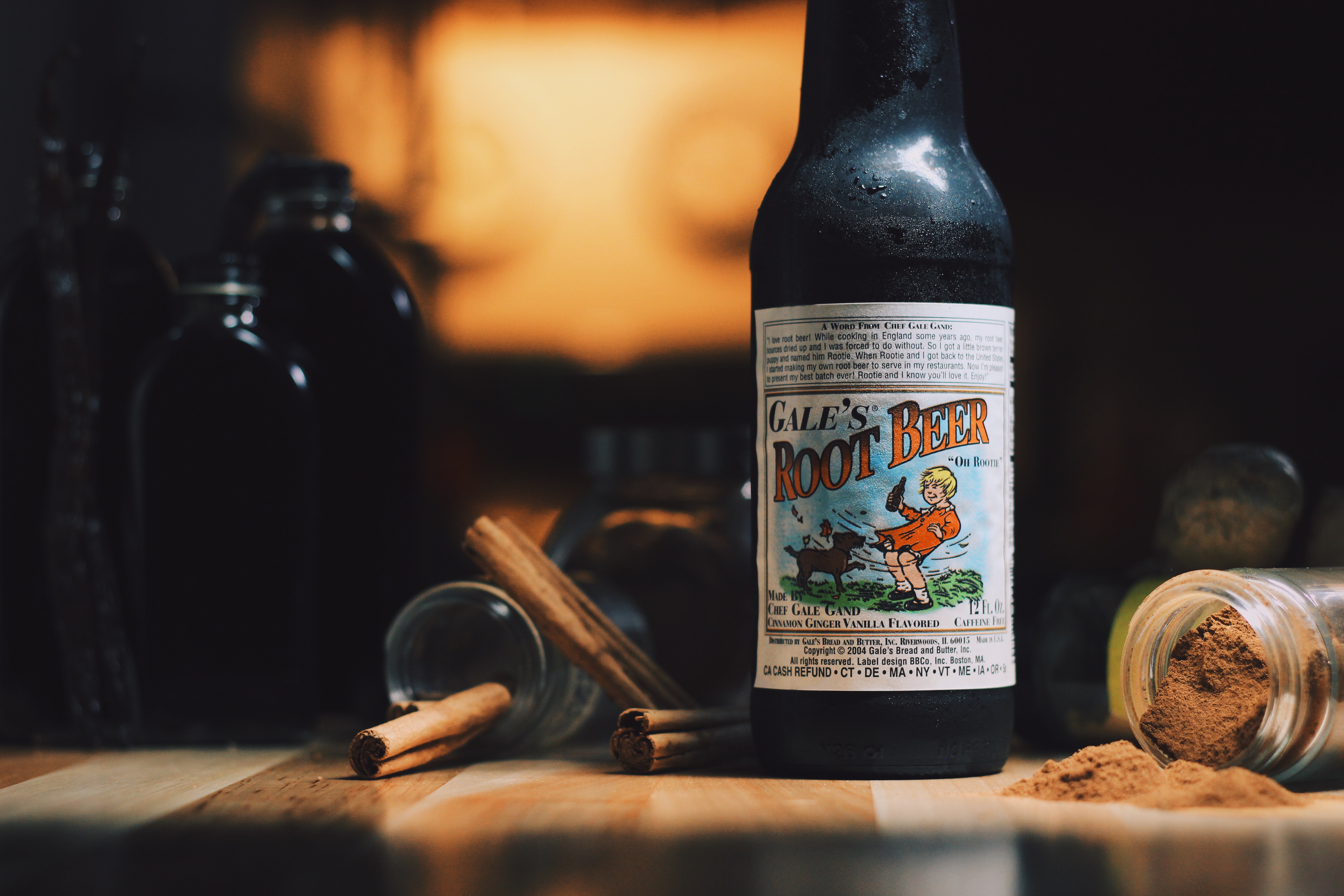
Gale’s Root Beer

History: Gale Gand is an acclaimed pastry chef. From writing books, teaching classes, developing products, filming television and running restaurants, Gale Gand has done it all in the world of food and beverage. But Gand has a liquid passion. “I can’t live without root beer,” she says cheerfully over the phone. Her love for the king of craft soda was tested years ago cooking in England where root beer was scarce. In her three years across the pond, the only place to find her favorite soda was in McDonald’s. But she and her chefs weren’t allowed to be seen in a McDonald’s, so they’d have to sneak people a pound to go buy them root beer as if it was some sort of black market treasure. A couple neighborhoods over from me, I often see people doing the same thing. They don’t sneak out with root beer though. As if to supplement her craving, while in England, Gand bought a Terrier and named it Rootie. After returning to America, Gand set out to make her own root beer, containing cold-pressed Nielsen-Massey Vanilla. The vanilla may be the most premium ingredient in the root beer, but its most defining element is likely the cinnamon. Gand makes a cinnamon-ginger infusion and then her bottler finishes it off with vanilla and cane sugar. About 50,000 bottles of Gale’s Root Beer are produced every year. Rootie appears on the bottle’s label.

Where to get: Gale’s Root Beer is available from a number of online retailers and the chef’s website has aggregated them all into a nice, single page. It’s also sold at Gand’s Chicago restaurant Spritzburger, home to fine burgers and homemade sodas.

Nose: Mild root beer; mint; light vanilla.

Taste: Vanilla; mild mint; cinnamon. This is a little harder to place than most root beers. Everything in this is relatively mild. There’s some mild spice to this that I’m identifying as ginger, but it doesn’t have a spicy bite. This isn’t creamy like a root beer rich in vanilla, but it also doesn’t have a crisp bite, like earthier root beers. Vanilla and cinnamon are probably the strongest flavors you’ll taste, but the two tastes really meld together to not overpower the other. I actually wouldn’t mind seeing either the vanilla or cinnamon be more pronounced in the flavor profile. It’s very easy drinking, but the individual flavors are not bold on their own.

Finish: Light carbonation with some ginger earthiness. The ginger is most evident on the finish, probably the most prominent of any flavor at any point of the sip.

History: This is a root beer that should appeal to a wide audience for its drinkability and lack of bite. This does very well with a few ice cubes and you’d have no problem drinking it quickly. But for so many craft soda enthusiasts, strong flavors are desired in every bottle. This is a root beer marketed as “cinnamon, ginger, vanilla flavored,” yet none of these flavors really jump out at you individually. Yet, you can certainly taste all three flavors. The ginger provides a mild earthiness and is strongest at the end of each sip. The cinnamon and vanilla work together in supporting roles, but both could stand to have the volume turned up. I can certainly see how fans of root beer would like this for variety’s sake. Gale’s Root Beer is something kids would also likely enjoy for how mild it is compared to some spicier root beers. I personally need a little more complexity when it comes to the granddaddy of craft sodas, but this is a root beer with a wide reach and for Chef Gand, that’s an accomplishment.