fivestarsoda.com

Mount Angel Brewing Company: Marionberry

History: Root Beer Larry, they call him. Nestled all the way up in Mount Angel, Oregon, Larry Oien’s family has roots in the root beer business. Back in the day, his dad’s cousin was on the board for A&W. Oien has been running Mount Angel Brewing Company since 2005 from “a German agricultural city” of just over 3,000 people, as he puts it. Oddly enough, there’s a barbecue connection here. So if you love soda, Germany, and smoked meats, keep your pants on, buddy. Oien and his brother Hal purchased Mount Angel Brewing Company from the Treager family so they could focus more on their barbecue grill business. The Treager’s used to brew beer and serve food at Mount Angel. Oien and his brother dropped the beer and food, but kept the name. So even though it’s called a “brewing company,” they do not brew beer. They do, however, make four different flavors, including their award-winning root beer. Ironically enough, the award was won at a beer competition. One of those flavors: marionberry. If you aren’t from Oregon, you probably don’t know what it is. We had to make sure it was a real thing. It is, and it’s very similar to a blackberry, though not quiiiiite the same. Oien notes, “They’re quite similar. Blackberry has a more definitive berry flavor, and marionberry is milder.” Along with two other soon-to-be-revealed flavors, Oien calls marionberry one of the “flavors of the Willamette Valley.” All of Mount Angel’s sodas are made with pure cane sugar, and natural extracts concocted in Wisconsin by a food scientist. Oien says it took about a year to get the marionberry flavor right in this soda. One thing Root Beer Larry is not a fan of in many sodas today? Too many bubbles. He adds “Everything is so dang carbonated. Drink it with some air. Savor the flavor.”

Where to get: “I’ve touched every bottle twice. I’ve bottled them, cased them up and delivered them to you personally,” Oien chuckles over the phone. As you can imagine, Mount Angel is a small operation. The company sells its sodas through the greater Oregon area. They’re also available online via the company’s website.
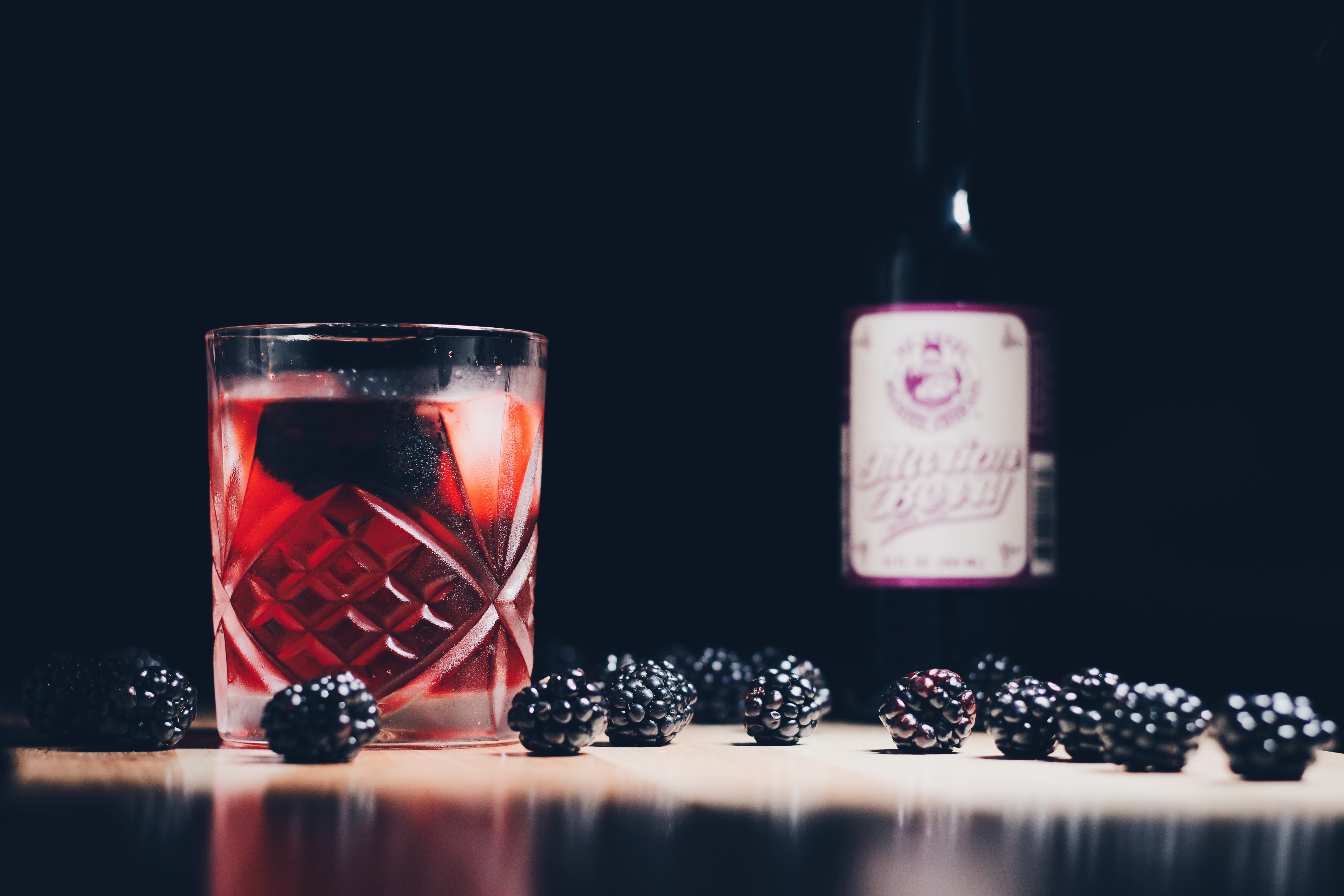
Nose: Blue raspberry Dum Dums; blackberries.

Taste: Blackberry; mild blue raspberry; grape. There’s a very distinctive sweet candy blackberry flavor that begins on the tongue and then transitions to a mild grape taste. The carbonation is nice and soft throughout the body of each sip. There are hints of blue raspberry throughout the drink, though definitely more blackberry. The blue raspberry flavor, though, does provide the slightest bit of tartness for a balanced mouth feel.

Finish: I’m definitely tasting a grape influence at the end of each sip. I don’t necessarily think there’s any grape flavor added, so it’s an interesting flavor to appear here.

Rating: Upon smelling this, it reminds me of the same blue raspberry smell present in High Mountain Huckleberry from Jackson Hole. Mount Angel Brewing Company’s Marionberry Soda is definitely more heavy on the berry side of things than the former. There is a distinctive blackberry taste in this soda that’s accompanied by notes of old-time grape and a tinge of blue raspberry tartness. Blackberry dominates the flavor profile and delights on the tongue. The levels of sugar and carbonation in this are just right. Enough to encourage repeat sipping without overpowering the soda’s main flavors. With so many soda flavors on the market today, we often find ourselves trying them and then moving on, never to return. Reminds me of my date last week. I’m still free any this weekend… if you’re reading this. Mount Angel Brewing Company has created a beverage you could enjoy sitting in your room on your laptop or with a meal after a long day at work. That grape flavor at the end of each drink is a little bit of a mystery. I wouldn’t mind seeing it curtailed a bit and letting the blackberry ride all the way through each sip. But this is a soda most should enjoy, particularly fans of fruit and/or berry-flavored sodas. Besides, you’ll be hard-pressed to find a marionberry soda anywhere else.
Taylor’s Tonics: Chai Cola

History: You could hear the seriousness in his voice. “We would’ve gone out of business,” says Taylor Peck. It was a grave error, one that would’ve cost his new venture over $40,000 in expenses. $40,000 they didn’t have to lose. And then, a break through. “It was kind of a miracle moment,” he says, the tension still in his voice. Taylor Peck is the founder and brewmaster of Taylor’s Tonics soda kitchen and retail soda shop, The Fizzary; both are located in San Francisco. Their flagship product is the one we review today, chai cola. But it was never supposed to happen.

Taylor and his team started out in Santa Cruz, California in 1996 making and importing teas. They quickly got into chai tea and then transitioned into using organic ingredients. Eventually they started making tea concentrates that they sold to clients. Peck become known for his sophisticated, flavorful tea brews. Business was good, so good he relocated to San Francisco in 2002. Six years later, he almost destroyed it all. “I made a major blunder as a brewmaster,” he chuckles over the phone. You see, there are a lot of ingredients and precision that go into making fine tea. In 2008, Peck was making a 16:1 chai tea concentrate. When he went to add the citric acid, he was off by one decimal point, meaning he added 10 times too much. The batch was useless as tea. This was a major problem, a costly problem. Peck estimates he would’ve lost over $40,000 and bankrupted his business if he didn’t do something. So Peck started thinking. And tinkering. And adding things. I mean why not; he had nothing to lose. Just kidding; he had everything to lose. And then one day… voila. Peck discovered that by carbonating this liquid mess and adding vanilla, it transformed into a pretty damn good soda.

Taylor’s Tonics now markets this soda as Chai Cola. It’s the company’s most recognizable product and the one that saved his business. As you might imagine, there’s a strong tea influence. In fact, 98% of its ingredients are also found in teas. In 2009, Peck began selling it to the public. Eventually he and his team sold off the tea concentrate side of the business to focus solely on craft sodas using tea ingredients. He explains, “It’s still our product. We just took it to a different plane.” All of the ingredients are natural and listed right on the bottle. “We do a combination of organic black tea extract, steamed black tea, and yerba maté teas.” You’ll find spices like cinnamon, nutmeg and three different ginger elements. Like most colas, this one also contains caffeine. Taylor’s Tonics also sells two other year-round flavors and a few seasonal selections. Three years ago, they added a retail soda fountain next to their store called The Fizzary. You’ll never hear Peck brag about his soda, but if you ask his opinion, he won’t shy away from giving it you; “We say little, do much. We don’t want to over promote and we make recipes that aren’t based in hype.” Bold. But can you blame him? I would be too if I pulled some wizard shit like he did. Let’s see if his soda is just as magical.

Where to get: At the time of this review, the online shop at Taylor’s Tonics is down for repair. If you’re looking at this way past June 4, 2015… go give it a peak. Until then, Soda Emporium and Galco’s have you covered for single bottles and Amazon has the hook-up on 12-packs.

Nose: Vanilla cola; chai tea; cloves. One of the best-smelling sodas my nose has come across.

Taste: Cola; tea leaves; cardamom; cinnamon; vanilla. This is a mouthful with a flavor profile akin to a fine dining experience. Lots of things are going on here. First there’s the unmistakable taste of black tea with a sweet kick. This segues into a smooth cola body with notes of vanilla, cinnamon and cardamom. The vanilla isn’t quite as pronounced on the tongue as it was on the nose. The cola and black tea flavors sustain throughout the drink, but the cinnamon and vanilla fade in favor of light ginger and cloves. I’d love to see that vanilla linger just a little bit longer. For a soda with black tea as a bold ingredient, it works well with contrasting flavors like vanilla, ginger and cinnamon.

Finish: Creamy cloves; herbal notes; chai. I wouldn’t necessarily call this a creamy soda, but rather a smooth one. However, the finish is certainly creamy, but it’s more of a botanical creaminess instead of one rich in vanilla. Interesting, but also very nice.

Rating: This is certainly an artisanal soda of the highest degree. Its flavor profile is rich with spices and herbs. Black tea leaves, cloves, vanilla, cinnamon and mild ginger are just a few highlights. The highest compliment I can give this soda is this: it’s a botanical craft soda that non-botanical soda fans will enjoy because its flavors work on multiple levels. The company fuses a blend of natural ingredients to form a tasty herbal elixir that really does taste like cola infused with chai. That said, with so many herbs and spices, this won’t be everyone’s cup of tea. Get it? ‘Cuz there’s tea in it. Ingredients like cardamom, yerba maté, and cloves are likely to shock the taste buds of some drinkers, but more likely to delight the tongues of most. I’m still trying to figuring out how to do that with women to this day. This isn’t a soda you’ll drink every day, but you’d really be missing out not to try this work of originality and revisit it every now and then. You can taste the effort Taylor’s Tonics puts in every bottle and the quality of ingredients used. It leaves a lasting impact. Chai Cola is a great fancy alternative to alcohol at cocktail parties and also makes a really fun and weird whiskey and coke, something that certainly won’t stop most of us. Do yourself a favor and sample this botanical beauty.

Bedford’s: Creme Beer

History: Creme Beer. The name alone sends a chill of nostalgia and intrigue down your spine. That was part of the plan Ed Bedford had when he concocted his first vanilla cream soda to sell on the open  market. Bedford is a down-to-earth northwest native with a friendly, grizzled voice. He says over the phone, “I’m almost 70 years-old and soda was a big thing in our life.” He wanted it to stay that way for the current generation, but also wanted to make sure they were drinking old time classics made with higher quality ingredients than something you might get at a fast food joint. So after a long stint as general manager for a beer, wine and soft drink distributor, Bedford founded Bedford’s Sodas in 1984. Today the company sells five different flavors. Based out of Port Angeles, Washington, he says good soda had faded away in the Pacific Northwest. He sought to bring it back by first starting with cream soda, a flavor no company was really emphasizing in the mid-80’s. The idea actually came from Steve Sourapas, an owner of the Dr. Pepper Bottling Company in Seattle. Bedford explained that during prohibition, many bars and saloons referred to cream soda as creme beer so they didn’t totally lose the boozy influence. The name stuck with his father, who passed it on to Bedford who threw it on a label to give cream soda a unique name. Bedford worked hard to get the flavor exactly where he wanted it. “I wanted a true vanilla cream,” he said. He put together a tasting panel with over 100 years of experience in the beverage industry to help pick the right recipe. He’s been working with the same flavor chemist for the entirety of his craft soda-making career. Before we hung up the phone, he paused and added, “I think that my sodas are as genuine as I can possibly be to what I can remember as a child. Always serve them ice cold, never with ice.”

Where to get: Bedford’s Sodas are sold all over the place online, including Summit City Soda, Orca Beverages (who bottle Bedford’s soda), and Amazon. You can also find them in Rocketfizz retailers.

Nose: Dunkin’ Donuts Bavarian Kreme Custard Donut. Hey man, it smells like that. Also vanilla, but you knew that.

Taste: Sugar; vanilla; creaminess. This is definitely an intense vanilla cream soda. No bubblegum here. The vanilla is creamy and sweet. It smells like my favorite donut, but the vanilla, at times, tastes a little bit more like vanilla buttercream or custard. This is a sweet soda, but smooth and drinkable. It tastes like classic cream soda with the volume turned up. You can really tell this uses higher quality ingredients. Everything is a little bolder and better. Nicely done.

Finish: Vanilla custard with just the sliiiiiightest hint of caramel. An excellent finish that begs for more sips.

Rating: This is an excellent cream soda, but before I tell you why, let’s talk about the first thing you see: the bottle. There’s something about it that draws you in. Maybe it’s the regal, old royal feel of the Bedford’s crest in the middle. Maybe it’s the medieval lettering of the font. Or maybe it’s the fact that this is called creme beer and not cream soda. Bedford’s does an excellent job selling the customer before the liquid even enters the equation. The same could be said about the dude at Lowe’s who sold me my overpriced toilet. But this is soda you’ll never throw down the drain. It’s fairly simple, but cream soda is a simple drink. It’s smooth and creamy with rich vanilla and slight notes of caramel on the finish. The vanilla almost has a hint of custard flavor to it that separates it from other vanilla creams. It could probably hold off on a gram or two of sugar, but there’s no question this is must-try cream soda. It also works well with an oaky bourbon to balance out the sweetness. Buy this. Tell your friends you had a creme beer today. Say nothing else and walk away. You’re a soda jerk. And we like it.

Americana: Honey Lime Ginger Ale

History: The Americana line of sodas is produced by a giant retro soda bottler known as Orca Beverages. Orca came about in the 1980’s and was founded by Mike Bourgeois in Mukilteo, WA, an affluent suburb of Seattle. The first brand they produced was their very own called Orca Sparkling and “contained over 50 percent juice sourced from Northwest juice processors.” Orca no longer bottles their own name brand, but they’ve expanded to become one of the biggest craft soda bottlers in the country. They’ve partnered with over 100 brands to produce their sodas, including classics like Dad’s Root Beer, Moxie Original Elixir, and Bubble Up. According to CFO Charles Funk, Americana is now the company’s flagship brand with 11 different flavors. The Americana bottles used to feature old presidents on the label. Personally, we’re not sure why they abandoned such a neat idea. But I’m also not sure why I’m on my third marriage and sleep on the couch half the time. In the words of the company, the brand is a throwback to the time of “soda fountains, sock hops and five-cent sodas.” You can’t even get a disease for five cents these days, much less soda. But you get the idea. Orca Beverages is steadfast in their emphasis on quality. Says Funk, “One thing about our whole line of sodas we produce is that we use the best ingredients we can find,” even if it means paying more. The company employs their own “Tasteologist.” So do we. We’re called Five Star Soda. Today, it’s honey lime ginger ale made with premium honey.

Where to get: Americana craft soda from Orca Beverages is distributed world-wide and easily found in stores that sell glass-bottled sodas. Americana is one of the more popular craft soda brands, just a touch below Boylan’s, Virgil’s, and Jones. You can find it online at Summit City Soda (better pricing) or on the company’s website. You can also purchase single bottles at Soda Emporium.

Nose: Ginger; honey. Maybe the first soda made with honey I can actually smell in the bottle.

Taste: Ginger; mild heat; honey. This is spicier than you expect it to be for a ginger ale with the word “honey” on the label. It’s light like a ginger ale with enough spice to call it a ginger beer. Probably a 7 on the heat scale with spice that lingers on the tongue. Some of that may be from the citrus of the lime that causes the heat to stick. It takes a few sips to adjust before the honey really comes through. After that initial heat, this becomes quite a sweet ginger ale. Almost too sweet at times. The spice of the ginger and the flavor of the lime form together to create a pepper-like heat. This is a ginger ale that’s definitely sweet with lingering spice.

Finish: Light honey immediately followed by peppery spice.

Rating: Americana Honey Lime Ginger Ale is an interesting take ginger ale and probably won’t fit the preconceived notions of taste you might have about what’s in the bottle. It’s quite spicy, but not the traditional gingery fire akin to ginger beers. No, this tastes like it has some kind of pepper in it. It’s a little too prevalent for me. Yet at the same time, this is also sweeter than most ginger ales. It’s an odd combination of sweet and spicy. The lime doesn’t quite come through in the flavor profile all that much, but that doesn’t really bother me. I just keep coming back to the sweet vs. heat. It feels like a struggle over which one should be more bold on the palate as opposed to working in tandem to create a balanced flavor profile. This is worth a try simply because it’s different, but it could use some tweaks. One thing I will say about this soda is that it benefits from being on ice as opposed to sipping straight from the bottle. There are better ginger ales out there, but you will please your inner soda connoisseur by trying one this different.

Gale’s Root Beer

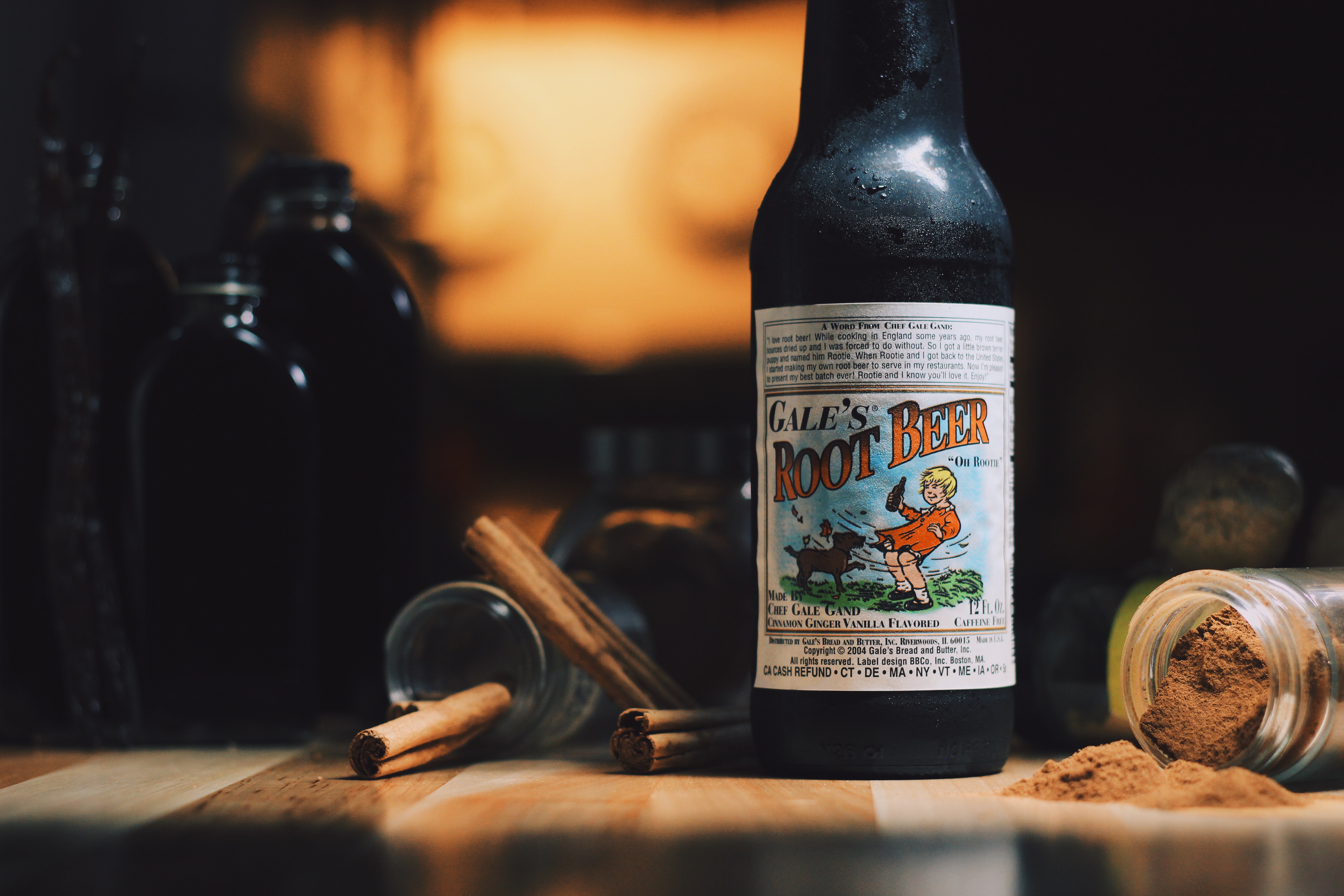
History: Gale Gand is an acclaimed pastry chef. From writing books, teaching classes, developing products, filming television and running restaurants, Gale Gand has done it all in the world of food and beverage. But Gand has a liquid passion. “I can’t live without root beer,” she says cheerfully over the phone. Her love for the king of craft soda was tested years ago cooking in England where root beer was scarce. In her three years across the pond, the only place to find her favorite soda was in McDonald’s. But she and her chefs weren’t allowed to be seen in a McDonald’s, so they’d have to sneak people a pound to go buy them root beer as if it was some sort of black market treasure. A couple neighborhoods over from me, I often see people doing the same thing. They don’t sneak out with root beer though. As if to supplement her craving, while in England, Gand bought a Terrier and named it Rootie. After returning to America, Gand set out to make her own root beer, containing cold-pressed Nielsen-Massey Vanilla. The vanilla may be the most premium ingredient in the root beer, but its most defining element is likely the cinnamon. Gand makes a cinnamon-ginger infusion and then her bottler finishes it off with vanilla and cane sugar. About 50,000 bottles of Gale’s Root Beer are produced every year. Rootie appears on the bottle’s label.

Where to get: Gale’s Root Beer is available from a number of online retailers and the chef’s website has aggregated them all into a nice, single page. It’s also sold at Gand’s Chicago restaurant Spritzburger, home to fine burgers and homemade sodas.

Nose: Mild root beer; mint; light vanilla.

Taste: Vanilla; mild mint; cinnamon. This is a little harder to place than most root beers. Everything in this is relatively mild. There’s some mild spice to this that I’m identifying as ginger, but it doesn’t have a spicy bite. This isn’t creamy like a root beer rich in vanilla, but it also doesn’t have a crisp bite, like earthier root beers. Vanilla and cinnamon are probably the strongest flavors you’ll taste, but the two tastes really meld together to not overpower the other. I actually wouldn’t mind seeing either the vanilla or cinnamon be more pronounced in the flavor profile. It’s very easy drinking, but the individual flavors are not bold on their own.

Finish: Light carbonation with some ginger earthiness. The ginger is most evident on the finish, probably the most prominent of any flavor at any point of the sip.

History: This is a root beer that should appeal to a wide audience for its drinkability and lack of bite. This does very well with a few ice cubes and you’d have no problem drinking it quickly. But for so many craft soda enthusiasts, strong flavors are desired in every bottle. This is a root beer marketed as “cinnamon, ginger, vanilla flavored,” yet none of these flavors really jump out at you individually. Yet, you can certainly taste all three flavors. The ginger provides a mild earthiness and is strongest at the end of each sip. The cinnamon and vanilla work together in supporting roles, but both could stand to have the volume turned up. I can certainly see how fans of root beer would like this for variety’s sake. Gale’s Root Beer is something kids would also likely enjoy for how mild it is compared to some spicier root beers. I personally need a little more complexity when it comes to the granddaddy of craft sodas, but this is a root beer with a wide reach and for Chef Gand, that’s an accomplishment.


Wurst Soda: Grape

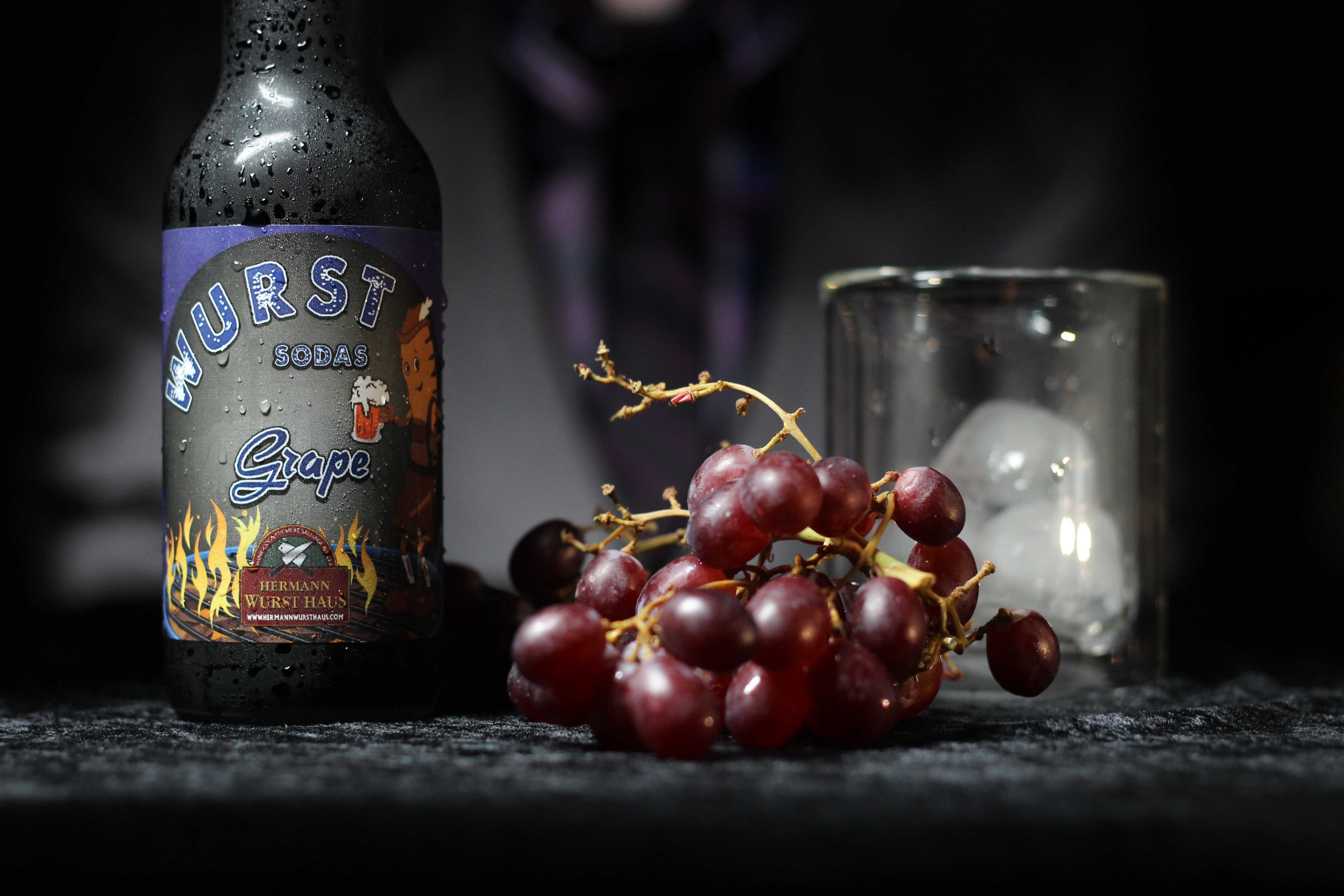
History: If the mid-south U.S.A. and German Oktoberfest has a child, Mike Sloan would be their spawn. Look at that guy. You wanna be friends with that guy. In his spare time, he enjoys “collecting antique sausage-making equipment.” In fact, Sloan has been in the meat business since he was nine years-old and worked for his parents’ Swiss Meat Sausage Company for 42 years in Swiss, Missouri. In 2011, he decided it was time to create his own legacy in the industry, so Sloan began Hermann Wurst Haus in 2011, cooking up homemade sausages, brats, and bacon. Dude makes 45 flavors of bratwurst and 12 flavors of bacon, among other things. All located in Hermann, Missouri, about an hour west of St. Louis. It’s an area rich in German heritage and culture, and also home to lots of wine makers. And with all that salty meat, you gotta wash it down with something. So in 2014, Sloan introduced Wurst Craft Sodas, “The Wurst Sodas You’ve Ever Had.” Hell of a tag line. Hopefully not literal. Hermann Wurst Haus produces five traditional soda flavors: root beer, cream soda, orange, grape, and black cherry. “These are the sodas you grew up on,” Sloan adds. All sodas are made with pure cane sugar and strive for an “old-time rich, soda fountain flavor.” Today’s review, grape soda, is modeled after old-fashioned grape Kool-Aid.

Where to get: Currently, all Hermann Wurst Haus sodas are only sold in-store, located at 234 E 1st St, Hermann, MO 65041. You might want to pop in. They just received a Tripadvisor 2015 Award of Excellence.

Nose: Grape Dimetapp. Yes, I know this is a medicine, but don’t tell me as a child you didn’t love both the smell and taste of Dimetapp. I would’ve partaken even if I wasn’t sick.

Taste: Grape Nehi; sugar; grape popsicle. Pretty traditional grape soda flavor. Definitely can see the grape Kool-Aid influence. Sugary, but doesn’t leave a syrupy taste in the mouth. Tastes like a grape popsicle from which you’ve sucked out all the juice. The carbonation is soft and nice. Nothing complicated about this.

Finish: Sweet old-fashioned grape soda taste. No difference between the body, finish, or aftertaste.

Rating: This is as straightforward as it gets with fruit soda. Everyone knows what classic grape soda tastes like, and this is it. It’s definitely nothing like the more natural version made by Waynesville Soda Jerks. This is sweet, sugary, classic grape soda. This is your country neighbor in the log cabin next door. He’s not the smartest. He’s not the cutest. But damn, he can chop that wood in a reliable and timely fashion. You can count on him and you can count on Wurst Grape Soda. It’s not the best grape soda we’ve tried, but you probably won’t regret having one every now and then. Maybe drink it with a sausage. For once in my life, I can say that seems fitting in this instance.

Squamscot: Maple Cream Soda

History: At Conner Bottling Works in Newfields, New Hampshire, Squamscot Beverages has been making old-fashioned, glass-bottled sodas or “tonics,” as they used to call them, for 152 years. The business opened in 1863. They’ve been using the same bottling machine named “Dixie” since 1938. It hasn’t even moved spots in the building since then. The business has never been sold by the founding family and today is run by Dan Conner, the fifth generation of his family to operate the business. It is the last independent bottler in the state of New Hampshire. Think about all that. Whether or not you enjoy their products, Squamscot has a remarkable history. It started as a beer bottling plant. This company is so old that the beer they were bottling back in 1863 had to be brought there by horse and carriage! These days, if you see a horse and carriage, you’re either lost in Amish country or you got drunk enough downtown to think paying $20 for a pre-blackout stroll was a good idea. Despite starting with beer, soda slowly made its way into Squamscot’s repertoire. Orange soda and ginger ale started being made in the late 1800’s. The beer business was going well. Then prohibition happened. Beer business wasn’t so hot after that. So soda became the company’s main source of income with its golden ginger ale ascending to flagship beverage status. In 1926 Pepsi, then being bottled by Conner Bottling Works, pulled out of its contract. This is when soda really took off for the company with lots of flavor expansion. Today, Dan Conner says Squamscot produces 27 flavors, its golden ginger ale still being one of the most popular. “We make a quality product. We offer it how it was always made,” with recipes dating back generations, he adds. Today’s review, Maple Cream Soda, is designed to be sweeter and is made with pure cane sugar and maple extract. Let’s see how it stacks up.

Where to get: Squamscot Beverages are sold widely throughout New Hampshire and sporadically across the country. The easiest way to find the Maple Cream Soda is to purchase it online via Galco’s Soda Pop Shop or from Holiday Wine Center. Don’t worry, you can trust both websites.

Nose: Maple syrup. I would say more, but this smells exactly like the flavor on the bottle. I’d take this in candle form.

Taste: Maple syrup; sugar; tartness. Tiny little bubbles flood the mouth before the tide returns to sea and you’re left with a delicious, pure maple flavor. Just the right amount of sweetness and maple syrup. But there’s also accompanying undertones of tart cane sugar throughout the body that somehow enhance the maple flavor. This is actually a soda that benefits from having a couple ice cubes. Almost like a fine bourbon, the water slowly releases more flavor, in this case, a creamier, more intense maple taste as well as some very light notes of vanilla caramel. On ice, that tartness becomes almost non-existent. So if you’re a fan of something that wrestles the tongue a little, drink this chilled in the bottle. If you prefer a creamier maple taste, a couple ice cubes will do the trick.

Finish: Mild maple syrup and caramelized sugar. Definitely some bite to the sugar here. On ice, the finish is basically the same, only less intense.

Rating: Maple is a flavor craft soda bottlers decided to elevate on a silver platter. It’s a flavor that just sounds like you can’t go wrong with in soda form. But take if from us – we’ve tried a lot of maple soda… it rarely lives up to the flavor utopia you’re expecting. But when you’ve got 152 years of soda manufacturing on your side, it’s a little easier to take on a popular flavor like maple. Squamscot has taken a flavor that often misses the mark and created a maple soda that is a standard-bearer in its realm. The flavor profile succeeds wildly. Tart cane sugar and authentic maple flavors blend to form a crisp, delicious soda that you as a maple fan have been waiting for. This is like when you ask out the hot girl who makes barbie look inadequate and she has everything in common with you, is smart and gives great massages. Expectations: met and exceeded. Well done, Squamscot. The underlying tartness might turn off a few drinkers. To those I say, try this on ice. It becomes less intense and creamier. This is the maple soda for which you’ve been waiting. Wait no more. Go live the dream.

Regatta: Ginger Beer

History: Stan Rottell knows the beverage industry. He’s been involved in every facet, from accounting to product development. He was big in the development of Snapple Teas. He even was behind a flavor re-engineering of Barritt’s Ginger Beer that turned the island favorite brew into one made with natural ingredients. This is where things started. After five years of babysitting the Barritt’s brand, the company decided to go a different direction and handed over their business to Gosling’s and went back to cheaper ingredients. This wasn’t the path Rottell wanted for himself or the products he endorsed. So he then made his own ginger beer. As an avid sailor, he named it Regatta Ginger Beer. Regatta typically refers to sailboat races. To this day, it’s still a one-man operation in Westport, Connecticut. Regatta Ginger Beer actually sponsors a fair share of sailing races across the country. As for the ginger beer itself, Rottell says “It’s got a bite, but it’s certainly going to be easy to drink…. I was looking for something that wouldn’t overwhelm what it was mixed with, but could be enjoyed on its own.” He wanted a ginger beer that was bold, but also a little fruity. In order to achieve that, he imports ginger root from the Caribbean, Africa, and sometimes Australia that possess slightly fruitier notes than other ginger roots that are more spicy or earthy. Like many ginger beers, this one is also designed mostly to be paired with alcohol. Rottell estimates 90% of Regatta Ginger Beer goes into some type of cocktail. The company often partners with well-known spirits like Russian Standard Vodka or Mount Gay Rum. Regatta Ginger Beer is made with pure cane sugar and limited preservatives. “There’s no magic,” Rottell adds. It’s all in the ginger root. For now, Regatta solely produces Ginger Beer, but Rottell is open for flavor expansion. He pauses, collects his thoughts and says with focus, “I’m constantly looking for a better ginger ale.”

Where to get: Regatta Ginger Beer is sold in 26 states and is particularly popular on both coasts. You can buy it in cans directly from the company or in single glass bottles from Keg Works.

Nose: Classic strong ginger beer. Smells like ginger fire is coming.

Taste: Ginger; spiciness; sweet sugar. Regatta’s take on ginger beer won’t make you cough from the spiciness, but it’s still got a kick. Soft little bubbles flood the mouth before you get a tinge of sweetness followed immediately by classic ginger heat. This contains just the right amount of sweetness for a ginger beer. Enough for flavor, but not distracting from the heat or flavor of the ginger roots. The ginger flavor is nice and varied flowing back and forth between the fresh-peeled root and candied ginger. There’s also some fruity notes that are difficult to accurately nail down. Mild apple undertones seem most prominent in a supporting role along with some citrus. The combination of ginger flavor, mild heat, moderate sweetness, and crisp carbonation make this one of the more refreshing takes on ginger beer on the market today.

Finish: Mildly earthy ginger with notes of rock candy sugar. Not overpowering, something for a ginger beer that can be hard to attain. This finish begs for additional sips.

Rating: This is a ginger beer you may not be familiar with, but it’s one you should get to know immediately. Its beautiful sea green bottle, yet simple design may not scream “Buy me!” but sometimes the most unsuspecting things are the best. Take my wife’s Porsche for example. I would’ve never expected with our combined income we’d buy it… until she went back and used my credit card without telling me. She’s the best! Regatta has bottled up a delicious, fruity ginger flavor profile using both Caribbean and African ginger roots and paired them with a level of sweetness that doesn’t distract from that classic ginger heat, yet provides additional flavor and balance. It’s about a six on the ginger beer heat scale. Perhaps the highest compliment we can pay to this ginger beer is that’s it’s refreshing and deserves to be consumed entirely on its own. But we all know most ginger beers are made to be mixers. And I’m not afraid to write this: Regatta Ginger Beer is the best ginger beer I’ve had for Moscow Mules or Dark and Stormy’s. You would be doing yourself a disservice not to try this with alcohol. I’d be surprised if this didn’t immediately make a dent in your top five ginger beers. Pull out your credit card, unless my wife somehow has yours too, and add this Florida-brewed ginger juice to your life.