Fruit Soda

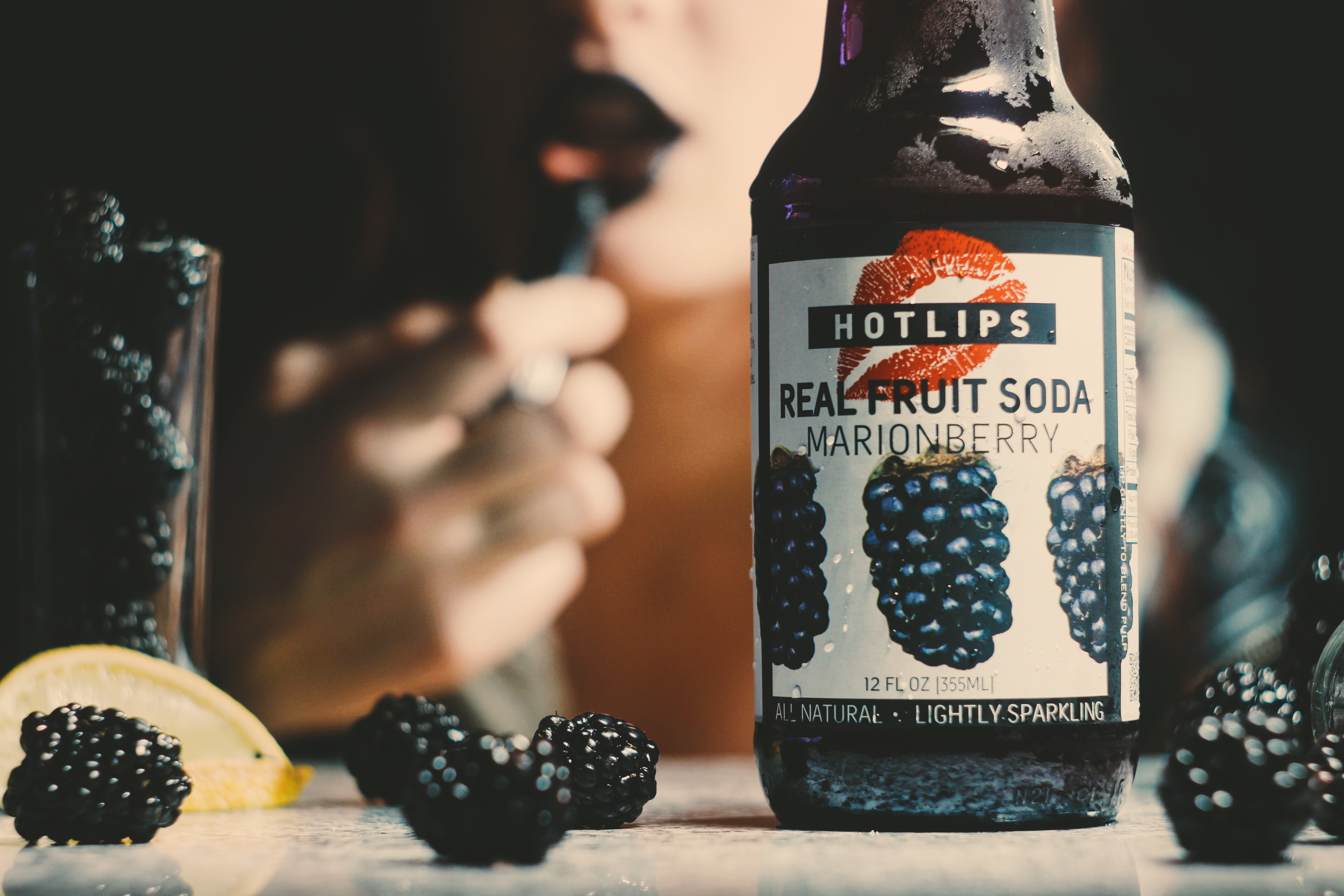
Hot Lips: Marionberry

History: As I dial up Hot Lips‘ corporate offices in Portland, Oregon, I am greeted by the most soothing, gentle Australian voice in my life. Adam Swoboda’s tone is so dreamy, I wish he’d sing me lullabies every night before bed, and I’m 27 years-old. Our interaction is tragically short-lived and I am passed off to Hot Lips Soda Account Manager Lars Burkholder who fills me in on the company’s history. “Hot Lips is a pizza restaurant first, and a soda company second,” he tells me, before adding Hot Lips Pizza has six locations across Portland. He encourages a sampling of the company’s “Tough Mother,” a pie with pepperoni, onions, peppers, and spicy chipotle sauce. Hot Lips was founded by David Yudkin has been making artisanal pizzas with ingredients sourced from local farms since 1984. Burkholder describes the company as “farm-to-table before it was cool.” After making fresh pizza for so long, Yudkin decided he wanted a fresh beverage to go with it, something he couldn’t get from the big companies. He wanted it to be “kid-friendly,” too. And who doesn’t love an ice-cold soda to wash down a few slices with? The farmers he was sourcing his pizza ingredients from were already harvesting fruit too, so it was a natural starting point for his own idea of soda. Yudkin came out with Hot Lips Soda in his restaurants in 2002 and began bottling in 2005. When you think of Hot Lips Soda, you should think of fresh fruit. “We’re starting from the actual fruit” and not an extract or oil,” Burkholder explains. They’re not shy about admitting that they go the extra mile to create a quality fresh-fruit soda “It’s pretty labor-intensive. It’s pretty expensive,” he reveals. Five of the company’s six sodas contain only four ingredients: fruit, lemon juice as a balancing agent, cane sugar, and carbonated water. The sixth, lemon, has just three since lemon is also the main fruit flavor. The company’s promise to its drinkers is that they will never put additives in their soda. No preservatives. No artificial colorings or flavors. Ever. Burkholder emphasized that the company is “really proud of the fact that it’s so simple,” in talking about each flavor. Hot Lips Soda is about letting the core fruit shine through for the drinker’s palate to absorb and enjoy. In order to ensure this, Hot Lips Soda is less carbonated than what you’re probably used to even in a craft soda. Each batch of soda also may taste slightly different from a previous output depending on the flavor the fruit when it was picked, something that reminds us of WiscoPop Cherry.

When choosing a Hot Lips flavor to sample, it only seemed right to start with Marionberry, an Oregon-native fruit. Marionberry is a hybrid of two types of blackberries bred together to create one super black, er… marionberry. So imagine those two blackberries as Jay Z and Beyoncé. Blue Ivy is their Marionberry. Listen, no one ever said we had to be good at analogies for this job. “It’s kind of the unofficial state berry of Oregon,” says Burkholder. An interesting fact about the marionberry soda is that it’s Hot Lips’ thickest soda in terms of consistency. The soda contains real marionberries, carbonated water, cane sugar, and lemon juice instead of citric acid for a cleaner, more natural balancing agent. And while red raspberry is the company’s most popular soda, marionberry apparently has a very loyal local crowd. “It’s very representative of the Hot Lips brand” because it is a local berry, Burkeholder notes. If you’re ever up around Portland wandering the streets in your flannel and tattered jeans with a bag of Voodoo Doughnuts in hand, Burkholder encourages you to stop by one of the pizzerias to come enjoy the company’s exclusively in-house “seasonal experimental” soda that changes every month. Past flavors have included cranberry, blood orange, and honey just to name a few.

Where to get: Hot Lips Soda can be purchased at all Hot Lips Pizza locations, as well as retailers in Alaska, California, Idaho, Oregon, Utah, and Washington. You can also buy Hot Lips soda online directly from the company at their web store in single bottles, 6-packs, and 12-packs. You can also buy it online from Summit City Soda in 12-packs and 24-packs. Hot Lips Soda is also sporadically available throughout the U.S. but the company is currently working to make their physical availability more consistent in the eastern portion of the country.

Nose: Mmm, like a piece of blackberry pie. You can almost smell the crust.

Taste: Frothy carbonation; rich blackberry; blackberry pie. If you’ve ever had a fresh piece of blackberry pie, this will taste familiar to you. The carbonation really aids in the flavor of this soda. The smaller bubbles and marionberry juice combine to create a frothy, velvety texture. It’s not creamy, but there’s definitely a little bit of a berry foam flavor going on. It’s slightly tart, but has enough sugar to make it easy to drink. Big berry flavor, like the kind you taste when eating a piece of grandma’s blackberry pie.

Finish: The tartness has subsided by now and you’re left with sweet, authentic blackberry flavor.

Rating: Hot Lips uses real fruit in their sodas and you can taste it. For those of you who don’t know, Marionberry is a hybrid between two different types of blackberries, so it’s just a fancy Oregon name for blackberry. And Hot Lips Marionberry has big, delicious, thick, black… berry flavor. I thought about writing a joke there, but I just don’t feel like getting beat up today. What stands out about this soda is the freshness of the berry flavor. It doesn’t taste like artificial blackberries or blackberry candy. If you know what actual blackberries taste like, this is it. The initial tartness, the sweetness on the finish, and the big berry taste. It’s all there. It really reminds me of the inside of a piece of blackberry pie. Definitely a nostalgic soda, and Lord knows that’ll appeal to many. Hot Lips lists lemon as another ingredient in this soda, and that’s something I’m not tasting. But I don’t think that’s a bad thing. It’s just a balancing agent. Marionberry is a simple flavor of soda that rests on the laurels of its main ingredient. Luckily, blackberry is a strong enough flavor to carry the soda from its initial fizz to its final sip. Hot Lips is one of the more popular craft sodas in America, and their take on Marionberry shows why the company continues to thrive.

Four Stars

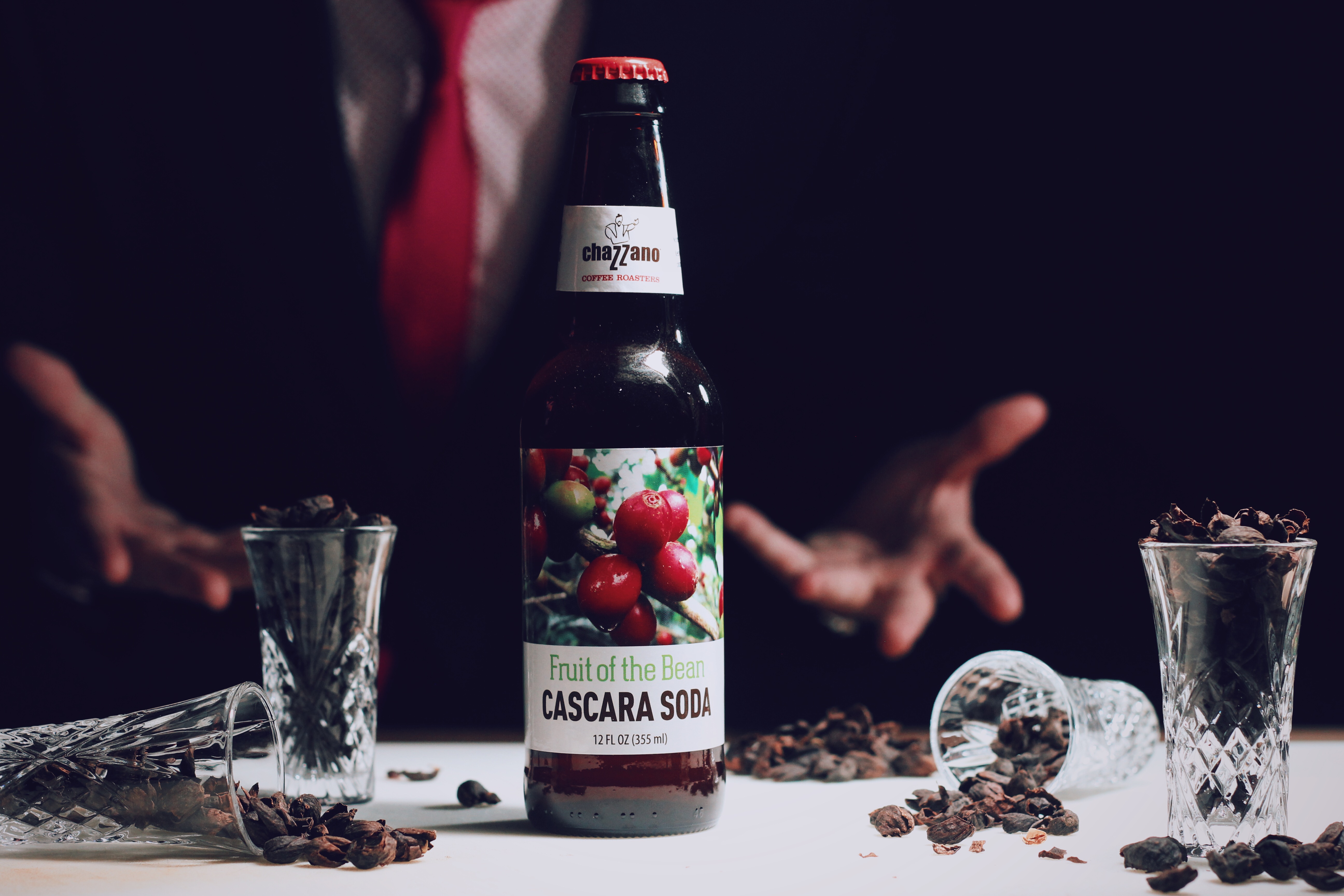
Chazzano Coffee: Fruit of the Bean Cascara Soda

History: There are as many layers to Chazzano Coffee founder and owner Frank Lanzkron-Tamarazo as there are to the beans he roasts in his Ferndale, Michigan cafe. But first and foremost, this dude loves coffee – he talked to us about it on the phone for 54 minutes. Most of our interviews are done in under 15. He also knows it about 2940325x better than anyone I’ve ever met. He is a master roaster and takes it seriously. He generously sent us two bags of it. Can confirm his coffee is amazing. He’s also one of the funniest people I’ve ever interviewed. When talking about bad coffee, he quipped, “It’s against God to do that.” It’s a topical quote because religion is another big part of Lanzkron-Tamarazo’s life. He’s Jewish with Italian heritage and grew up in New York City. Religion is actually what led Lanzkron-Tamarazo to his own coffee business because he originally moved to Michigan to take a job in a synagogue that didn’t work out. It even impacted the cafe’s name. You see, Lanzkron-Tamarazo is a Cantor, which is the main Torah reader and singer in Jewish synagogues. In Hebrew it’s called a “Chazzan.” So he took the Hebrew spelling, added an “O” to it because he’s Italian and basically every Italian word ends in “O”, and voila – Chazzano Coffee was born in October of 2009. Lanzkron-Tamarazo’s journey to become one of America’s most knowledgeable sources on coffee started 16 years earlier when his mother-in-law bought him a roaster for his birthday. After buying beans from around the world, his “night time hobby” escalated from brewing ounces to pounds to hundreds of pounds to thousands. And after buying bigger and bigger roasters to satisfy his greater yields, the dollars were adding up and the passion was no longer pacing at a slow drip. Lanzkron-Tamarazo says he decided “Life is short. It’s time to do something that will really bring joy to my life.” Why, you might ask? “I could not find anyone else’s coffee that was better than mine,” he admits. Over the phone, you can tell he isn’t being condescending – this dude believes he’s it when it comes to coffee. Chazzano Coffee’s catchphrase is “Good coffee makes you sing!” Seems appropriate since Lanzkron-Tamarazo and his wife are both opera singers. “My kids will probably need therapy because of that,” he jokes.

Six years later, Chazzano Coffee gained a new relative on the shelves in the cafe: soda. As a youngster, Lanzkron-Tamarazo’s grandmother loved Manhattan Special Espresso Soda, a beverage you can still buy today. It was always his duty to bring it to her. As an adult, it was his dream to create his own coffee soda. So in October of 2015, he did. But he also created another, arguably much more interesting soda based on cascara, also known as “coffee cherry.” Cascara is the husk or skin of coffee cherry, the fruit of the coffee bean. Lanzkron-Tamarazo describes the taste of coffee cherry as honeydew-esque. It’s often used in teas. He notes many coffee farmers use the fruit as compost for trees, however others in countries like Yemen use it to create beverages. Lanzkron-Tamarazo first tasted coffee cherry at Gold Mountain Coffee Growers in Matagalpa, Nicaragua in January of 2015. It wasn’t long before he started making his own tea using cascara. That tea is a central part of Fruit of the Bean Cascara Soda. In fact, it is the soda… because the soda is literally just the tea and carbonated water. No sugar. No preservatives. No added flavors. Just two ingredients. His coffee soda follows the same principle. “There’s nothing like it that has no preservatives, that has no sugar,” he boasts. And while Lanzkron-Tamarazo describes coffee cherry’s flavor as tasting like honeydew, he says the cascara soda is sweet with notes of apple and pineapple. It’s not often we taste sodas based on something we’ve never even heard of, but I suppose there’s a first for everything. Chazzano Coffee is already ahead of the game when it comes to originality.

Where to get: Chazzano’s Fruit of the Bean Cascara soda can be purchased in the Ferndale, Michigan cafe. For those of you not able to make the trip, Lanzkron-Tamarazo takes orders for his soda via email or phone. You can find their contact information on their website.

Nose: Prunes with just a touch of mild cherry.

Taste: Unsweetened prunes; slightly fruity tea; tobacco; mild coffee. There’s an interesting combination of flavors going on that all go back and forth. Typically with sodas you taste an initial flavor, then some more tasting notes that come in to blend and form the soda’s base, and then a finish. Here, the three flavors of mild prunes, tea, and coffee all make up the soda’s body and intermingle throughout each sip. This is not a sweet soda as it contains no sugar. Each of the three flavors have equal balance throughout the bottle, though some flavors are stronger on some sips and milder on others. The prune taste provides a little bit of natural fruit flavor with some floral hibiscus notes, while the tea has slightly fruit, almost cherry-like notes. The coffee flavors are pretty straightforward and provide some mild bitterness. It’s hard to pinpoint an exact coffee flavor with the fruity notes also in play. An interesting taste worth pointing out that comes from the brewed cascara tea used to make this soda is tobacco. It’s not strong, but it does provide some subtle smokey and savory notes for a more full-bodied flavor. Both are mild in nature. It’s a mild soda in general, but is very drinkable for one with no sugar.

Finish: There’s a very light coffee flavor at the end of this soda, kind of like a blonde roast. It’s a unique sensation going from a tea flavor in the soda’s body to a coffee one on the finish.

Rating: Fruit of the Bean Cascara Soda is truly a pioneering soda in the industry. It’s the only bottled soda made from “coffee cherry” or cascara that we know of… and trust us, we’ve looked into it. It’s a coffee shop connoisseur’s dream. This is a soda you can drink as an alternative to tea or coffee and still get a little caffeine kick from, as cascara contains about a quarter of the caffeine of normal coffee. The flavors are truly… odd. That’s not a bad thing. It’s a swirl of prune notes, blonde roast coffee, and steeped tea with notes of hibiscus and tobacco. The tea flavor brings both floral and savory elements to the table, while the coffee brings a little bit of a roasted bitter taste. But the biggest flavor I notice is that fruity prune taste. It’s there just enough to stand out the most to me, but all three flavors are balanced throughout the beverage. Like Chazzano Coffee Soda, Fruit of the Bean Cascara Soda also contains no sugar. For some, that’ll be a turn off. Personally I’m not a fan of sodas without sugar, whether they are labeled diet or not, but I don’t know – this one is so light and drinkable that I do actually enjoy it. It has real flavor despite the absence of sugar while maintaining a sophisticated flavor profile. It doesn’t surrender taste. Frank Lanzkron-Tamarazo has said he won’t make a soda with sugar in it. I’d be interested to how this one would taste if that were to happen. I also think adding sugar would strengthen its appeal to a larger audience. It’s hard to critique this soda beyond that because there’s no basis on which to judge it seeing as its the first of its kind to be bottled. I have to praise Chazzano Coffee for being truly original and I’m interested to see where this pioneering soda takes the flavor in the industry and how it might inspire its creators to branch out even farther.

Four Stars

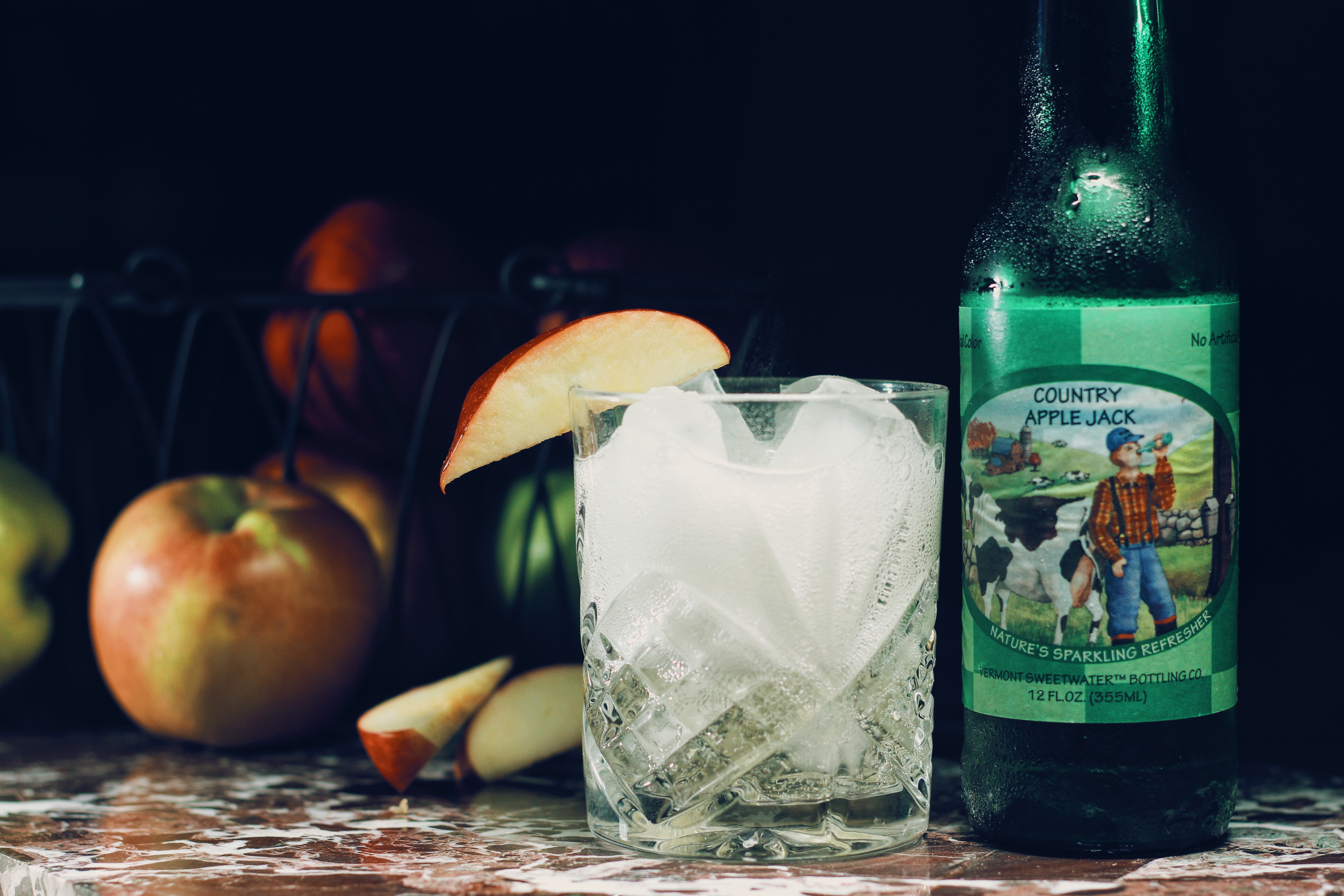
Vermont Sweet Water: Country Apple Jack

History: Apple is a vastly unexplored flavor in craft soda. It’s like the deep sea; we don’t really know how to approach it. Maybe it’s a little scary, but it can also be pretty neat. The biggest difference, I guess, would be that most of the stuff at the bottom of the ocean looks like it could eat your soul, while apple soda seems like a small blessing. Vermont Sweetwater is a small soda bottler founded in 1993 by brothers Rich and Bob Munch. The company tries to cater to the slightly more adventurous craft soda drinker. I mean, they founded the company on a carbonated maple seltzer water. Some of their flavors include Mango Moonshine, Raspberry Rhubarb, and Tangerine Cream Twister. They’re one of only a small number of companies that dared to seek out and try apple in soda. They call it Country Apple Jack, an apple soda with a dash of cinnamon. We don’t know a whole lot more about it than that so let’s get to tasting.

Where to get: You can buy Country Apple Jack or any other of Vermont Sweetwater’s sodas at the online store in either 24-packs or 6-packs, as well as on Amazon.

Nose: Faint apple; cinnamon; honey.

Taste: Honeycrisp apples; Ambrosia apples; tartness; cinnamon; sugar. This tastes like a soda your grandma made at about 6:30 after supper to be served with a scoop of vanilla ice cream. It’s got really good, authentic apple flavor. The biggest tasting note is honey, so it’s likely this was made using the flavors of Honeycrisp and/or Ambrosia apples, both rich in flavor and yielding a good honey taste. You’ll also taste cinnamon more along the backend of each sip. It’s not overly sweet, but there’s definitely enough sugar to make this feel like soda. There’s a definite tartness to this when you first drink it, but that fades with each continual sip in favor of a creamy honey flavor. The name “Country Apple Jack” seems very appropriate for this soda, as it feels like a down home, old fashioned recipe you’d encounter on a farm. Big on apple flavor with corresponding notes of honey and cinnamon and the slightest amount of tang for contrast.

Finish: Kind of a creamy apple and cinnamon thing going on. Think of the gooey inner portion of an apple pie.

Rating: Vermont Sweet Water does an excellent job of taking a soda that most will assume tastes like carbonated apple juice and rewriting the script on it. Instead, Country Apple Jack is somewhere in between biting into a Honeycrisp or Ambrosia apple and a piece of grandma’s apple pie. It has some striking similarities to Pure Soda’s Apple Pie Soda, though this is more of a spiced fruit beverage than one trying to emulate a dessert. It does a good job of living up to its name. It just tastes a little country, a little southern, even. Ironic for a soda from Vermont. Country Apple Jack is highlighted by a distinctive blend of honey and cinnamon flavors. If you’re an apple aficionado, you’ll probably taste the aforementioned Honeycrisp or Ambrosia flavors. If you’re normal like the rest of us and can’t identify specific apple flavors, just know those are the ones that have a honey taste to them. There’s also a slight tart or tang to this for contrast. It’s stronger at the beginning and fades as you drink it. I’d like to see that tartness hang around and give this more of a full-bodied flavor, something to push back a little more. On the flip side, a nice surprise with this soda is its creaminess. I’ve always wondered what an apple cream soda would taste like. This isn’t it – but it’s as close as I’ve seen anyone get. As you drink Country Apple Jack, it loses its tartness and becomes velvety in both mouth feel and flavor, similar to the inside of a pie. It’s easily the soda’s best element. Still, I see this being a divisive soda. Some will want this to be what it isn’t – a carbonated bottle of apple juice. I wouldn’t argue with you if you ranked this three stars, but I don’t see how it could go any lower than that. Personally, I think you have to applaud inventiveness, especially when it works. Country Apple Jack isn’t a soda you’ll likely put in your regular rotation, but it’s a nice change of pace that any soda lover should sample at some point.

Four Stars


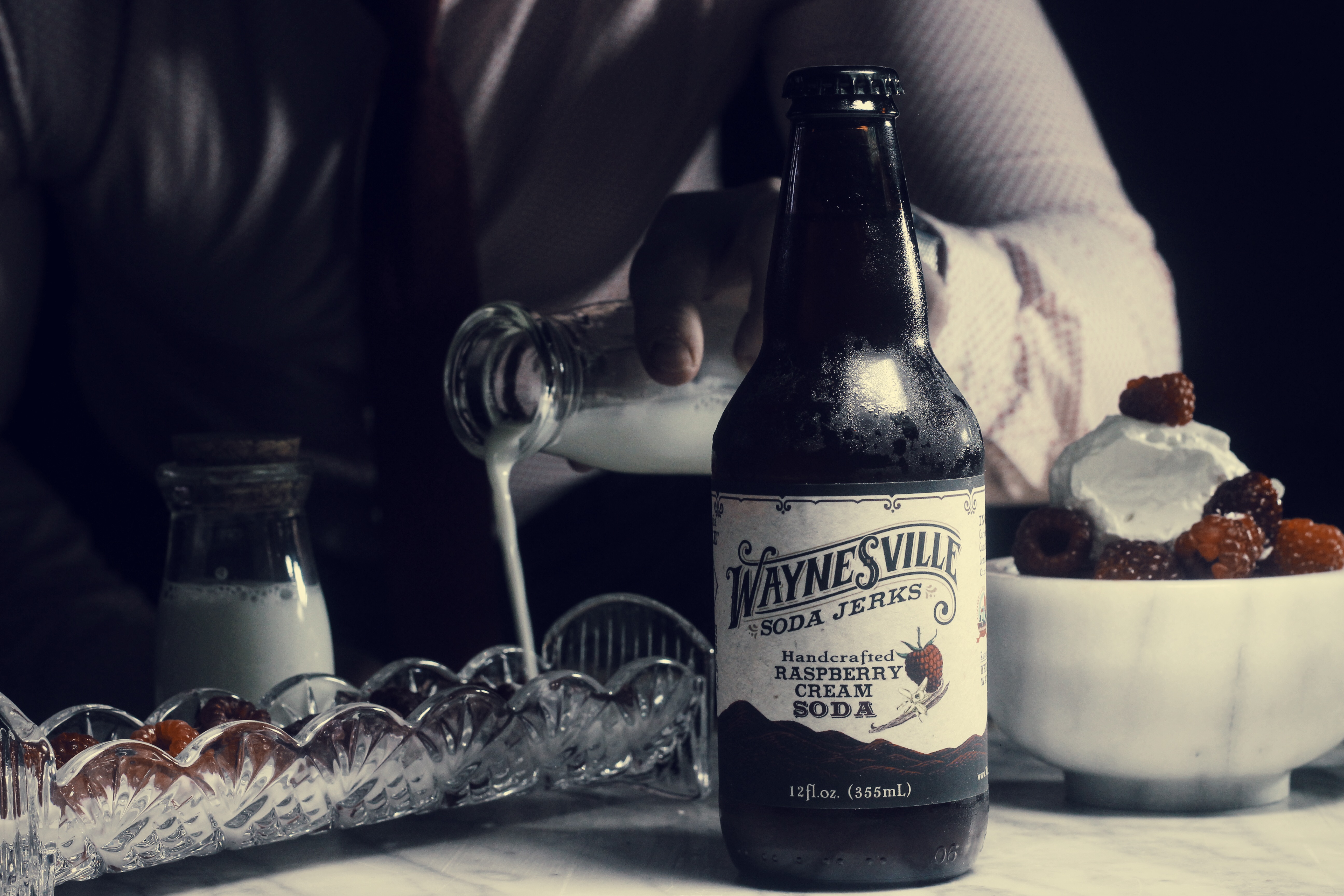
Waynesville Soda Jerks: Raspberry Cream Soda

History: If the farmer’s market had an all-star team, these two would be its captains. Chris Allen and Megan Brown are the founders and owners of Waynesville Soda Jerks in Waynesville, North Carolina – and they’re about as farm-to-bottle as you can get. The two launched their full eight-flavor line of handcrafted sodas in May of 2015, and they’re so serious about going local with their ingredients that they literally list where they came from on the bottle. These days “handcrafted” is becoming kind of a cliche in craft soda, but for this duo the word seems appropriate. “We really like to highlight the local agriculture around western North Carolina,” says Allen. The two started by picking local wine berries from outside their home and using a Soda Stream to see if they could create something worth drinking. In April of 2013, they launched a Kickstarter, and two-and-a-half years later, they’re one of the fastest-growing small bottlers in the nation. The highlight ingredient in all Waynesville Soda Jerk Sodas is the fruit, which Brown notes “is always local,” with the exception of citrus and vanilla. Allen and Brown had been focusing solely on going the route of fruit or fruit and herb sodas until the requests for traditional flavors finally struck a chord with the two.

“People were always asking for cream soda,” Allen admits. So the jerks went to work and put their own unconventional twist on the flavor: raspberry. As a soda fan, the marriage of these two flavors is exciting. Imagine taking something that people already love and adore and making it even more stunning. On paper, this is like combining all the best parts of Beyoncé and Taylor Swift… in soda form. Who doesn’t want to look at that? Who wouldn’t want to drink that? Who wouldn’t want to just… let’s get back to the point before this gets weirder. The decision on which fruit to choose for their newest flavor was easy. Brown tells us that the two “had an outstanding source for raspberries this season,” in Wright Way Nursery. The duo fresh presses the juice from the raspberries themselves and it goes right into the soda. We weren’t told exact proportions, but when asked about how much real juice went into each bottle of raspberry cream soda, Allen responded in a serious tone with “a significant amount.” Allen and Brown made it very clear there were two distinct tasting elements to this soda: the raspberry flavor and the cream flavor. For the fruit, Allen says they went for a “very clean and pure raspberry flavor.” As for the creaminess, it was really the first “traditional” non-fruit soda flavor the two decided to bottle. So in order to achieve the taste they wanted, the duo used real vanilla beans and caramelized the cane sugar for a creaminess that balanced out the sharpness of the raspberry. They also added a little lemon juice and a pinch of sea salt for what they called “soda seasonings,” adding that they brought acidity and richness to the flavor profile. We aren’t sure exactly how they put it all together, but I’ll take $200, Alex, for funnel this in my mouth. The pair is also working on another new, more traditional flavor – but we’d hate to spoil it for you.

Where to get: You can purchase raspberry cream soda and the rest of the Waynesville Soda Jerk flavors at the company’s new online store or from Summit City Soda. And if you’re from the Waynesville area, check out these spots to pick up a bottle.

Nose: Fresh raspberries just run through the water. On first smell, you’d swear this was raspberry soda. Not much in the way of vanilla or any sort of creaminess.

Taste: Fresh raspberries; soft vanilla; mild tartness; sugar. You’re greeted with a very authentic, but not overwhelming raspberry flavor. Reminds me of eating raspberries with sugar on top, but in liquid form. Very light and refreshing on the palate. Definitely more crisp than creamy. The initial raspberry flavor is joined by noticeable vanilla notes about half way through the sip. There’s also just a little bit of tartness from the lemon in this that adds contrast to the sweetness of the raspberry and sugar; you feel it on the edges of your jaw. A nice jolt of unexpected flavor. Before the drink begins to fade, the raspberry and vanilla meld to really create that raspberry cream flavor. Reminds me of raspberries with creme fraiche.

Finish: Vanilla sugar with subtle raspberry notes that linger, then slowly fade.

Rating: Waynesville Soda Jerks pride themselves on using fresh fruit in every hand-made batch of soda they produce. They even tell you where the fruit comes from on every bottle. You can taste their dedication. The raspberries in their raspberry cream soda taste real, not like candy. It’s like drinking raspberries with sugar on them with a dash of lemon and a dusting of vanilla bean. Typically when you think of cream soda, you think something that feels heavy on the palate, thick and frothy in texture. This is much lighter than you’ll probably be expecting. It’s more crisp than it is creamy. I’d probably call this raspberry-vanilla soda to my friends as opposed to raspberry cream, but it just doesn’t sound the same. Then again, I don’t call my stepmom Michelle to my friends either, but I don’t even think the Internet is ready for the words I do use. Bottomline, the flavors work. The raspberries taste fresh and delicious. The lemon provides an unexpected burst of tartness that contrasts nicely with the sweetness of the raspberries. And the vanilla adds a nice layer of sophistication to the raspberry taste near the end of each sip. It’s easily the unsung hero of the soda. I actually think the vanilla could be emboldened even more in the flavor profile and only good would come from it. This is the most subtle of any fruit cream soda I’ve tried, but also easily the freshest. Waynesville Soda Jerks continue to be one of the best local soda bottlers in the country. You should go out of your way to try their stuff, including the raspberry cream soda.

Four Stars

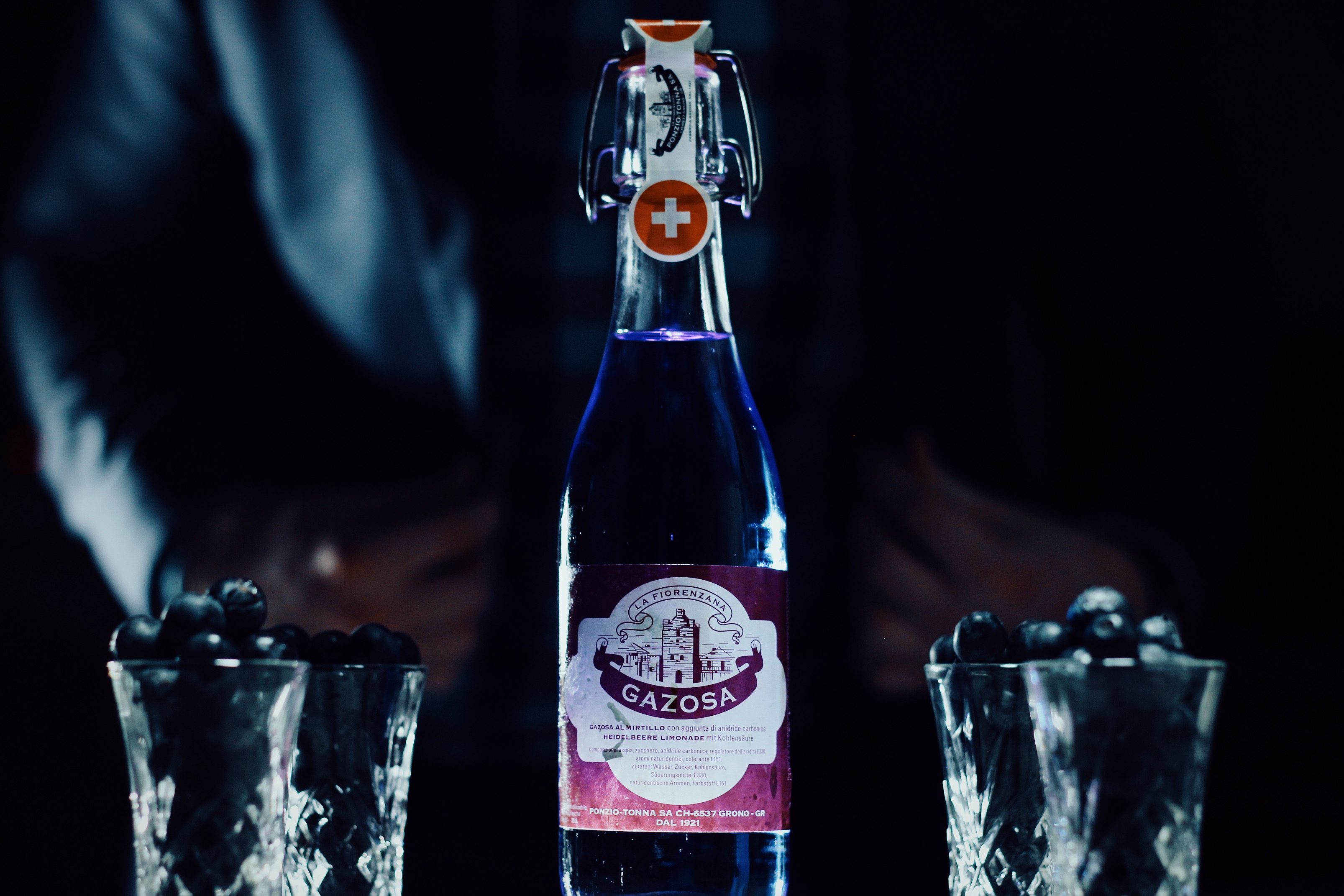
Gazosa La Fiorenzana: Mirtillo

History: What if I told you there is a little soda bottler out there still making its concoctions in refillable bottles like the old days? What if I told you it’s a family business in its fourth generation? What if I told you they use real ingredients and don’t even have a marketing budget, relying only on word-of-mouth publicity? Are you getting the nostalgia tingles yet? Is your small business radar blinging like a Drake song? Gazosa La Fiorenzana is a small, family-owned Swiss soda bottler located in the Grono village of the Grisons canton that’s been making their products the same way since 1921. Five Star Soda was the first American media outlet to review one of its beverages back in August of 2015. Stephen Keller is an ex-fútbol player formerly of FC Zurich and founder of Plopenzisch, “the official dealer of Gazosa in the Benelux and parts of Germany.” After trying Gazosa for the first time in a Zurich bar in 2002, Keller began importing the Swiss soda to the Netherlands, Belgium and Germany. “Our flavors are pure and old fashioned, please don’t expect any mixes or addition of vanilla or anything,” he says. The company was started by Francesco Tonna, who introduced four original flavors: Pompelmo (grapefruit), Limone (lemon), Mandarino (mandarin orange), and Lampone (raspberry). Keller tells us four more flavors were added between the years of 1940 and 1964 by Tonna’s daughter Matilda Tonna and his son Gianni Ponzio. One of those flavors includes today’s review, mirtillo, which is Italian for blueberry. Keller describes it to us as “Alpine blueberry soda,” which sounds fancy and makes us all like it more. The wild alpine blueberry is about a quarter of the size of an average blueberry. According to Keller, mirtillo is a popular regional flavor in Switzerland and is used in gelato, cakes, jams, and syrups. Kind of sounds like the equivalent of grape or strawberry in America. While mirtillo may be popular in Switzerland, most soda flavors outside of America contain some sort of citrus element, as do a majority of Gazosa’s – so this is certainly a unique international treat. It’s always refreshing to see a company that still does things the same way after decades and decades – probably a good sign for the customer. Also, this is perhaps the most beautiful hue of blue we’ve ever seen in a soda. It looks like it could give you magical powers. We’ll let you know if we land a superhero movie deal after sampling.

Where to get: Sorry, Americans – Gazosa sodas are distributed only in Switzerland, the Netherlands, Belgium and Germany where they are available in many cafes and restaurants.

Nose: Fresh blueberry bushes; crisp snow melt. Ever smelled freshly melted snow in the woods and how clean it smells? There’s a crispness on the nose of this. Delightful.

Taste: Fresh blueberries; brisk carbonation; tartness. There’s a very natural, rich floral blueberry taste to this with a carbonation that is very distinct. The bubbles are light, but immense. Definitely an old-fashioned soda trick and a very fun mouth feel. The blueberry here is layered. Sometimes it’s sweet. Sometimes it’s a little sour. Kind of like eating a bowl of blueberries, honestly. This is bold enough to satisfy the taste buds, yet light enough to encourage finishing the entire bottle. I taste a little bite of a wildcard flavor accompanying some sips: mint, almost like a wintergreen. It’s definitely a blueberry mint taste, but it’s there. Maybe we can agree to just calling it an earthy note. Wouldn’t mind seeing that scaled back a little. Gazosa’s Mirtillo tastes natural, refreshing, and tart.

Finish: Tart blueberry with the slightest undertones of sugar. Imagine biting into a more sour blueberry and then following it up with a mildly sweet one.

Rating: Made with blueberries from the Alps, Gazosa’s Mirtillo Soda is the most natural-tasting blueberry soda we’ve come across thus far. Just like the fruit, some sips are refreshingly sweet, while others are earthy and sour. This is a soda with all parts working in tandem. The flavor is as delightful and the packaging. Gazosa has engineered their swing-top bottles in a way that dates back hundreds of years. One crucial design element I found was this: the mouth of the bottle is made with extra thick glass that reduces the amount of liquid per sip. With less soda per drink, I found myself inspecting the flavors more instead of just instinctually slurping down the liquid that filled my mouth. I’m not sure if this is by design, but it really allows the drinker to think about the flavor profile. Outside of the soda’s pleasant blueberry flavor, its biggest achievement is maintaining a tart flavor without being acidic. That’s a hard line to tow for most soda bottlers. Also a hard line to tow for most women… in my experience. Blueberry is a flavor that is finally starting to see the light of day in the craft soda world, and Gazosa out of Switzlerand is already ahead of the game on this one. To that we say, gut gemacht, Gazosa.

Four Stars

Derr’s: Orange Pineapple

History: Tucked away in the small city of Boonville, Indiana sits Derr’s Soda. This business is old. It’s old enough by comparison to make Mick Jagger seem like he isn’t disintegrating just a little bit every time he performs on stage. It’s so old that when Derr’s started making “pop,” they had to pump the water they used from a well. It’s so old, their original means of transportation were horses and wagons. Get it? Derr’s Soda was founded by John Derr under the name “John Derr & Sons” in 1889 in Boonville, Indiana and has remained in the family ever since. It’s currently in its fourth generation of ownership. Over the phone, John Derr Sr.’s great grandson, Joe Derr, Jr., begins to recount some of the company history. He pauses for a long time before revealing that Derr’s started out making flavorings, colorings, and syrups to be used on treats like snow cones. He said this naturally transitioned into soda. The company was famous for its Derr’s Dry (lemon-lime) and strawberry sodas, with orange pineapple, orange, and grape also being very popular. As with most family businesses, there’s lots of consistency at Derr’s. One thing that hasn’t remained steadfast since 1889: the business itself. Derr’s closed its doors for a number of years in 1992. Essentially what happened was that no one in the Derr family had time for the business anymore. The final owner upon closure was Charles Derr. Within the family, the question was always, “when, not if” Derr’s would re-open. Charles Derr’s nephew, Joe Derr, Jr. and Charles’s son, John Derr finally restarted Derr’s in early 2010. They are also assisted by John’s sister, Barb Byers. Finally, someone with a name that isn’t Derr.

“It’s made the old fashioned way,” says Derr Jr. He’s not kidding. Before re-opening, the Derr boys went on a multi-year search to find the original suppliers of certain oils and flavors that went to the soda’s recipes. They were also “gifted the formulas” by Charles’s widow, Pauline Hull Derr. Currently, the company only sells three of its original flavors in bottles: strawberry, cream soda, and orange pineapple. The latter is certainly the most unique in the world of craft soda. “It’s a little more pineapple than it is orange,” says Derr Jr. He adds that the company produces its own secret extract that it uses in the recipe for orange pineapple soda. Derr Jr. notes orange pineapple is designed to taste smooth, and for that reason is also a good mixer. The company is proud of the flavor in its bottles, so much so that it scaled back on one signature soda trait. Derr Jr. tells us, “It’s got less carbonation in it than some of the newer drinks because of the full flavor that you get.” In addition to the three flavors Derr’s bottles, they also produce fountain sodas, and those do include older sodas like Derr’s Dry, orange, and grape. You can tell they really care about their liquid. Also, I’m pretty sure this a record for the number of times I’ve typed one last name in a review. Don’t Derr me wrong, guys.

Where to get: Derr’s is sold in physical locations regionally in southern Indiana, parts of southern Illinois, and western Kentucky. It’s also sold online throughout the U.S. You can purchase Derr’s Soda from Summit City Soda or from the company directly via its online store.

Nose: If you’ve ever had orange-pineapple juice, this smells almost exactly like that. Pretty spot on. The pineapple scent smells a little more candied than it does in pure juice form, but that’s to be expected with soda.

Taste: Pineapple; mild coconut; sugar; citrus. There’s a very, very sweet, candied pineapple flavor to this. It’s also got juuuuuuust a touch of coconut that accompanies that pineapple flavor. It’s almost an afterthought, but it’s there. The orange is also there, but it’s pretty subtle because the pineapple is so loud and sugary. The orange notes do provide a little bit of a zing, but again, very subtle. The flavor you’ll taste most besides pineapple is general citrus, and that’s something you’ll taste near the beginning and ending of each sip. The carbonation is actually what provides greatest contrast to the sweetness of the pineapple. The bubbles are little, but bountiful and make you think this tastes zestier than it really is. But bold, sweet pineapple is the dominant flavor and the unquestioned identity of this one.

Finish: Sweet, citrusy pineapple that quickly fades.

Rating: If you’d rather skip the hassle of carving up a pineapple and wasting a majority of the fruit, Derr’s Orange Pineapple has you covered. The flavor is really bright and does a very admirable job impersonating the fruit. The pineapple taste is bold, strong, and sweet. Very sweet. It’s actually surprisingly sweet when you look at the label because the bottle contains 34 grams of sugar. It tastes more like 50. For some, that’s a welcome sugar rush. For others, it’s a diabetic episode waiting to happen. In fact, the pineapple in this is so strong that it makes you love the citrus element. It provides a nice buffer near the beginning and ending to reign in the pineapple sugar storm you get for the majority of each sip. The subtle coconut flavor seems to fade as you drink it, but when it’s there, it adds a nice variance to the soda’s overall flavor profile. The finish on Derr’s Orange Pineapple is unremarkable. It really just dies near the end of the sip. I’d love to taste that tropical pineapple flavor slowly fade into the sunset, so that would be my biggest qualm with this soda. I think a slow fade out as opposed to a stark drop would help drinkers ease back in to the blast of sweet pineapple at the beginning of each drink. Now we’ve mentioned how sweet this is probably five times, and it is – but don’t get us wrong, the pineapple flavor here is really nice. This is a wonderful pineapple soda, though I do think I’d cut back on the sugar. I also wish I tasted the orange more. It would add some needed tartness. Still, this is fun. Pineapple is a fruit that is rarely attempted in soda. Kudos to Derr’s for being original. This would be a wonderful summer drink. Adding some vodka or rum to cut the sugar might not be a bad idea either. You could do a lot of things with Derr’s Orange Pineapple. And if you end up drinking a whole six-pack of it at once, let us know. We’d be happy to come visit you in the hospital.

Three Stars

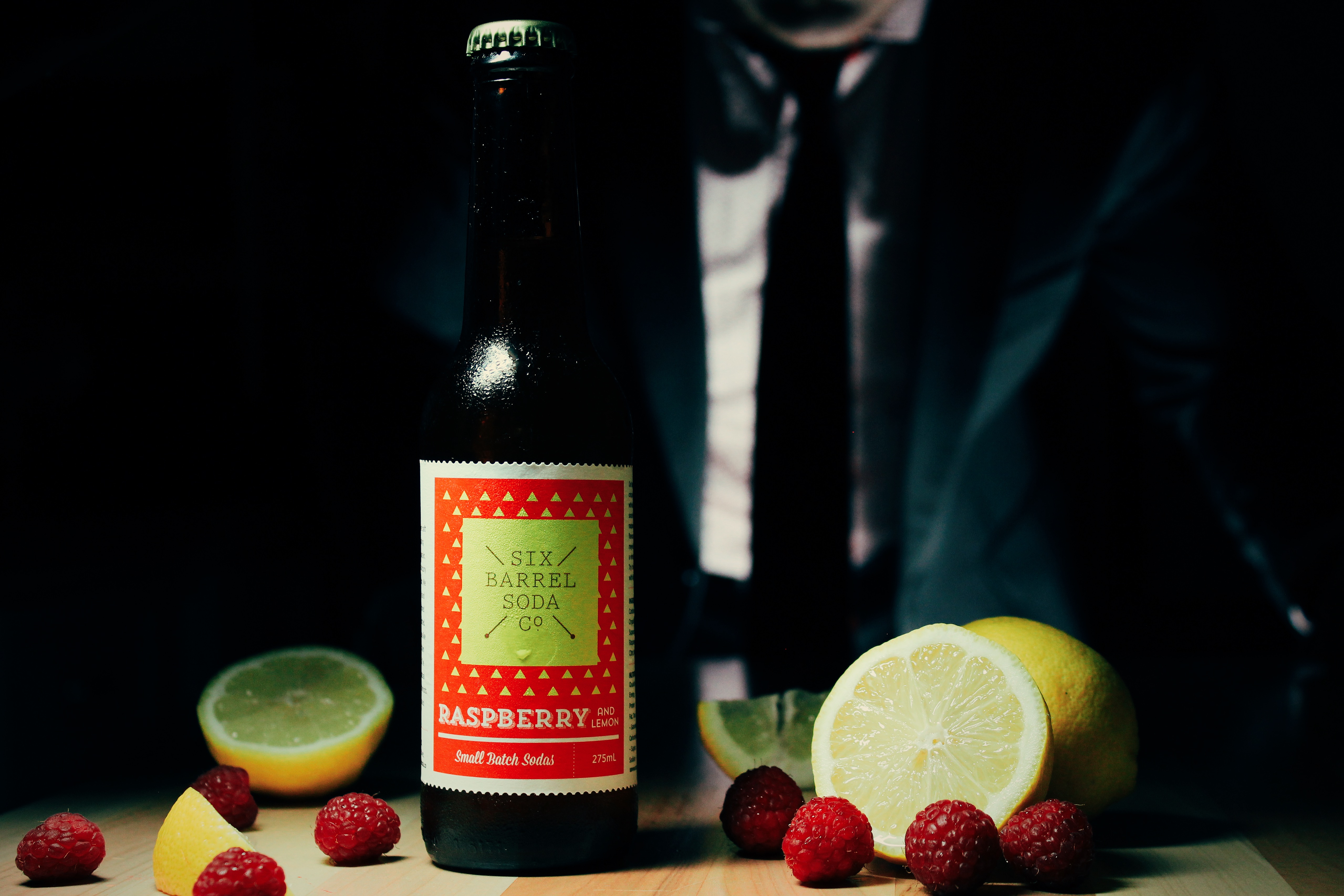
Six Barrel Soda Co.: Raspberry & Lemon

History: Six Barrel Soda Co. is the coolest modern American soda not found in America. You’ll actually have to travel quite far if you’re American… all the way to the town of Wellington on the island nation of New Zealand. Founded in 2012, Six Barrel Soda specializes in modern takes on old soda flavors and old takes on new ones. It’s got kind of retro-new age thing going on. “Soda has such a great history and there is so much to work with flavour wise,” says Six Barrel Soda Co-founder Joseph Slater. The company also serves up take-home soda syrups as well for those who have separation anxiety. Like many American soda businesses, Six Barrel’s owners started in the bar industry. Slater and his business partner, Mike Stewart, found their knack for serving soda and homemade teas at their bar in Wellington. The two doubled down and quickly went in to soda full time. Last time I doubled down, I was in Vegas and woke up in a stranger’s room. And it was a dude. Six Barrel Soda Co. is at the forefront of cutting edge craft soda in New Zealand, which allows them to take some risks when it comes to flavor. Slater says they “try to do flavours that people might not have tried before or are unique to us.” One of those flavors is raspberry and lemon. “At our bar, I was making a raspberry syrup for a Florodora cocktail and a lemon syrup for lemonades, so I started doing a mixed pink lemonade too. There aren’t really any other pink lemonades in New Zealand and we thought that needed to be remedied,” Slater tells us. In America, when you think pink lemonade, you don’t necessarily think of raspberry in the flavor profile. The gentlemen at Six Barrel are trying to put a different spin on the flavor without over doing it. Slater adds, “It’s meant to be pretty subtle, we didn’t want that intense, fake raspberry taste so the idea is it just has a hint of raspberry to balance the citrus. It should be quite soft and crisp.” Initially, raspberry and lemon was the company’s most popular flavor, though they admit the others have caught up to it. The recipe uses only real raspberries and fresh-squeezed lemons in addition to fair-trade organic pure cane sugar. There are no concentrates or preservatives in the soda. Currently, Six Barrel is working on a couple new flavors they hope to have out in 2016. We’d love to tell you what they are, buuuuut we gotta drink this instead.

Where to get: According to Slater, Six Barrel Soda supplies “bars, restaurants, cafes, grocery and gift store across NZ, Australia, Singapore” and soon, Korea. Americans, your best bet is to email the company and see if something can be worked out. Six Barrel Soda sells their soda online and ships throughout New Zealand.

Nose: Raspberry; honey; tea with lemon. Definitely prominent raspberry with some floral, tea-like elements.

Taste: Mild raspberry; lemon with honey; cane sugar juice. We always list out the initial taste elements without looking at the bottle. You can taste the raspberry in this, but there’s a distinctive fruity, lemon-honey flavor present. Imagine squeezing fresh lemon juice and honey into a raspberry tea. That’s what this is like. Yet, there is no honey in Six Barrel Soda Co.’s Raspberry and Lemon Soda. So what you’re tasting here is likely how the sugar interacts with the lemon. You get a mild raspberry note to begin the sip before that floral, sweet lemon takes over. It’s really nice and unlike how soda companies in America use lemon. Lemon flavor in American soda is typically tart and acidic, while this is mellow and fruity. It really does taste like honey. I stand by that. You do get some bitterness that lingers on the back of the tongue from the lemon, so the acidity is still there in some form. The two flavors are fairly balanced overall, but that sweet lemon stands out a little bit more.

Finish: Honey; lemon, cane sugar. The raspberry is definitely more prominent near the beginning of each sip than the end.

Rating: This is a truly unique soda in the sense that it won’t be exactly what you’re expecting. Sure, there’s a raspberry flavor. Sure there’s some traditional acidic lemon. But it isn’t like your typical American fruit soda or even the newer, more natural incantations that are popping up from smaller bottlers. This has a subdued, tea-like taste to it, which isn’t that surprising considering the previous history of Six Barrel’s owners. It’s more floral than fruity, almost like there’s a flowery taste in addition to the raspberry and lemon. And the honey-lemon flavor – I can’t get over it. It’s the starring flavor in this soda. Let me say, it’s nice, but there’s no honey in the ingredients. So that flavor has to come from some sort of interaction. My best guess is between the sugar and lemon elements. I personally would like to see the raspberry flavor come through more. It’s there at the beginning, but quickly exits and doesn’t influence any other portion of the sip. As previously mentioned, the raspberry is supposed to be light. I just think it’s such a wonderful flavor and could be elevated more in this soda. As a whole, this is light and smooth, but not what I’d call crisp and refreshing. And for some people, that’ll be a detractor. This, of course, is coming from an American perspective. You have to remember that the U.S. typically prefers things bolder and sweeter than their international counterparts. It’s why your hot prom date is probably fat now. Based on the name, you’d think this would be ideal for outdoor weather, but due to its floral flavors, I think this is prime fall soda-drinking material. Six Barrel Soda Co.is one of the trendiest players in the international craft soda community. There flavors may be different, but their name is here to stay.

Three Stars

164 Soda Co.: Tree Climber

History: Josh Carnell and Frank Schiffner are soda vloggers… because that is a thing.

In talking with Carnell, he told us the two of them literally just bought some Frostie’s and Bundaberg soda, filmed themselves drinking it with commentary, and a month later became Rocket Pop Stop reviews. “We had no idea what we were doing,” he says. You’re probably not surprised these are the guys behind 164 Soda Co… because why the hell else would we be talking about two strange dudes on the Internet? It’s cool though. We like to get weird too. Carnell is a dreamer. He’s always wanted his own soda shop. Lately though, the dream has been about creating rather than just selling. “I wanted to try my hand at making my own soda,” he says. Turns out filming yourself drinking soda makes you thirsty for what your own version could be like. “Honestly, I think a lot of it had to do with the videos we had done. We really wanted to go deeper about what is special about these sodas.” But first, the St. Charles, Illinois boys needed a name for their potential new company. Carnell reminisced how the two met each other in St. Charles East High School in 2010. It was room 164. Carnell recalls his buddy “looked a little chubby.” Ouch. Regardless, room 164 became the impetus for the two’s label as a soda company. Carnell started experimenting with strawberry soda in January 2014. Fast forward to March 2015 and the two dudes began the soda creating process. Their goal is to break the mold of people who are turned off by stereotypical soda. They’ve visited several craft soda bottlers, like Canonborough Beverage Co. and Gents Ginger Ale to try to gain insight on what the cool, new bottlers are doing. After a few tries in July of 2015, they concocted what just might become their signature soda: Tree Climber. It’s a take on a German beverage called “Fassbrause,” which is essentially a nonalcoholic apple cider drink. Apple Beer was also inspired by Fassbrause. 164 Soda Co.’s version is tweaked a little from the original. Its main two flavors are apple and ginger. When asked about which one is stronger, Carnell says “we’ve found that you seek out the flavor you taste.” He adds that the duo is trying to take soda and make it sophisticated. Hmm, that sounds familiar.

Where to get: Currently 164 Soda Co. is just sold at markets around the St. Charles, Illinois area. The hope is for the company to expand into local bars and restaurants. For now, if you’re interested in what the company is brewing up, shoot them an email at 164sodaco@gmail.com.

Nose: A bit of a sour cider smell reminiscent of alcoholic ciders. The more you waft the bottle under your nose, the more the sweet apple juice smell opens up. Definitely smells like it could be tart.

Taste: Earthy; apple; acidic; mild grape. This has a very earthy taste to it. The sweetness is minimal, almost nil. It really does kind of taste like an alcoholic cider with the ethanol stripped away. It’s strange in that it doesn’t taste alcoholic, yet definitely isn’t sweet enough to meet the definition of a traditional apple cider. It’s a dry soda. Kind of a beer flavor to this too, but it’s sweeter than beer. First thing’s first: it’s tart. The tartness comes from both the apple and ginger. You taste both flavors off the bat, apple more so, and they’re both gift-wrapped in a bow of acidity. An interesting tasting note is malt, like in beer. It’s interesting because there’s none in here, yet the flavor remains. Almost a hop taste too, but not quite. If you go searching for it, there’s a grape flavor in here as well. But what you’re going to taste strongly is an acidic, almost beer-like, earthy apple juice, devoid of sugar, with a pinch of ginger.

Finish: Savory apple with subtle notes of licorice.

Rating: Tree Climber is definitely not from a soda universe that feels familiar. No, this feels like it was imported from a far away land. You’ll taste essentially no sugar and a lot of tartness, two elements that usually don’t pair in soda in that order. The defining flavor here is raw apple juice with a zing, accompanied by mild ginger. I am wondering if the ginger absorbed all of the apple’s natural sweetness because it’s odd to taste this much authentic apple without any sort of sweet relief. Very subtle grape notes dance about near the end of each sip, as does a light licorice taste that most probably won’t even notice. This would really benefit from some added sugar. I wish I had the power to add it to the recipe because I think it would take Tree Climber to the next level. As currently constructed, Tree Climber is like all my past relationships: too bitter and not my fault. It tastes more like a carbonated juice blend to me than a soda, yet it really tastes like something else entirely. I have to hand it to 164 Soda Co. in that Tree Climber is based off of what is essentially a German apple beer, and this definitely tastes like a beer with authentic apple flavor and some added mild ginger. So I think they accomplished the basic framework of what they intended to create. I’m just not sure it’ll fly off shelves with soda enthusiasts without more cane sugar in the recipe. Tree Climber is worth a shot because you’re simply not going to find an American soda with a more foreign taste than this one. We just wonder if we’ve actually seen its final form.

Three Stars