Four Stars

Fireman’s Brew: Black Cherry

History: Despite their well-earned status as heroes, firefighters are average dudes and dudettes just like you and I. They want the same things most of us do at the end of a long day, namely, beer. Firefighters Rob and Ed spent a full day in December of 2000 fighting a raging brushfire in the Glendale Mountains of California. The battle took them into the midnight hours. Exhausted, they just wanted an ice cold beer, something that really said, “you earned me, pal,” something a cut above the rest. I often felt the same way after my ex came back from a trip to the mall with her friends. As you might’ve guessed by now, they eventually decided to make their own under the name Fireman’s Brew in Canoga Park of Los Angeles, California. Company COO, David Johnson, remembers starting out in 2007 selling beer out of the back of his car. Over the phone, Johnson is extremely laid back. He and his fireman buddies enjoy the simple things. They just wanted to make a great beer for firemen. To this day, the company makes only three beers that they call “off duty drinks“: blonde, brunette, and redhead. “You stick to something and you do it really well… people enjoy that,” Johnson philosophizes to us. However, the guys at Fireman’s Brew quickly realized something… it’s hard to market beer to on-duty firefighters.

In 2008 they introduced a line of “on duty drinks,” starting with coffee and quickly followed up by soda. Just like their beer, Fireman’s Brew makes three flavors of soda: root beer, cream, and black cherry. “It’s the same thing we do with our beers. We try to keep the flavor profiles simple and straightforward,” says Johnson. He adds that the company’s sodas are all-natural, using pure cane sugar in every bottle, and devoid of preservatives. Johnson doesn’t care to get too specific about his flavors, not because he’s keeping a secret; he’s just a a chill guy. “We weren’t sticking our nose in it and smelling it” he says about the soda flavors. With the black cherry, he does note the company sought out a retro cherry flavor that had a bit of a deeper taste to it. What’s really nice to see about this company though is their commitment to the cause. Johnson tells us there are “over 100 firefighter shareholders in the company.” But more importantly, Fireman’s Brew donates a portion of the profits from every product sold to the “National Fallen Firefighters Foundation in Emmitsburg, Maryland” to help out families in need. Whether you enjoy their soda or not, that deserves a tip of the hat and squirt of the hose.

Where to get: Fireman’s Brew sodas can be found at most Rocketfizz retailers. Use the company’s online locator to find the store nearest you. Garvey Nut & Candy is also another option (we assure you we looked – they have it). Online, you can buy Fireman’s Brew Black Cherry from Soda Emporium in single bottles or in 4-packs.

Nose: Mmm. A little maraschino cherry, a little traditional black cherry. Even a mild cherry cola smell in the background.

Taste: Maraschino cherry; Bing cherries; classic black cherry soda; vanilla. This is very lush, very smooth. You’re greeted with a deep, deep, sweet cherry flavor that’s more of a candied maraschino cherry than black. Definitely a little bit of a grenadine thing going on too. The flavor is big and permeates the mouth with mild bubbles that glide to the back of the tongue. As the taste settles in and the initial boldness wears off, the black cherry becomes more apparent, but it’s definitely subtle compared to the maraschino notes. You’ll also taste mild vanilla that floats about on each sip. Sometimes it accompanies the front end of the sip, sometimes it attaches itself to the black cherry notes. This is definitely a sweet beverage, more sweet than most black cherry sodas. But the main takeaway is the maraschino cherry taste with subtle black cherry notes. This tastes luxurious and bright on the palate.

Finish: Definitely a little tartness with a mellow black cherry flavor that slowly fades. A little bit of vanilla on the tongue, too. Mild.

Rating: Fireman’s Brew Black Cherry is 12 ounces of power in a bottle. The flavor rocks your taste buds. In my opinion, this is more of a sweet cherry soda with subtleties of black cherry and vanilla. Still, there’s nothing subtle about this soda. It’s got lots of personality and other sodas know when it walks in a room. Just like my ex. Please come back. The maraschino cherry and grenadine flavors are apparent before anything else. On some sips, there’s additional vanilla notes that accompany these flavors. The black cherry taste is more reserved on the back half of each drink. There’s just enough to make you feel ok with calling this a black cherry soda. Fireman’s Brew Black Cherry has a huge flavor that seems customized to work in a cocktail. Alcohol would dial back the sweetness, while the soda would still have ample flavor to transform the liquor into something fun for your mouth and bad for your liver. This has such a big, sweet flavor that a whole bottle may overwhelm some drinkers. It contains 45 grams of sugar per bottle. I’d probably either cut that down to 35-40 or add more tartness for balance. In the end though, what matters is flavor, and Fireman’s Brew Black Cherry soda has enough flavor to put out a forest fire. That doesn’t make any sense, but you get it. If you like maraschino cherries or Cherry Coke made with grenadine, you’ll love this soda. It’s one your taste buds need to try. Just mentally buckle up before you indulge. As their catch phrase says, extinguish your thirst.

Four Stars


Old Dominion Brewing: Root Beer

History: In 2007 a love story began when Fordham Brewing out of Anapolis, Maryland and Old Dominion Brewing from Ashburn, Virgina merged to make beautiful beer together in Dover, Delaware. The brands Fordham and Dominion still maintain separate identities, so you’ll find the more adventurous offerings coming from the Old Dominion side, while the traditional ales and IPAs are made by Fordham. There was no prenup in this marriage, so Old Dominion decided to bring its sodas into the relationship too. Chief among them was the root beer, created during Old Dominion’s first year of existence in 1989. “We love doing it,” Fordham and Dominion CEO, Jim Lutz, says about the brewery’s sodas. There’s an affable charm to Lutz. He tells us he prefers to be called “Head Forklift Driver.” I bet he’s got dad jokes for days. What his brewery also has is soda… and lots of it. In fact, Lutz mentions that about 25% of the brewery’s business comes from its soda. In addition to the root beer, Old Dominion also makes a ginger ale, black cherry, and orange cream soda. But the root beer is the only one that maintains its original recipe, still the same as it was in 1989. Some of the premier ingredients include pure cane sugar, honey, vanilla, and yucca root. The latter is what should stand out to you even though you probably don’t know what it is or how it tastes. Yucca kind of looks like a piece of ginger and a carrot had a baby and it turned out uglier than you expected. The flavor really varies depending on the piece you get, but people often describe it as bitter or tasting like a potato. It’s also occasionally sweet, though. As for the flavor of the root beer, Lutz tells us they wanted it to taste like a sweet treat. “It tastes like the old fashioned root beer when I used to ride my bike up to this old fashioned root beer stand,” he says. Nothing wrong with spoiling yourself with a little nostalgia-inducing root beer.

Where to get: Old Dominion sodas are sold mainly throughout the Mid-Atlantic region. Soda drinkers in Delaware, Virginia, Maryland and Washington D.C. will have the easiest time finding them. They are also sporadically available in Pennsylvania and New Jersey. Surprisingly, Old Dominion also sells lots of its soda in London, England for all you UK folk. The rest of us can purchase it online from Harris Teeter Grocer and Pharmacy or by contacting the brewery directly via email and setting up an order.

Nose: Vanilla; wintergreen. Pretty standard root beer nose with an emphasis on creamy vanilla and mint.

Taste: Honey; herbal; malt; mint; creamy vanilla. This is a sophisticated flavor profile, even for a root beer. A lot going on in the mouth. The flavors are in layers. Up front is a big note of honey on the back of the tongue. This is followed up by equal parts of creamy mint and vanilla. You’re about half way through the sip, and at this point, the root beer is a little sweet. Next come the herbal elements that provide balance. This is also where the carbonation reaches its peak to help provide the root beer’s bite. The wintergreen sticks around longer than the vanilla and is supplemented by yucca. The yucca gives the root beer a botanical element and imparts a little maltiness as well when combined with the mint and honey. It’s a lot for the mouth to process when analyzing, but the flavors work.

Finish: Slightly bitter, herbal mint with undertones of classic root beer.

Rating: Root beers are a dime-a-dozen in the craft soda landscape. The kingpin of the crop; you’ve gotta really make your version stand out to get noticed. Old Dominion Brewing has done a good job putting a different twist on their root beer. It isn’t like anything else. There’s multiple layers of flavor to this beverage, which is what makes it rise above others. Among the highlights include its use of honey, vanilla, mint, and yucca. It’s just a little more herbal than other root beers, while still retaining a crisp sweetness. Usually we take the term “herbal” with root beers to mean mint, but Old Dominion’s Root Beer has a distinct note of sweet malt. It’s likely the way all the ingredients work together, chiefly the yucca and honey. Both the mint and vanilla elements have a creaminess to them and these play well with the root beer’s bite and herbal notes. This root beer is like the opposite of all your break-ups: delicious, fun to process, and you won’t be crying when the pizza guy shows up. I wouldn’t mind seeing the vanilla a little more prominent. I think that would add another enjoyable element to play off the honey and yucca. Old Dominion Brewing has brewed up a really enjoyable root beer that should be savored over time. Sip slowly without ice and up your root beer game.

Four Stars

Capt’n Eli’s: Orange Pop

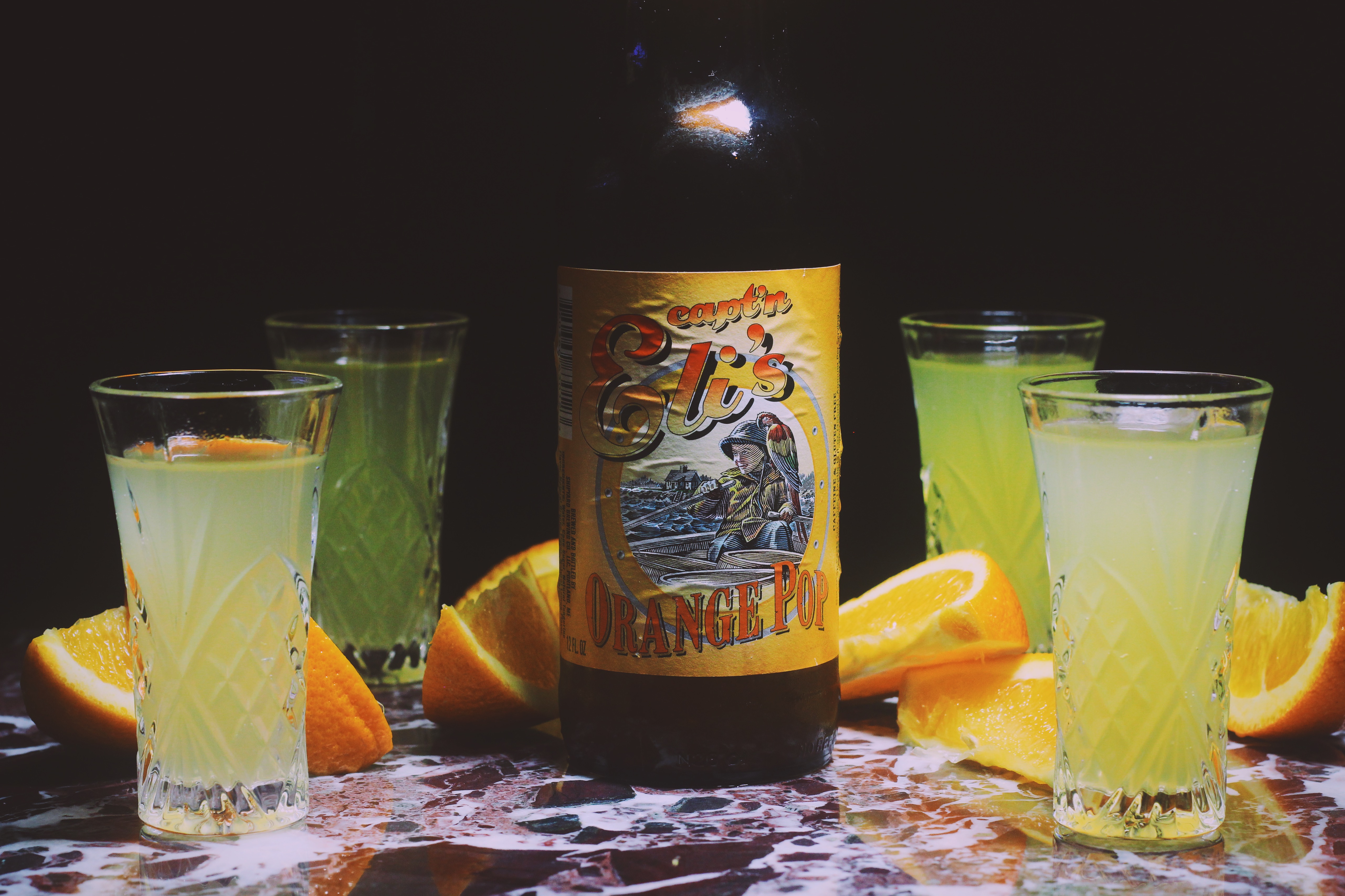
History: If you find yourself perusing the pages of The Undersea Adventures of Captain Eli, just know the super hero comic you’re reading was ultimately created with the end goal of quenching your thirst and not satisfying your insatiable appetite for deep sea justice. Despite my pompous language, I didn’t make that up. Capt’n Eli’s Soda really does have a comic named after it, introduced in the early 2000’s for marketing purposes. But the soda’s history dates much farther back than the comic. 80 years earlier in the early 1920’s, little Eli Forsley would wander down in his father’s basement and steal some of his dad’s homemade root beer. In turn, he’d sell it to his friends for a profit. When Eli grew up, he started making root beer in his basement too. Sure enough, one of his five sons, Fred, grew up with an affinity for the root beer. Fun fact: Fred’s son (coincidentally named Eli) is the model for the comic’s lead character. Fred was an entrepreneur like his father. In 1992, he founded Federal Jack’s restaurant in Kennebunk, Maine and two years later, he and a partner started up Shipyard Brewing in Portland, Maine. You might know Shipyard for its highly popular “Pumpkinhead” pumpkin beer. In 1996, Forsley started serving the root beer on draft at Federal Jack’s. Current Capt’n Eli’s President Ed Crockett recalls how “the local folks raved about it.” The next logical step was bottling. This happened in 2002. And yadda, yadda, yadda, 15 years later the company now has eight flavors after just recently introducing a cola in June of 2015 to replace the now discontinued Parrot Punch. It’s so new, it’s not even on the website yet. But we’re not here to talk about root beer or cola or even my love life because that’s what my therapist is for. No, we are here to talk about Capt’n Eli’s Orange Pop. “When we drafted that recipe, we wanted to be different,” Crockett says. The company wanted an orange soda that felt refreshing instead of sugary and quenching instead of syrupy. Crockett tells us Capt’n Eli’s Orange Pop was directly inspired by Orangina. Like Orangina, you can see bits of pulp floating about in the soda. It also contains no caffeine, gluten or food coloring, and is made with pure cane sugar. What we’re trying to say is that Orange Pop is a classic flavor designed with a slightly different spin. Time to wade the deep orange waters Capt’n Eli patrols.

Where to get: Capt’n Eli’s Soda is distributed nationally, but is most widely available in retailers along the eastern seaboard. You can also purchase the soda online from Summit City Soda, as well as the Capt’n Eli’s online store. For large orders, and especially if you’re a retailer hoping to sell soda in your store, contact Homer Soda Company.

Nose: Fresh orange rind zest.

Taste: Orange; slight tart bite; mild tangerine. There’s a definite authentic orange flavor to this. Tastes fresher than most orange sodas. You get zesty, carbonated orange up front with a semisweet tart finish. In the background, there’s definitely a little bit of a tangerine taste – slightly sweeter than regular orange with more of an exotic flavor. The more you drink this, the more acidic it becomes. That classic orange soda zing becomes louder and louder on the palate. Overall, not quite as sweet as most orange sodas, but closely related to a classic orange with more of an authentic taste and a bit of zip.

Finish: Full-bodied orange zest flavor with a tartness that sinks into the back of the tongue.

Rating: Capt’n Eli’s Orange Pop is a close relative of your classic orange soda, but it clearly got all the better genes in the family. The orange flavor tastes real and bold. It’s not overly sweet or carbonated. The bite is zesty and slightly acidic in a way that is fitting of high-end orange soda. This really tastes like a craft soda. You can tell you’re drinking something of higher quality. The notes of tangerine add even more sophistication. All of these qualities elevate Capt’n Eli’s Orange Pop in the orange soda category. Crocket told us Orange Pop is actually the company’s lowest-selling flavor. I think that’s crazy. This is a diamond in the rough. This is an orange soda from which other orange sodas should watch and learn. Just don’t do it every day. That’s stalking. The bottom line is that this tastes like an orange soda you’re familiar with, but better. It’s comfortable, yet intriguing. It is a little more tart than a lot of orange sodas out there. I think that could either be dialed back a bit or the sugar levels could be slightly increased. That knocks it down from five stars, but overall, this is tops. Flavorful and zesty. This is a must-try orange soda.

Four Stars

Soda Jerk Soda: Lemon Lavender

History: Seattle, Washington is continually churning out some of the most inventive and artisanal craft sodas on the market. But some of these effervescent elixirs are hidden gems that not everyone knows about. We believe they deserve their day in the sun. Enter Soda Jerk Soda, some of the most creative craft soda on the west coast. Owner Cory Clark had been a cosmetic chemist with a couple stores in Texas, but he was looking for his next project. Something different, he thought. Something cool. “I’m kind of a person that has to be creating something to be happy,” he says. He told us initially he wanted to start an ice cream and soda fountain, but after seeing the success of the Soda Stream, Clark changed his mind and started exploring soda syrups. He quickly changed course again after he realized he preferred fresh ingredients to syrup. It’s hard to disagree there. But before we tell you about the liquid, here’s an example of Clark’s creativeness. Dude sells his soda out of what is essentially a cute-ass baby truck on wheels. He bought it online and customized it himself after being inspired by a Cushman Truckster… aka the next thing I’m drunk buying online. Back to the soda. You won’t find anything traditional on the Soda Jerk Soda truck. It features three taps with two rotating flavors. Strawberry Rhubarb. Lime Cilantro Jalapeno. Lemon Lavender. These are some of the flavors you’ll find in place of classics like root beer or cola. “I try to pair an herb or spice with the ingredient,” Clark notes. Soda Jerk Soda also always uses organic cane sugar and fresh ingredients with as many sourced locally from Washington as possible. Clark adds he uses organic ingredients whenever he can. There are also no preservatives in Soda Jerk Soda. Hipsters everywhere should be lining up for this stuff.

Lemon Lavender is one of the first flavors Clark created and to this day it’s the company’s best seller. It’s also the only flavor consistently available on tap. Fresh lavender flowers from Washington are used in the soda instead of lavender extracts in order to make the soda taste as authentic as possible. What’s really interesting about Clark’s process is that he doesn’t cook down his ingredients. He just uses hot water for steeping the herbs and melting down the sugar. He says he does this to ensure “the flavors are very bright and strong.” The Lemon Lavender soda contains 12.5 % juice. Time to ingest the freshness.

Where to get: Soda Jerk Soda is one of those local-only craft sodas, so you’ve gotta be in the Seattle area or going to the city to get a taste. Clark told us he’s looking into shipping methods, but as of fall 2015, it was still quite a ways off due to high costs for both parties. Here’s a list of where to find Soda Jerk Soda in Seattle.

Nose: Strong lavender. Mild lemon-lime tucked behind the lavender. The scent wavers between sweet, floral, and savory. A big nose on this soda.

Taste: Tart; sweet lavender; lemon. Definitely a floral/botanical soda, but uncharacteristically sweet for a soda in that flavor zone. The flavors here are big and bold. This looks like pink lemonade, but is defined by the lavender taste that permeates each sip. There’s a quick rush of light carbonation at the beginning of the drink, quickly followed up by tart lemon and sweet lavender. This is initially more tart than sweet, which makes it very crisp. The lavender does give the soda a bit of an herbal taste, but it’s a sweet one. While lavender really shines in the first half of the drink, lemon takes over the second half of each sip. It’s interesting; the lemon becomes sweeter, while the lavender begins packing a bit of zing and tasting more savory, along the lines of a tart lavender tea. The lemon and lavender taste fresh and don’t make your taste buds over think. Overall, it’s a pretty even mix of sweet to sour, though I’d give the nod to the former. There’s a lot going on for just two main flavors, but luckily, this artisanal soda isn’t overly complicated.

Finish: Herbal lavender, almost like a tea with subtle tart lemon in the background.

Rating: What makes this soda interesting is the Jekyll and Hyde personalities of its two flavors, lavender and lemon. Initially the lavender is sweet and the lemon is tart, but on the back half of each sip, the roles are reversed. I’ve never tasted that before in a soda that relies so heavily on just two ingredients. Really takes your taste buds for a ride. Reminds me of that one night last year in Vegas… never mind. The standout flavor of the two is lavender. It’s very bold and very floral. Again, at times it’s very sweet, almost a little fruity. Near the finish, it becomes more tart and savory, imparting a botanical flavor. What I want to stress is this: the lavender taste in this soda is not a candied flavor. You can really taste the lavender flowers. Super, super authentic and flavorful. Lemon was a great companion flavor to pair with the boldness of the lavender. It helps reign in the soda’s overall flavor profile and adds a nice zing. For some, this won’t work because they simply can’t adjust to lavender in liquid form. For others, this might be a little too tart or herbal. Personally, I enjoy how the tartness lingers throughout each sip. I actually wouldn’t mind seeing the sweet lemon flavor enhanced in addition to that tartness. Soda Jerk Lemon Lavender is also really wonderful with dark rum for a simple, balanced, and flavorful night cap. Lavender is, of course, known for its sleep properties. The bottom line about Soda Jerk Lemon Lavender soda is that it tastes remarkably fresh and crisp. The two flavors work well in tandem and are bold on the palate. You’d be missing out if you didn’t indulge your taste buds in this unique, split personality of an artisan soda.

Four Stars

Rogue: Citrus Cucumber

History: This is a story that ends with soda, but one that took clam chowder, nudity, and charity to get there. Now I’ve aroused your interest. Rogue is a company with gusto. “Our soda is a revolution,” they proclaim to us via email (For clerical purposes, all quotes in this article were relayed by marketing manager, Anna Abatzoglou, who made it clear these are not direct quotes from herself, but rather the company. The specific employee(s) were not specified.). Rogue began in October of 1988 in Ashland, Orgeon, but soon needed to expand. A few months later, founder Jack Joyce became stranded at a bar in Newport, Oregon due to a raging snowstorm. There he met the creator of Mo’s Clam Chowder, Mo Niemi, who told Joyce it was always her dream to live above a bar. Needing a bigger space, Joyce listened to Niemi’s conditions. There were two: 1. Give back to the community and 2. Make sure this picture of a naked Niemi in a bathtub hang inside the bar. How lucky. Dude meets a girl and instantly gets a nude photo. I can’t even get one from girls on Tinder. The company tells us to this day that photo hangs in all 10 of their pubs. Rogue also doesn’t have a marketing budget, instead putting that money toward local charities and infrastructure. Rogue has resided in Newport, Oregon since 1992.

If you’ve heard of Rogue before, you’re probably aware of their wide array of beers, from normal to straight funky. The company tells us they not only also make beer and soda, but farm a bunch of different fruits, vegetables, and grains. Today’s review, Rogue Citrus Cucumber, contains both Rogue Honey and Rogue Cucumbers from Rogue Farms in Independence, Oregon; this ad brought to you by Rogue. Says Abatzoglou of the soda’s signature fruit, “When they’re ripe, we pick them off the vine, slice them up, and add them fresh into every hand-crafted batch of Citrus Cucumber Soda. We grow cukes for our small batch spruce gin so why not go cuke to cocktail with a refreshing cucumber citrus soda?” Any excuse to get the term “cuke” into this review will do. It sounds like a combo of cute and puke. Some company specializing in cat products reading this just got a great idea, I’m sure. All Rogue sodas are brewed in small batches, using pure cane sugar and Rogue Farms Honey. “We get honey from 7,140,289 Rogue Farms honeybees that is used to sweeten all of our sodas,” the company tells us. I love that they maintain a current count on their over seven million bees. Most days I can’t even keep track of where I put my keys last. They also note the bees are “carefully kept and fed.” I conjured up an image of what I hoped this meant, and the Internet did not disappoint. But seriously, it’s apparent Rogue is a company about fun and one that takes pride and puts serious effort into its products. They’re basically internally going farm-to-table with their soda, a very interesting concept in the craft soda world. Rogue’s motto is “Dare, Risk, Dream.” I’m about to add a fourth: drink.

Where to get: Rogue sodas are available in about 30 states, according to the company. You can always purchase it online via the Rogue store.

Nose: Definitely smells like candy melon with a hint of cucumber. That sweet fruit is evident on the nose, almost like a candy kiwi. Starburst tropical fruit chews are the closest comparison I can come up with. It’s definitely a familiar childhood smell. An intriguing beginning.

Taste: Fruity melon; cucumber; mild lemon and lime; cane sugar. The flavors here hit you quickly and are unchained from harsh carbonation like most lemon-lime sodas. This is very fruity for a lemon-lime soda, but I wouldn’t call it tropical. You’ll taste these fruity flavors before the lemon-lime. Cucumber is definitely in here, but not as bold as I expected it to be for a soda that bears its name. I also taste some kiwi in here, but I think that’s more of a result of how the honey contrasts with the cucumber. There’s a variety of melon tastes here too, though subtle. Most prominent among those tastes is honeydew. There’s two types of honey in this (wildflower and Rogue Farms), so that’s probably a big reason for the melon flavor. All those melon flavors in addition to the kiwi and cucumber swirl around in your mouth and coat the back of your tongue before mild traditional lemon-lime finishes out the body of the sip. The sugar is crisp, and with the citrus elements, makes the soda even more refreshing than expected. The way the honey and cucumbers work together makes for some really interesting tasting notes.

Finish: Cucumber and lemon-lime that alternate back and forth. Lime is the most prominent of the three flavors.

Review: Rogue is perhaps best known for its unconventional beers. It’s a company with attitude and feistiness, and one not afraid to take risks. Rogue’s Citrus Cucumber is probably the wackiest offering they have on their soda side, and it’s one that displays a surprisingly wide range of flavors. Cucumber certainly has a leading role in the flavor profile, but I wouldn’t say it hogs the spotlight. There are very nice candy melon flavors that accompany the cucumber, like bold honeydew and even undertones of watermelon. Both the wildflower and Rogue Farms Honeys play a big role in the taste as well. They interact with the cucumber to form a kiwi taste that’s up front along with the honeydew. It’s so fruity for a cucumber-flavored drink. There’s a joke in there somewhere, but I just won’t. Traditional lemon-lime comes in near the end, but it’s subtle. I wouldn’t mind seeing the lemon-lime higher in the flavor profile, personally. The fruitiness is unexpected, but it takes the edge off the cucumber and that’s a nice little deal for you. Trust me, you don’t want cucumber to be exceedingly strong in a soda. I gotta admit, this is a little weird, but it’s definitely something your taste buds need to experience to fully understand. Rogue seems to be one of the best beverage companies at understanding this concept. Their creativeness is much-needed. Just remember… the quirky, creative kids from high school are the ones writing your checks now. Don’t be afraid to get a little weird.

Four Stars

Dry Sparkling: Lavender

History: “I believe we’re creating a new category of soda,” says Dry Sparkling CEO and founder Sharelle Klaus. The Seattle, Washington-based Dry Sparkling is and has been at the forefront of the artisan, lower calorie, natural soda movement. The company began in 2005 and is about to celebrate its tenth anniversary. The bottles are sleek, modern in packaging design. Each flavor is translucent in color. There are only four ingredients in every soda: carbonated water, cane sugar, natural flavors, and phosphoric acid. No flavor contains over 100 calories. And unlike a majority of glass-bottled sodas that are created with the intention of being a nostalgia-inducing sweet treat, Dry Sparkling’s flavors were engineered with more of a culinary mindset. “I know that you can pair food with a nonalcoholic,” Klaus tells us she recalled thinking, adding she sometimes had thoughts like, “I really want a basil soda with this plate of spaghetti.” For the record, I too really want a basil soda, and also a girl who’s a 10, but will settle for a six. Dry Soda has been more successful in manifesting their vision… so far. In fact, according to Klaus, they’re the fastest growing soda company in the nation. Dry Sparkling designed each of its eight flavors so that they pair well with food. You won’t find craft soda classics like root beer or cream soda here. Instead you’ll experience flavors like Lavender, Vanilla Bean, and Juniper Berry. “It’s all about the flavor for us, honoring the flavor or ingredient,” Klaus adds. These are the New-Age warriors of soda.

Despite Dry Sparkling’s many differences from your typical sugary liquid offering, its creation was closely related to a common denominator almost all sodas shares: children. Klaus laughs as she recounts how she couldn’t drink alcohol for almost ten years of her life when she was either having children or nursing them. Like many women with finer tastes than mine, Klaus loves wine, particularly pairing wine with food. Having four kids threw a wrench in the wine part of that equation, so Klaus sought to create Dry Sparkling, a high-end nonalcoholic beverage that could be paired with a variety of cuisines. I find it ironic the brand has a close relation to kids, but wasn’t created for them. That said, it wouldn’t be the worst idea to get your young ones hooked on this instead of root beer floats unless you want them looking like my stepmom in a few years. Sorry. But not really. The company has completely embraced the crossover between the nonalcoholic crowd and the world of artisan spirits. Klaus tells us, “I was watching craft beer and I thought, ‘this is absolutely what has to happen in soda.’” They encourage drinkers to try their sodas in cocktails. There’s even a whole section on their website devoted to drink recipes. “That’s where the innovation comes from…. Soda should be opened up,” says Klaus.

While the company’s name is technically still Dry Soda, and despite Klaus referring to her products as “soda” in our interview, the business seems to be moving away from the term. “Dry Soda” recently rebranded. Their bottles are now labeled “Dry Sparkling,” as is their website (see update at bottom of page). Klaus acknowledges that she realizes soda is a negative word, but also adds she feels “sparkling” better defines the brand because of the bubbles and low sugar content. Today’s review, lavender, was one of Dry’s original four flavors and also the closest to Klaus’s heart. She tells us she worked on it herself, taking a staggering 1,300 (!!!) flavor tests to perfect the recipe in order to achieve a balance of floral and herbal tasting notes. “It’s the one I’m most proud of,” she says. She recommends pairing the soda with chocolate, so we took her recommendation up in our photos. Klaus says this can be a soda even for the less adventurous, noting she wanted to capture the comfort of vanilla in a lavender soft drink. She laughs, adding, “I have four small children under the age of seven, I needed something soothing.”

Where to get: Dry Sparkling is distributed nationwide. You can find it in stores like Whole Foods and Target, among others, but the best way to find the retailer nearest you is to use the company’s online soda locator. You can buy Dry Soda online from Soda Emporium in single bottles and Amazon in 12-packs.

Nose: I understand this is lavender, but I’m smelling ginger beer and some fruity floral notes. That ginger note is distinct. Unexpected.

Taste: Light; mild citrus; floral. This is light and refreshing. No ginger flavor like on the nose. Lavender is an unfamiliar flavor in soda, so your taste buds’ tendencies will be to look for something it knows first, and what we tasted first was a familiar friend: citrus. Particularly lemon-lime citrus. This flavor becomes less and less prominent as you get accustomed to the sweet floral notes in this soda. There’s only 70 calories in a 12 oz. bottle, but the sugar is prominent enough to satisfy the prototypical soda drinker. It’s likely supplemented by the sweet lavender floral notes on the backend of each sip. The carbonation serves as a buffer between the light citrus and lavender flavors. The bubbles are tiny, and come and go in a flash about half way through each sip. You’ll taste a familiar mild citrus up front that gives way more and more each sip to floral flavors with balanced sweetness.

Finish: Light floral notes of lavender. The lavender tastes like a sweet flower at the finish of every sip, and becomes bolder as the drink goes on.

Rating: Soda drinkers are not often the most adventurous when it comes to flavor, even when enjoying craft or artisan soft drinks. We like some sort of familiarity even when dipping our toes in the deep end. Orange and fennel? Why not, because I know at least one of those flavors. Lavender soda? You might get the insane eyes from your friends. But guess what? Dry Sparkling’s Lavender is actually a safe first step for those wanting to venture out into the unknown. There’s a familiarity to it on first sip in the form of a lemon-lime taste. It’s a nice segue into the soda’s main tasting notes that are floral and slightly sweet in nature. This is a crisp and refreshing soda. It’s light and very drinkable. You could down this in ten minutes and be fine. With a flavor this rare though, I’d suggest savoring it a little more to enlighten your taste buds. I suggest the same thing to all women I date and I’m still strongly single, so maybe just trust your instincts. For a soda with only four ingredients, this is actually quite flavorful. For anyone afraid of trying herbal or botanical sodas, I’d suggest getting your feet wet with this one first. It’s not overly bold in flavor and definitely isn’t something you’ll encounter often. It’s fun. It’s refreshing. It’s different. And it’s definitely worth trying a bottle to gauge for yourself.

Four Stars

Update: This review was edited to reflect the name of the company as “DRY Sparkling” instead of “DRY Soda” at the request of the company.

Pig Iron Cola

History: Pig Iron Bar-B-Q is a little piece of the south stashed in the upper northwest. Michael Lucas opened Pig Iron Bar-B-Q in 2004 in Seattle, Washington after studying barbecue while living down in Texas. So you’re probably wondering how a barbecue joint ended up with its own soda. Take a seat. Your lesson is now beginning. When it came to selling soda in his restaurant, Lucas was very specific from the beginning. “When I opened, the one thing I specifically wanted was RC Cola,” he said. So by gawd, he got RC Cola. But there was a problem. Suddenly in 2006, the RC Cola was no longer available. Lucas tells us over the phone with a chuckle that Pig Iron’s RC Cola supplier wasn’t actually licensed to distribute RC Cola. Dude was a soda bootlegger. So I guess I can cross that one off the business idea list. Naturally, Lucas sought out other distributors, but none of them could grant his wish for RC Cola. Eventually one of those distributors, Orca Beverage, called Lucas back and asked what he thought about making his own soda. He was game, and for three months in 2006, Lucas and Orca Beverage experimented with flavors that mimicked RC Cola. He said he wanted something that was “undoubtedly straightforward, but different,” something that had a little bit of mystery to the flavor. He added that caramel and slightly fruity notes were both in mind when concocting the recipe. There was one element of the soda that Lucas was very specific about: carbonation. Unlike traditional colas that blast your mouth with bubbles, Lucas wanted something much less intense that felt softer in the mouth. Another thing Lucas had in mind? Pairing his cola with food. “The thing I thought about most was having the soda with the brisket,” he adds. Savory, salty meats paired with sweet, slightly fruity craft cola. It makes me shed a red, white, and blue-tinged single tear.

Where to get: Pig Iron Cola is nationally distributed. In addition to the BBQ joint in Seattle, you can purchase it online from vendors like Summit City Soda (better deal) and Amazon. If you’re a business looking to sell soda or just someone wanting to place a larger order, Homer Soda Company is your best option.

Nose: Soft cola notes reminiscent of RC Cola; faint cherry; kola nut (cola bitterness).

Taste: Cola; cherry syrup; cane sugar; mild bitterness. This is a sweeter cola with noticeable fruity notes. Cherry is what stands out, but it’s subtle. This is definitely more cola than cherry cola, but the fruity influence is there. I’ve heard the taste of Pig Iron Cola described as “brash” several times, but I disagree. It’s sweet, but not brash. Not harsh. It’s a sweeter, bolder version of RC Cola with more of a cherry note. As is standard with most cola, the carbonation is flush up front before any taste comes in and tinges the entire drink with a traditional mild bitterness. Pig Iron Cola displays a familiar cola taste with a distinct sweetness and slightly fruity influence that help it stand out.

Finish: Slightly more bitter than the body of the soda, but still sweet with faint cherry notes and soft mouth feel.

Rating: We say it all the time because it’s true: cola is the hardest flavor to make taste unique without flying off the hinges. Pig Iron Cola does a nice job of staying traditional, while adding subtle tasting notes like cherry, and turning the volume up on others, like the cane sugar. Those who have tried RC Cola will find an instant comfort with Pig Iron Cola. The two are similar, but Pig Iron is bolder and not quite as soft on the mouth. It’s a bold cola without becoming harsh. It’s like the opposite of my ex-wife. Where this really shines in my opinion is the cane sugar. It’s crisp and bold, but still has enough of a balanced mouth feel to invite copious repeat sipping. The sugar really weaves together the classic cola flavors with those cherry notes we keep mentioning. Because this is on the sweeter side, I’d recommend pairing it with savory or salty foods. This makes sense considering it’s a barbecue joint that makes the stuff. Pig Iron Cola is comfort soda. In a craft soda market that is continually trending away from cola, Pig Iron is a nice reminder that the category is still alive and well.

Timber City Ginger: White Peach Ginger Beer

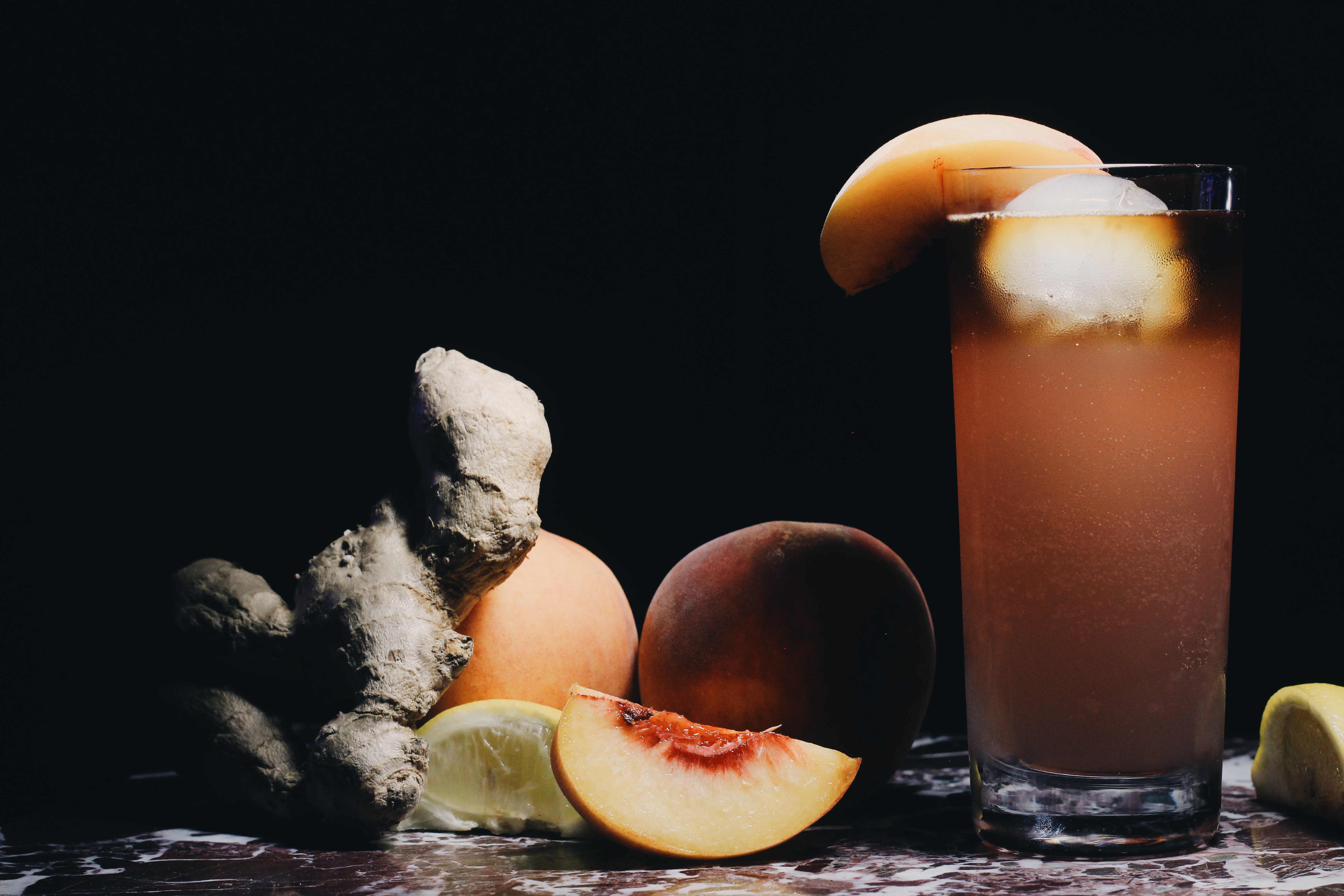
History: “I’m sick of being in kitchens,” Kyle McKnight told Kara Patt in 2014 inside a Seattle bar. He was explaining his homemade ginger beer recipe to her that he came up with two-and-a-half years prior and hinting that maybe they could do something with it. Back then, McKnight was selling the ginger beer in a restaurant and it was going faster than the food. Patt also came from the food industry. She had 18 years of experience and received a masters from NYU in food studies. She wanted something new as well. She told us over the phone, “I wanted to start my own business and do it in the right way…. This ginger beer tasted like the right ticket.” Shortly after their encounter, they both quit their jobs to devote themselves to Timber City Ginger. The independent bottlers started in Seattle farmer’s markets, growing from two to seven and then to online sales. This is a sassy ginger beer, one with attitude, defiant even. The company proclaims on its website, “This is not a soda – This is a tonic: an elixir.” Hmm. Sometimes I put on a Kobe Bryant jersey, go to the Y, and get hot from the 3-point line. But at the end of the day, I’m still just an un-athletic white dude who writes about soda on the Internet. Point is, we think it’s still safe to call this soda. But we understand why they prefer the term “tonic.” Timber City Ginger produces a ginger beer that is noticeably less sweet, made with local Washington produce and herbs. Sage and thyme are used in every batch, and according to Patt, “The herbs are what really make it stand out.” The ginger itself does not come from Washington, as it’s not grown there. But don’t worry, you’ll get your money’s worth; there’s almost a pound of fresh ginger in every gallon of ginger beer. As you might imagine with a beverage this artisanal, there’s no preservatives or artificial flavors used. The use of local ingredients also leads to lots of seasonal favor variations on their signature ginger beer, including today’s review, white peach. They call the majority of ginger beers on the market today “formulaic” and “sugar saturated.” They’re certainly proud of their more botanical approach. “People will come in a cold rainstorm and buy the ginger beer,” says Patt. That’s a lot confidence to drink in. Let’s see how it tastes.

Where to get: If you aren’t in the Seattle area, you can buy Timber City Ginger Beer in 32 oz. cans, swing top bottles, or in syrup concentrate at the company’s website. Eventually, Patt and McKnight would like to expand Timber City Ginger down the west coast and perhaps open a branch in Colorado, where Patt is from.

Nose: Lemon; pink lemonade; earthy ginger. This is a beautiful desaturated pink hue and has the matching pink lemonade smell. Olfactory heaven.

Taste: Bitter lemon; crisp ginger; faint peach; mild sugar. This is definitely an earthier ginger beer, tinged with a mild peachy sweetness. Everything here tastes very authentic. You’ll taste the lemon first. Very fresh and definitely bringing a bitterness. The ginger has light savory notes on its own and gives off a little bit of a pickled ginger (the stuff you get with sushi) taste when combined with the peach. That savory aspect tastes familiar. It’s unquestionably sage, an herb Timber City Ginger uses in every batch. The sweetness in this ginger beer really comes from the peach. It elevates the sugar in the flavor profile and gives the ginger beer a signature flavor. It’s not too sweet, but enough to make this easily drinkable without rum or vodka. I’d say a 5/10 on the sugar scale. The peach also imparts a little bit of a floral taste when combined with the botanical ginger flavor. This gets mildly sweeter as you continue to drink it, and the peach flavor really elevates to the top of the flavor profile.

Finish: Bitter lemon notes with peppery ginger that lingers until the next sip. The ginger sticks around long after the peach flavor has faded to remind you just who owns this soda tonic soda.

Rating: Ginger beers are a dime-a-dozen these days, but what separates Timber City Ginger’s concoctions from the rest of the market is the signature freshness they capture in each giant silver can of ginger beer. The ginger tastes like you chopped off a fresh piece and ate it. The peach flavor is real and not from a candy store. Together, the two work well. Now, in addition to being extremely popular, ginger is a flavor that can really vary in character from soda to soda. Timber City Ginger went with an earthier, slightly floral take with mild sweetness. If you’re someone who likes a lot of sweetness in their moscow mule, this probably isn’t the ginger beer for you. Sugar isn’t where this ginger beer shines, but there are some sweeter elements. The peach notes blend with the sugar to create sweet, floral flavors. These contrast with the peppery, savory ginger notes to form a little bit of a pickled ginger taste. This is probably the best flavor in the entire drink. You’ve seen pickled ginger on those sushi dates you overpaid for and didn’t take the girl home on. Personally, I wouldn’t mind seeing the cane sugar upped just a little bit to open up those peach notes more. I also think if the ginger had more heat, both the ginger and peach flavors would stand out more on the palate. Lovers of earthier, more natural sodas will almost certainly enjoy this take on ginger beer. Its versatility allows it to be enjoyed on its own as a sipper or as a great peach-infused dark and stormy. Start with the first, pass out with the latter.