five star soda

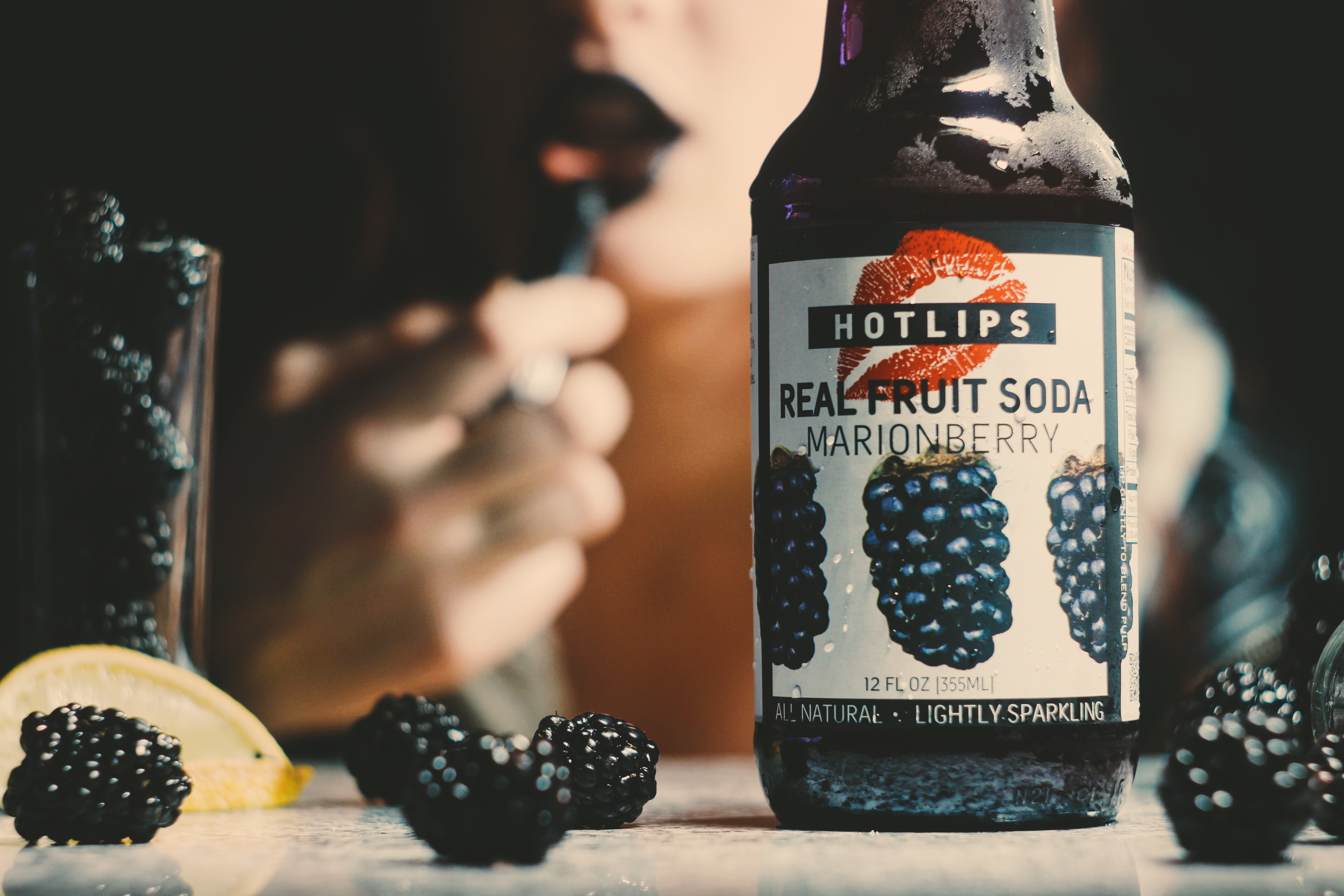
Hot Lips: Marionberry

History: As I dial up Hot Lips‘ corporate offices in Portland, Oregon, I am greeted by the most soothing, gentle Australian voice in my life. Adam Swoboda’s tone is so dreamy, I wish he’d sing me lullabies every night before bed, and I’m 27 years-old. Our interaction is tragically short-lived and I am passed off to Hot Lips Soda Account Manager Lars Burkholder who fills me in on the company’s history. “Hot Lips is a pizza restaurant first, and a soda company second,” he tells me, before adding Hot Lips Pizza has six locations across Portland. He encourages a sampling of the company’s “Tough Mother,” a pie with pepperoni, onions, peppers, and spicy chipotle sauce. Hot Lips was founded by David Yudkin has been making artisanal pizzas with ingredients sourced from local farms since 1984. Burkholder describes the company as “farm-to-table before it was cool.” After making fresh pizza for so long, Yudkin decided he wanted a fresh beverage to go with it, something he couldn’t get from the big companies. He wanted it to be “kid-friendly,” too. And who doesn’t love an ice-cold soda to wash down a few slices with? The farmers he was sourcing his pizza ingredients from were already harvesting fruit too, so it was a natural starting point for his own idea of soda. Yudkin came out with Hot Lips Soda in his restaurants in 2002 and began bottling in 2005. When you think of Hot Lips Soda, you should think of fresh fruit. “We’re starting from the actual fruit” and not an extract or oil,” Burkholder explains. They’re not shy about admitting that they go the extra mile to create a quality fresh-fruit soda “It’s pretty labor-intensive. It’s pretty expensive,” he reveals. Five of the company’s six sodas contain only four ingredients: fruit, lemon juice as a balancing agent, cane sugar, and carbonated water. The sixth, lemon, has just three since lemon is also the main fruit flavor. The company’s promise to its drinkers is that they will never put additives in their soda. No preservatives. No artificial colorings or flavors. Ever. Burkholder emphasized that the company is “really proud of the fact that it’s so simple,” in talking about each flavor. Hot Lips Soda is about letting the core fruit shine through for the drinker’s palate to absorb and enjoy. In order to ensure this, Hot Lips Soda is less carbonated than what you’re probably used to even in a craft soda. Each batch of soda also may taste slightly different from a previous output depending on the flavor the fruit when it was picked, something that reminds us of WiscoPop Cherry.

When choosing a Hot Lips flavor to sample, it only seemed right to start with Marionberry, an Oregon-native fruit. Marionberry is a hybrid of two types of blackberries bred together to create one super black, er… marionberry. So imagine those two blackberries as Jay Z and Beyoncé. Blue Ivy is their Marionberry. Listen, no one ever said we had to be good at analogies for this job. “It’s kind of the unofficial state berry of Oregon,” says Burkholder. An interesting fact about the marionberry soda is that it’s Hot Lips’ thickest soda in terms of consistency. The soda contains real marionberries, carbonated water, cane sugar, and lemon juice instead of citric acid for a cleaner, more natural balancing agent. And while red raspberry is the company’s most popular soda, marionberry apparently has a very loyal local crowd. “It’s very representative of the Hot Lips brand” because it is a local berry, Burkeholder notes. If you’re ever up around Portland wandering the streets in your flannel and tattered jeans with a bag of Voodoo Doughnuts in hand, Burkholder encourages you to stop by one of the pizzerias to come enjoy the company’s exclusively in-house “seasonal experimental” soda that changes every month. Past flavors have included cranberry, blood orange, and honey just to name a few.

Where to get: Hot Lips Soda can be purchased at all Hot Lips Pizza locations, as well as retailers in Alaska, California, Idaho, Oregon, Utah, and Washington. You can also buy Hot Lips soda online directly from the company at their web store in single bottles, 6-packs, and 12-packs. You can also buy it online from Summit City Soda in 12-packs and 24-packs. Hot Lips Soda is also sporadically available throughout the U.S. but the company is currently working to make their physical availability more consistent in the eastern portion of the country.

Nose: Mmm, like a piece of blackberry pie. You can almost smell the crust.

Taste: Frothy carbonation; rich blackberry; blackberry pie. If you’ve ever had a fresh piece of blackberry pie, this will taste familiar to you. The carbonation really aids in the flavor of this soda. The smaller bubbles and marionberry juice combine to create a frothy, velvety texture. It’s not creamy, but there’s definitely a little bit of a berry foam flavor going on. It’s slightly tart, but has enough sugar to make it easy to drink. Big berry flavor, like the kind you taste when eating a piece of grandma’s blackberry pie.

Finish: The tartness has subsided by now and you’re left with sweet, authentic blackberry flavor.

Rating: Hot Lips uses real fruit in their sodas and you can taste it. For those of you who don’t know, Marionberry is a hybrid between two different types of blackberries, so it’s just a fancy Oregon name for blackberry. And Hot Lips Marionberry has big, delicious, thick, black… berry flavor. I thought about writing a joke there, but I just don’t feel like getting beat up today. What stands out about this soda is the freshness of the berry flavor. It doesn’t taste like artificial blackberries or blackberry candy. If you know what actual blackberries taste like, this is it. The initial tartness, the sweetness on the finish, and the big berry taste. It’s all there. It really reminds me of the inside of a piece of blackberry pie. Definitely a nostalgic soda, and Lord knows that’ll appeal to many. Hot Lips lists lemon as another ingredient in this soda, and that’s something I’m not tasting. But I don’t think that’s a bad thing. It’s just a balancing agent. Marionberry is a simple flavor of soda that rests on the laurels of its main ingredient. Luckily, blackberry is a strong enough flavor to carry the soda from its initial fizz to its final sip. Hot Lips is one of the more popular craft sodas in America, and their take on Marionberry shows why the company continues to thrive.

Four Stars

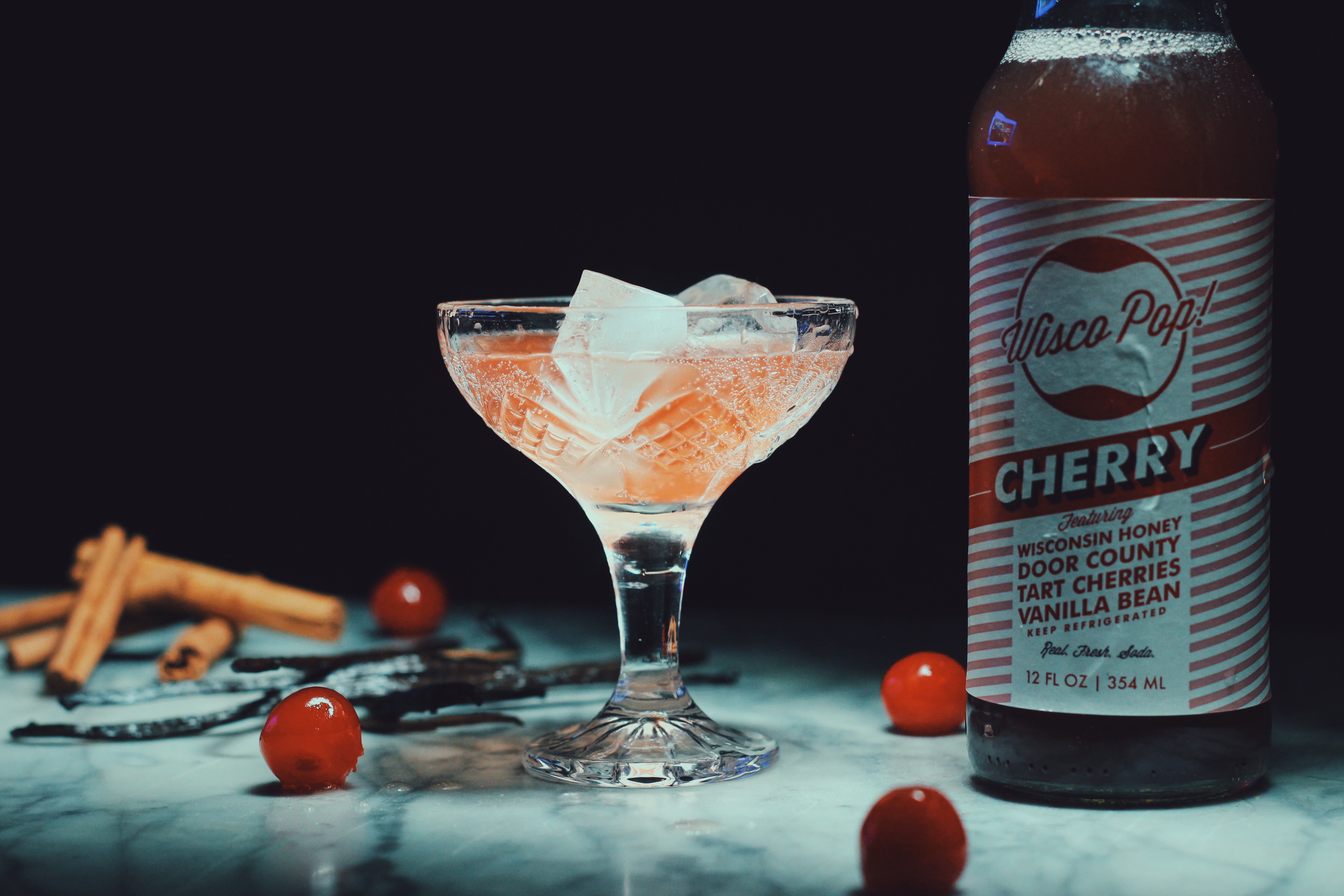
Wisco Pop!: Cherry

History: It took a lot of beer to get here. A lot. And I’m not referencing the ugly girl I went home with last night. No, I’m talking about one of Wisconsin’s freshest exports: Wisco Pop! Soda. Founder Austin Ashley is a lover of food and beverage. In 2003, he was ahead of the craft beer scene, sampling as many as he could ingest. He even bought equipment to brew his own beer. But before he got that far, he burned himself out on the stuff, both mentally and financially. With a curious mind and bunch of brewing equipment just sitting around, Ashley turned his attention to making ginger beer and root beer, the latter of which wasn’t quite as palatable. “That was pretty disgusting,” he admits. After trying out various recipes and flavors on families, the Wisco Pop! team of Ashley, his wife Hallie, and his friend Zac decided to hit the farmers market in July of 2012. When I think of farmers markets, I think of words like “local,” “fresh,” and “natural.” If you’re like me, you hit the nail on the head when describing the soda Wisco Pop! brews. “We’re 100% committed to using, real, fresh, natural ingredients. Everything comes from something in nature,” Ashely explains. Naturally, it was a hit at famers markets, so the trio launched a Kickstarter in December of 2013 to buy bottling equipment. Fast forward to late 2015 and the Viroqua, Wisconsin company is now selling their soda nationally online. Currently, Wisco Pop! produces three flavors: Ginger, Cherry, and Root Beer. “The natural food market is the consumer I’m after,” Ashley tells us, before adding that no soda from the company will ever be associated with a flavor house or any sort of outside recipe manipulation. Translation: you want fresh, you get fresh. No preservatives. Local ingredients. Real fruit, sugar, honey, and spices. Ashley actually gets frustrated occasionally with how fresh his company’s soda is because not every batch turns out the same. So you might buy Wisco Pop! Cherry in the summer and have it taste slightly different than a batch from the fall.

If you can’t read big headlines, Cherry is the flavor we’re reviewing today. Wisco Pop! Cherry is perhaps the most localized flavor in the company’s line. The stars of the show are the Door County Cherries used. Ashley describes the cherries as tart and often used in Wisconsin cherry pies. So you probably won’t be surprised to hear Ashley say he wanted the soda “to taste like cherry pie a little bit.” In talking to Ashley on the phone, you get the sense he’s a pretty chill dude. It wasn’t much more of a surprise then to hear him admit that he didn’t put a whole lot of thought into the recipe as a whole. In addition to the cherries, the soda’s recipe also contains vanilla bean, Wisconsin honey, cinnamon, and lemon. Currently, Wisco Pop! is working on a 100% organic soda line with grapefruit hibiscus the likely first flavor.

Where to get: Wisco Pop! soda is available at 105 retailers mainly in Minneapolis, Milwaukee, Madison and surrounding towns. You can find your nearest retailer at the company’s online locator. You can also purchase the company’s soda online from anywhere in the U.S. via their web store.

Nose: Big vanilla bean scent. Smells like the inside of a cherry pie with a heavy vanilla influence.

Taste: Tart cherries; lemon; smooth vanilla bean; mild honey. This has really good, authentic flavor of cherry and vanilla. The vanilla bean tastes so pure that it gives the soda an earthy aspect. The cherries are flavorful and taste slightly tart; this is enhanced by the carbonation. There’s also some lemon notes in here that add to the tartness. I want to emphasize that this is tart and not sour. Back to the vanilla – the more you drink this, the smoother it gets and the creamier the vanilla becomes. The longer this soda goes on, the more and more the flavors meld with one another to create the taste of the inside of a cherry pie. It’s really pleasant and shows the sophistication of the recipe. Great authentic cherry and vanilla bean flavors.

Finish: Still fairly tart cherry flavor with subtle vanilla also still present. The one flavor you taste on the finish and not as much in the soda’s body is honey. Overall, pretty similar to the flavors you taste near the beginning and middle of the soda with the exception of some mild honey notes.

Rating: Wisco Pop’s Cherry is probably one of the easiest drinking cherry sodas you’ll come across. With its tart cherry notes and smooth, slightly creamy vanilla flavors, it’s an excellent fruit soda that demands more than one bottle be enjoyed. This only gets better as it goes on. The tartness of the cherries and lemon and the creamy, earthy notes of vanilla are a perfect contrast of flavors and provide a wonderful mouth feel. This soda makes me smile. I do wish I could taste the honey more because it’s advertised as local “Wisconsin Honey” and the brand is of course called “Wisco Pop!” But that’s really my only criticism. Cherry by Wisco Pop! is like a loving girlfriend. She’ll always take care of you and never let you down. You’d be silly not to invest in Wisco Pop’s Cherry. She’ll treat you well.

Four Stars

Cannonborough BevCo.: Ginger Beer

History: As craft soda continues to evolve and enter a new realm of artisanal quality, freshness is becoming an increasingly popular buzzword. And if there’s a model for fresh soda, look no further than Charleston, South Carolina where the gents at Cannonborough Beverage Company (hereby referred to as CannonBevCo) have been concocting seasonal fresh fruit sodas since 2012. These three dudes grew up together playing soccer and now they’re competing in a different arena that America actually cares about: beverages. CannonBevCo has been at the forefront of the farm-to-table soda movement since the company’s inception. To create their sodas, they get fruits from local farmers and blend a mixture that balances the sugar and acidity of the fruits. “Sometimes you feel a little guilty drinking soda. We wanted to take the vehicle of soda we loved and elevate it a little bit,” says co-founder Mick Matricciano. But it’s their methods that really set them apart. The company uses the same equipment used to brew craft beer. A couple of them actually got their start in the bar scene mixing cocktails, a trick of the trade that’s come in handy when crafting recipes for their soda using fresh fruit and herbs. CannonBevCo is also one of the only soda bottles in the nation that uses force carbonation. Let me explain this to you like you’re an eight year-old. They blast CO2 into their liquid, which bonds with water, and when the CO2 dissolves you get bubbles. I get that a few of you still didn’t get that. It’s fine. One of you is probably an ex-girlfriend of mine. A more recent innovation is finding a way to keep their soda shelf-stable without the use of preservatives by using bottle pasteurization. It’s a method more commonly used with other juice beverages like ciders. Matricciano likens it to canning jams.When they’re not making soda, they’re winning awards for the soda they already made. Recently CannonBevCo was awarded “best beverage in the south” by Garden and Gun, a southern United States travel, food, and culture magazine.

CannonBevCo specializes in sodas using real, local ingredients, meaning most flavors have a limited seasonal run with the exception of Grapefruit Elderfower, Honey Basil, and Ginger Beer. Those are year-round. You’ll notice one of those flavors doesn’t sound like the other. For those of you who need some help: ginger beer is a very common flavor of soda and often utilized in cocktails. That was actually the appeal of making the ginger beer. “It’s a classic style,” says Matricciano, before adding that ginger beer gave the guys the chance to show them “working within the box” as opposed to their more artisanal offerings. This is a ginger beer recipe with ingredients you’re not used to seeing. In addition to real ginger juice, the company uses lime juice instead of lemon juice in addition to vanilla beans, cloves, and habanero peppers. Matricciano explains “We wanted ginger to be the main attraction of the soda, but use the clove and vanilla to soften it.” He adds that the cloves provide a warmth to the flavor, while the vanilla helps prolong the ginger’s flavor. They also chose lime over lemon juice because they felt like ginger’s flavor was already aggressive enough and that adding lemon would overdo it. That idea sounds frighteningly like my love life. CannonBevCo’s ginger beer was designed to be used both as a mixer and a stand-alone soda, something many ginger beer brewers don’t take into consideration. The thought of a ginger beer made with vanilla certainly has us intrigued.

Where to get: CannonBevCo Ginger Beer is available in bars, restaurants, and cafes throughout South Carolina. You can also order their sodas in 750ml bottles for $10 + shipping at their online store.

Nose: Ginger with maybe a little pepper. Smells more sweet than spicy.

Taste: Lime; vanilla; ginger; mild heat. Let’s start with the basics – this tastes good. Surprisingly, you taste lime right off the bat. It’s a softer lime, blended with notes of vanilla. You can taste the real lime juice Cannonborough used and it’s a refreshing flavor. Definitely not too acidic, which is nice because the ginger comes in next and it has a lot of flavor character. The ginger flavor is crisp and has a little heat to it, but the real burn comes from the habanero pepper in this – and that’s what you taste near the end of the sip. I’d give this maybe a 6.5/10 on the heat index. The lime provides a nice citrus contrast to the ginger. There’s equal parts harmony between the ginger, lime, vanilla, and spiciness. Easily one of the most refreshing and flavorful ginger beers we’ve ever tried.

Finish: Lingering pepper-like heat that you feel on the back of your tongue and in the throat. Maybe some herbal notes in there as well, which is most likely the clove used in this recipe. The habanero heat slowly fades and the lime juice and vanilla bean flavors remain. Really nice.

Rating: We used to say that root beers were a dime-a-dozen in craft soda, and they are, but you can make the same argument for ginger beer now. 2015 was the year of ginger in soda. Unfortunately, many companies are now making ginger beer just to say they have the flavor in their line with little regard for making a unique product. It’s refreshing, literally and figuratively, to drink this one in. CannonBevCo perfectly walks the line of “natural” and “classical” sodas when it comes to taste. Their ginger beer is a prime example. It’s made with real ginger juice, lime juice, vanilla beans, and habanero peppers, while simultaneously being sweet enough to taste good. So often “natural sodas” are like when dudes hit on girls out of their league – admirable in their inspiration and unenviable in their execution. It usually comes down to sugar content. Natural sodas are often earthy in flavor and taste more like a flavored carbonated water than anything else. They usually sacrifice taste for lower calories. Cannonborough pulls off a nifty trick with their ginger beer, coming in at 90 calories/12 oz while still being packed with flavor. Oh yeah… we should probably talk about the flavor more. First and foremost, everything tastes real and fresh. The use of lime juice in CannonBevCo’s ginger beer is alarmingly good. It pairs well with the sweetness of the vanilla beans for a soft vanilla-citrus combination, and also provides a nice citrus contrast to the ginger. The heat on this is right where it needs to be. Strong enough to make an impact, yet not so fiery to distract from the ginger, lime, and vanilla flavors. I even think they could turn the heat up one more level and still be fine. But that’s a personal preference thing. I think what really makes CannonBevCo’s ginger beer stand out is the use of vanilla. It’s very uncommon in ginger beer, yet extremely common in most soda. Sometimes the best ideas don’t fall far from the tree. This is undoubtedly one of the best ginger beers available in America – crisp and refreshing, full of citrus with notes of pepper, and anchored by a perfectly executed use of real vanilla. This ginger beer is out of your league. Fortunately, if you throw a few bucks her way, they’ll let you have a go with her.

Five Stars

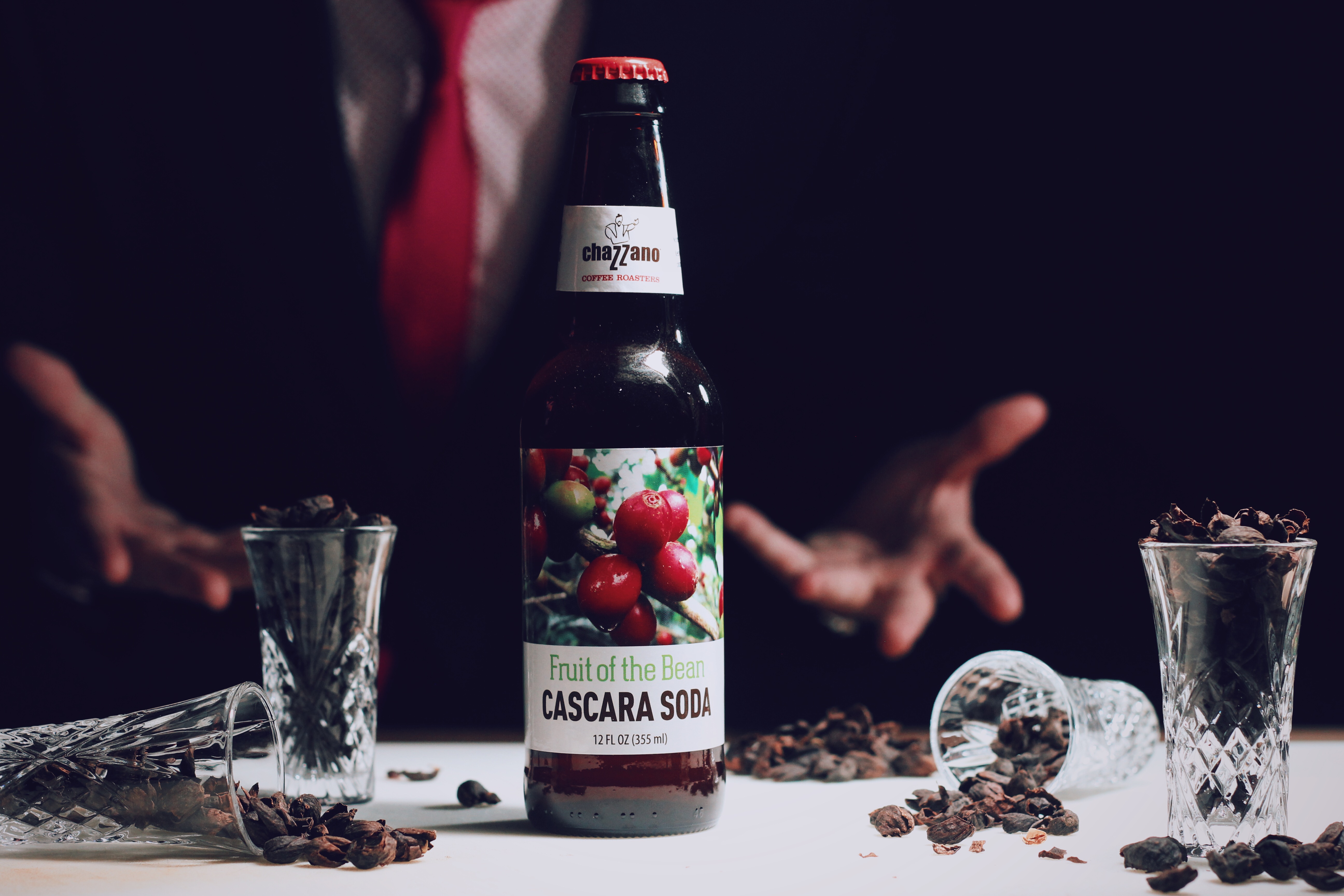
Chazzano Coffee: Fruit of the Bean Cascara Soda

History: There are as many layers to Chazzano Coffee founder and owner Frank Lanzkron-Tamarazo as there are to the beans he roasts in his Ferndale, Michigan cafe. But first and foremost, this dude loves coffee – he talked to us about it on the phone for 54 minutes. Most of our interviews are done in under 15. He also knows it about 2940325x better than anyone I’ve ever met. He is a master roaster and takes it seriously. He generously sent us two bags of it. Can confirm his coffee is amazing. He’s also one of the funniest people I’ve ever interviewed. When talking about bad coffee, he quipped, “It’s against God to do that.” It’s a topical quote because religion is another big part of Lanzkron-Tamarazo’s life. He’s Jewish with Italian heritage and grew up in New York City. Religion is actually what led Lanzkron-Tamarazo to his own coffee business because he originally moved to Michigan to take a job in a synagogue that didn’t work out. It even impacted the cafe’s name. You see, Lanzkron-Tamarazo is a Cantor, which is the main Torah reader and singer in Jewish synagogues. In Hebrew it’s called a “Chazzan.” So he took the Hebrew spelling, added an “O” to it because he’s Italian and basically every Italian word ends in “O”, and voila – Chazzano Coffee was born in October of 2009. Lanzkron-Tamarazo’s journey to become one of America’s most knowledgeable sources on coffee started 16 years earlier when his mother-in-law bought him a roaster for his birthday. After buying beans from around the world, his “night time hobby” escalated from brewing ounces to pounds to hundreds of pounds to thousands. And after buying bigger and bigger roasters to satisfy his greater yields, the dollars were adding up and the passion was no longer pacing at a slow drip. Lanzkron-Tamarazo says he decided “Life is short. It’s time to do something that will really bring joy to my life.” Why, you might ask? “I could not find anyone else’s coffee that was better than mine,” he admits. Over the phone, you can tell he isn’t being condescending – this dude believes he’s it when it comes to coffee. Chazzano Coffee’s catchphrase is “Good coffee makes you sing!” Seems appropriate since Lanzkron-Tamarazo and his wife are both opera singers. “My kids will probably need therapy because of that,” he jokes.

Six years later, Chazzano Coffee gained a new relative on the shelves in the cafe: soda. As a youngster, Lanzkron-Tamarazo’s grandmother loved Manhattan Special Espresso Soda, a beverage you can still buy today. It was always his duty to bring it to her. As an adult, it was his dream to create his own coffee soda. So in October of 2015, he did. But he also created another, arguably much more interesting soda based on cascara, also known as “coffee cherry.” Cascara is the husk or skin of coffee cherry, the fruit of the coffee bean. Lanzkron-Tamarazo describes the taste of coffee cherry as honeydew-esque. It’s often used in teas. He notes many coffee farmers use the fruit as compost for trees, however others in countries like Yemen use it to create beverages. Lanzkron-Tamarazo first tasted coffee cherry at Gold Mountain Coffee Growers in Matagalpa, Nicaragua in January of 2015. It wasn’t long before he started making his own tea using cascara. That tea is a central part of Fruit of the Bean Cascara Soda. In fact, it is the soda… because the soda is literally just the tea and carbonated water. No sugar. No preservatives. No added flavors. Just two ingredients. His coffee soda follows the same principle. “There’s nothing like it that has no preservatives, that has no sugar,” he boasts. And while Lanzkron-Tamarazo describes coffee cherry’s flavor as tasting like honeydew, he says the cascara soda is sweet with notes of apple and pineapple. It’s not often we taste sodas based on something we’ve never even heard of, but I suppose there’s a first for everything. Chazzano Coffee is already ahead of the game when it comes to originality.

Where to get: Chazzano’s Fruit of the Bean Cascara soda can be purchased in the Ferndale, Michigan cafe. For those of you not able to make the trip, Lanzkron-Tamarazo takes orders for his soda via email or phone. You can find their contact information on their website.

Nose: Prunes with just a touch of mild cherry.

Taste: Unsweetened prunes; slightly fruity tea; tobacco; mild coffee. There’s an interesting combination of flavors going on that all go back and forth. Typically with sodas you taste an initial flavor, then some more tasting notes that come in to blend and form the soda’s base, and then a finish. Here, the three flavors of mild prunes, tea, and coffee all make up the soda’s body and intermingle throughout each sip. This is not a sweet soda as it contains no sugar. Each of the three flavors have equal balance throughout the bottle, though some flavors are stronger on some sips and milder on others. The prune taste provides a little bit of natural fruit flavor with some floral hibiscus notes, while the tea has slightly fruit, almost cherry-like notes. The coffee flavors are pretty straightforward and provide some mild bitterness. It’s hard to pinpoint an exact coffee flavor with the fruity notes also in play. An interesting taste worth pointing out that comes from the brewed cascara tea used to make this soda is tobacco. It’s not strong, but it does provide some subtle smokey and savory notes for a more full-bodied flavor. Both are mild in nature. It’s a mild soda in general, but is very drinkable for one with no sugar.

Finish: There’s a very light coffee flavor at the end of this soda, kind of like a blonde roast. It’s a unique sensation going from a tea flavor in the soda’s body to a coffee one on the finish.

Rating: Fruit of the Bean Cascara Soda is truly a pioneering soda in the industry. It’s the only bottled soda made from “coffee cherry” or cascara that we know of… and trust us, we’ve looked into it. It’s a coffee shop connoisseur’s dream. This is a soda you can drink as an alternative to tea or coffee and still get a little caffeine kick from, as cascara contains about a quarter of the caffeine of normal coffee. The flavors are truly… odd. That’s not a bad thing. It’s a swirl of prune notes, blonde roast coffee, and steeped tea with notes of hibiscus and tobacco. The tea flavor brings both floral and savory elements to the table, while the coffee brings a little bit of a roasted bitter taste. But the biggest flavor I notice is that fruity prune taste. It’s there just enough to stand out the most to me, but all three flavors are balanced throughout the beverage. Like Chazzano Coffee Soda, Fruit of the Bean Cascara Soda also contains no sugar. For some, that’ll be a turn off. Personally I’m not a fan of sodas without sugar, whether they are labeled diet or not, but I don’t know – this one is so light and drinkable that I do actually enjoy it. It has real flavor despite the absence of sugar while maintaining a sophisticated flavor profile. It doesn’t surrender taste. Frank Lanzkron-Tamarazo has said he won’t make a soda with sugar in it. I’d be interested to how this one would taste if that were to happen. I also think adding sugar would strengthen its appeal to a larger audience. It’s hard to critique this soda beyond that because there’s no basis on which to judge it seeing as its the first of its kind to be bottled. I have to praise Chazzano Coffee for being truly original and I’m interested to see where this pioneering soda takes the flavor in the industry and how it might inspire its creators to branch out even farther.

Four Stars

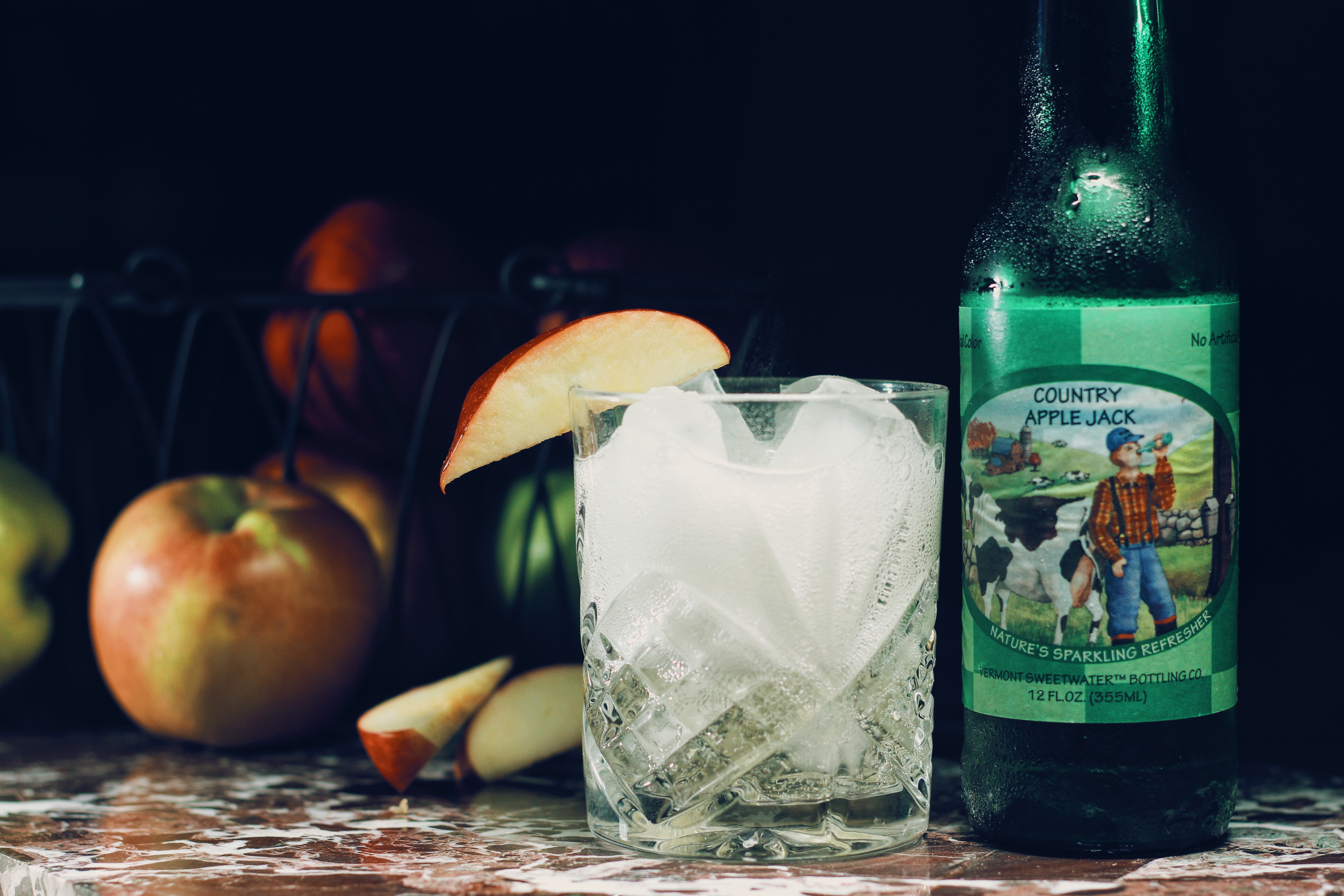
Vermont Sweet Water: Country Apple Jack

History: Apple is a vastly unexplored flavor in craft soda. It’s like the deep sea; we don’t really know how to approach it. Maybe it’s a little scary, but it can also be pretty neat. The biggest difference, I guess, would be that most of the stuff at the bottom of the ocean looks like it could eat your soul, while apple soda seems like a small blessing. Vermont Sweetwater is a small soda bottler founded in 1993 by brothers Rich and Bob Munch. The company tries to cater to the slightly more adventurous craft soda drinker. I mean, they founded the company on a carbonated maple seltzer water. Some of their flavors include Mango Moonshine, Raspberry Rhubarb, and Tangerine Cream Twister. They’re one of only a small number of companies that dared to seek out and try apple in soda. They call it Country Apple Jack, an apple soda with a dash of cinnamon. We don’t know a whole lot more about it than that so let’s get to tasting.

Where to get: You can buy Country Apple Jack or any other of Vermont Sweetwater’s sodas at the online store in either 24-packs or 6-packs, as well as on Amazon.

Nose: Faint apple; cinnamon; honey.

Taste: Honeycrisp apples; Ambrosia apples; tartness; cinnamon; sugar. This tastes like a soda your grandma made at about 6:30 after supper to be served with a scoop of vanilla ice cream. It’s got really good, authentic apple flavor. The biggest tasting note is honey, so it’s likely this was made using the flavors of Honeycrisp and/or Ambrosia apples, both rich in flavor and yielding a good honey taste. You’ll also taste cinnamon more along the backend of each sip. It’s not overly sweet, but there’s definitely enough sugar to make this feel like soda. There’s a definite tartness to this when you first drink it, but that fades with each continual sip in favor of a creamy honey flavor. The name “Country Apple Jack” seems very appropriate for this soda, as it feels like a down home, old fashioned recipe you’d encounter on a farm. Big on apple flavor with corresponding notes of honey and cinnamon and the slightest amount of tang for contrast.

Finish: Kind of a creamy apple and cinnamon thing going on. Think of the gooey inner portion of an apple pie.

Rating: Vermont Sweet Water does an excellent job of taking a soda that most will assume tastes like carbonated apple juice and rewriting the script on it. Instead, Country Apple Jack is somewhere in between biting into a Honeycrisp or Ambrosia apple and a piece of grandma’s apple pie. It has some striking similarities to Pure Soda’s Apple Pie Soda, though this is more of a spiced fruit beverage than one trying to emulate a dessert. It does a good job of living up to its name. It just tastes a little country, a little southern, even. Ironic for a soda from Vermont. Country Apple Jack is highlighted by a distinctive blend of honey and cinnamon flavors. If you’re an apple aficionado, you’ll probably taste the aforementioned Honeycrisp or Ambrosia flavors. If you’re normal like the rest of us and can’t identify specific apple flavors, just know those are the ones that have a honey taste to them. There’s also a slight tart or tang to this for contrast. It’s stronger at the beginning and fades as you drink it. I’d like to see that tartness hang around and give this more of a full-bodied flavor, something to push back a little more. On the flip side, a nice surprise with this soda is its creaminess. I’ve always wondered what an apple cream soda would taste like. This isn’t it – but it’s as close as I’ve seen anyone get. As you drink Country Apple Jack, it loses its tartness and becomes velvety in both mouth feel and flavor, similar to the inside of a pie. It’s easily the soda’s best element. Still, I see this being a divisive soda. Some will want this to be what it isn’t – a carbonated bottle of apple juice. I wouldn’t argue with you if you ranked this three stars, but I don’t see how it could go any lower than that. Personally, I think you have to applaud inventiveness, especially when it works. Country Apple Jack isn’t a soda you’ll likely put in your regular rotation, but it’s a nice change of pace that any soda lover should sample at some point.

Four Stars


Green Bee: Lemon Sting

History: According to Michigan State University, “It has often been said that bees are responsible for one out of every three bites of food we eat.” Chris and Lori Kinkcade thought they should be responsible for four flavors of soda as well. Chris Kinkade is a beekeeper in Brunswick, Maine and the founder of Green Bee Craft Beverages. He remembers looking at a jar of honey and thinking, “I could make something out of this.” Local honey might be the source of Green Bee soda’s flavor, but Kinkade’s kids are really the reason it exists. “They were always bugging me for soda, and I never wanted to give them what’s on the market,” he conceded. This led to the company’s first flavor of soda: Lemon Sting. As you might expect, with the health of children as the inspiration, Green Bee approaches soda in more of an organic, lower calorie way than what’s typical to the marketplace. “To us, it’s about fresh soda,” he says. As described in the company’s motto, “The Green Bee Way,” they say they “always use whole ingredients,” including “fresh pressed juices, natural herbs and spices.” They also do not use preservatives or extracts. When it comes to Lemon Sting, our review today, Lori Kinkade notes it’s made “from freshly squeezed lemon juice, rosemary and wildflower honey.” Sounds like a drink that would make Julia Child proud. The Green Bee website describes Lemon Sting’s taste as “fresh, clean flavor with crisp finish.” We like to call beverages like these “farmer’s market sodas” because they’ve just got that mom n’ pop feel to them and are made with minimal sugar (in this case solely honey) and use real, fresh ingredients. Buzz, buzz.

Where to get: Green Bee lists out where you can find and purchase their soda right here. For those outside of New England, you can buy it online via Green Bee’s official retail partner Jackeez.

Nose: Honey. Earthy honey.

Taste: Lemon; herbs; honey. The three main components of Lemon Sting are lemon juice, honey, and rosemary, and that’s spot-on in terms of what you taste. The lemon and honey are immediate and hit flush in the center of your tongue. There’s initially just a touch of sweetness from the honey that comes out, but soon the lemon juice becomes the dominant of the two flavors, though it does retain the honey’s earthy notes. This is not a sweet soda, but also not bitter – pretty typical for “natural sodas” in that regard. After a couple sips, the lemon and honey form a light, sweet lemon flavor like one might find in a tea. Then there’s the rosemary. I always taste this separately from the lemon and honey. It definitely imparts and herbal flavor to the soda near the back half of each sip, but doesn’t really add anything to the initial flavors. The lemon-honey combo is the star of this soda. The honey isn’t overly strong and the lemon isn’t too sour. The flavors compliment each other well.

Finish: Strange aftertaste. It’s like what a corn tamale tastes like. Not sure how this happened, but it needs improvement.

Rating: Natural sodas are a polarizing category, often looked down upon by old school soda drinkers and lauded by the new farmer’s market wave of diet-conscious hipsters. If you’re a rootin’ tootin’, sugar lovin’ root beer or cola fanatic, this probably won’t be your thing. For the rest of you, read on. I don’t know many people who’d drink a soda where lemon is the primary flavor, so it’s good Green Bee has recognized that and used local honey from Brunswick, Maine to cut into this powerful ingredient. When paired with with honey, the lemon flavor in Lemon Sting is present enough to make an impact, but transformed in a way that should appeal to fans of both natural beverages and citrus soft drinks. The honey has a very natural, earthy flavor. It is not sweet. The lemon tastes authentic, like something you’d find in lemon-lime soda with the volume turned up. My biggest disappointment is the soda’s third ingredient: rosemary. It’s such a fantastic herb with great flavor, and if you didn’t look at the ingredient list, you’d probably never know it was in Lemon Sting. You can occasionally taste it as kind of a general herbal flavor on the back half of some sips here and there, but it’s not prominent enough to affect the overall flavor profile. It’s exciting to read about, but ultimately never happens… reminds me of my sister’s wedding. If the rosemary was brought up higher in the flavor profile, I think if could play off the honey’s sweetness and give Lemon Sting’s earthy flavor more character. If you enjoy tea with honey and lemon, this is tailor-made for you. Lemon Sting is a solid offering for a natural soda with notes of earthy sweetness. I think you’d be best-suited drinking this on a hot day in the sun, perhaps paired with a sweet treat in hand.

Three Stars

Fiz: Classic Cream Soda

History: After introducing myself and informing him of my intentions, Lou Petix greets me on the other end of the line with a guttural New Yorker’s, “Hey, how you doin’?” His disposition is friendly and talkative, yet his accent is deep and gritty, making him sound two stories tall. He and his brother Joe are third generation owners of College Club Beverages in Rochester, New York. “We started as kids here at 8 years-old…. It was just a natural progression” he explains. His grandpa, Luigi Petix, was an Italian immigrant who came over and started Family Bottling Works in 1922 before the business was renamed College Club Beverages after World War II. The company became famous for their refillable bottles and to this day still employs that method for their 18 flavors of College Club sodas. They’re old school. They don’t even have an official working website. Just a Facebook page. They still buy the raw materials and make their soda syrups in house, something that’s becoming more and more rare these days with the advent of flavor houses and culinary chemists. Now here’s the slightly confusing part, so follow closely. College Club has multiple brands under its company umbrella. You can only buy actual College Club soda in Rochester. The sodas you’ll see on the shelves around the greater New York area and available online are labeled “Fiz” and “Primo.” Fiz covers the 13 flavors of craft soda the company sells, while Primo is a line of two Italian sodas. You’re probably thinking… why? Why not just consolidate all of them? The answer is because while there is some overlap in flavors between College Club and Fiz (both brands have classics like cream soda and root beer, etc.), the recipes aren’t exactly the same. This is because up until the 1950’s Fiz was a totally different soda company that ran on its own. After calling it quits, the Petix brother liked their flavors, labels, and bottles so much, that they bought out the entirety of the company’s resources. Today, they use Fiz as their craft soda line. That’s the story. We promise there’s no more twists. This isn’t a review directed by M. Night Shyamalan.

When trying to decide which flavor of Fiz to review, we consulted Lou. He suggested the root beer or ginger beer (Fiz’s most popular flavor) before mentioning in passing an interesting tidbit about the cream soda. There’s a secret ingredient in it atypical to cream soda. “There’s a little trick to it that my father taught me,” he teased, noting it’s mild, but there. My reaction anytime someone tells me there’s a secret ingredient is to immediately crack the case. What could it be? Something New York-y? Petix did say “we try to access our raw materials as locally as possible,” while also adding they prefer natural flavors. Intrigued, I prodded him further about the cream soda. “This is what we call our classic cream soda,” saying it was very heavy on vanilla flavor. So in the end, he didn’t budge. But that makes it more fun for us, and for you.

Where to get: These aren’t the easiest sodas to get a hold of if you’re outside of the New York area. You can, however, order Fiz soda online from New York Style Deli. I know the website looks a little amateur, but we called and checked it out; it’s legit. Your best option might just be to call the company at (585) 328-6665. They take orders over the phone and will ship anywhere in the continental U.S.

Nose: Almond; cherry; pound cake. There’s a faint cream soda smell here, but it’s infused with chocolate, cherry and almond scents. Interesting and intriguing.

Taste: Fizzy; chocolate-covered cherry; vanilla; mild nuttiness; sugar. There’s elements of traditional cream soda here, and then there’s the part that gives the soda its flavor identity. You notice an initial burst of carbonation immediately, more so than an average soda, and then the unique flavors come out that separate Fiz Cream Soda from the crowd. You get all of the soda’s flavors up front spun together in a cocoon of sugary uncertainty. There’s definitely a fruity element to this that tastes like it’s paired with chocolate. After repeated tasting, I’m thinking it’s cherry. Almost like a Cherry Mash candy flavor. This is paired with vanilla and a corresponding mild almond nuttiness, but not like biting into the nut itself; more like how almond syrup tastes in pound cake. This isn’t a creamy soda, but that almond flavor gives the soda’s body a richness, something that’s pretty unusual for cream sodas that don’t have a particularly creamy mouth feel, and/or aren’t made with honey. I’m also getting some undertones of brown sugar and maybe a little bit of caramel. But the soda comes down to three flavors: vanilla, cherry-chocolate, and almond.

Finish: Vanilla sugar with notes of creamy cherry that linger for a few seconds and slowly fade. Excellent.

Rating: Fiz Classic Cream Soda by College Club Beverages ascends beyond the category’s normal realm into a distant plane of flavor even we can’t fully comprehend. But it’s good. It’s damn good. No… no, this is great. I am fanboy-ing out over how exquisite this is and I don’t even care. And it’s all about the taste. There’s a mystery flavor to this cream soda – sure you taste the vanilla and maybe a little caramel, but WHAT IS IT? It’s like a combination of chocolate and cherries with mild almond extract and maybe a little creamy brown sugar. Whatever it is exactly, it makes the soda. You won’t taste another cream soda like this one. Guessing the secret ingredient in Fiz Cream Soda is like being an 18 year-old boy and trying to hit on a 27 year-old woman: it’s fun to try, but you’ll never figure it out. Our best guess at the signature flavor is similar to what a Cherry Mash candy tastes like – a creamy cherry-chocolate flavor with notes of vanilla and nuttiness. To be clear, this is definitely more vanilla than cherry, chocolate, or almond – but the accompanying tasting notes are so unprecedented in cream soda that they stand out with noticeable contrast. We always try to find a few points to critique in sodas, but I’ve gotta admit I would change nothing about this. It’s so unique, flavorful, and delicious that it rises to the top of the cream soda category. It’s a little on the sweeter side at 46 grams of sugar per bottle, but those aforementioned flavors will keep your mind preoccupied until the last sip. Try the first half chilled straight out of the bottle for a crisper cream soda and the other half on ice for a creamier transformation. You’ll want more of this. I know we do. Fiz Cream Soda’s greatest trait isn’t even how good the soda tastes; it’s that it keeps you guessing long after you’ve finished it. There’s something special about this one. Go out of your way to taste the mystery.

Five Stars

Original New York Seltzer: Lemon & Lime Soda

History: The 80’s were some of American culture’s most glamorous years. Big hair, neon signs, leather jackets, cocaine flying everywhere, acid wash jeans, baggy suits. It was a hell of a time. Original New York Seltzer (hereby referred to as ONYS) was a drink born in the 80’s and it personified that time. The independent brand became known for its flashy presentation with brightly colored labels that popped, big lettering on small bottles, and signature clear liquid in all flavors that separated it from the major labels. To be specific, ONYS was started in 1981 by the father-son team of Alan and Randy Miller. You might know Randy Miller’s other work because today he runs a company that trains big animals like bears and tigers often used in movies. As ONYS rose to prominence, the big boys took notice and eventually came calling. Anheuser Busch offered the Miller’s $180 million to sell. Because keeping the business independent was their top priority, they declined. Soon after, due to a damaged distribution network, ONYS stopped production, and everyone’s favorite 80’s soda disappeared just as fast as the jheri curl. But the beauty of nostalgia is that young fans grow up and old favorites die hard. So over 30 years later, Ryan Marsh resurrected the company, relaunching the brand in May of 2015. The new ONYS President said, “As a kid growing up in the ‘80s, my family and friends all knew and loved Original New York Seltzer. It was the only brand our parents would allow us to drink…. We’re committed to upholding everything that has made this brand unique.” That includes making soda that’s free of preservatives, coloring, and artificial flavors. Now some of you might be confused that we’re calling a brand with the word “seltzer” in it a craft soda. Don’t be. Here’s why: ONYS is carbonated, has a shared range of flavors with soda, is made with pure cane sugar, and contains a calorie content not that far removed from a normal craft soda. When Marsh said he wanted to restore things to how they once were, he wasn’t kidding. He elaborates by saying, “The carbonation has been set to 1987 levels. Original New York Seltzer is bottled in the original-sized bottles in the original factory. The same employees that brought ONYS to life in the factory are still running the lines and are monitoring the quality control process.” How ’bout that? A single nostalgic tear runs down my eye. Something that’s kind of funny? ONYS is and always was headquartered in Los Angeles, not New York. Marsh notes that vanilla cream and black cherry are the current most popular flavors, so we wanted to give some love to one of the other kids, lemon and lime.

Where to get: You can purchase Original New York Seltzer Lemon & Lime plus the rest of the company’s flavors directly from the ONYS online store and from Amazon.

Nose: Lemon-lime, ala 7-Up more than Sprite. More of a lime scent than lemon.

Taste: Lime-y; sugar; light lemon; bubbles. The lime here is more prominent than the lemon, but the lemon has a better flavor. First, the lime. Think along the lines of candy lime like you’d taste in a green Life Savers. The lime is accompanied by lots of little bubbles that amplify its intensity. The carbonation isn’t overly intense, but there’s definitely a lot of it. After a couple seconds, the lime fades and you’re left with a soft lemon flavor, similar to Sprite. However, the second half of each sip is also what distinguishes Original New York Seltzer’s Lemon & Lime Soda from Sprite or 7-Up. There’s no syrupy aftertaste. That said, overall this is pretty similar to a cross between Sprite and Howdy Lemon-Lime Soda.

Finish: Mild, crisp lemon flavor with sugar that slowly fades out.

Rating: To be fair, there’s not a whole lot of wiggle room to start with when it comes to lemon-lime sodas, but Original New York Seltzer’s take on the category tastes remarkably similar to the major brands already on the market. And I’m not saying it’s bad. No, no. It’s good. It’s pleasant. It’s light and refreshing. It’s just doesn’t taste significantly different from a mass-produced brand like Sprite or a craft classic like Bubble Up. While a craft soda connoisseur might be able to taste that this is made with real sugar and not corn syrup, most drinkers will overlook a subtlety like that. And while an enthusiast might be able to differentiate the strength in lime flavors between ONYS Lemon & Lime vs. its competitors, most drinkers will just think it’s another lemon-lime soda. You could probably hand this to most people in a blind taste test and they’d tell you it was Sprite. Again, it’s not a bad thing. It’s a hard flavor to infuse with uniqueness. Put it this way: I think this tastes better than 7-Up and Sprite and is better for you. There’s no reason you shouldn’t be drinking this instead. Most may not find many differences between this soda and others like it, but I’d be willing to bet most people also wouldn’t turn down a bottle of this after having a few sips. This is a soda you bring out of the bullpen when you need a drink to rely upon. Old girl is solid.

Three Stars