fivestarsoda.com

Red Hare Brewing: Root Beer

History: You don’t see a ton of craft soda coming out of Georgia, aside from the Red Rock brand, so we dug deeper and discovered Red Hare Brewing. Fun fact: it’s Georgia’s first craft brewery to make its beers available in cans. According to Elyse Moore, Red Hare’s Graphic Designer and Marketing Coordinator, the brewery was the idea of buddies Roger Davis and Bobby Thomas. Every Saturday these two “would home brew in Roger’s basement,” according to Moore. Eventually the two got enough positive feedback from friends and family that they decided to open Red Hare Brewing in Marietta, Georgia in 2011. If you like beer and are in the area, they recommend you stop in for a Gangway IPA or Long-Day Lager. But most of you aren’t reading this review for beer… in the traditional sense. You’re here the crown prince of craft soda, the spiciest of soda ales: root beer. What an opulent introduction. Moore tells us that Red Hare Brewing first introduced its root beer on draft in the brewery in 2013. It wasn’t until two years later that they started canning it. And that’s something that admittedly might turn craft soda purists off; you won’t find Red Hare Root Beer in bottles. Just cans. Evercans, actually. Oh yeah… according to Moore, Red Hare was “the world’s first beer in an Evercan.” An Evercan is a can made of 90% recycled aluminum. It just so happened that Novelis, a rolled aluminum company that sells its products for beverage receptacles and automotive usage, was located nearby in Atlanta. So the two teamed up and created the Evercan for Red Hare’s beer and root beer to be sold in. But you want to know how it tastes. Moore admits “it’s a pretty standard root beer recipe.” I applaud your honesty. Bold move. That’s like telling a potential lover, “yeah, I have a pretty basic situation going on. Still interested?” It’s supposed to taste nostalgic, the root beer… that is. She goes a little more in depth, adding that “a bit spicy and herbal is what they were going for” in terms of a flavor profile. Currently root beer is the only soda Red Hare Brewing produces, but the brewery does have plans to unveil a grapefruit soda that will also be available in cans by this summer.

Where to get: Red Hare Brewing’s Root Beer is available throughout Georgia, Tennessee, South Carolina, Alabama, and in the panhandle of Florida. The company is currently looking into selling it online. If you’re outside of those states, you’ll have to make a trip to the ol’ brewery and have a glass on draft. Or you could just contact the company directly by going here.

Nose: Big vanilla and sarsaparilla scents. Very reminiscent of the smell of A&W Root Beer, though not as sweet.

Taste: Creamy; birch; sarsaparilla; vanilla; crisp carbonation. Much more of a creamy vanilla-based root beer than one with deep spice notes. It makes Red Hare’s Root Beer very drinkable. There’s also definitely a crispness to the flavor, but I wouldn’t go as far as saying this root beer has a bite. That sharpness comes from the birch and sarsaparilla flavor. So it has a little bit of the modern creamy vanilla thing going on with the classic sarsaparilla and birch oil flavors to supplement. The carbonation is big and really pops in the mouth, enhancing the the more herbal flavors in the soda. It has a very creamy mouth feel. Goes down smooth with big notes of velvety vanilla. Really nice.

Finish: Mild mint and birch with lingering vanilla and crisp carbonation.

Rating: Red Hare Brewing makes a damn good root beer. It’s not too complicated, has enough flavor to be still be nuanced, and drinks incredibly smooth. It has a great balance of creamy and crispness on the palate. Probably safe to say it tastes a little more creamy than crisp because vanilla is the primary flavor in the root beer. Tastes like it’d go great with some french vanilla ice cream in a root beer float. I’d say our standards for root beer at five star are a little higher than other categories because it’s the most pervasive flavor in craft soda, and this is still absolutely tops. This root beer is the cute, hip girl who graduated with a 4.0: down-to-earth and attainable. There’s honestly nothing wrong with this root beer. It’s creamy. It has a good blend of vanilla and traditional root beer flavors. And it drinks light and easy with just the most subtle of bites. The only change I wish the company would make is to bottle this in addition to putting it in cans. There’s no metallic taste from the can; that’s just the craft soda purist in me – I like a cold bottle. If you enjoy particularly spicy or minty root beers, Red Hare’s may not be for you. It’s definitely on the sweeter, more vanilla-forward side. It plays to its niche impeccably well. Just put this in glass and I’d order a case.

Five Stars

Goody: Red Pop

History: You know what wasn’t “goody”? Researching this damn soda. But by God if we can’t provide the best damn soda journalism in the world, we just won’t publish the review until it’s ready. So what do we have here? A soda called Goody Red Pop. It dates back all the way to the 1920’s, when it was created by Willow Springs Distillery in Omaha, Nebraska as an alternative to alcohol during prohibition. Soda Emporium states its exact year of birth was 1923. At one point, the brewery was making up to 24 flavors of it. And at another, the Willow Springs Distillery went bottoms up. Goody Pop was dead; it just wasn’t buried yet. Orca Beverage in Mukilteo, Washington is a distributor and producer of vintage sodas known for breathing life back into half-extinct brands. “Brands like Spiffy, Lemmy, Mr. Cola, Goody and Jic Jac were no longer being produced at all when Orca Beverage took an interest in them, acquired the trademarks and started researching recipes to come up with the authentic flavors,” says Harold Business Journal writer Jennifer Sasseen. In the early 2010’s, Goody made its return to the bottling line and on shelves. Orca Beverage produces four variations of Goody, and they’re all named after colors instead of flavors: red, blue, green, and yellow. You might’ve heard of another famous red pop by Faygo, but what’s this one all about? It’s made with pure cane sugar and according to the company, “it brings together all your favorite red fruits (and a few other candy notes) to make a big flavor classic red pop.” Not exactly the most descriptive explanation. But I guess the mystery is half the fun. I hope.

Where to get: Goody Red Pop is widely available throughout the U.S. You can probably find it at a Rocketfizz retailer near you, and if not, there’s a plethora of online options. Soda Emporium has single bottles and six-packs, while Orca Beverage and Amazon offer 12-packs.

Nose: Whoa, *coughs*. This smells s w e e t. Like, I have Type 1 Diabetes and I haven’t even tried it yet. Smells like a combination of a pack of old fashioned bubble gum and cherry syrup. Maybe a little candy strawberry too. Very candy-esque. But good Lord, this smells intensely sugary.

Taste: Sugar; candy strawberry; mild cherry cough syrup; mild bubblegum. This is a mish-mash of as many red flavors as Goody could fit into a 12 oz. glass bottle. Red Pop is very sweet. That’s the first thing we noticed. Its strongest flavor is probably a candy strawberry. Think sugary strawberry bubblegum. There’s also some mild cherry going on. It reminds me of a cherry flavor you taste in cough drops. Kind of a sweet, tangy cherry. This tastes like someone melted down strawberry bubble gum and candy cherry chews into a syrup and added some carbonated water. Very sweet.

Finish: Tangy cherry and sweet strawberry bubblegum swirl about before dropping off suddenly. Strawberry lingers the longest. Still very sugary.

Rating: Let’s get right to it: I’m not gonna say this is good, but I’m not gonna say it’s terrible. It’s tolerable. Kids will probably like it. Adults will likely fall into a coma if they have more than a bottle. First off, the sugar hits you like the earth’s tectonic plates smashing together to break apart Pangea. If you don’t get that reference, you probably didn’t make it past second grade. I mean, this is very, very sweet. Sugar. Sugar. Sugar. Get it? Alright, now the flavor. Red Pop is like a cross between candy strawberry bubblegum and candy cherry. It’s mostly a rush of those two flavors encapsulated by a shield of sugar. You’ll also taste some tanginess along with the cherry flavor, the soda’s most redeeming quality. Kids might like this for its sweetness, but I’d have a hard time recommending it to any audience over 14 years-old. The sugar is just too intense. The strawberry and cherry flavors blend in an odd way that don’t compliment one another. And did I mention this is too sweet yet? All in all, it’s just too overbearing with a flavor that probably won’t move the needle for most fans of craft soda. If you need to fuel your heart for the final half mile of a marathon, have someone throw a Goody Red Pop your way. Just be prepared to have paramedics near by once the effect fully kicks in.

Two Stars

Hank’s: Orange Cream

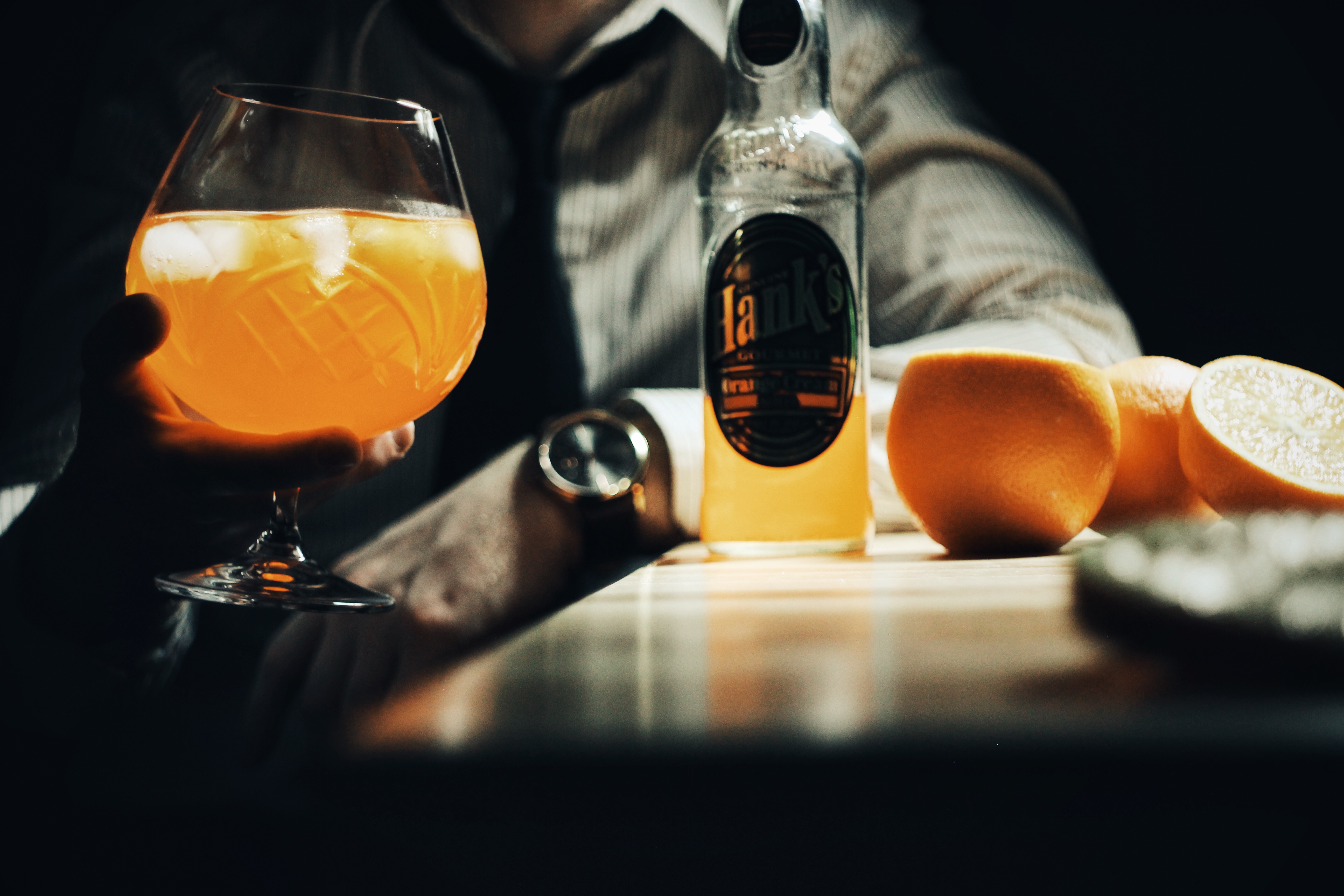
History: Innnnnn West Philadelphia, born and raised, Hank’s Gourmet Soda is callin’ your name. Hank’s is one of those interesting sodas that came well after the old-school vintage stuff, but well before the craft soda renaissance of the mid-2010’s. The company was founded in (do we really have to tell you?) Philadelphia in 1995 by Bill Dunman and his business partners. The group came from a background in beer distribution, handling popular east coast brands like Yuengling and Sam Adams. But it wasn’t always smooth sailing in the beer industry. Dunman calls Pennsylvania’s beer distribution laws as “archaic,” and after years of fighting the system, the friends decided to try their hands at something a little less regulated: soda. “We all kind of knew the potential of brown-bottled root beer,” Dunman says. It was also a little bit about local pride. He notes that “We really felt like we needed a gourmet soda, specifically root beer, for Philadelphia.” As you can imagine, Hank’s started with root beer in ’95 before adding diet root beer, vanilla cream and Wishniak black cherry a year later. And can we just talk about how damn beautiful the bottle is? Look at that thing. It’s more attractive than my sister’s kid. Cheryl, if you’re reading this… he still has time to grow out of it. Dunman says whether it comes to flavors, packaging, or marketing, “we always try to make the highest quality product we can.” Today’s review, orange cream, was released around 1998. Predictably, the company designed it to taste like an old fashioned orange creamsicle. Just a side note: basically every bottler names that as the goal, but not everyone achieves it. The struggle is real in the craft soda game too, dawg. Dunman wouldn’t reveal many secrets about the ingredients, but did say they strive for big vanilla and orange flavors, before adding that Hank’s doesn’t carbonate its soda as much as other bottlers in order to achieve a more “full-bodied flavor.” And when you buy the soda via the Hank’s website, a portion of the proceeds go toward Spark Philadelphia, an organization that lists as part of its mission statement, “Helping underserved youth become motivated learners and connected community members, and by encouraging adults to nurture the next generation through mentoring and volunteerism.” Tip of the cap, Hank’s. Now for a pop of the cap.

Where to get: You can buy Hank’s Orange Cream Soda directly from the company’s website in 12-packs. It’s also available to purchase online in single bottles from Soda Emporium. Amazon has the hook up for 6-packs.

Nose: Vanilla; orange; creamy. Smells exactly how an orange cream soda should.

Taste: Bold orange; mild zest; frothy carbonation; vanilla cream. This is full of flavor. You’re initially hit with a wave of crisp carbonation that abruptly transforms into small, frothy bubbles. The body of Hank’s Orange Cream is an even mixture of slightly zesty orange and creamy candy vanilla. The two go hand-in-hand. It retains strong orange flavor while having enough vanilla cream flavor to make an impression on the taste buds. It’s not overly complicated in terms of a flavor profile – just two main tastes – but the two have great balance to make for an extremely smooth soda with great flavor.

Finish: Swirling orange and vanilla cream flavors. The zesty notes from the orange aren’t as prevalent in the finish, but the vanilla is slightly creamier.

Rating: The most important thing about Hank’s Orange Cream Soda is that it doesn’t make any mistakes when it comes to taste and gets better as you drink it. It’s hard to ask more from a soda. I think the same thing could be said about me, but that doesn’t stop my soon-to-be ex girlfriend from critiquing every single thing I do. You also have to commend this soda for what it’s not. It’s not funky-tasting. It’s not too creamy or heavy. It’s not too orange-y. Hank’s Orange Cream Soda is a perfect example of the Goldilocks Principle: it’s just right. Simply put, if I had to give a recommendation for an orange cream soda, Hank’s would be the one. It has great classic orange soda flavor with added zesty notes that provide some nice acidity in contrast with the creamy vanilla flavors. There’s great balance between the orange and vanilla, perhaps the soda’s greatest quality. This creates an enjoyable mouth feel along with the soda’s frothy carbonation. I wouldn’t mind if the orange was even more zesty to create more contrast, but that’s being pretty nitpicky at this point. The only way I could see someone not liking this is if they just don’t like orange. Here at Five Star Soda, we try so many sodas that we rarely finish the bottle when doing tastings. Hank’s sent us two bottles of this flavor and they were both gone within 20 minutes after taking the photos. If we haven’t convinced you this is in an elite tier yet, then I don’t know if we’re friends anymore.

Five Stars

Bette Jane’s Blood Orange Ginger Beer

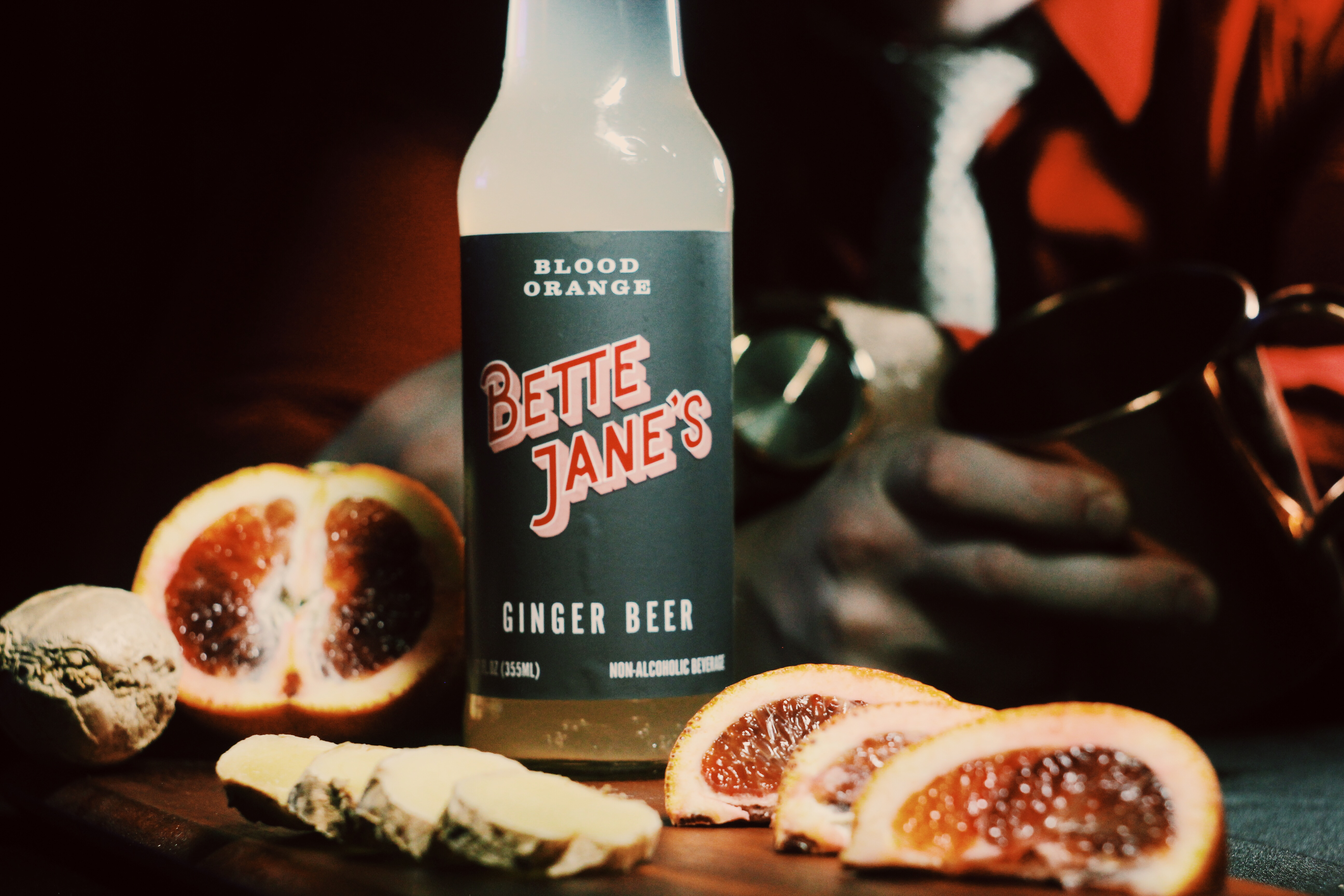
History: Bette Jane’s is a little west coast bottler filling a large gap for a great cause. Founder Kirk Pearson is the man behind the bottles and launched the company in July of 2014 after believing his home-brewed ginger beer deserved a larger audience. A portion of proceeds from all company sales go toward finding a cure for breast cancer, the disease Pearson lost his mother to at a young age. Pearson is a veteran of the spirits industry and “saw a need for high-quality mixers with a local twist,” he says. Bette Jane’s is probably most known for their ginger beer, but also makes a tonic water and club soda, in addition to the blood orange ginger beer we’re reviewing today. Pearson considers his biggest competitors to be Fever Tree and Q Tonic (whose kola we’ve reviewed in the past), but the former is from England and the latter from Brooklyn. He decided the best coast needed to up its cocktail mixer game. “We are the only full line of cocktail mixers made on the West Coast and we are all-natural,” he tells us. And with ginger beer being the hottest craft soda on the market right now, bottlers are trying to find ways to put a new spin on the flavor before it loses its steam with the general public. Enter Bette Jane’s Blood Orange Ginger Beer.

Pearson says blood orange was the logical next step, adding “When I first started making ginger beer at home as a hobby, it was the first flavor I started toying with…. It was always going to be our first extension off the ginger beer.” He also believes the fruit itself just has a nice verbal aesthetic. “The consumer can really relate. They love the name ‘blood orange.’” And I’ll admit, I’d want one even if I didn’t know what it was. Blood orange? Sure. Blood strawberry? Give it to me. That’s not a real thing, but it’s amazing what one word does. Blood orange a self-promoting fruit. Pearson concocts all Bette Jane’s drink formulas himself and uses a blood orange concentrate to give the ginger beer its signature flavor. His vision for this particular soda was all about balance. It’s designed to taste like a blood orange soda on the front and a ginger beer on the back end “with longevity of spice,” he says. It was critically important for Bette Jane’s to differentiate its take on blood orange from other sodas that attempt the flavor. Because what’s trendy isn’t always what’s good. Pearson said he believes other blood orange ginger beverages are usually “too chemically or too sweet.” He added that his version “needed to have the punch of blood orange, but not be too sweet.” Again, all about balance. Clearly a lot of thought was put into this flavor. So it’s time for us to drink in the knowledge.

Where to get: Bette Jane’s is distributed throughout all of California and starting in April 2015, it’s heading to Arizona. If you’re outside those areas, April 2015 is still the date you want to watch because that’s when Real Soda will start selling Bette Jane’s Ginger Beers online. Don’t mind the website looking like it’s from the 90’s. We’ve ordered from it before. It’s legit and its owner is one of the most eccentric, knowledgeable people on soda you’ll ever encounter. You can also contact the company directly here.

Nose: Ginger; orange popsicle. Lots of citrus going on.

Taste: Light orange; ginger juice; sugar; heat. Very soft orange up front with mild acidity and tartness. The flavor is kind of like what I imagine an orange popsicle made from real orange would taste like. Soon after the ginger beer namesake flavor wells up from of the bottom of the bottle to join the orange and it creates a heavy citrus flavor. This is the best part of the soda, which is nice because it’s also the most prominent flavor you’ll taste. Finally, after the ginger fully washes away the orange flavor, you’ll taste some fire that hangs out in the throat. It’s got some solid burn to it. I’d say probably a 7.5/10 on the heat scale. If you’re sensitive to spiciness, that number probably balloons up to 8.5. Sweet with soft, juicy blood orange up front and a gingery kick in the pants on the way out.

Finish: Lingering spiciness that slowly fades, leaving notes of ginger juice along the back of the tongue.

Rating: Blood orange is such a great flavor idea for soda. Why people haven’t thought to combine orange and ginger until around 2015 blows my mind, and despite this fact, most of these hybrid ginger beers still suck. Look, I’m just keeping it real. But I guess even two beautiful things don’t always work on the first try. Look at Brad Pitt and Jennifer Anniston. But Bette Jane’s has figured out the recipe for taking two great concept flavors in soda and turning them into something you need to put in your mouth. The orange and ginger together are refreshing, crisp, and full of spicy citrus. The sweetness and mildness of the blood orange combine perfectly with the peppery, spicy nature of the natural ginger used in Bette Jane’s Blood Orange Ginger Beer. What really stands out is that blood orange flavor. It’s so soft and light on the palate, but it has a nostalgic taste to it. Think orange popsicle made with real oranges. It takes me back to childhood. This soda is a perfect blend of flavors from the past and flavors of the present. The sugar levels are just right and don’t render the ginger’s heat barren of flavor or potency. You can’t beat the balance of fruity citrus and spicy ginger here. It’s exquisite. I wouldn’t even mind to crank the heat up one more notch, but I think you might run the risk of thinning out your audience by doing that. There’s no reason you shouldn’t buy at least four of these, enough to pair with an excellent dark rum and get drunk off of share with your friends. And to top it all off, the money goes to a great cause. Even non-ginger beer lovers should find this appealing. Delicious.

Five Stars

Red Rock Golden Ginger Ale

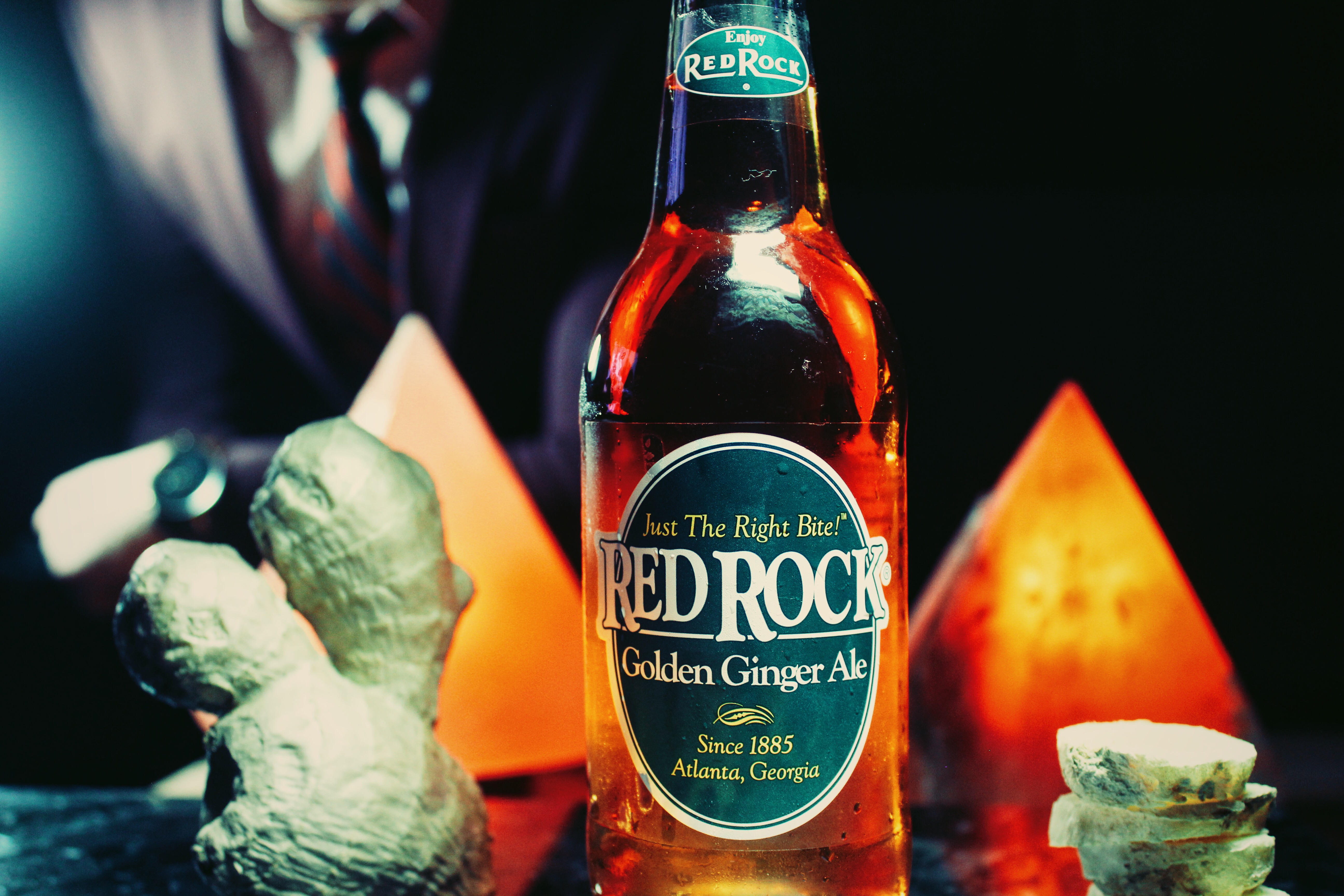
History: Red Rock Golden Ginger Ale is one of the classics in the American craft soda scene, and man, was it hard to track down someone to talk to about it. After a seemingly endless number of fruitless Internet clicks, we finally used some common sense and just looked on the bottle to discover Red Rock is distributed by Clayton Distributing in Atlanta, Georgia. We spoke to Paul Redd, the company owner and proud southern boy. The accent? Thick. Occasionally when he really got going, his words all spilled out in one gelatinous blob like molasses dripping out of a jar. For example, he explained “Red Rock was formulated inAtlantahfewYAassforeCo-CoCola.” But in all seriousness Redd was extremely helpful, and to translate, he said Red Rock Ginger Ale was created in Atlanta in 1885 by Lee Hogan and G.T. Hogan even before Coca-Cola. It reached its peak popularity in the 30’s and 40’s when it was available in all 48 states of the continental U.S. “It did very well on up through World War II,” says Redd. But with the sugar rationing that occurred during the war, Red Rock as a brand took some damage (there’s also a Red Rock Cola). The ginger ale always survived, though its availability shrunk decisively to mainly just Atlanta until the 1980’s. From one southerner to another, this is a soda that’s seen hard times, daddy! The ginger ale’s formula, made with cane sugar, has been the same since 1885 with one exception: Clayton Distributing added capsaicin, a component from chili pepper. Redd adds that it gives the ginger ale its signature “hot and spicy taste.” Red Rock is similar to another old time ginger ale called Blenheim in that both are known for being especially fiery when it comes to taste. In fact, Redd says “The first time you drink it, some people think it’s too hot,” before quickly adding “the more you drink it, the better it tastes.” I guess we’ll find out.

Where to get: Red Rock Golden Ginger Ale can be purchased online in single bottle quantities from Soda Emporium or in six-packs from Beverages Direct. If you’re a retailer looking to sell Red Rock in your store or just need to make a large order, contact Homer Soda Company. Physically, the ginger ale is available mostly in the southeast. Cracker Barrels around the nation also carry the soda. Basically, you’d need to have a really good excuse not to find it.

Nose: Smells like what you’re accustomed to with ginger ale. Slightly earthy, slightly sweet.

Taste: Medium spice; bold ginger ale flavor. I think we all know how Canada Dry Ginger Ale tastes. Take what you know about Canada Dry and imagine its flavor emboldened by about two levels with a little heat, and that’s what you have in Red Rock Golden Ginger Ale. A couple other differences: this has more carbonation and it also has a funky initial taste I’m not crazy about. It has an earthy spice to it that crawls into the sinuses at first, but mostly resides in the throat. This is a ginger ale that has some familiarities, but is stronger than what most people buy at the grocery store. Definitely has a noticeable kick.

Finish: Candied ginger with some earthy notes and lingering medium heat in the throat.

Rating: Red Rock Golden Ginger Ale is a classic and one of the bolder-tasting ginger ales on the market. If you’re using Canada Dry as a base, this has stronger flavor, more carbonation, and some actual heat for a ginger ale. The spice initially creeps into your nostrils before settling in the back of the throat. It’s definitely a good ginger ale, but I wouldn’t call it great. There’s a funky, earthy taste you get immediately at the beginning of each sip that’s just hard to shake. It’s a little too earthy and unwelcoming. The longer you drink this, the more it goes away… or maybe you just get used to it. But I can’t forgot it when it comes to rating this ginger ale. That said, there are also good qualities. One is the carbonation. There’s lots of it and the bubbles really make the ginger ale pop in your mouth. Great texture. The body of the ginger ale also has really nice flavor. Bold, crisp, and refreshing. This would probably make a really good cocktail mixer. Love the color. Like the flavor, but don’t love it. Definitely stands out as retro amongst the newer styles and flavors of ginger ale, so if you’re looking to get down with some old fashioned nostalgia, Red Rock Golden Ginger Ale is definitely an option for you.

Three Stars

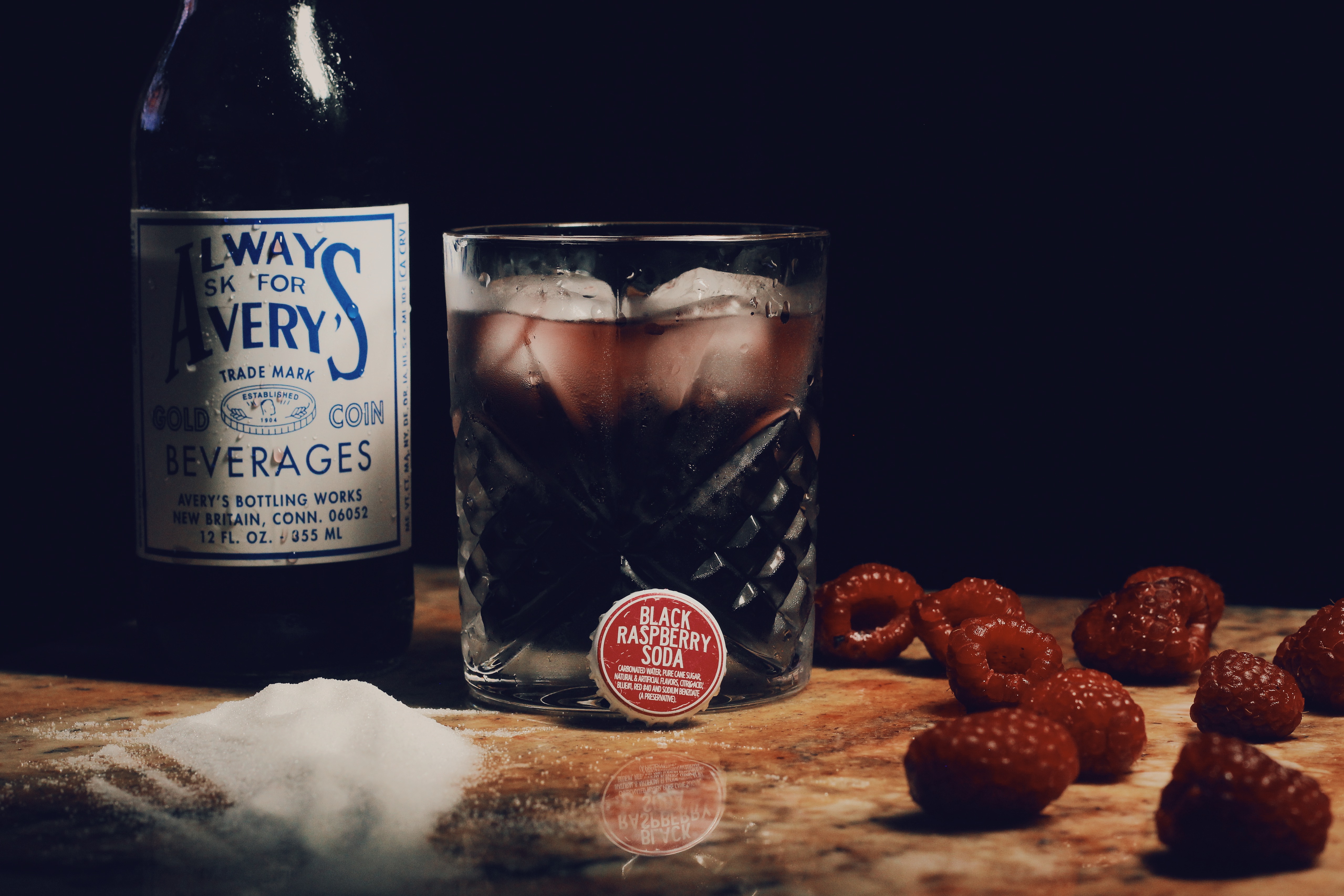
Avery’s Beverages: Black Raspberry

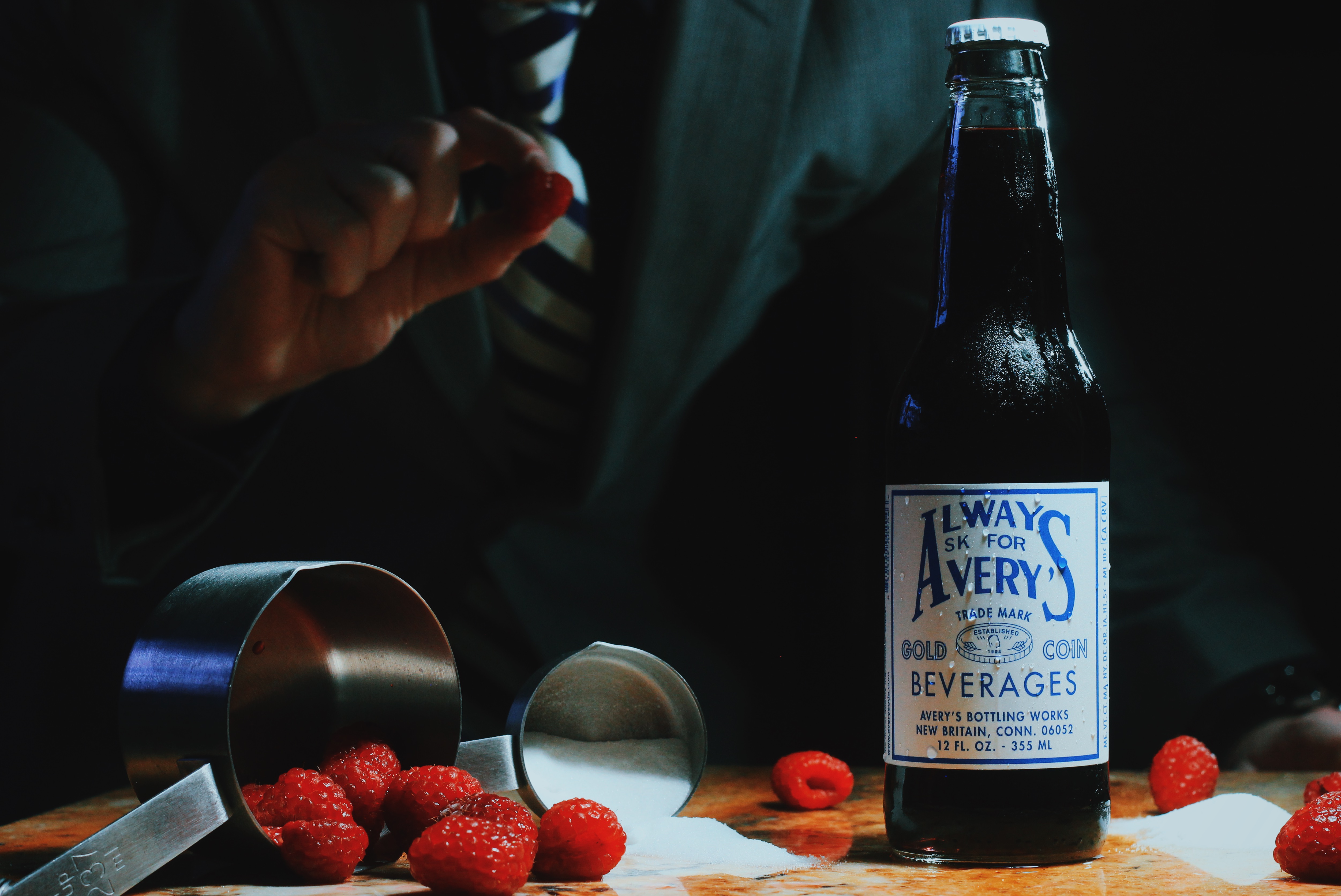
History: “Starting a soda company back then was kind of like starting a .com right now. It was just a very trendy thing to do,” confesses Avery’s Beverages General Manager, Rob Metz. And when he says back then, he means back then. Avery’s has been brewing up soda the old fashioned way in New Britain, Connecticut since 1904 when Sherman F. Avery founded the company. Dude was actually a milk peddler before he hit it big with soda. Ridin’ dirty on his horse, Sherman the milk man. That could be a Kanye West lyric and still be better than most of the stuff on his new album. Ahem. Avery’s still uses artisan well water in their sodas. That should give you the warm and fuzzies if you get nostalgic about glass-bottled soda. And P.S. they make a ton of them. From normal flavors like birch beer and root beer to oddities like Toxic Slime and Monster Mucus, Avery’s has over 40 different flavors of your favorite fizzy drinks. If there’s a flavor you like, they probably make it. Out of all the concoctions they brew, we had to pick a unique one, so we went with black raspberry. What’s the difference between a red and black raspberry besides color? I dunno man, I’m asking you! Avery’s isn’t even sure themselves. Metz admits the soda came before his time with the company, so he can’t list a ton of differencea between the two berries. He likens the flavor to huckleberry. Metz credits the company’s loyal fan base as the reason they’re still in business today. “We’ve got the authenticity that lot of the newer folks in the craft soda industry might not have,” something that without question appeals to a large portion of their target audience. It’s cool to be retro right now. Remember that when we’re begging you for quarters on the street in two years.

Where to get: Avery’s soda can purchased purchased throughout the U.S. online from Vintage Soda Company. If you’re a retailer looking to sell Avery’s Black Raspberry in your store, contact Homer Soda Company for a wholesale or large order. The company also fulfills orders directly, but you’ve gotta contact them the old fashioned way via phone or email.

Nose: An interesting smell, kind of a combination of grape, raspberries with sugar on top, and a raspberry Sno Cone. Definitely raspberry forward, but more floral than a typical raspberry scent.

Taste: Grape; raspberry Jolly Rancher. This is more straightforward than I was expecting based on the nose. I have to say that this is surprisingly strong in grape flavor. More than raspberry. The grape taste is subdued. It’s like drinking a Grape Nehi, except right as the flavor is about to crescendo, it stops and you never get any signature tasting notes. This is void of boldness. Instead it falls off into a very subtle Jolly Rancher blue raspberry that lacks a bite. Kind of like someone took the tartness out. It’s a really smooth drink and soft on the palate, but the flavor isn’t as bold as you might be expecting.

Rating: Mild grape tinged with the tiniest bit of raspberry Sno Cone. Most will probably taste only the grape.

Finish: For a soda labeled “black raspberry,” this tastes remarkably like a more subdued version of grape soda. The soda’s biggest selling point is its smoothness. It goes down incredibly easy. You could drink two of these in a sitting, easily. However, this is partially due to the fact that its flavors are very mild. The strongest element in the soda is the sweetness, but give credit to Avery’s; it isn’t overpowering. If you handed a bottle of this to someone without a label on it, my guess is they’d probably just guess it was grape soda. And it’s not a bad take on grape soda… but this isn’t grape soda. I was hoping for a big note of raspberry with perhaps some extra sugar. I remember picking black raspberries in my grandma’s back yard as a child, plucking them right off the bushes and into my mouth. They had an earthy sweetness to them, but overall have less flavor and less tartness than a regular raspberry. This is where Avery’s missed an opportunity with their take on black raspberry. None of those elements are present. You’ll taste mild grape with a soft raspberry Sno Cone flavor near the end of the sip, so at least there is some variance to the flavor profile. The taste is simple and pleasant, but it isn’t what’s on the label. If you’re in the market for a highly drinkable, mild take on grape soda with a little flavor variance near the end of the sip, then you’ve literally hit the jackpot. If your favorite fruit is raspberry and you’ve had a rough day at work and all you want is a carbonated raspberry beverage before downing a bottle of wine and having a good cry in the bathtub… then this isn’t for you. I have to stop airing my personal problems out on here. Luckily, Avery’s has like 45 flavors for you to try. We’ll keep searching until we find the magic one(s).

Three Stars

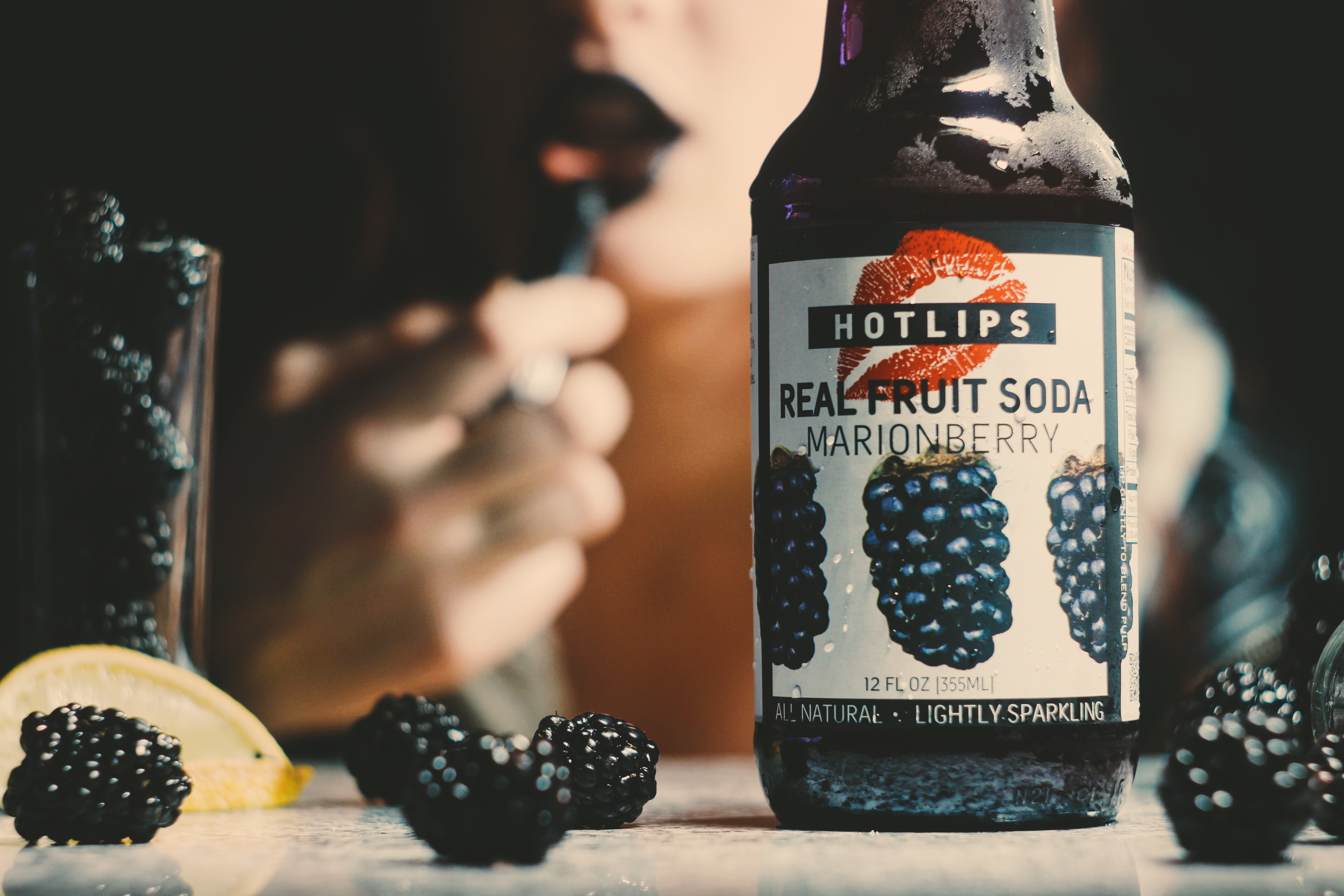
Hot Lips: Marionberry

History: As I dial up Hot Lips‘ corporate offices in Portland, Oregon, I am greeted by the most soothing, gentle Australian voice in my life. Adam Swoboda’s tone is so dreamy, I wish he’d sing me lullabies every night before bed, and I’m 27 years-old. Our interaction is tragically short-lived and I am passed off to Hot Lips Soda Account Manager Lars Burkholder who fills me in on the company’s history. “Hot Lips is a pizza restaurant first, and a soda company second,” he tells me, before adding Hot Lips Pizza has six locations across Portland. He encourages a sampling of the company’s “Tough Mother,” a pie with pepperoni, onions, peppers, and spicy chipotle sauce. Hot Lips was founded by David Yudkin has been making artisanal pizzas with ingredients sourced from local farms since 1984. Burkholder describes the company as “farm-to-table before it was cool.” After making fresh pizza for so long, Yudkin decided he wanted a fresh beverage to go with it, something he couldn’t get from the big companies. He wanted it to be “kid-friendly,” too. And who doesn’t love an ice-cold soda to wash down a few slices with? The farmers he was sourcing his pizza ingredients from were already harvesting fruit too, so it was a natural starting point for his own idea of soda. Yudkin came out with Hot Lips Soda in his restaurants in 2002 and began bottling in 2005. When you think of Hot Lips Soda, you should think of fresh fruit. “We’re starting from the actual fruit” and not an extract or oil,” Burkholder explains. They’re not shy about admitting that they go the extra mile to create a quality fresh-fruit soda “It’s pretty labor-intensive. It’s pretty expensive,” he reveals. Five of the company’s six sodas contain only four ingredients: fruit, lemon juice as a balancing agent, cane sugar, and carbonated water. The sixth, lemon, has just three since lemon is also the main fruit flavor. The company’s promise to its drinkers is that they will never put additives in their soda. No preservatives. No artificial colorings or flavors. Ever. Burkholder emphasized that the company is “really proud of the fact that it’s so simple,” in talking about each flavor. Hot Lips Soda is about letting the core fruit shine through for the drinker’s palate to absorb and enjoy. In order to ensure this, Hot Lips Soda is less carbonated than what you’re probably used to even in a craft soda. Each batch of soda also may taste slightly different from a previous output depending on the flavor the fruit when it was picked, something that reminds us of WiscoPop Cherry.

When choosing a Hot Lips flavor to sample, it only seemed right to start with Marionberry, an Oregon-native fruit. Marionberry is a hybrid of two types of blackberries bred together to create one super black, er… marionberry. So imagine those two blackberries as Jay Z and Beyoncé. Blue Ivy is their Marionberry. Listen, no one ever said we had to be good at analogies for this job. “It’s kind of the unofficial state berry of Oregon,” says Burkholder. An interesting fact about the marionberry soda is that it’s Hot Lips’ thickest soda in terms of consistency. The soda contains real marionberries, carbonated water, cane sugar, and lemon juice instead of citric acid for a cleaner, more natural balancing agent. And while red raspberry is the company’s most popular soda, marionberry apparently has a very loyal local crowd. “It’s very representative of the Hot Lips brand” because it is a local berry, Burkeholder notes. If you’re ever up around Portland wandering the streets in your flannel and tattered jeans with a bag of Voodoo Doughnuts in hand, Burkholder encourages you to stop by one of the pizzerias to come enjoy the company’s exclusively in-house “seasonal experimental” soda that changes every month. Past flavors have included cranberry, blood orange, and honey just to name a few.

Where to get: Hot Lips Soda can be purchased at all Hot Lips Pizza locations, as well as retailers in Alaska, California, Idaho, Oregon, Utah, and Washington. You can also buy Hot Lips soda online directly from the company at their web store in single bottles, 6-packs, and 12-packs. You can also buy it online from Summit City Soda in 12-packs and 24-packs. Hot Lips Soda is also sporadically available throughout the U.S. but the company is currently working to make their physical availability more consistent in the eastern portion of the country.

Nose: Mmm, like a piece of blackberry pie. You can almost smell the crust.

Taste: Frothy carbonation; rich blackberry; blackberry pie. If you’ve ever had a fresh piece of blackberry pie, this will taste familiar to you. The carbonation really aids in the flavor of this soda. The smaller bubbles and marionberry juice combine to create a frothy, velvety texture. It’s not creamy, but there’s definitely a little bit of a berry foam flavor going on. It’s slightly tart, but has enough sugar to make it easy to drink. Big berry flavor, like the kind you taste when eating a piece of grandma’s blackberry pie.

Finish: The tartness has subsided by now and you’re left with sweet, authentic blackberry flavor.

Rating: Hot Lips uses real fruit in their sodas and you can taste it. For those of you who don’t know, Marionberry is a hybrid between two different types of blackberries, so it’s just a fancy Oregon name for blackberry. And Hot Lips Marionberry has big, delicious, thick, black… berry flavor. I thought about writing a joke there, but I just don’t feel like getting beat up today. What stands out about this soda is the freshness of the berry flavor. It doesn’t taste like artificial blackberries or blackberry candy. If you know what actual blackberries taste like, this is it. The initial tartness, the sweetness on the finish, and the big berry taste. It’s all there. It really reminds me of the inside of a piece of blackberry pie. Definitely a nostalgic soda, and Lord knows that’ll appeal to many. Hot Lips lists lemon as another ingredient in this soda, and that’s something I’m not tasting. But I don’t think that’s a bad thing. It’s just a balancing agent. Marionberry is a simple flavor of soda that rests on the laurels of its main ingredient. Luckily, blackberry is a strong enough flavor to carry the soda from its initial fizz to its final sip. Hot Lips is one of the more popular craft sodas in America, and their take on Marionberry shows why the company continues to thrive.

Four Stars

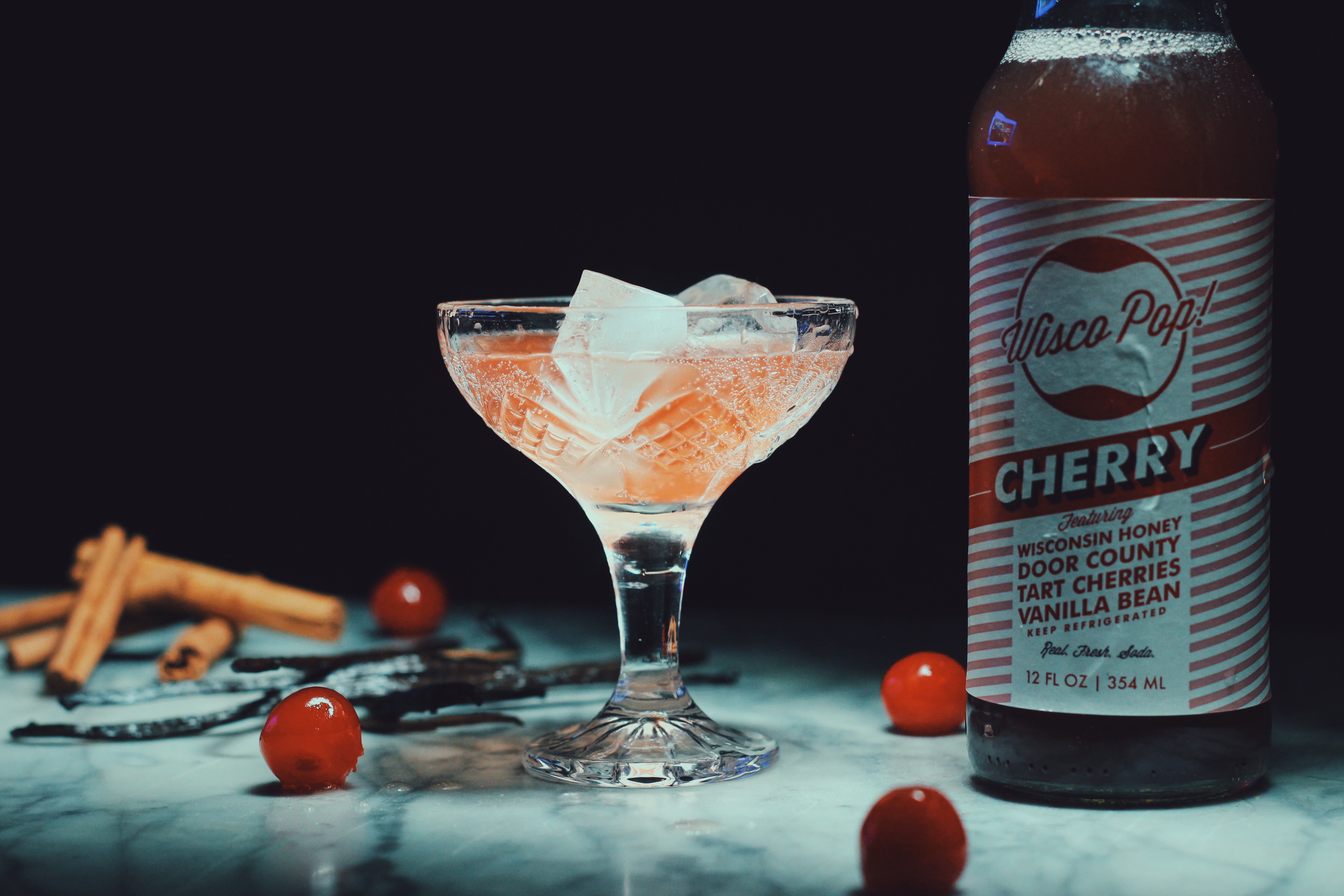
Wisco Pop!: Cherry

History: It took a lot of beer to get here. A lot. And I’m not referencing the ugly girl I went home with last night. No, I’m talking about one of Wisconsin’s freshest exports: Wisco Pop! Soda. Founder Austin Ashley is a lover of food and beverage. In 2003, he was ahead of the craft beer scene, sampling as many as he could ingest. He even bought equipment to brew his own beer. But before he got that far, he burned himself out on the stuff, both mentally and financially. With a curious mind and bunch of brewing equipment just sitting around, Ashley turned his attention to making ginger beer and root beer, the latter of which wasn’t quite as palatable. “That was pretty disgusting,” he admits. After trying out various recipes and flavors on families, the Wisco Pop! team of Ashley, his wife Hallie, and his friend Zac decided to hit the farmers market in July of 2012. When I think of farmers markets, I think of words like “local,” “fresh,” and “natural.” If you’re like me, you hit the nail on the head when describing the soda Wisco Pop! brews. “We’re 100% committed to using, real, fresh, natural ingredients. Everything comes from something in nature,” Ashely explains. Naturally, it was a hit at famers markets, so the trio launched a Kickstarter in December of 2013 to buy bottling equipment. Fast forward to late 2015 and the Viroqua, Wisconsin company is now selling their soda nationally online. Currently, Wisco Pop! produces three flavors: Ginger, Cherry, and Root Beer. “The natural food market is the consumer I’m after,” Ashley tells us, before adding that no soda from the company will ever be associated with a flavor house or any sort of outside recipe manipulation. Translation: you want fresh, you get fresh. No preservatives. Local ingredients. Real fruit, sugar, honey, and spices. Ashley actually gets frustrated occasionally with how fresh his company’s soda is because not every batch turns out the same. So you might buy Wisco Pop! Cherry in the summer and have it taste slightly different than a batch from the fall.

If you can’t read big headlines, Cherry is the flavor we’re reviewing today. Wisco Pop! Cherry is perhaps the most localized flavor in the company’s line. The stars of the show are the Door County Cherries used. Ashley describes the cherries as tart and often used in Wisconsin cherry pies. So you probably won’t be surprised to hear Ashley say he wanted the soda “to taste like cherry pie a little bit.” In talking to Ashley on the phone, you get the sense he’s a pretty chill dude. It wasn’t much more of a surprise then to hear him admit that he didn’t put a whole lot of thought into the recipe as a whole. In addition to the cherries, the soda’s recipe also contains vanilla bean, Wisconsin honey, cinnamon, and lemon. Currently, Wisco Pop! is working on a 100% organic soda line with grapefruit hibiscus the likely first flavor.

Where to get: Wisco Pop! soda is available at 105 retailers mainly in Minneapolis, Milwaukee, Madison and surrounding towns. You can find your nearest retailer at the company’s online locator. You can also purchase the company’s soda online from anywhere in the U.S. via their web store.

Nose: Big vanilla bean scent. Smells like the inside of a cherry pie with a heavy vanilla influence.

Taste: Tart cherries; lemon; smooth vanilla bean; mild honey. This has really good, authentic flavor of cherry and vanilla. The vanilla bean tastes so pure that it gives the soda an earthy aspect. The cherries are flavorful and taste slightly tart; this is enhanced by the carbonation. There’s also some lemon notes in here that add to the tartness. I want to emphasize that this is tart and not sour. Back to the vanilla – the more you drink this, the smoother it gets and the creamier the vanilla becomes. The longer this soda goes on, the more and more the flavors meld with one another to create the taste of the inside of a cherry pie. It’s really pleasant and shows the sophistication of the recipe. Great authentic cherry and vanilla bean flavors.

Finish: Still fairly tart cherry flavor with subtle vanilla also still present. The one flavor you taste on the finish and not as much in the soda’s body is honey. Overall, pretty similar to the flavors you taste near the beginning and middle of the soda with the exception of some mild honey notes.

Rating: Wisco Pop’s Cherry is probably one of the easiest drinking cherry sodas you’ll come across. With its tart cherry notes and smooth, slightly creamy vanilla flavors, it’s an excellent fruit soda that demands more than one bottle be enjoyed. This only gets better as it goes on. The tartness of the cherries and lemon and the creamy, earthy notes of vanilla are a perfect contrast of flavors and provide a wonderful mouth feel. This soda makes me smile. I do wish I could taste the honey more because it’s advertised as local “Wisconsin Honey” and the brand is of course called “Wisco Pop!” But that’s really my only criticism. Cherry by Wisco Pop! is like a loving girlfriend. She’ll always take care of you and never let you down. You’d be silly not to invest in Wisco Pop’s Cherry. She’ll treat you well.

Four Stars