flavor

Howdy: Lemon Lime

History: Before Spite and 7-Up, there was Howdy. Orca Beverage President and Owner, Mike Bourgeois, calls Howdy the “original creators of the lemon-lime category.” In fact, Howdy Lemon-Lime was the primordial soda recipe from which 7-Up eventually evolved. The company originally began in 1929, and according to Bourgeois, back then Howdy was made with seven ingredients. I don’t think I need to explain the connection further. Here’s the weird part: one of those seven ingredients was lithium. Bourgeois tells us the soda was originally marketed as a “Bib-Lable Lithiated Lemon-Lime Soda.” He goes on to tell us that lithium was used at the turn of the century as a mood-altering stimulant, thought to “give you a lift.” He offered up cocaine as a comparison. Good. Because there’s nothing I like with my lunch more than an ice cold lemon-lime soda chocked full of angel dust. Really makes the rest of the day go faster when I do my afternoon accounting work with a heart rate of 200 BPM. As you might imagine, lithium has since been regulated out of the drink. Bourgeois did not specify when Howdy went out of business, but notes the company had been dormant for many years until around 2010 when Orca Beverage reactivated the trademark due to its rich history. Orca has done this several times since the Mukilteo, Washington-based soda distributor began in 1987 because it wants to preserve the nostalgia of retro soda as much as possible. It is now the sole producer of Howdy. Currently, the company boasts around 120 different brands. Bourgeois says in the case of Howdy, “It was a natural niche for us to cultivate.” He adds that the recipe has been reformulated to be more modern and clean and uses pure cane sugar and real lemon and lime oils. Even the logo is the same as the original. “It’s more flavorful. It has a little more of everything in it,” Bourgeois says at the end of our conversation. Time to taste the history.

Where to get: Howdy Lemon Lime soda is distributed nationwide at retro soda retailers. We suggest checking your nearest Rocketfizz retailer. You can also purchase it online at Amazon (via Orca Beverage) and Soda Emporium. And if you’re a retailer looking to sell soda yourself, or you’re just a dude wanting a bunch of soda at one time, Homer Soda is your go-to.

Nose: Classic lemon-lime smell, leaning more towards the lime side of things. Fragrant pine scents as well.

Taste: Lemon-lime with an emphasis on lime. Howdy tastes like 7-Up with bolder flavors. The lime is much more dominant than the lemon. Still refreshing and light, but heavier and sweeter than your day-to-day lemon lime soda. Definitely more acidic as well, but not anything that’s going to overpower you. The lime becomes bolder as you drink it. Fairly straightforward in terms of lemon-lime flavor, again, with more lime than lemon.

Finish: A wave of tart lime followed by a smooth, sweet lemon flavor. That tartness outlasts both flavors and lingers until the next sip.

Rating: Howdy is classic, old-school soda. Not complicated, not sophisticated, but reliable. Howdy Lemon Lime is the Toyota Corolla of craft soda. Always dependable when called on and will get you where you want to go. This in-review ad brought to you by Toyota *cash register noise*. Howdy definitely tipped the scales toward lime in this soda. You still get the lemon, but the lime is bold and continually increases in flavor as the drink goes on. The carbonation is nice and works really well to compliment the soda’s flavors. It’s refreshing. The sugar is probably a gram or two high, but nothing you can’t get past. The only complaint we have is the lime. At times when it reaches its strongest points, it takes on a bit of a pine flavor, something that makes me feel like a lumberjack lost in the woods. I’m just trying to drink a soda, not chop down trees. So maybe juuuust tone down the lime a little. Or perhaps up the lemon. But Howdy Lemon Lime is a classic and it has staying power for a reason. It won’t blow you away, but it’s flavors are crisp and refreshing. I’d recommend it for a hot day out in the sun.

Three Stars

Ozark Mountain Bottleworks: Smuggler’s Run

History: Ahoy, mateys – batten down the hatches because shiver me timbers, it’s our 100th review! There, got all the pirate references out first sentence. Walk the plank with us as we tell the story of Branson, Missouri’s hidden treasure: Ozark Mountain Bottleworks. I’ll stop. Eventually. Maybe. Doubt it. “Craft soda kind of chose us,” says OZMB co-founder, Tina King. She humorously notes she prefers the term “bottle washer” as her title, noting “someone has to do it.” Ironically, the company’s inception isn’t linked to soda at all, but lemonade. King recalls the summer of 2009 in St. Louis when she started making homemade lemonade as a wine spritzer. “My kids wanted that drink,” she added. So King removed the alcohol to create a carbonated lemonade that eventually morphed into Ozark Mountain Lemonade, a pink lemonade-esque soda with a hint of lemon-lime. From that point, King says she and her husband just fell into the craft soda industry based on the success of the lemonade. “It never crossed my mind to go into beverage,” she says. When the couple started introducing other flavors, the first thing on their minds was color. They added a red cream, purple grape and orange cream soda in addition to the pink lemonade. I get the sense they were still strongly influenced by children’s interests at that point. From there, King and her husband decided to delve into root beet. They delved deep. She says it took two-and-a-half years before they found the right recipe for their signature OZMB Root Beer. I too have been searching years for my signature flavor… in my love life. I’m still single. To this day, root beer is still their best seller. Since its first five sodas, OZMB has branched out into seasonal flavors. One caught our attention and caused us to compile a list of pirate lingo: Smuggler’s Run. “It’s our summer brew,” King tells us before adding it was so popular this summer that it was ordered for an extended run. Its mellow blue color is eye-catching and the label’s font conjures up images of 20th century bootleggers and swindlers. The soda’s name is a nod to the Branson High School Pirates.

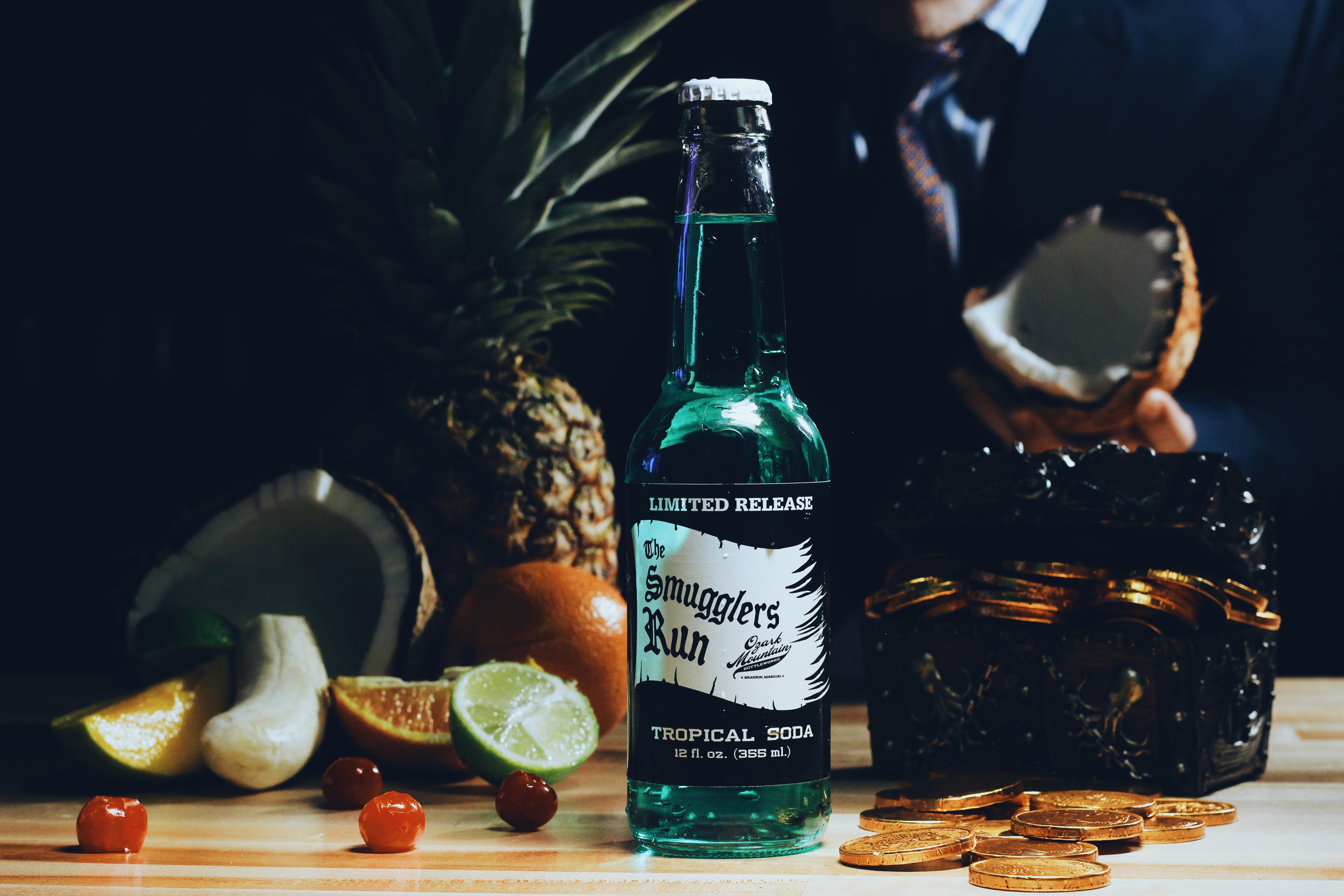
Smuggler’s Run is a seasonal tropical soda. “We love to vacation in the keys,” King tells us, something that inspired both the taste and color of the soda. It was a pet project of King’s, intended to mimic a non-alcoholic version of a rum runner. Certainly an intriguing idea and one that further displays the link between craft soda and craft cocktails. Smuggler’s Run contains a bounty of fruit flavors with King noting that coconut is intended to be highest in the flavor profile. In addition to coconut, notes of pineapple, banana, mango, cherry, and orange were also designed to be tasted. King tells us what she believes sets OZMB soda apart is the “amazing richness… There’s nothing like it,” she says cheerfully. All OZMB sodas are made with pure cane sugar and materials that are as eco-friendly as possible, including Missouri-made bottles. The company works closely with recycling efforts in Branson. We here at Five Star are all about charity too: case in point, I’m about to recycle this into my mouth.

Where to get: Ozark Mountain Bottleworks soda is sold nationwide. Traditionally, OZMB Smuggler’s Run ends in late summer, though King notes it will have a slightly extended run in 2015 due to its increased popularity. You may have to do a little work to find this one as it is not sold online due to its seasonal nature. You can find Smuggler’s Run in Rocketfizz retailers. Use the company’s online locator to find the store nearest you. Or you can contact OZMB directly. Once Smuggler’s Run ends, OZMB’s next seasonal flavor is Butter Beer. As of this review in mid-September 2015, Butter Beer is already being sold.

Nose: Very, very tropical. Reminds me of being back on the beach in the Bahamas sipping on rum punch, only without alcohol. Kool-Aid Bursts Tropical Punch wouldn’t be an unfair comparison, but this really smells like a fruity cocktail minus the booze.

Taste: Slightly creamy coconut; mango; pineapple; cherry; orange. You’ll taste coconut first. It’s probably the boldest of the bunch, but only slightly. The flavors in this are lush and varied. The taste is undoubtedly tropical fruit punch with several fruits the tongue recognizes. First, the coconut comes in all by itself. It’s slightly creamy, but mostly tropical, like in an island cocktail. It’s not quiiiiiite pina colada. The coconut flavor is more fruity than creamy and is quickly met on the palate by a combination of pineapple, orange and most notably, mango. The three flavors in tandem with the coconut interact to give the soda its signature flavor in each sip. The citrus taste is, again, fruity. You can really taste the flesh of the citrus fruit in your mouth, which was a flavorful surprise. It’s crisp and provides just the slightest amount of bitterness. There might even be a tinge of lime in here. Vivid tastes. Smuggler’s Run also has a little bit of a maraschino cherry flavor that floats about in the background, sometimes coming to the forefront depending on the sip. The same could be said with very mild banana, but you really have to search for it. A lot of flavors going on. Rich, sweet tropical citrus finds a great companion flavor in coconut with the rest being more subtle.

Finish: Pineapple-orange with faint creamy coconut lingering in the background.

Rating: Smuggler’s Run is fun, fruity and full of flavor. The fruit flavors taste ripe. They taste sweet, but they taste real. Yet it goes deeper. This is a soda about feeling. It places you on the beach, the waves crashing in at sunset. You sit there in your sun chair, hat tipped over your head, a cold tropical drink in hand. It really does dig up memories and blast you with nostalgia. Some might taste the fruity cocktail sans alcohol we’ve been preaching about. Others might be reminded of fruit punch from their childhood. This is a glass-bottled soda that hits home. It also doesn’t hurt that the flavors are bountiful, yet don’t overpower each other. They intermingle so well that it’s really hard to isolate them in detail, but I’d describe the taste as tropical citrus punch spun in a cocoon of coconut, and infused with droplets of cherry syrup; maybe a couple banana slices in the glass too. The coconut flavor probably plays the leading role with excellent support from the notes of mango, orange, and pineapple. If you’ve ever had mango, you’ll recognize this flavor immediately since it’s such a rare find in soda. The meandering cherry syrup taste is, no pun intended, the cherry on top. Smuggler’s Run is a whale of a fruit soda. Paired with rum, it’s a tropical cocktail in itself. This is a soda that maximizes its potential and delights the taste buds. Drink it chilled without ice from the bottle. We wouldn’t change a thing. The only drawback we can find is that it’s limited edition. Get it before the season ends, throw on a pineapple shirt, and start jammin ‘mon.

Five Stars


Rogue: Citrus Cucumber

History: This is a story that ends with soda, but one that took clam chowder, nudity, and charity to get there. Now I’ve aroused your interest. Rogue is a company with gusto. “Our soda is a revolution,” they proclaim to us via email (For clerical purposes, all quotes in this article were relayed by marketing manager, Anna Abatzoglou, who made it clear these are not direct quotes from herself, but rather the company. The specific employee(s) were not specified.). Rogue began in October of 1988 in Ashland, Orgeon, but soon needed to expand. A few months later, founder Jack Joyce became stranded at a bar in Newport, Oregon due to a raging snowstorm. There he met the creator of Mo’s Clam Chowder, Mo Niemi, who told Joyce it was always her dream to live above a bar. Needing a bigger space, Joyce listened to Niemi’s conditions. There were two: 1. Give back to the community and 2. Make sure this picture of a naked Niemi in a bathtub hang inside the bar. How lucky. Dude meets a girl and instantly gets a nude photo. I can’t even get one from girls on Tinder. The company tells us to this day that photo hangs in all 10 of their pubs. Rogue also doesn’t have a marketing budget, instead putting that money toward local charities and infrastructure. Rogue has resided in Newport, Oregon since 1992.

If you’ve heard of Rogue before, you’re probably aware of their wide array of beers, from normal to straight funky. The company tells us they not only also make beer and soda, but farm a bunch of different fruits, vegetables, and grains. Today’s review, Rogue Citrus Cucumber, contains both Rogue Honey and Rogue Cucumbers from Rogue Farms in Independence, Oregon; this ad brought to you by Rogue. Says Abatzoglou of the soda’s signature fruit, “When they’re ripe, we pick them off the vine, slice them up, and add them fresh into every hand-crafted batch of Citrus Cucumber Soda. We grow cukes for our small batch spruce gin so why not go cuke to cocktail with a refreshing cucumber citrus soda?” Any excuse to get the term “cuke” into this review will do. It sounds like a combo of cute and puke. Some company specializing in cat products reading this just got a great idea, I’m sure. All Rogue sodas are brewed in small batches, using pure cane sugar and Rogue Farms Honey. “We get honey from 7,140,289 Rogue Farms honeybees that is used to sweeten all of our sodas,” the company tells us. I love that they maintain a current count on their over seven million bees. Most days I can’t even keep track of where I put my keys last. They also note the bees are “carefully kept and fed.” I conjured up an image of what I hoped this meant, and the Internet did not disappoint. But seriously, it’s apparent Rogue is a company about fun and one that takes pride and puts serious effort into its products. They’re basically internally going farm-to-table with their soda, a very interesting concept in the craft soda world. Rogue’s motto is “Dare, Risk, Dream.” I’m about to add a fourth: drink.

Where to get: Rogue sodas are available in about 30 states, according to the company. You can always purchase it online via the Rogue store.

Nose: Definitely smells like candy melon with a hint of cucumber. That sweet fruit is evident on the nose, almost like a candy kiwi. Starburst tropical fruit chews are the closest comparison I can come up with. It’s definitely a familiar childhood smell. An intriguing beginning.

Taste: Fruity melon; cucumber; mild lemon and lime; cane sugar. The flavors here hit you quickly and are unchained from harsh carbonation like most lemon-lime sodas. This is very fruity for a lemon-lime soda, but I wouldn’t call it tropical. You’ll taste these fruity flavors before the lemon-lime. Cucumber is definitely in here, but not as bold as I expected it to be for a soda that bears its name. I also taste some kiwi in here, but I think that’s more of a result of how the honey contrasts with the cucumber. There’s a variety of melon tastes here too, though subtle. Most prominent among those tastes is honeydew. There’s two types of honey in this (wildflower and Rogue Farms), so that’s probably a big reason for the melon flavor. All those melon flavors in addition to the kiwi and cucumber swirl around in your mouth and coat the back of your tongue before mild traditional lemon-lime finishes out the body of the sip. The sugar is crisp, and with the citrus elements, makes the soda even more refreshing than expected. The way the honey and cucumbers work together makes for some really interesting tasting notes.

Finish: Cucumber and lemon-lime that alternate back and forth. Lime is the most prominent of the three flavors.

Review: Rogue is perhaps best known for its unconventional beers. It’s a company with attitude and feistiness, and one not afraid to take risks. Rogue’s Citrus Cucumber is probably the wackiest offering they have on their soda side, and it’s one that displays a surprisingly wide range of flavors. Cucumber certainly has a leading role in the flavor profile, but I wouldn’t say it hogs the spotlight. There are very nice candy melon flavors that accompany the cucumber, like bold honeydew and even undertones of watermelon. Both the wildflower and Rogue Farms Honeys play a big role in the taste as well. They interact with the cucumber to form a kiwi taste that’s up front along with the honeydew. It’s so fruity for a cucumber-flavored drink. There’s a joke in there somewhere, but I just won’t. Traditional lemon-lime comes in near the end, but it’s subtle. I wouldn’t mind seeing the lemon-lime higher in the flavor profile, personally. The fruitiness is unexpected, but it takes the edge off the cucumber and that’s a nice little deal for you. Trust me, you don’t want cucumber to be exceedingly strong in a soda. I gotta admit, this is a little weird, but it’s definitely something your taste buds need to experience to fully understand. Rogue seems to be one of the best beverage companies at understanding this concept. Their creativeness is much-needed. Just remember… the quirky, creative kids from high school are the ones writing your checks now. Don’t be afraid to get a little weird.

Four Stars

Sprecher: Cream Soda

History: Sprecher sodas are known for their bold, deep flavors. Turns out you can thank Germany for this. I’ll explain in a minute. In talking to Randy Sprecher on the phone, I get the sense he’s a gentle, intelligent soul with an almost intimidating knowledge on the intricacies of beer and soda-making. Originally from California, he reminisces how he spent 18 months in Augsburg, Germany in the late 60’s. Deustchland is arguably the beer capital of the world, so naturally, Sprecher says he lost his taste for American beer there. This became a problem when he moved back to California because he couldn’t afford to import his favorite beers. Solution? He started making his own in 1971. Despite having a degree in oceanography, Sprecher wanted to pursue beer, and so he packed up his van and drove up to Milwaukee, Wisconsin, where he began working for Pabst. He made about $40,000 before he said the company started deteriorating. Wanting to start his own business for the modest amount he made at Pabst, Sprecher began buying various pieces of brewery equipment via auction. Through his craftiness, he successfully started up Sprecher Brewery in Glendale, Wisconsin and began selling beer in 1985. Really puts bargain shopping into perspective. Hope my girlfriend is reading this. He’d also researched soda recipes to a great degree on the side, and thought, “What does it take to make a soda that is of much higher quality?” Three years later, he figured it out, creating and selling his own root beer and cream soda.

To a craft soda connoisseur, Sprecher soda might raise an eyebrow or two. What you’ll likely notice is that the brewery uses high fructose corn syrup in its soda as opposed to pure cane sugar. To many, cane sugar is to craft soda what great actors are to movies; you can make it without them, but it’s not the same. Sprecher believes his recipes shouldn’t cause drinkers any hesitation. Let me at least try to explain to you why. Be forewarned, Randy Sprecher is a scientist and I am not. Sprecher Brewery brews their sodas in gas-fired kettles. Everyone knows that water boils at 212 degrees. Well, Sprecher tells us that the skin of the kettles the brewery uses reach up to 1,100 degrees. This causes a chemical reaction in the high fructose corn syrup (which is also bonded to glucose) by splitting the sucrose and forming inverted sugar. As Sprecher explained this process to me, jumping from chemical reaction anecdotes to overviews of molecules, all I could think in my head was, “I know some of these words!” He adds, “Whether you’re talking about cane sugar or fructose, you’re talking about the exact same molecule,” and “I can show you letters from Harvard Medical School” that don’t support the idea that cane sugar is better than corn syrup. I understand this won’t satisfy some people, but just know that Sprecher sodas are also brewed in small batches using Wisconsin-sourced ingredients, including the crown jewel of the cream soda – clover honey from Indian Summer Honey Farms. “We use more honey than they can produce,” says Sprecher. He’s not joking. Indian Summer Honey’s beekeeper literally has to pack up his bees from Wisconsin in the winter and take them down to Florida just to fulfill the massive orders Sprecher Brewery places. When it comes to the cream soda, Sprecher adds that vanilla plays a critical role in addition to the honey, and that he believes the flavor is akin to a toasted marshmallow. “We just strive for big, pure flavor so it really comes at you,” he says. Then come at me, Sprecher. Come at me.

Where to get: Sprecher soda is distributed nation-wide, though it may be sporadic in some areas. If you live in Midwest America, you should be golden… just check one of your local grocery stores. You can also use the company’s online locator (ignore the fact it only lists 10 states. Just enter your zip code) to find the retailer nearest you. For the rest of us, there’s always the Internet. You can buy anywhere from a single bottle up to 36 of them directly from Sprecher’s online store. Amazon can also hook you up.

Nose: Rich, dark vanilla; honey; mild french vanilla ice cream.

Taste: Vanilla cream, brown sugar; semisweet honey; creaminess. This is such a deeply rich, vanilla cream soda. The vanilla comes through more than any flavor and it’s bold, yet not overly sweet like some vanilla cream sodas. The sugar keeps the flavor nice and crisp. Undertones of honey carry the soda throughout each sip and contrast nicely with the vanilla, keeping the sugar levels in check and providing a slightly bittersweet bite on some sips. This is very, very creamy with big honey-vanilla flavor. There are even some brown sugar and caramel notes that float about throughout each sip. On some sips, there’s even a sweet earthiness to it, kind of like a toasted marshmallow. Very satisfying on the palate. When paired with ice, the cream soda becomes even creamier.

Finish: Creamy vanilla caramel with a semisweet bite at the tail end of each sip. Fantastic.

Rating: Sprecher’s Cream Soda is a standard-bearer in its category. It’s incredibly flavorful without being overly complex. Creamy vanilla and bittersweet honey highlight this delectable liquid treat from Wisconsin. Notes of brown sugar and burned caramel dance about in the background of each sip. The vanilla is velvety in the mouth and is sweet with a subtle tartness. It definitely communicates the essence of real vanilla. If I had to use one word to describe this cream soda it would be this: scrumptious. If I had another, it would be rich. When you’re tasting the flavors in this bottle, you know you’re drinking a craft soda. Even the look is mesmerizing. Sprecher’s Cream Soda mirrors a cream ale sitting in a glass with its thick, foamy head that takes considerable time to subside. It’s a nice visual touch. The last time I had something that tasted this good and looked this sexy, I was in Mexico on my post-divorce celebration. The details are kind of hazy. You’ll feel hazy in all the right ways after this cream soda too. It’s heavenly. You’d never taste the corn syrup in it. We can’t even tell and we taste hundreds of sodas a year. I wouldn’t change anything about this. Cream soda is a flavor that evokes stars in the eyes of soda connoisseurs, yet often leaves them in tears because of diabetes-inducing sugar overload. There’s nothing to cry about here. Celebrate the magnificence of this creamy, rich mouth magic and order a four-pack. This is one that just needs to be experienced.

Five Stars

Dry Sparkling: Lavender

History: “I believe we’re creating a new category of soda,” says Dry Sparkling CEO and founder Sharelle Klaus. The Seattle, Washington-based Dry Sparkling is and has been at the forefront of the artisan, lower calorie, natural soda movement. The company began in 2005 and is about to celebrate its tenth anniversary. The bottles are sleek, modern in packaging design. Each flavor is translucent in color. There are only four ingredients in every soda: carbonated water, cane sugar, natural flavors, and phosphoric acid. No flavor contains over 100 calories. And unlike a majority of glass-bottled sodas that are created with the intention of being a nostalgia-inducing sweet treat, Dry Sparkling’s flavors were engineered with more of a culinary mindset. “I know that you can pair food with a nonalcoholic,” Klaus tells us she recalled thinking, adding she sometimes had thoughts like, “I really want a basil soda with this plate of spaghetti.” For the record, I too really want a basil soda, and also a girl who’s a 10, but will settle for a six. Dry Soda has been more successful in manifesting their vision… so far. In fact, according to Klaus, they’re the fastest growing soda company in the nation. Dry Sparkling designed each of its eight flavors so that they pair well with food. You won’t find craft soda classics like root beer or cream soda here. Instead you’ll experience flavors like Lavender, Vanilla Bean, and Juniper Berry. “It’s all about the flavor for us, honoring the flavor or ingredient,” Klaus adds. These are the New-Age warriors of soda.

Despite Dry Sparkling’s many differences from your typical sugary liquid offering, its creation was closely related to a common denominator almost all sodas shares: children. Klaus laughs as she recounts how she couldn’t drink alcohol for almost ten years of her life when she was either having children or nursing them. Like many women with finer tastes than mine, Klaus loves wine, particularly pairing wine with food. Having four kids threw a wrench in the wine part of that equation, so Klaus sought to create Dry Sparkling, a high-end nonalcoholic beverage that could be paired with a variety of cuisines. I find it ironic the brand has a close relation to kids, but wasn’t created for them. That said, it wouldn’t be the worst idea to get your young ones hooked on this instead of root beer floats unless you want them looking like my stepmom in a few years. Sorry. But not really. The company has completely embraced the crossover between the nonalcoholic crowd and the world of artisan spirits. Klaus tells us, “I was watching craft beer and I thought, ‘this is absolutely what has to happen in soda.’” They encourage drinkers to try their sodas in cocktails. There’s even a whole section on their website devoted to drink recipes. “That’s where the innovation comes from…. Soda should be opened up,” says Klaus.

While the company’s name is technically still Dry Soda, and despite Klaus referring to her products as “soda” in our interview, the business seems to be moving away from the term. “Dry Soda” recently rebranded. Their bottles are now labeled “Dry Sparkling,” as is their website (see update at bottom of page). Klaus acknowledges that she realizes soda is a negative word, but also adds she feels “sparkling” better defines the brand because of the bubbles and low sugar content. Today’s review, lavender, was one of Dry’s original four flavors and also the closest to Klaus’s heart. She tells us she worked on it herself, taking a staggering 1,300 (!!!) flavor tests to perfect the recipe in order to achieve a balance of floral and herbal tasting notes. “It’s the one I’m most proud of,” she says. She recommends pairing the soda with chocolate, so we took her recommendation up in our photos. Klaus says this can be a soda even for the less adventurous, noting she wanted to capture the comfort of vanilla in a lavender soft drink. She laughs, adding, “I have four small children under the age of seven, I needed something soothing.”

Where to get: Dry Sparkling is distributed nationwide. You can find it in stores like Whole Foods and Target, among others, but the best way to find the retailer nearest you is to use the company’s online soda locator. You can buy Dry Soda online from Soda Emporium in single bottles and Amazon in 12-packs.

Nose: I understand this is lavender, but I’m smelling ginger beer and some fruity floral notes. That ginger note is distinct. Unexpected.

Taste: Light; mild citrus; floral. This is light and refreshing. No ginger flavor like on the nose. Lavender is an unfamiliar flavor in soda, so your taste buds’ tendencies will be to look for something it knows first, and what we tasted first was a familiar friend: citrus. Particularly lemon-lime citrus. This flavor becomes less and less prominent as you get accustomed to the sweet floral notes in this soda. There’s only 70 calories in a 12 oz. bottle, but the sugar is prominent enough to satisfy the prototypical soda drinker. It’s likely supplemented by the sweet lavender floral notes on the backend of each sip. The carbonation serves as a buffer between the light citrus and lavender flavors. The bubbles are tiny, and come and go in a flash about half way through each sip. You’ll taste a familiar mild citrus up front that gives way more and more each sip to floral flavors with balanced sweetness.

Finish: Light floral notes of lavender. The lavender tastes like a sweet flower at the finish of every sip, and becomes bolder as the drink goes on.

Rating: Soda drinkers are not often the most adventurous when it comes to flavor, even when enjoying craft or artisan soft drinks. We like some sort of familiarity even when dipping our toes in the deep end. Orange and fennel? Why not, because I know at least one of those flavors. Lavender soda? You might get the insane eyes from your friends. But guess what? Dry Sparkling’s Lavender is actually a safe first step for those wanting to venture out into the unknown. There’s a familiarity to it on first sip in the form of a lemon-lime taste. It’s a nice segue into the soda’s main tasting notes that are floral and slightly sweet in nature. This is a crisp and refreshing soda. It’s light and very drinkable. You could down this in ten minutes and be fine. With a flavor this rare though, I’d suggest savoring it a little more to enlighten your taste buds. I suggest the same thing to all women I date and I’m still strongly single, so maybe just trust your instincts. For a soda with only four ingredients, this is actually quite flavorful. For anyone afraid of trying herbal or botanical sodas, I’d suggest getting your feet wet with this one first. It’s not overly bold in flavor and definitely isn’t something you’ll encounter often. It’s fun. It’s refreshing. It’s different. And it’s definitely worth trying a bottle to gauge for yourself.

Four Stars

Update: This review was edited to reflect the name of the company as “DRY Sparkling” instead of “DRY Soda” at the request of the company.

Pig Iron Cola

History: Pig Iron Bar-B-Q is a little piece of the south stashed in the upper northwest. Michael Lucas opened Pig Iron Bar-B-Q in 2004 in Seattle, Washington after studying barbecue while living down in Texas. So you’re probably wondering how a barbecue joint ended up with its own soda. Take a seat. Your lesson is now beginning. When it came to selling soda in his restaurant, Lucas was very specific from the beginning. “When I opened, the one thing I specifically wanted was RC Cola,” he said. So by gawd, he got RC Cola. But there was a problem. Suddenly in 2006, the RC Cola was no longer available. Lucas tells us over the phone with a chuckle that Pig Iron’s RC Cola supplier wasn’t actually licensed to distribute RC Cola. Dude was a soda bootlegger. So I guess I can cross that one off the business idea list. Naturally, Lucas sought out other distributors, but none of them could grant his wish for RC Cola. Eventually one of those distributors, Orca Beverage, called Lucas back and asked what he thought about making his own soda. He was game, and for three months in 2006, Lucas and Orca Beverage experimented with flavors that mimicked RC Cola. He said he wanted something that was “undoubtedly straightforward, but different,” something that had a little bit of mystery to the flavor. He added that caramel and slightly fruity notes were both in mind when concocting the recipe. There was one element of the soda that Lucas was very specific about: carbonation. Unlike traditional colas that blast your mouth with bubbles, Lucas wanted something much less intense that felt softer in the mouth. Another thing Lucas had in mind? Pairing his cola with food. “The thing I thought about most was having the soda with the brisket,” he adds. Savory, salty meats paired with sweet, slightly fruity craft cola. It makes me shed a red, white, and blue-tinged single tear.

Where to get: Pig Iron Cola is nationally distributed. In addition to the BBQ joint in Seattle, you can purchase it online from vendors like Summit City Soda (better deal) and Amazon. If you’re a business looking to sell soda or just someone wanting to place a larger order, Homer Soda Company is your best option.

Nose: Soft cola notes reminiscent of RC Cola; faint cherry; kola nut (cola bitterness).

Taste: Cola; cherry syrup; cane sugar; mild bitterness. This is a sweeter cola with noticeable fruity notes. Cherry is what stands out, but it’s subtle. This is definitely more cola than cherry cola, but the fruity influence is there. I’ve heard the taste of Pig Iron Cola described as “brash” several times, but I disagree. It’s sweet, but not brash. Not harsh. It’s a sweeter, bolder version of RC Cola with more of a cherry note. As is standard with most cola, the carbonation is flush up front before any taste comes in and tinges the entire drink with a traditional mild bitterness. Pig Iron Cola displays a familiar cola taste with a distinct sweetness and slightly fruity influence that help it stand out.

Finish: Slightly more bitter than the body of the soda, but still sweet with faint cherry notes and soft mouth feel.

Rating: We say it all the time because it’s true: cola is the hardest flavor to make taste unique without flying off the hinges. Pig Iron Cola does a nice job of staying traditional, while adding subtle tasting notes like cherry, and turning the volume up on others, like the cane sugar. Those who have tried RC Cola will find an instant comfort with Pig Iron Cola. The two are similar, but Pig Iron is bolder and not quite as soft on the mouth. It’s a bold cola without becoming harsh. It’s like the opposite of my ex-wife. Where this really shines in my opinion is the cane sugar. It’s crisp and bold, but still has enough of a balanced mouth feel to invite copious repeat sipping. The sugar really weaves together the classic cola flavors with those cherry notes we keep mentioning. Because this is on the sweeter side, I’d recommend pairing it with savory or salty foods. This makes sense considering it’s a barbecue joint that makes the stuff. Pig Iron Cola is comfort soda. In a craft soda market that is continually trending away from cola, Pig Iron is a nice reminder that the category is still alive and well.

Timber City Ginger: White Peach Ginger Beer

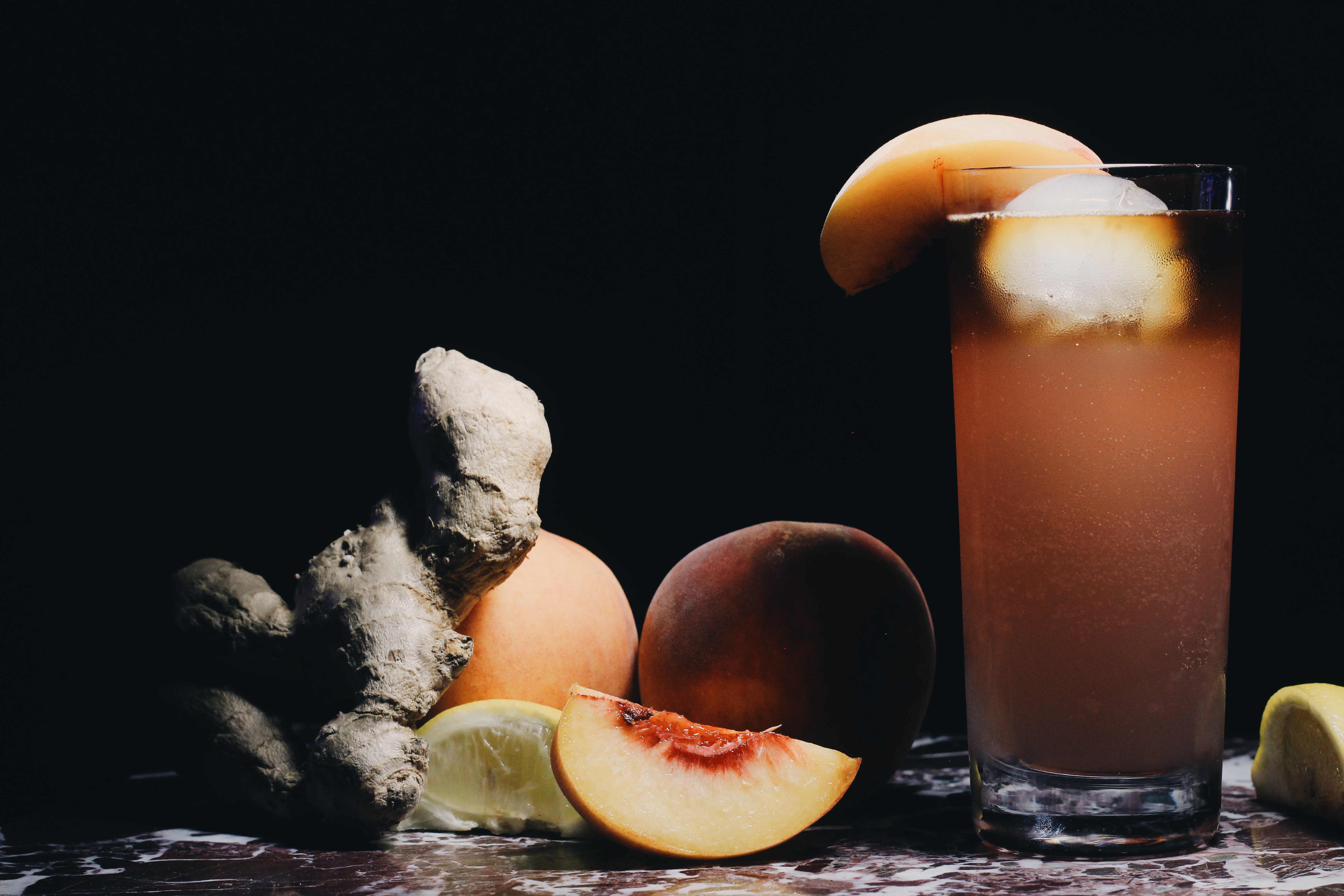
History: “I’m sick of being in kitchens,” Kyle McKnight told Kara Patt in 2014 inside a Seattle bar. He was explaining his homemade ginger beer recipe to her that he came up with two-and-a-half years prior and hinting that maybe they could do something with it. Back then, McKnight was selling the ginger beer in a restaurant and it was going faster than the food. Patt also came from the food industry. She had 18 years of experience and received a masters from NYU in food studies. She wanted something new as well. She told us over the phone, “I wanted to start my own business and do it in the right way…. This ginger beer tasted like the right ticket.” Shortly after their encounter, they both quit their jobs to devote themselves to Timber City Ginger. The independent bottlers started in Seattle farmer’s markets, growing from two to seven and then to online sales. This is a sassy ginger beer, one with attitude, defiant even. The company proclaims on its website, “This is not a soda – This is a tonic: an elixir.” Hmm. Sometimes I put on a Kobe Bryant jersey, go to the Y, and get hot from the 3-point line. But at the end of the day, I’m still just an un-athletic white dude who writes about soda on the Internet. Point is, we think it’s still safe to call this soda. But we understand why they prefer the term “tonic.” Timber City Ginger produces a ginger beer that is noticeably less sweet, made with local Washington produce and herbs. Sage and thyme are used in every batch, and according to Patt, “The herbs are what really make it stand out.” The ginger itself does not come from Washington, as it’s not grown there. But don’t worry, you’ll get your money’s worth; there’s almost a pound of fresh ginger in every gallon of ginger beer. As you might imagine with a beverage this artisanal, there’s no preservatives or artificial flavors used. The use of local ingredients also leads to lots of seasonal favor variations on their signature ginger beer, including today’s review, white peach. They call the majority of ginger beers on the market today “formulaic” and “sugar saturated.” They’re certainly proud of their more botanical approach. “People will come in a cold rainstorm and buy the ginger beer,” says Patt. That’s a lot confidence to drink in. Let’s see how it tastes.

Where to get: If you aren’t in the Seattle area, you can buy Timber City Ginger Beer in 32 oz. cans, swing top bottles, or in syrup concentrate at the company’s website. Eventually, Patt and McKnight would like to expand Timber City Ginger down the west coast and perhaps open a branch in Colorado, where Patt is from.

Nose: Lemon; pink lemonade; earthy ginger. This is a beautiful desaturated pink hue and has the matching pink lemonade smell. Olfactory heaven.

Taste: Bitter lemon; crisp ginger; faint peach; mild sugar. This is definitely an earthier ginger beer, tinged with a mild peachy sweetness. Everything here tastes very authentic. You’ll taste the lemon first. Very fresh and definitely bringing a bitterness. The ginger has light savory notes on its own and gives off a little bit of a pickled ginger (the stuff you get with sushi) taste when combined with the peach. That savory aspect tastes familiar. It’s unquestionably sage, an herb Timber City Ginger uses in every batch. The sweetness in this ginger beer really comes from the peach. It elevates the sugar in the flavor profile and gives the ginger beer a signature flavor. It’s not too sweet, but enough to make this easily drinkable without rum or vodka. I’d say a 5/10 on the sugar scale. The peach also imparts a little bit of a floral taste when combined with the botanical ginger flavor. This gets mildly sweeter as you continue to drink it, and the peach flavor really elevates to the top of the flavor profile.

Finish: Bitter lemon notes with peppery ginger that lingers until the next sip. The ginger sticks around long after the peach flavor has faded to remind you just who owns this soda tonic soda.

Rating: Ginger beers are a dime-a-dozen these days, but what separates Timber City Ginger’s concoctions from the rest of the market is the signature freshness they capture in each giant silver can of ginger beer. The ginger tastes like you chopped off a fresh piece and ate it. The peach flavor is real and not from a candy store. Together, the two work well. Now, in addition to being extremely popular, ginger is a flavor that can really vary in character from soda to soda. Timber City Ginger went with an earthier, slightly floral take with mild sweetness. If you’re someone who likes a lot of sweetness in their moscow mule, this probably isn’t the ginger beer for you. Sugar isn’t where this ginger beer shines, but there are some sweeter elements. The peach notes blend with the sugar to create sweet, floral flavors. These contrast with the peppery, savory ginger notes to form a little bit of a pickled ginger taste. This is probably the best flavor in the entire drink. You’ve seen pickled ginger on those sushi dates you overpaid for and didn’t take the girl home on. Personally, I wouldn’t mind seeing the cane sugar upped just a little bit to open up those peach notes more. I also think if the ginger had more heat, both the ginger and peach flavors would stand out more on the palate. Lovers of earthier, more natural sodas will almost certainly enjoy this take on ginger beer. Its versatility allows it to be enjoyed on its own as a sipper or as a great peach-infused dark and stormy. Start with the first, pass out with the latter.

Bruce Cost: Ginger Ale

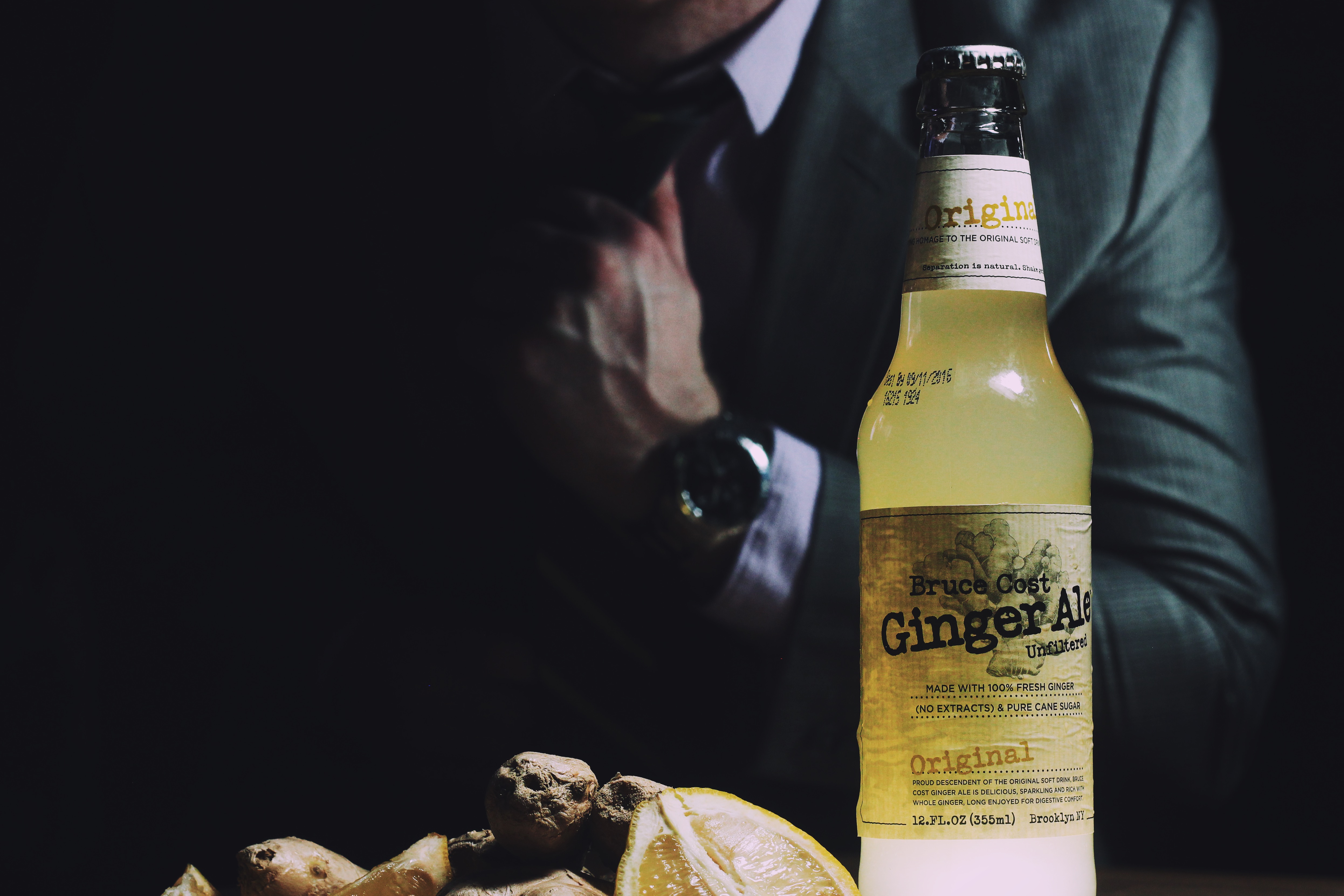
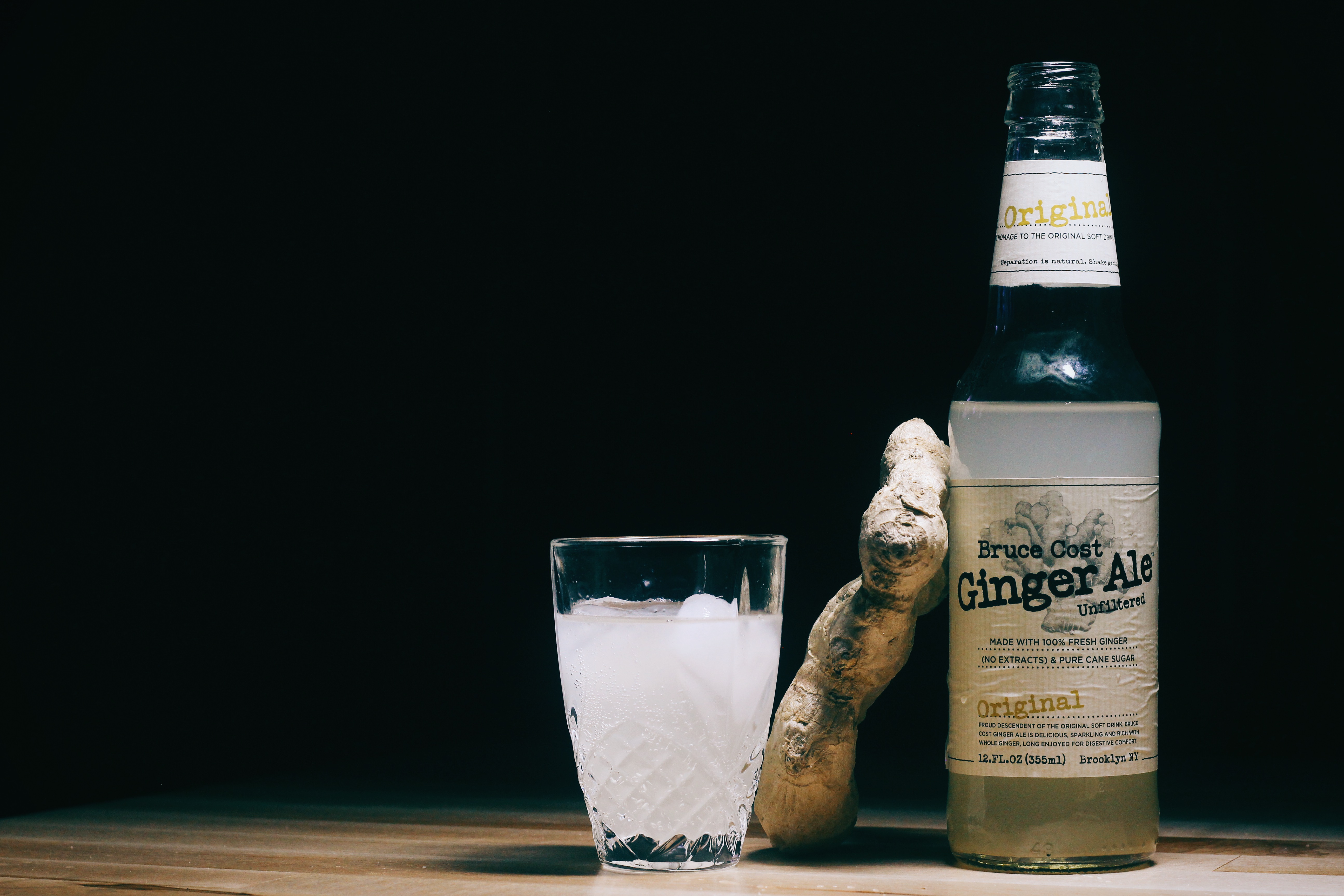
History: Bruce Cost knows about ginger. Dude’s been writing books about it and using it in his Asian-inspired restaurants since 1984. According to Bruce Cost Ginger Ale Marketing Manager, Kevin Li, Cost is also a “2-time James Beard nominee as ‘Best Chef in California.'” As of this sentence, I’m a two-time Bruce Cost Ginger Ale and rum consumer. I wonder if I can make it to four by the end of this review. If I do, I wonder if I’ll even make it to the end. It’s good timing for Cost, considering in mid-2015, we’re in the midst of a ginger boom in craft soda. But, as Li tells us, Cost started making his “chef-driven” unfiltered ginger ale back in 2010 in Brooklyn, New York, introducing it in three flavors: original, jasmine tea, and pomegranate. You can literally see pieces of ginger floating in the bottle, hence the “unfiltered” label. The chef went through 14 different restaurants before putting all of his eggs in the craft soda basket. “The idea was to produce a kind of soda that was more akin to a microbrew beer, full bodied with the mouth feel of beer or wine rather than the sparkly flavored, sugar water that is familiar to most people,” says Li. But don’t think this soda has no sugar. He adds the company strives for a flavor that is “somewhat sweet and lightly carbonated.” There’s a reason we’re reviewing the original. Look around on the Internet. You’ll notice that Bruce Cost Ginger Ale has quite the reputation. Li notes the company sources its fresh ginger from Shangdong, China and does not use any ginger extracts or flavorings in its soda. Each bottle contains a whopping 40 grams of ginger. Though not fermented, Bruce Cost ginger ale’s unfiltered look, slightly foamy head, and use of only fresh ginger make it a close cousin to ginger beer. Like Arkansas-cousin close. Sorry, Arkansas readers. In fact, Li surprises us with a scoop, telling us the company is entering the other side of ginger soda market this fall and will introduce an 8.4 oz can of ginger beer. Until then, we pull back the curtain on Bruce Cost’s original ginger ale and see if the critical claim has merit.

Where to get: Bruce Cost Ginger Ales are sold in physical retailers mostly in New York and California. You can also find it at The Fresh Market stores nationwide and Whole Foods in five regions. Check out Bruce Cost’s online store locator to find out where the nearest retailer is to you. For the rest of us eating pizza in our Snuggies, there’s always the Internet. Amazon, BevMo, Harney and Sons Teas… just take your pick.

Nose: Musky, kind of has an agave syrup smell to it. Definitely not spicy ginger like you might be expecting from a soda with actual pieces of ginger floating in the bottle.

Taste: Cane sugar; candied ginger; light spiciness. An easy-drinking ginger ale that surprisingly leans on the sweeter side of things. This is an unfiltered ginger ale, and while this is obvious when looking at the pieces of ginger in the bottle, it seems to have an effect on the sugar as well. The sugar, in turn, really impacts the flavor profile. The signature flavor in this is more of a candied ginger than one that’s raw and full of fire. There is a little bit of spice to the ginger on the backend every now and then, but not enough to make those hesitant of spicy flavors bat an eye. You’ll taste more sweet than spicy with just enough of the latter to provide balance. The carbonation is very light and the ginger intensifies throughout the drink. Definitely does not have the same bite and tartness you’ll find in a ginger beer, but also isn’t as dry as most ginger ales. Lots of sweet ginger flavor.

Finish: Sweet ginger with a tinge of pepper. Almost a little bit of a mild herbal effect if you take enough time in between sips.

Rating: Generally ginger ales are full of carbonation and fairly light on flavor. Bruce Cost flips the script with its Ginger Ale by filling each bottle with unfiltered pieces of ginger root packed with big, sweet flavor and hardly any bubbles. The ginger flavor tastes more candy than spicy, but it permeates every sip from beginning to end, increasing in strength as you continue to drink it. Probably one of the sweeter ginger ales you’ll try and not quite as dry as some others. This makes it a great candidate for cocktails. I understand a lot of you will leave at this point to go make a drink. I get it. For those of you who stuck around, the password is wast3ofAsentenze. Bruce Cost certainly tastes like a gourmet ginger ale, but it is a little on the sweet side, coming in at 37 grams per bottle. I’d probably chop that number down to around 30. But this has a nice ginger flavor and is versatile enough to be enjoyed on its own or in your favorite Friday night concoction. One of the better ginger ales on the craft soda market. It certainly seems to be a fan favorite.